Kirjojen hintavertailu – 12 903 725 kirjaa ja 27 kauppaa

Kirjailija

Jaume Aurell

Kirjat ja teokset yhdessä paikassa: 14 kirjaa, julkaisuja vuosilta 2012–2025, suosituimpiin kuuluu Le Livre Enlumine Medieval Instrument Politique. Vertaile teosten hintoja ja tarkista saatavuus suomalaisista kirjakaupoista.

14 kirjaa

Kirjojen julkaisuvuodet: 2012–2025.

30 Great Books That Made History

30 Great Books That Made History

Jaume Aurell

JOHN WILEY AND SONS LTD
2025
sidottu
Today, many readers could easily list thirty classic authors, or thirty classic works of art, literature, music, philosophy, or science. But would they be able to name thirty classic works of history, despite our contemporary appetite for books that re-tell the most stimulating and exciting episodes from centuries ago? In spite of history’s outsized influence in the world of ideas, the books that made—and-remade—the history we know so well are often forgotten. In this panoramic book, distinguished historian Jaume Aurell sets out to introduce readers to a new canon of historical writing. Taking a global approach, he places the work of Herodotus, Thucydides, Gibbon, Michelet and Braudel alongside masterpieces from a myriad of periods and civilizations, from Sima Quian, Anna Komnene, Al-Masudi and Fukuzawa Yukichi to Eduardo O’Gorman, C. L. R. James and Natalie Z. Davis. At the same time, Aurell argues that we should not see these books as a definitive canon—instead, any canon should be seen as a list-in-progress to be contested and debated anew with each generation. Written with verve and a palpable esteem for the works included, this book is critical reading for any student or scholar of history. It is only by being exposed to these diverse and deeply significant works that we can fully perceive the shape of discipline, and carve out a new appreciation for the art of history writing.
30 Great Books That Made History

30 Great Books That Made History

Jaume Aurell

JOHN WILEY AND SONS LTD
2025
nidottu
Today, many readers could easily list thirty classic authors, or thirty classic works of art, literature, music, philosophy, or science. But would they be able to name thirty classic works of history, despite our contemporary appetite for books that re-tell the most stimulating and exciting episodes from centuries ago? In spite of history’s outsized influence in the world of ideas, the books that made—and-remade—the history we know so well are often forgotten. In this panoramic book, distinguished historian Jaume Aurell sets out to introduce readers to a new canon of historical writing. Taking a global approach, he places the work of Herodotus, Thucydides, Gibbon, Michelet and Braudel alongside masterpieces from a myriad of periods and civilizations, from Sima Quian, Anna Komnene, Al-Masudi and Fukuzawa Yukichi to Eduardo O’Gorman, C. L. R. James and Natalie Z. Davis. At the same time, Aurell argues that we should not see these books as a definitive canon—instead, any canon should be seen as a list-in-progress to be contested and debated anew with each generation. Written with verve and a palpable esteem for the works included, this book is critical reading for any student or scholar of history. It is only by being exposed to these diverse and deeply significant works that we can fully perceive the shape of discipline, and carve out a new appreciation for the art of history writing.
Historians' Autobiographies as Historiographical Inquiry

Historians' Autobiographies as Historiographical Inquiry

Jaume Aurell

Cambridge University Press
2025
sidottu
This Element analyses the autobiographies of historians from a global perspective and looks at all eras, from antiquity to the present day. It includes twenty autobiographies: Caesar's and Lucian of Samosata's memories in antiquity; an autobiography of a medieval king such as Peter IV of Aragon; Vico's, Gibbon's and Adams' intellectual self-accounting in modernity; autobiographical revelations and social activism of twentieth century women historians such as Carolyn Steedman, Jill Conway and Gerda Lerner; classical Chinese and Islamic traditions through the autobiographies of Sima Quian and Ibn Khaldun; the perplexities inherent in the modernisation of Japan (Fukuzawa Yukichi), China (Gu Jiegang), India (Nirad Chaudhuri) and Egypt (Taha Hussein); postmodernists such as Rosenstone; and traumatic postcolonial experiences in Africa (Bethwell Ogot), Latin America (Carlos Eire) and Southeast Asia (Wang Gungwu). This Element proposes a literary and historical approach to these autobiographies, emphasising its historiographical dimension and value.
Historians' Autobiographies as Historiographical Inquiry

Historians' Autobiographies as Historiographical Inquiry

Jaume Aurell

Cambridge University Press
2025
pokkari
This Element analyses the autobiographies of historians from a global perspective and looks at all eras, from antiquity to the present day. It includes twenty autobiographies: Caesar's and Lucian of Samosata's memories in antiquity; an autobiography of a medieval king such as Peter IV of Aragon; Vico's, Gibbon's and Adams' intellectual self-accounting in modernity; autobiographical revelations and social activism of twentieth century women historians such as Carolyn Steedman, Jill Conway and Gerda Lerner; classical Chinese and Islamic traditions through the autobiographies of Sima Quian and Ibn Khaldun; the perplexities inherent in the modernisation of Japan (Fukuzawa Yukichi), China (Gu Jiegang), India (Nirad Chaudhuri) and Egypt (Taha Hussein); postmodernists such as Rosenstone; and traumatic postcolonial experiences in Africa (Bethwell Ogot), Latin America (Carlos Eire) and Southeast Asia (Wang Gungwu). This Element proposes a literary and historical approach to these autobiographies, emphasising its historiographical dimension and value.
Medieval Self-Coronations

Medieval Self-Coronations

Jaume Aurell

Cambridge University Press
2024
pokkari
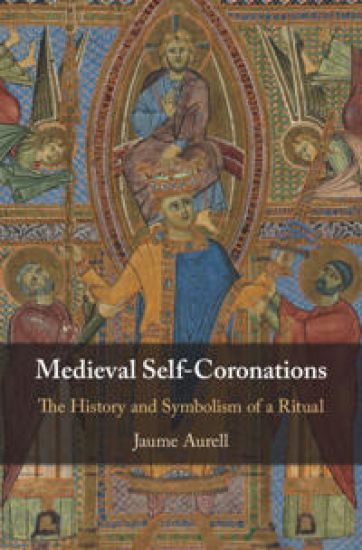
Based on narrative, iconographical, and liturgical sources, this is the first systematic study to trace the story of the ritual of royal self-coronations from Ancient Persia to the present. Exposing as myth the idea that Napoleon's act of self-coronation in 1804 was the first extraordinary event to break the secular tradition of kings being crowned by bishops, Jaume Aurell vividly demonstrates that self-coronations were not as transgressive or unconventional as has been imagined. Drawing on numerous examples of royal self-coronations, with a particular focus on European Kings of the Middle Ages, including Frederic II of Germany (1229), Alphonse XI of Castile (1328), Peter IV of Aragon (1332) and Charles III of Navarra (1390), Aurell draws on history, anthropology, ritual studies, liturgy and art history to explore royal self-coronations as privileged sites at which the frontiers and limits between the temporal and spiritual, politics and religion, tradition and innovation are encountered.
What Is a Classic in History?

What Is a Classic in History?

Jaume Aurell

Cambridge University Press
2024
sidottu
What is a classic in historical writing? How do we explain the continued interest in certain historical texts, even when their accounts and interpretations of particular periods have been displaced or revised by newer generations of historians? How do these texts help to maintain the historiographical canon? Jaume Aurell's innovative study ranges from the heroic writings of ancient Greek historians such as Herodotus to the twentieth century microhistories of Carlo Ginzburg. The book explores how certain texts have been able to stand the test of time, gain their status as historiographical classics, and capture the imaginations of readers across generations. Investigating the processes of permanence and change in both historiography and history, Aurell further examines the creation of historical genres and canons. Taking influence from methodologies including sociology, literary criticism, theology, and postcolonial studies, What Is a Classic in History? encourages readers to re-evaluate their ideas of history and historiography alike.
What Is a Classic in History?

What Is a Classic in History?

Jaume Aurell

Cambridge University Press
2024
pokkari

Halvin toimitettuna 35,10 €

What is a classic in historical writing? How do we explain the continued interest in certain historical texts, even when their accounts and interpretations of particular periods have been displaced or revised by newer generations of historians? How do these texts help to maintain the historiographical canon? Jaume Aurell's innovative study ranges from the heroic writings of ancient Greek historians such as Herodotus to the twentieth century microhistories of Carlo Ginzburg. The book explores how certain texts have been able to stand the test of time, gain their status as historiographical classics, and capture the imaginations of readers across generations. Investigating the processes of permanence and change in both historiography and history, Aurell further examines the creation of historical genres and canons. Taking influence from methodologies including sociology, literary criticism, theology, and postcolonial studies, What Is a Classic in History? encourages readers to re-evaluate their ideas of history and historiography alike.
Genealogies of the West

Genealogies of the West

Jaume Aurell

ANTHEM PRESS
2023
nidottu
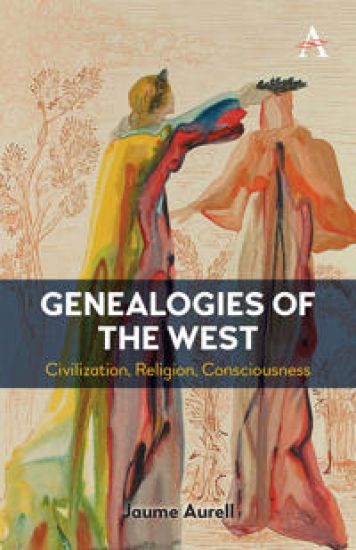
Genealogies of the West presents a new look at the West by tracing the still-recognizable footprints of the past and reflecting on the present challenges it faces. Through a review of its rich and often controversial history, it recalls the genealogies of the plural processes, ideas, characters, and events that structure the West’s tradition and identity, and their presence nowadays. It shows the faces of the Modernity and its most relevant achievements—such as the state, capitalism, science, technology, ideologies, and enlightenments—and how they are being revised nowadays by postmodernity. This helps readers gain perspective, gives clues for understanding the complexities of the past, challenges some pre-assumed historical inaccuracies, identifies its weight and presence in the present, and projects these thoughts toward the future.
Le Livre Enlumine Medieval Instrument Politique

Le Livre Enlumine Medieval Instrument Politique

Jaume Aurell; Ivan Foletti; Eliza Garrison

Viella
2021
nidottu
Cet ouvrage reunit quatorze essais sur l'utilisation des livres enlumines medievaux dans le cadre d'actions, de comportements et de relations politiques au sein des societes europeennes, entendant ici par "politique" l'exercice du pouvoir a travers ses multiples manifestations. En analysant les liens entre le livre enlumine et le fait politique, les auteurs ont etudie les raisons des commanditaires et des concepteurs des manuscrits dans leurs contextes historiques et sociaux de realisation, la vie des livres comme objets dotes d'une valeur a la fois economique et symbolique, leur utilisation comme moyen de communication ainsi que leur posterite.
Medieval Self-Coronations

Medieval Self-Coronations

Jaume Aurell

Cambridge University Press
2020
sidottu
Based on narrative, iconographical, and liturgical sources, this is the first systematic study to trace the story of the ritual of royal self-coronations from Ancient Persia to the present. Exposing as myth the idea that Napoleon's act of self-coronation in 1804 was the first extraordinary event to break the secular tradition of kings being crowned by bishops, Jaume Aurell vividly demonstrates that self-coronations were not as transgressive or unconventional as has been imagined. Drawing on numerous examples of royal self-coronations, with a particular focus on European Kings of the Middle Ages, including Frederic II of Germany (1229), Alphonse XI of Castile (1328), Peter IV of Aragon (1332) and Charles III of Navarra (1390), Aurell draws on history, anthropology, ritual studies, liturgy and art history to explore royal self-coronations as privileged sites at which the frontiers and limits between the temporal and spiritual, politics and religion, tradition and innovation are encountered.
Theoretical Perspectives on Historians' Autobiographies
E. H. Carr wrote, "study the historian before you begin to study the facts." This book approaches the life, work, ideas, debates, and the context of key 20th- and 21st-century historians through an analysis of their life writing projects viewed as historiographical sources. Merging literary studies on autobiography with theories of history, it provides a systematic and detailed analysis of the autobiographies of the most outstanding historians, from the classic texts by Giambattista Vico, Edward Gibbon and Henry Adams, to the Annales historians such as Fernand Braudel, Philippe Ariès and Georges Duby, to Marxist historians such as Eric Hobsbawm and Annie Kriegel, to postmodern historians such as Carolyn Steedman, Robert A. Rosenstone, Carlos Eire, Luisa Passerini, Elisabeth Roudinesco, Gerda Lerner and Sheila Fitzpatrick, and to "interventional" historians such as Geoff Eley, Jill Ker Conway, Natalie Davis and Gabrielle Spiegel. Using a comparative approach to these texts, this book identifies six historical-autobiographical styles: humanistic, biographic, ego-historical, monographic, postmodern, and interventional. By privileging historians' autobiographies, this book proposes a renewed history of historiography, one that engages the theoretical evolution of the discipline, the way history has been interpreted by historians, and the currents of thought and ideologies that have dominated and influenced its writing in the 20th and 21st centuries.
Genealogía de Occidente: Claves históricas del mundo actual

Genealogía de Occidente: Claves históricas del mundo actual

Jaume Aurell

Createspace Independent Publishing Platform
2017
nidottu
Este libro propone una revisi n de la historia de Occidente. Su objetivo es rastrear las improntas del pasado que son todav a reconocibles en nuestro presente y descifrar las huellas todav a perceptibles de los lugares esenciales, los personajes c lebres, los eventos trascendentales y las tendencias intelectuales que Occidente reconoce como propias; lo que hoy llamar amos su ADN. Se trata de un recorrido por algunas ricas metr polis de la Antig edad como Jerusal n, Atenas, Roma, Antioqu a, Alejandr a y Constantinopla; la prodigiosa expansi n del cristianismo; la dolorosa escisi n entre Roma, Constantinopla y La Meca; las opulentas ciudades comerciales medievales y renacentistas como Brujas, Venecia y Florencia; las inconmensurables figuras de humanistas y cient ficos que mostraron una curiosidad universal como Leonardo da Vinci, Galileo y Newton; los imperios transoce nicos espa ol, portugu s y brit nico; la consolidaci n de los valores modernos como el Estado, el capitalismo y la ciencia moderna; el racionalismo de la Ilustraci n; los deslumbrantes centros neur lgicos de la modernidad como el Londres victoriano, la Viena fin-de-siglo, el Berl n de entreguerras o el Par s de los artistas y, m s recientemente, el idealismo de los a os sesenta y la perplejidad algo titubeante pero tambi n esperanzada del presente. No es esta una historia sistem tica del pasado, sino un relato de los procesos, las ideas y los eventos experimentados por Occidente que han pasado a formar parte de su identidad. Mediante una narraci n amena, el autor nos convoca no solo a repasar el conocimiento del pasado sino a reflexionar tambi n sobre el presente, investigando aquellos aspectos pol ticos, sociales, econ micos, culturales, intelectuales, art sticos y religiosos de las civilizaciones del pasado que han dejado huella en los valores del presente, con el nimo de comprender mejor qui nes somos, de d nde venimos, c mo somos y qu deuda tenemos con cada per odo del pasado. Esta lectura nos ayudar a tomar perspectiva, aumentar la confianza en nosotros mismos y procurar expandir, con mayor entusiasmo, algunos valores que son patrimonio de Occidente (en particular de Europa) y que pueden contribuir a una mejora objetiva del mundo.
Theoretical Perspectives on Historians' Autobiographies
E. H. Carr wrote, "study the historian before you begin to study the facts." This book approaches the life, work, ideas, debates, and the context of key 20th- and 21st-century historians through an analysis of their life writing projects viewed as historiographical sources. Merging literary studies on autobiography with theories of history, it provides a systematic and detailed analysis of the autobiographies of the most outstanding historians, from the classic texts by Giambattista Vico, Edward Gibbon and Henry Adams, to the Annales historians such as Fernand Braudel, Philippe Ariès and Georges Duby, to Marxist historians such as Eric Hobsbawm and Annie Kriegel, to postmodern historians such as Carolyn Steedman, Robert A. Rosenstone, Carlos Eire, Luisa Passerini, Elisabeth Roudinesco, Gerda Lerner and Sheila Fitzpatrick, and to "interventional" historians such as Geoff Eley, Jill Ker Conway, Natalie Davis and Gabrielle Spiegel. Using a comparative approach to these texts, this book identifies six historical-autobiographical styles: humanistic, biographic, ego-historical, monographic, postmodern, and interventional. By privileging historians' autobiographies, this book proposes a renewed history of historiography, one that engages the theoretical evolution of the discipline, the way history has been interpreted by historians, and the currents of thought and ideologies that have dominated and influenced its writing in the 20th and 21st centuries.
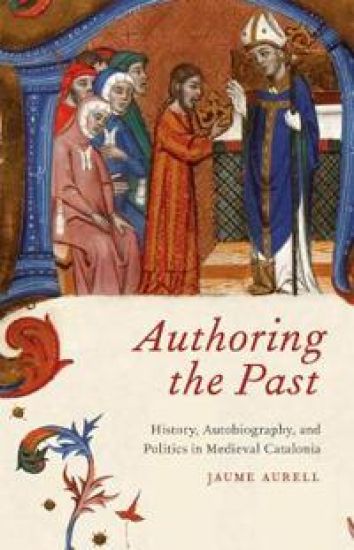
Authoring the Past

Authoring the Past

Jaume Aurell

University of Chicago Press
2012
sidottu
"Authoring the Past" surveys medieval Catalan historiography, shedding light on the emergence and evolution of historical writing and autobiography in the Middle Ages, on questions of authority and authorship, and on the links between history and politics during the period. Jaume Aurell examines texts from the late twelfth to the late fourteenth centuries - including the Latin Gesta comitum Barcinonensium, and four texts in medieval Catalan: "Jaume I's Llibre dels fets", the "Cronica of Bernat Desclot", the "Cronica of Ramon Muntaner", and the "Cronica of Pere el Cerimonios" - and outlines the different motivations for the writing of each. For Aurell, these chronicles are not mere archaeological artifacts but rather documents that speak to their writers' specific contemporary social and political purposes. He argues that these Catalonian counts and Aragonese kings were attempting to use their role as authors to legitimize their monarchical status, their growing political and economic power, and their aggressive expansionist policies in the Mediterranean. By analyzing these texts alongside one another, Aurell demonstrates the shifting contexts in which chronicles were conceived, written, and read throughout the Middle Ages. The first study of its kind to make medieval Catalan writings available to English-speaking audiences, "Authoring the Past" will be of interest to scholars of comparative literature, students of Hispanic and Romance medieval studies, and medievalists who study the chronicle tradition in other languages.