
Kirjailija
Javier Garcia de Gabiola
Kirjat ja teokset yhdessä paikassa: 5 kirjaa, julkaisuja vuosilta 2020–2026, suosituimpiin kuuluu Swords of Saud Volume 2. Vertaile teosten hintoja ja tarkista saatavuus suomalaisista kirjakaupoista.
5 kirjaa
Kirjojen julkaisuvuodet: 2020–2026.
Swords of Saud Volume 1
Javier Garcia de Gabiola; Tom Cooper
HELION COMPANY
2025
nidottu
Halvin toimitettuna 28,40 €
The Rif War Volume 2
Javier Garcia de Gabiola
HELION COMPANY
2023
pokkari
Halvin toimitettuna 28,40 €
The Rif War in rugged northern Morocco is remembered for romantic novels and films about the French Foreign Legion, such as Beau Geste. In reality, the French intervention of 1925-1926, although very important, was late and secondary in importance to that of the Spanish. Spain had been fighting in Africa since 1909 and had suffered disasters such as Barranco del Lobo and victories such as the cavalry charge at Taxdirt. Madrid had to face enemies such as El Mizzi n, El Jeriro, and the famous El Raisuni, made famous by the film The Wind and the Lion. Later, Abd-el Krim's revolt caused 8,000 Spanish deaths at Annual in 1921, and then loomed over French Morocco, leading to another 5,700 casualties. This war was not only a campaign of attacks by Rif guerrillas upon isolated forts and columns, but degenerated into trench warfare in some sectors and saw the use of tanks, artillery, gas, aviation, and an amphibious operation that would go on to be closely studied by the Allies in the Second World War. All of this forced an effective collaboration between generals Philippe Petain and Miguel Primo de Rivera who, as allies, finally crushed the rebellion after gathering some 250,000 soldiers and 300 aircraft against some 30,000 to 40,000 Rifians. This series of books addresses the organization of the Spanish and Rifian armies, and of the air forces and their operations, including those of an incipient and frustrated Rifian aviation. Also, in the case of Spain, the Rif War saw the birth of its air forces in combat. The war also saw the Spanish Army completely reformed, reaching new levels of effectiveness with the founding of the Spanish Legion and the recruitment of Moroccan soldiers of the Regulares. These troops, together with a plethora of commanders who made their combat debuts here, such as Franco, Mola, Queipo de Llano, Varela, Yag e and Kindel n amongst others, would later fight in the Spanish Civil War. These commanders would be called the "Africanistas" (Africanists) and would constitute the hard core of the military that rose up against the government in 1936. Volume 2 of The Rif War covers the Spanish reconquest of the positions lost after the Disaster of Annual in the Melilla Sector, the near disaster of Xauen in the Western zone of the African Protectorate, the Rifian attack in French Morocco, the Landing at Alhucemas and the Spanish-French offensive, with the capture of Abd El-Krim and the destruction of his forces, and the final campaigns in the Gomara region to pacify the Protectorate.
The Rif War in rugged northern Morocco is remembered for romantic films and novels about the French Foreign Legion, such as Beau Geste. In reality, the French intervention, although very important, was late and secondary in importance to that of the Spanish. Spain, which had been fighting in Africa since 1909, suffering disasters such as Barranco del Lobo and victories such as the cavalry charge in Taxdirt in 1913, had had to face enemies such as Mizzian, El Roghi, or the famous El Raisuni. Abd-el Krim's revolt caused 8,000 Spanish deaths at Annual in 1921, and then loomed over French Morocco, leading to another 5,700 casualties. This war was not only a campaign of attacks by Rif guerrillas on isolated forts and columns, but degenerated into trench warfare in some sectors, and saw the use of tanks, artillery, gas, aviation, and an amphibious operation that would go on to be closely studied by the Allies in the Second World War. All of this forced an effective collaboration between generals Petain and Primo de Rivera, who, as allies, finally crushed the rebellion after gathering some 250,000 soldiers and 400 aircraft against some 45-65,000 Riffians. The war also saw the Spanish army completely reformed, reaching new levels of effectiveness with the founding of the Spanish Legion and the recruitment of Moroccan soldiers of the Regulares. These troops, together with a plethora of commanders who made their combat debuts here, such as Franco, Mola, Queipo de Llano and Kindelán, would later fight in the Spanish Civil War. These commanders would be called the "Africanistas" and would constitute the hard core of the military that rose up against the government in 1936. The book focuses not only on land military operations and the organization of the armies - Spanish, French and Riffian - but also on the air forces and their operations, including those of an incipient and frustrated Riffian aviation. In the case of Spain, the Rif War was the birth certificate of its air forces in combat and here, Spain was the first nation to use specially designed bomb-aiming devices.
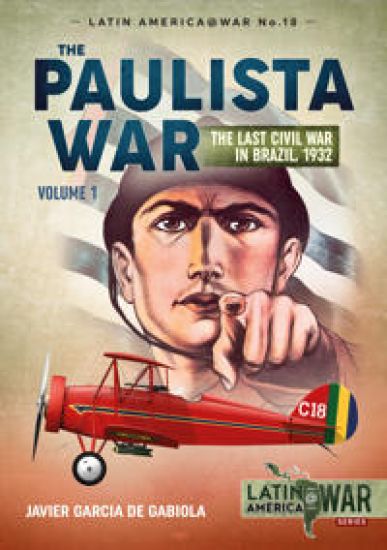
The Year 1932 was not only the year in which the famous carnival of Rio de Janeiro was organized for the first time, or the giant statue of the Christ the Redeemer was placed on top of the Corcovado mountain ridge: tragically, it was also the year of the last civil war fought in Brazil. On 9 July 1932, about 35,000 men from two Brazilian federal states - Sao Paulo and Mato Grosso do Sul – rose in arms against the dictatorship of Getúlio Vargas, demanding the return to constitutionality and democracy. This movement became known as the ‘Constitutionalist’, while its members became known as the ‘Paulistas’. The Brazilian government reacted with brute force: it deployed over 100,000 troops supported by heavy artillery and combat aircraft. The result was the biggest war ever fought in Brazil: the first ever campaign to see strategic aerial bombardment conducted in the Americas; the first aircraft shot down in air combat, and the first to see night bombing operations. Following three months of bitter fighting – which often degenerated into trench warfare – the Paulistas were defeated. Indeed, the end of this conflict brought to the end a period of successive civil wars fought in Brazil since 1889. The Paulista War – the first authoritative account of this conflict ever published in the English language – provides a blow-by-blow account of both aerial and ground combat operations. It is lavishly illustrated with a collection of authentic photographs and exclusive colour profiles, and as such is an indispensable source of reference about this crucial moment in the history of the largest country in South America.