Kirjojen hintavertailu – 12 903 725 kirjaa ja 27 kauppaa

Kirjailija

Javier Muñoz-Basols

Kirjat ja teokset yhdessä paikassa: 14 kirjaa, julkaisuja vuosilta 2009–2021, suosituimpiin kuuluu Spanish Idioms in Practice. Vertaile teosten hintoja ja tarkista saatavuus suomalaisista kirjakaupoista.

14 kirjaa

Kirjojen julkaisuvuodet: 2009–2021.

La diversidad del español y su enseñanza

La diversidad del español y su enseñanza

Natividad Hernández Muñoz; Javier Muñoz-Basols; Carlos Soler Montes

Routledge
2021
sidottu
La diversidad del español y su enseñanza es la primera publicación concebida para reflexionar sobre la diversidad de la lengua desde un punto de vista crítico, interdisciplinario, institucional, aplicado e internacional. El análisis de doce lecturas y de una detallada guía de explotación didáctica potencian la adquisición de conocimientos sobre la lengua y desvelan la complejidad de la investigación sobre las variedades del español. Características principales:• Artículos de investigación desde diferentes enfoques y perspectivas;• Actividades de reflexión para verificar la asimilación de contenidos;• Análisis crítico de extractos y citas de autoridad (español e inglés);• Preguntas analíticas sobre el estado de la cuestión y recursos institucionales;• Modelos metodológicos de investigación empírica sobre la diversidad de la lengua;• Propuestas de temas para la investigación y el debate dentro y fuera del aula;• Pautas bibliográficas detalladas para profundizar sobre la materia;• Selección de conceptos clave para potenciar la adquisición de terminología lingüística;• Glosario bilingüe en línea (español e inglés) sobre variedades del español, sociolingüística aplicada y política lingüística;• Soluciones de las guías de lectura e información complementaria. Diseñado como libro de texto o material de autoaprendizaje, La diversidad del español y su enseñanza es una herramienta imprescindible para familiarizarse con la diversidad de la lengua. La información será de interés y aplicable en contextos académicos y profesionales de enseñanza, diseño curricular y elaboración de materiales didácticos de español como lengua extranjera o segunda y de herencia. Cualquier investigador, profesor, estudiante o lector podrá acceder de manera crítica y pautada a esta importante parcela de conocimiento sobre el idioma. La diversidad del español y su enseñanza brings together twelve articles that investigate Spanish linguistic variation and the impact this has on Spanish language teaching. Based on a special edition of the Journal of Spanish Language Teaching, each chapter here presents an article from the Journal with an additional reading guide designed to transform the information into a pedagogical tool that can be used and applied in the classroom. Each article is accompanied by critical analysis, reflection activities, questions for future research and debate, and suggestions for further reading. A bilingual glossary covering key terms within Spanish language variation, applied sociolinguistics and language policy is available online at www.routledge.com/9780367651695. This book is a practical overview of the evolution and current state of the study of Spanish language variation and will be of most interest to researchers and teachers of Spanish as a second language who will gain insight into how to include linguistic variation in their teaching.
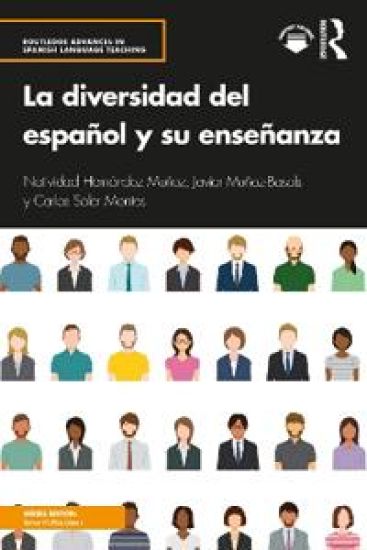
La diversidad del español y su enseñanza

La diversidad del español y su enseñanza

Natividad Hernández Muñoz; Javier Muñoz-Basols; Carlos Soler Montes

Routledge
2021
nidottu
La diversidad del español y su enseñanza es la primera publicación concebida para reflexionar sobre la diversidad de la lengua desde un punto de vista crítico, interdisciplinario, institucional, aplicado e internacional. El análisis de doce lecturas y de una detallada guía de explotación didáctica potencian la adquisición de conocimientos sobre la lengua y desvelan la complejidad de la investigación sobre las variedades del español. Características principales:• Artículos de investigación desde diferentes enfoques y perspectivas;• Actividades de reflexión para verificar la asimilación de contenidos;• Análisis crítico de extractos y citas de autoridad (español e inglés);• Preguntas analíticas sobre el estado de la cuestión y recursos institucionales;• Modelos metodológicos de investigación empírica sobre la diversidad de la lengua;• Propuestas de temas para la investigación y el debate dentro y fuera del aula;• Pautas bibliográficas detalladas para profundizar sobre la materia;• Selección de conceptos clave para potenciar la adquisición de terminología lingüística;• Glosario bilingüe en línea (español e inglés) sobre variedades del español, sociolingüística aplicada y política lingüística;• Soluciones de las guías de lectura e información complementaria. Diseñado como libro de texto o material de autoaprendizaje, La diversidad del español y su enseñanza es una herramienta imprescindible para familiarizarse con la diversidad de la lengua. La información será de interés y aplicable en contextos académicos y profesionales de enseñanza, diseño curricular y elaboración de materiales didácticos de español como lengua extranjera o segunda y de herencia. Cualquier investigador, profesor, estudiante o lector podrá acceder de manera crítica y pautada a esta importante parcela de conocimiento sobre el idioma. La diversidad del español y su enseñanza brings together twelve articles that investigate Spanish linguistic variation and the impact this has on Spanish language teaching. Based on a special edition of the Journal of Spanish Language Teaching, each chapter here presents an article from the Journal with an additional reading guide designed to transform the information into a pedagogical tool that can be used and applied in the classroom. Each article is accompanied by critical analysis, reflection activities, questions for future research and debate, and suggestions for further reading. A bilingual glossary covering key terms within Spanish language variation, applied sociolinguistics and language policy is available online at www.routledge.com/9780367651695. This book is a practical overview of the evolution and current state of the study of Spanish language variation and will be of most interest to researchers and teachers of Spanish as a second language who will gain insight into how to include linguistic variation in their teaching.
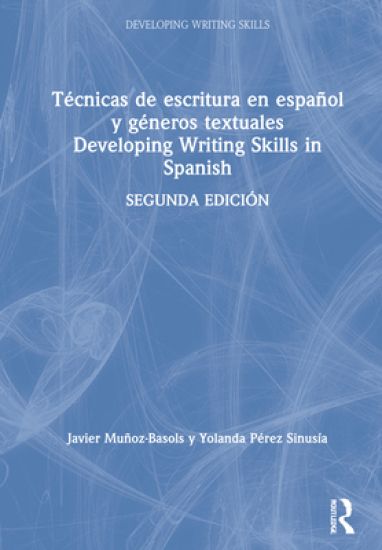
Técnicas de escritura en español y géneros textuales / Developing Writing Skills in Spanish
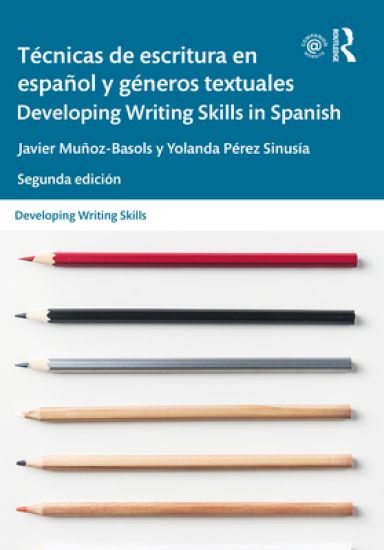
Técnicas de escritura en español y géneros textuales / Developing Writing Skills in Spanish es la primera publicación concebida para desarrollar y perfeccionar la expresión escrita en español a partir de una metodología basada en géneros textuales. Cada capítulo se ocupa de un género y está diseñado para guiar al escritor en la planificación, el desarrollo y la revisión de textos. Las novedades de esta segunda edición incluyen: un cuestionario sobre la escritura, listados con objetivos y prácticas escritas, nuevos materiales y actividades, repertorios de vocabulario temático, ejercicios de corrección gramatical y estilo, ampliación de las respuestas modelo y diferentes rutas para la escritura. Características principales:• Tipologías variadas: textos narrativos, descriptivos, expositivos, argumentativos, periodísticos, publicitarios, jurídicos y administrativos, científicos y técnicos;• Actividades para trabajar la precisión léxica, la gramática, el estilo y la reescritura de manera progresiva;• Vocabulario temático, marcadores discursivos y expresiones útiles para la escritura;• Pautas detalladas, consejos prácticos y estrategias discursivas en función del tipo de texto;• Modelos textuales de reconocidos periodistas y autores del ámbito hispánico;• Recursos adicionales recogidos en un portal de escritura en línea. Diseñado como libro de texto, material de autoaprendizaje u obra de referencia, Técnicas de escritura en español y géneros textuales / Developing Writing Skills in Spanish es una herramienta esencial para familiarizarse con las características lingüísticas y discursivas propias de la lengua y para dominar la técnica de la escritura en diferentes géneros textuales. Técnicas de escritura en español y géneros textuales / Developing Writing Skills in Spanish provides intermediate and advanced level students with the necessary skills to become competent and confident writers in the Spanish language. This new edition includes: new material and activities, chapter objectives, exercises on grammar and style correction, thematic vocabulary lists, and an expanded answer key with more detailed explanations. Designed for use as a classroom text, self-study material or reference work, Técnicas de escritura en español y géneros textuales / Developing Writing Skills in Spanish is ideal for all intermediate to advanced students of Spanish.
Técnicas de escritura en español y géneros textuales / Developing Writing Skills in Spanish

Técnicas de escritura en español y géneros textuales / Developing Writing Skills in Spanish

Javier Muñoz-Basols; Yolanda Pérez Sinusía

Routledge
2021
nidottu

Halvin toimitettuna 55,60 €

Técnicas de escritura en español y géneros textuales / Developing Writing Skills in Spanish es la primera publicación concebida para desarrollar y perfeccionar la expresión escrita en español a partir de una metodología basada en géneros textuales. Cada capítulo se ocupa de un género y está diseñado para guiar al escritor en la planificación, el desarrollo y la revisión de textos. Las novedades de esta segunda edición incluyen: un cuestionario sobre la escritura, listados con objetivos y prácticas escritas, nuevos materiales y actividades, repertorios de vocabulario temático, ejercicios de corrección gramatical y estilo, ampliación de las respuestas modelo y diferentes rutas para la escritura. Características principales:• Tipologías variadas: textos narrativos, descriptivos, expositivos, argumentativos, periodísticos, publicitarios, jurídicos y administrativos, científicos y técnicos;• Actividades para trabajar la precisión léxica, la gramática, el estilo y la reescritura de manera progresiva;• Vocabulario temático, marcadores discursivos y expresiones útiles para la escritura;• Pautas detalladas, consejos prácticos y estrategias discursivas en función del tipo de texto;• Modelos textuales de reconocidos periodistas y autores del ámbito hispánico;• Recursos adicionales recogidos en un portal de escritura en línea. Diseñado como libro de texto, material de autoaprendizaje u obra de referencia, Técnicas de escritura en español y géneros textuales / Developing Writing Skills in Spanish es una herramienta esencial para familiarizarse con las características lingüísticas y discursivas propias de la lengua y para dominar la técnica de la escritura en diferentes géneros textuales. Técnicas de escritura en español y géneros textuales / Developing Writing Skills in Spanish provides intermediate and advanced level students with the necessary skills to become competent and confident writers in the Spanish language. This new edition includes: new material and activities, chapter objectives, exercises on grammar and style correction, thematic vocabulary lists, and an expanded answer key with more detailed explanations. Designed for use as a classroom text, self-study material or reference work, Técnicas de escritura en español y géneros textuales / Developing Writing Skills in Spanish is ideal for all intermediate to advanced students of Spanish.
Manual prático de escrita em português

Manual prático de escrita em português

Javier Muñoz-Basols; Yolanda Pérez Sinusía; Marianne David; Clélia F. Donovan

Routledge
2019
sidottu
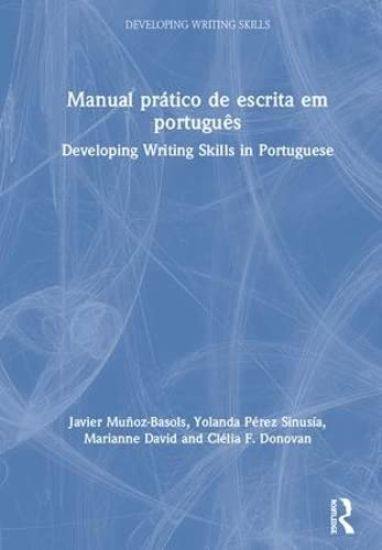
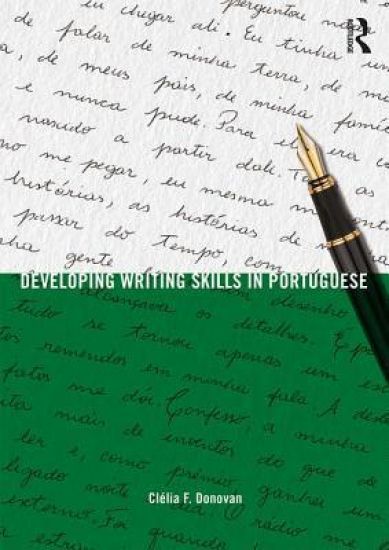
Manual prático de escrita em português/Developing Writing Skills in Portuguese provides intermediate- and advanced-level students with the necessary skills to become competent and confident writers in the Portuguese language. With a focus on writing as a craft, Manual prático de escrita em português offers a rich selection of original materials including narrative texts, expository essays, opinion pieces and newspaper articles. Each chapter covers a specific kind of writing and is designed to help tackle the material in small units. The book aids students in crafting clear, coherent and cohesive texts by means of guided practice and step-by-step activities. Suitable for use as a classroom text or as a self-study course, this book is ideal for students at level B2 – C2 of the Common European Framework for Languages or at Intermediate High – Advanced High on the ACTFL proficiency scales.
Manual prático de escrita em português

Manual prático de escrita em português

Javier Muñoz-Basols; Yolanda Pérez Sinusía; Marianne David; Clélia F. Donovan

Routledge
2019
nidottu
Manual prático de escrita em português/Developing Writing Skills in Portuguese provides intermediate- and advanced-level students with the necessary skills to become competent and confident writers in the Portuguese language. With a focus on writing as a craft, Manual prático de escrita em português offers a rich selection of original materials including narrative texts, expository essays, opinion pieces and newspaper articles. Each chapter covers a specific kind of writing and is designed to help tackle the material in small units. The book aids students in crafting clear, coherent and cohesive texts by means of guided practice and step-by-step activities. Suitable for use as a classroom text or as a self-study course, this book is ideal for students at level B2 – C2 of the Common European Framework for Languages or at Intermediate High – Advanced High on the ACTFL proficiency scales.
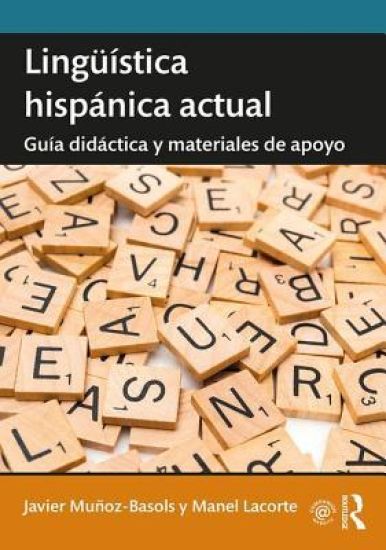
Lingüística hispánica actual

Lingüística hispánica actual

Javier Muñoz-Basols; Manel Lacorte

Routledge
2017
sidottu
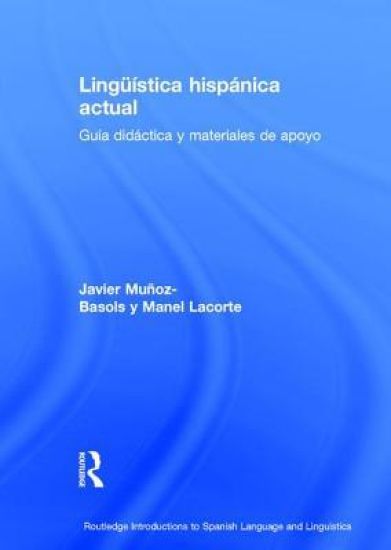
Lingüística hispánica actual provides step-by-step instructions on how to plan, design, and teach introductory Hispanic Linguistics courses. It is a versatile resource, which can be used in conjunction with Introducción a la lingüística hispánica actual: teoría y práctica. It contains an answer key for all the activities in the main textbook. It also includes additional activities, with clear and accessible explanations for students and instructors, and can accompany other existing texts and courses on Hispanic Linguistics. Features include:• A comprehensive selection of materials which gradually introduce students to the main areas of Hispanic Linguistics: General Linguistics, Phonology and Phonetics, Morphology, Syntax, Semantics and Pragmatics, History of the Spanish Language, Language Variation, and Second Language Acquisition and Language Teaching.• A wide range of carefully-crafted classroom and homework activities, essay questions and research projects to engage students and enrich their learning of Hispanic Linguistics.• Detailed guidance on how to successfully implement each activity in the classroom, suggestions for how to expand and adapt activities for different needs, and a full annotated answer key for instructors to save time planning and implementing lessons.• An extensive bilingual glossary of terms for each of the disciplines covered in the guide helps teachers introduce key concepts and terms in the classroom. Lingüística hispánica actual provides a wealth of activities specially designed to make learning Hispanic Linguistics more dynamic and enjoyable for students.
Lingüística hispánica actual

Lingüística hispánica actual

Javier Muñoz-Basols; Manel Lacorte

Routledge
2017
nidottu
Lingüística hispánica actual provides step-by-step instructions on how to plan, design, and teach introductory Hispanic Linguistics courses. It is a versatile resource, which can be used in conjunction with Introducción a la lingüística hispánica actual: teoría y práctica. It contains an answer key for all the activities in the main textbook. It also includes additional activities, with clear and accessible explanations for students and instructors, and can accompany other existing texts and courses on Hispanic Linguistics. Features include:• A comprehensive selection of materials which gradually introduce students to the main areas of Hispanic Linguistics: General Linguistics, Phonology and Phonetics, Morphology, Syntax, Semantics and Pragmatics, History of the Spanish Language, Language Variation, and Second Language Acquisition and Language Teaching.• A wide range of carefully-crafted classroom and homework activities, essay questions and research projects to engage students and enrich their learning of Hispanic Linguistics.• Detailed guidance on how to successfully implement each activity in the classroom, suggestions for how to expand and adapt activities for different needs, and a full annotated answer key for instructors to save time planning and implementing lessons.• An extensive bilingual glossary of terms for each of the disciplines covered in the guide helps teachers introduce key concepts and terms in the classroom. Lingüística hispánica actual provides a wealth of activities specially designed to make learning Hispanic Linguistics more dynamic and enjoyable for students.
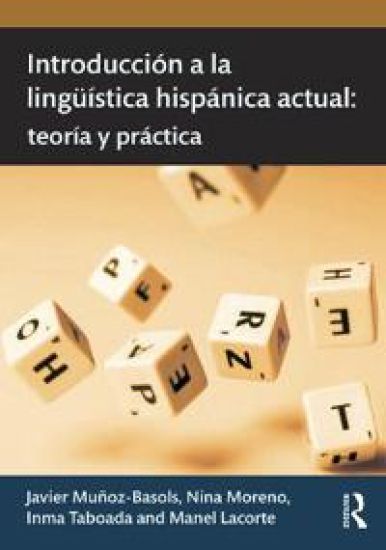
Introducción a la lingüística hispánica actual

Introducción a la lingüística hispánica actual

Javier Muñoz-Basols; Nina Moreno; Inma Taboada; Manel Lacorte

Routledge
2016
sidottu
Introducción a la lingüística hispánica actual: teoría y práctica has been specially designed for students of Spanish with little or no linguistic background, who need to understand the key concepts and constructs of Hispanic Linguistics. The book has been carefully crafted to introduce the reader to the main areas of linguistics, both theoretical and applied. General Linguistics, Phonology and Phonetics, Morphology, Syntax, Semantics and Pragmatics, History of the Spanish Language, Language Variation, and Second Language Acquisition are concisely and accurately outlined, providing a comprehensive foundation in the field. Features include: written entirely in Spanish sequenced exercises and engaging activities which facilitate the learning of each area of linguistics; emphasis on the connections between theory and the actual use of the language throughout the book;a selection of possible research projects and guidance on further reading in each chapter, giving students the necessary tools for in-depth exploration of each of the areas presented in the book;a bilingual glossary of key linguistic terms;a comprehensive e-resource with a wealth of additional materials, including audio clips and videos of the varieties of Spanish around the world, available at www.routledge.com/products/9780415631570. Written in a clear and accessible manner, Introducción a la lingüística hispánica actual is the ideal introduction for all undergraduate students of Hispanic Linguistics. The book will also be of interest to graduate students with no prior exposure to linguistics.
Introducción a la lingüística hispánica actual

Introducción a la lingüística hispánica actual

Javier Muñoz-Basols; Nina Moreno; Inma Taboada; Manel Lacorte

Routledge
2016
nidottu

Halvin toimitettuna 108,50 €

Introducción a la lingüística hispánica actual: teoría y práctica has been specially designed for students of Spanish with little or no linguistic background, who need to understand the key concepts and constructs of Hispanic Linguistics. The book has been carefully crafted to introduce the reader to the main areas of linguistics, both theoretical and applied. General Linguistics, Phonology and Phonetics, Morphology, Syntax, Semantics and Pragmatics, History of the Spanish Language, Language Variation, and Second Language Acquisition are concisely and accurately outlined, providing a comprehensive foundation in the field. Features include: written entirely in Spanish sequenced exercises and engaging activities which facilitate the learning of each area of linguistics; emphasis on the connections between theory and the actual use of the language throughout the book;a selection of possible research projects and guidance on further reading in each chapter, giving students the necessary tools for in-depth exploration of each of the areas presented in the book;a bilingual glossary of key linguistic terms;a comprehensive e-resource with a wealth of additional materials, including audio clips and videos of the varieties of Spanish around the world, available at www.routledge.com/products/9780415631570. Written in a clear and accessible manner, Introducción a la lingüística hispánica actual is the ideal introduction for all undergraduate students of Hispanic Linguistics. The book will also be of interest to graduate students with no prior exposure to linguistics.
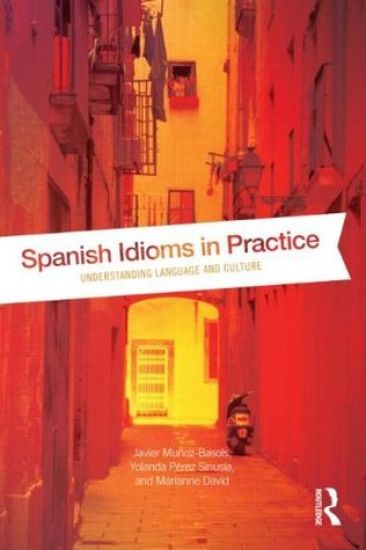
Spanish Idioms in Practice

Spanish Idioms in Practice

Javier Muñoz-Basols; Yolanda Pérez Sinusía; Marianne David

Routledge
2013
sidottu
Idiomatic expressions are the ‘salt and pepper’ of any language. They give Spanish its colour and imagery, its richness and variety. From set phrases and idioms to metaphorical expressions and proverbs, these essential components allow users to add humour and spice to their language, vividly embodying Hispanic culture while naturalizing their communication style to more closely resemble that of native speakers. Key features: Includes a selection of the most widely used idioms from Spain and Latin America; Idioms are classified into specific and easy-to-reference categories; Creative activities, exercises, mnemonic devices and learning strategies facilitate the acquisition and mastery of idiomatic language; Connections between the Spanish language and Hispanic culture are explained and illustrated; Reference tables at the end of each section highlight similarities between English and Spanish usage of idiomatic language; Original samples, as well as fragments from various Spanish-speaking countries and well-known literary works, are included to help expose students to the use of idioms in journalistic and literary writing. Practical, informative and highly entertaining, this is the ideal text for all intermediate and advanced learners of Spanish.
Spanish Idioms in Practice

Spanish Idioms in Practice

Javier Muñoz-Basols; Yolanda Pérez Sinusía; Marianne David

Routledge
2013
nidottu
Idiomatic expressions are the ‘salt and pepper’ of any language. They give Spanish its colour and imagery, its richness and variety. From set phrases and idioms to metaphorical expressions and proverbs, these essential components allow users to add humour and spice to their language, vividly embodying Hispanic culture while naturalizing their communication style to more closely resemble that of native speakers. Key features: Includes a selection of the most widely used idioms from Spain and Latin America; Idioms are classified into specific and easy-to-reference categories; Creative activities, exercises, mnemonic devices and learning strategies facilitate the acquisition and mastery of idiomatic language; Connections between the Spanish language and Hispanic culture are explained and illustrated; Reference tables at the end of each section highlight similarities between English and Spanish usage of idiomatic language; Original samples, as well as fragments from various Spanish-speaking countries and well-known literary works, are included to help expose students to the use of idioms in journalistic and literary writing. Practical, informative and highly entertaining, this is the ideal text for all intermediate and advanced learners of Spanish.
Speed Up Your Spanish

Speed Up Your Spanish

Javier Muñoz-Basols; Marianne David; Olga Núñez Piñeiro

Routledge
2009
nidottu
‘Excellent book. The chapters put together and systematise a lot of material that is often taught in an anecdotal or haphazard sort of way, if at all. Students will learn a great deal from the book and have their confidence in using Spanish considerably boosted as a result.’ – Jonathan Thacker, Merton College, University of Oxford, UK‘An invaluable, highly original and methodically sound approach to correcting and eliminating common, yet difficult-to-eliminate errors.’ – Manuel Delgado, Bucknell University, USA‘The user-friendly format and page layout makes Speed Up Your Spanish a highly practical reference source for students and teachers.’– Ma Victoria García Serrano, University of Pennsylvania, USAFalse friends, idiomatic expressions, gender and capitalization are just some of the areas that cause confusion for students of Spanish. Learning how to avoid the common errors that arise repeatedly in these areas is an essential step for successful language learning. Speed Up Your Spanish is a unique and innovative resource that identifies and explains such errors, thereby enabling students of Spanish to learn from their mistakes while enhancing their understanding of the Spanish language. Each of the nine chapters focuses on a grammatical category where English speakers typically make mistakes in Spanish. Each chapter is divided into sections that classify the concepts and errors into subcategories. Full explanations are provided throughout with clear, comprehensive examples and exercises to help the learner gain an in-depth understanding of Spanish grammar and usage. Key features: carefully selected grammar topics and examples based on the most commonly made errorsexercises throughout to reinforce learningshortcuts and mnemonic devices providing vital learning strategiesa Companion Website available at www.speedupyourspanish.com providing supplementary exercises as well as audio files. Suitable both for classroom use or self-study, Speed Up Your Spanish is the ideal resource for all intermediate learners of Spanish wishing to refine their language skills. Javier Muñoz-Basols is an Instructor in Spanish at the University of Oxford. Marianne David teaches Spanish at the Trinity School in New York. Olga Núñez Piñeiro is Senior Lecturer in Spanish at the University of Westminster.
Speed Up Your Spanish

Speed Up Your Spanish

Javier Muñoz-Basols; Marianne David; Olga Núñez Piñeiro

Routledge
2009
sidottu
‘Excellent book. The chapters put together and systematise a lot of material that is often taught in an anecdotal or haphazard sort of way, if at all. Students will learn a great deal from the book and have their confidence in using Spanish considerably boosted as a result.’ – Jonathan Thacker, Merton College, University of Oxford, UK‘An invaluable, highly original and methodically sound approach to correcting and eliminating common, yet difficult-to-eliminate errors.’ – Manuel Delgado, Bucknell University, USA‘The user-friendly format and page layout makes Speed Up Your Spanish a highly practical reference source for students and teachers.’– Ma Victoria García Serrano, University of Pennsylvania, USAFalse friends, idiomatic expressions, gender and capitalization are just some of the areas that cause confusion for students of Spanish. Learning how to avoid the common errors that arise repeatedly in these areas is an essential step for successful language learning. Speed Up Your Spanish is a unique and innovative resource that identifies and explains such errors, thereby enabling students of Spanish to learn from their mistakes while enhancing their understanding of the Spanish language. Each of the nine chapters focuses on a grammatical category where English speakers typically make mistakes in Spanish. Each chapter is divided into sections that classify the concepts and errors into subcategories. Full explanations are provided throughout with clear, comprehensive examples and exercises to help the learner gain an in-depth understanding of Spanish grammar and usage. Key features: carefully selected grammar topics and examples based on the most commonly made errorsexercises throughout to reinforce learningshortcuts and mnemonic devices providing vital learning strategiesa Companion Website available at www.speedupyourspanish.com providing supplementary exercises as well as audio files. Suitable both for classroom use or self-study, Speed Up Your Spanish is the ideal resource for all intermediate learners of Spanish wishing to refine their language skills. Javier Muñoz-Basols is an Instructor in Spanish at the University of Oxford. Marianne David teaches Spanish at the Trinity School in New York. Olga Núñez Piñeiro is Senior Lecturer in Spanish at the University of Westminster.