Kirjojen hintavertailu – 12 859 829 kirjaa ja 27 kauppaa

Kirjailija

Jay G. Blumler

Kirjat ja teokset yhdessä paikassa: 5 kirjaa, julkaisuja vuosilta 1990–2016, suosituimpiin kuuluu The Formation of Campaign Agendas. Vertaile teosten hintoja ja tarkista saatavuus suomalaisista kirjakaupoista.

5 kirjaa

Kirjojen julkaisuvuodet: 1990–2016.

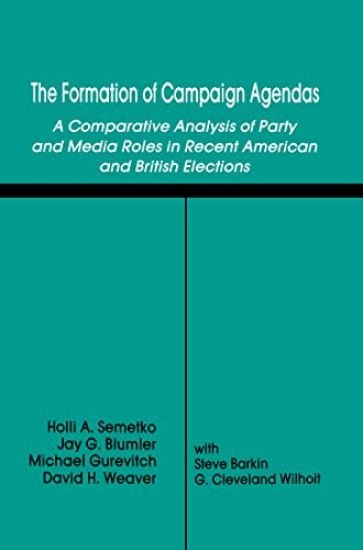
The Formation of Campaign Agendas

The Formation of Campaign Agendas

Holli A. Semetko; Jay G. Blumler; Michael Gurevitch; David H. Weaver; Steve Barkin

Routledge
2011
nidottu
This unusual volume seeks to accomplish three related goals: * to assess the extent and limits of media power in election campaigns * to extend the concept of media agenda-setting to include the contributions of powerful news sources in the process of election agenda formation * to evaluate the impact of national system variables (differences in political and media systems) on the balance of party and media forces in the formation of campaign agendas In the process, it searches for ways of measuring the discretionary power of the media in electoral politics, testing this in terms of the relative ability of journalists and politicians to shape election campaign agendas.
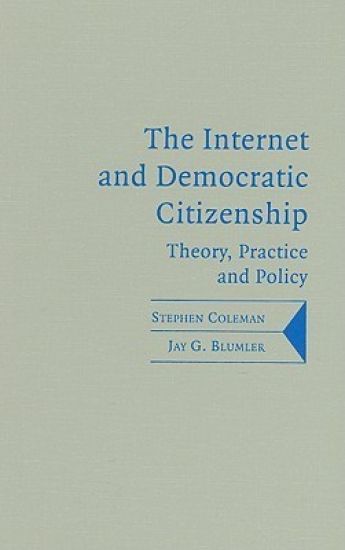
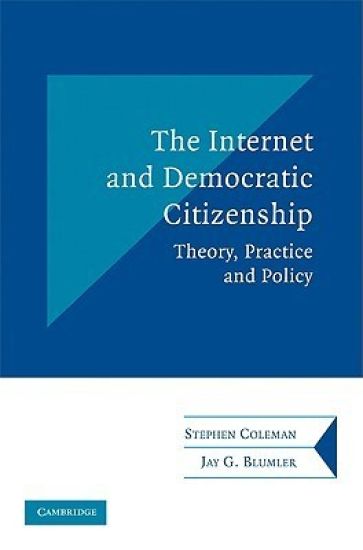
The Internet and Democratic Citizenship

The Internet and Democratic Citizenship

Stephen Coleman; Jay G. Blumler

Cambridge University Press
2009
sidottu
Relations between the public and holders of political authority are in a period of transformative flux. On the one side, new expectations and meanings of citizenship are being entertained and occasionally acted upon. On the other, an inexorable impoverishment of mainstream political communication is taking place. This book argues that the Internet has the potential to improve public communications and enrich democracy, a project that requires imaginative policy-making. This argument is developed through three stages: first exploring the theoretical foundations for renewing democratic citizenship, then examining practical case studies of e-democracy, and finally, reviewing the limitations of recent policies designed to promote e-democracy and setting out a radical, but practical proposal for an online civic commons: a trusted public space where the dispersed energies, self-articulations and aspirations of citizens can be rehearsed, in public, within a process of ongoing feedback to the various levels and centers of governance: local, national and transnational.
The Internet and Democratic Citizenship

The Internet and Democratic Citizenship

Stephen Coleman; Jay G. Blumler

Cambridge University Press
2009
pokkari
Relations between the public and holders of political authority are in a period of transformative flux. On the one side, new expectations and meanings of citizenship are being entertained and occasionally acted upon. On the other, an inexorable impoverishment of mainstream political communication is taking place. This book argues that the Internet has the potential to improve public communications and enrich democracy, a project that requires imaginative policy-making. This argument is developed through three stages: first exploring the theoretical foundations for renewing democratic citizenship, then examining practical case studies of e-democracy, and finally, reviewing the limitations of recent policies designed to promote e-democracy and setting out a radical, but practical proposal for an online civic commons: a trusted public space where the dispersed energies, self-articulations and aspirations of citizens can be rehearsed, in public, within a process of ongoing feedback to the various levels and centers of governance: local, national and transnational.
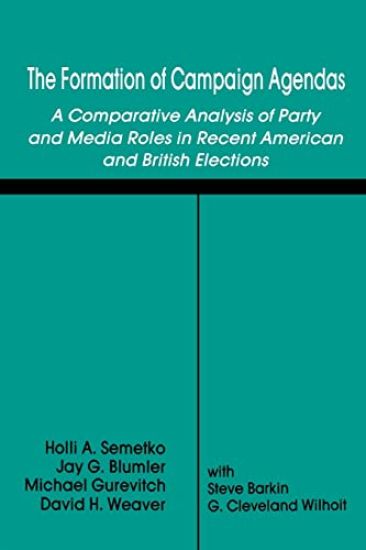
The Formation of Campaign Agendas

The Formation of Campaign Agendas

Holli A. Semetko; Jay G. Blumler; Michael Gurevitch; David H. Weaver; Steve Barkin

Routledge Member of the Taylor and Francis Group
1990
sidottu
This unusual volume seeks to accomplish three related goals: * to assess the extent and limits of media power in election campaigns * to extend the concept of media agenda-setting to include the contributions of powerful news sources in the process of election agenda formation * to evaluate the impact of national system variables (differences in political and media systems) on the balance of party and media forces in the formation of campaign agendas In the process, it searches for ways of measuring the discretionary power of the media in electoral politics, testing this in terms of the relative ability of journalists and politicians to shape election campaign agendas.
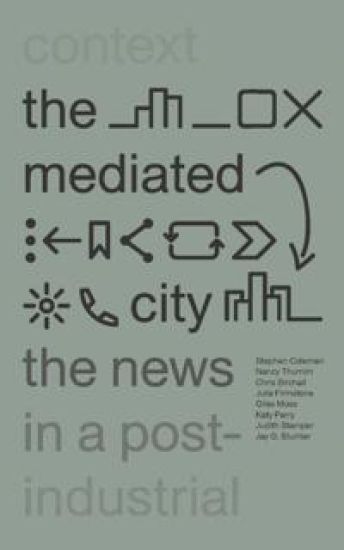
The Mediated City

The Mediated City

Stephen Coleman; Thumim Nancy; Birchall Chris; Firmstone Julie; Moss Giles; Katy Parry; Stamper Judith; Jay G. Blumler

Zed Books Ltd
2016
sidottu
How does news circulate in a major post-industrial city? And how in turn are identities and differences formed and mediated through this circulation? This seminal work is the first to offer an empirical examination, and trace a city’s pattern of, news circulation. Encompassing a comprehensive range of practices involved in producing, circulating and consuming ‘news’ and recognizing the various ways in which individuals and groups may find out, follow and discuss local issues and events, The Mediated City critiques thinking that takes the centrality of certain news media as an unquestioned starting point. By doing so, it opens up a discussion: do we know what news is? What types of media constitute it? And why does it matter?