Kirjojen hintavertailu – 12 903 725 kirjaa ja 27 kauppaa

Kirjailija

Jay M. Pasachoff

Kirjat ja teokset yhdessä paikassa: 9 kirjaa, julkaisuja vuosilta 1994–2021, suosituimpiin kuuluu The Sun. Vertaile teosten hintoja ja tarkista saatavuus suomalaisista kirjakaupoista.

9 kirjaa

Kirjojen julkaisuvuodet: 1994–2021.

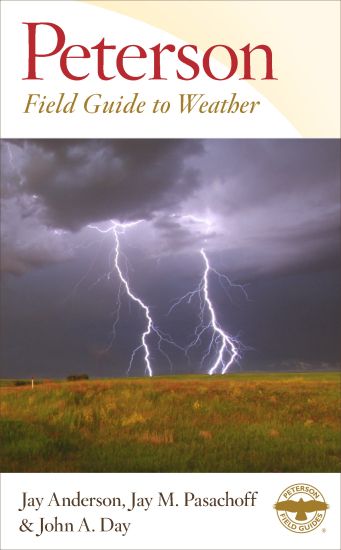
Peterson Field Guide to Weather

Peterson Field Guide to Weather

Jay Anderson; John A. Day; Jay M. Pasachoff

Mariner Books
2021
nidottu
A field guide to the weather, including clouds, storm systems, and climate change A resource for those intrigued by events in the sky--clouds, precipitation, storms, aurora, halos--and for those who follow daily weather events. Using a nontechnical approach, the authors describe the flow of energy and moisture through global and local landscapes and how they evolve into day-to-day weather. For those fascinated by the sky's colors and patterns, there are halos, rainbows, iridescent clouds, and other tapestries in the sky. For the cloud-watcher, common and unusual cloud forms are covered; for those entranced by storms, the guide includes severe thunderstorms, winter blizzards, hurricanes, hail, ice storms, and other challenges that the atmosphere inflicts. It even includes a chapter on weather in the atmospheres of the planets and the sun. More than 400 photographs illustrate visible weather, and diagrams explain the more challenging physical concepts. This book is designed for those who want to look up, marvel, and understand what they see.
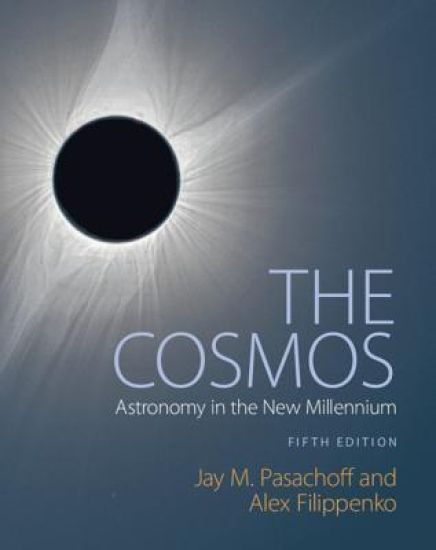
The Cosmos

The Cosmos

Jay M. Pasachoff; Alex Filippenko

Cambridge University Press
2019
pokkari

Halvin toimitettuna 86,90 €

The fifth edition of The Cosmos: Astronomy in the New Millennium provides you with the fundamentals of astronomical knowledge that have been built up over decades, with an expanded discussion of the incredible advances that are now taking place in this fast-paced field, such as New Horizons' flyby of Pluto, exoplanets, 'dark matter', and the direct detection of gravitational waves by the Laser Interferometer Gravitational-Wave Observatory (LIGO). Written in a clear and easily understandable style, this textbook has been thoroughly revised to include updated data and figures, new images from recent space missions and telescopes, the latest discoveries on supernovae, and new observations of the region around the four-million-solar-mass black hole at the center of our Milky Way Galaxy. A rich array of teaching and learning resources is available at http://thecosmos5.com. The website is regularly updated to include the latest discoveries and photographs in the field.
Cosmos

Cosmos

Roberta J. M. Olson; Jay M. Pasachoff

Reaktion Books
2019
sidottu
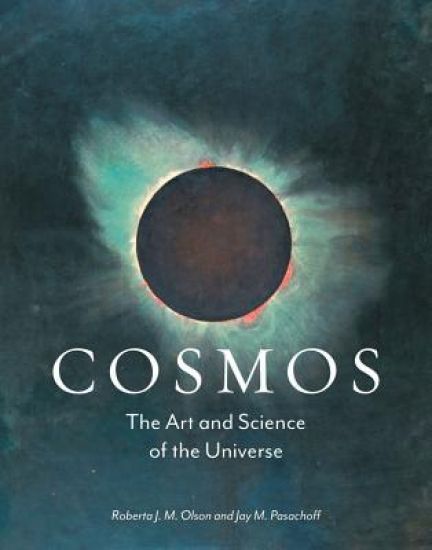
Since time immemorial, the nocturnal skies have mesmerized people, and heavenly bodies have inspired the imaginations of artists, poets, and scientists. This book showcases the superstars of the firmament and universe in sumptuous illustrations featuring paintings, sculpture, drawings, watercolours, prints, as well as plates from books, celestial diagrams, and astronomical photography. Cosmos: The Art and Science of the Universe charts the human love affair with the heavens in art and astronomy, based on sound science and insightful art and cultural history. While its illustrations are thrilling and seductive, the book also recounts the fascinating story about the quest to discover the mysteries of the universe in ten lively chapters. Embellished with new information, interpretations, and amusing anecdotes, the authors weave a rich tapestry about the interconnections in the cosmos and the efforts to understand them. A stunning book that unveils the beauty of the cosmos and its compelling story. Professors Olson and Pasachoff have been working together on the intersection of art and astronomy since the 1985-1986 passage of Halley’s Comet brought them together. They are joint authors of Fire in the Sky: Comets and Meteors, the Decisive Centuries, in British Art and Science (1998) and this book is the culmination of their decades of collaboration.
The Sun

The Sun

Jay M. Pasachoff; Leon Golub

Reaktion Books
2017
sidottu
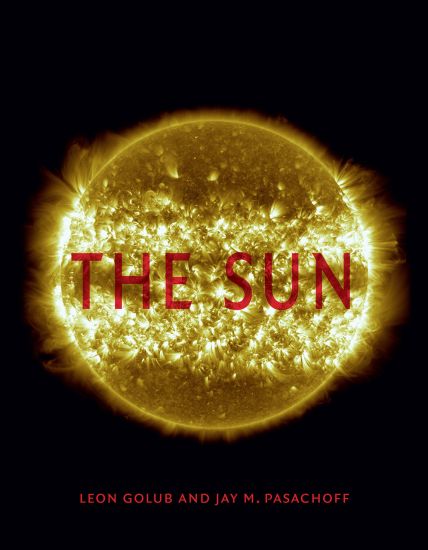
Essential for life on earth and a major influence on our environment, the Sun is also the most fascinating object in the daytime sky. Every day we feel the effect of its coming and going – literally the difference between day and night. But figuring out what the Sun is, what it’s made of, why it glows so brightly, how old it is, how long it will last – all of these take thought and observation. Leon Golub and Jay M. Pasachoff offer an engaging and informative account of what scientists know about the Sun, and the history of these discoveries. Solar astronomers have studied the Sun over the centuries both for its intrinsic interest and in order to use it as a laboratory to reveal the secrets of other stars. The authors discuss the surface of the Sun, including sunspots and their eleven-year cycle, as well as the magnetism that causes them; the Sun’s insides, as studied mainly from seismic waves that astronomers record on its surface; the outer layers of the Sun that we see from Earth only at eclipses and from spacecraft; and space weather, the radiation and particles that we on Earth receive from the Sun in flares or other ejections. Golub and Pasachoff also provide instructions on how to observe the Sun safely, and how to attend and to observe solar eclipses. Illustrated with a wide variety of beautiful solar images, this informative book will appeal to both scientists and a more general readership interested in this star at the centre of our solar system. Published in association with the Science Museum, London.
Astronomy

Astronomy

Jay M. Pasachoff

Mariner Books
2014
nidottu
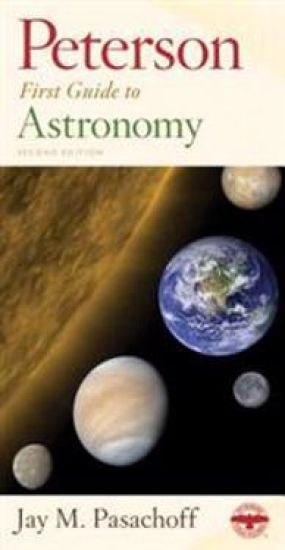
The Peterson First Guide to Astronomy provides an introduction to astronomy for beginners, featuring photographs taken from the MESSENGER spacecraft and predictions for meteor showers, comets, and eclipses. The book encourages readers to go out into the field, using the maps that show the positions of the stars throughout the year as a guide. This edition maintains the easy-to-use condensed format of the original, and makes it easy to proceed to the full-fledged Peterson Field Guide to Stars and Planets for more in-depth information.
Nearest Star

Nearest Star

Leon Golub; Jay M. Pasachoff

Cambridge University Press
2014
sidottu
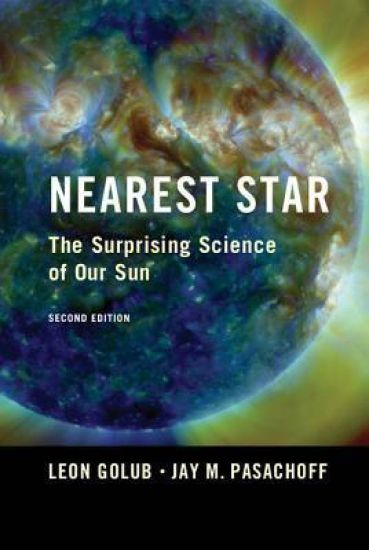
How did the Sun evolve, and what will it become? What is the origin of its light and heat? How does solar activity affect the atmospheric conditions that make life on Earth possible? These are the questions at the heart of solar physics, and at the core of this book. The Sun is the only star near enough to study in sufficient detail to provide rigorous tests of our theories and help us understand the more distant and exotic objects throughout the cosmos. Having observed the Sun using both ground-based and spaceborne instruments, the authors bring their extensive personal experience to this story revealing what we have discovered about phenomena from eclipses to neutrinos, space weather, and global warming. This second edition is updated throughout, and features results from the current spacecraft that are aloft, especially NASA's Solar Dynamics Observatory, for which one of the authors designed some of the telescopes.
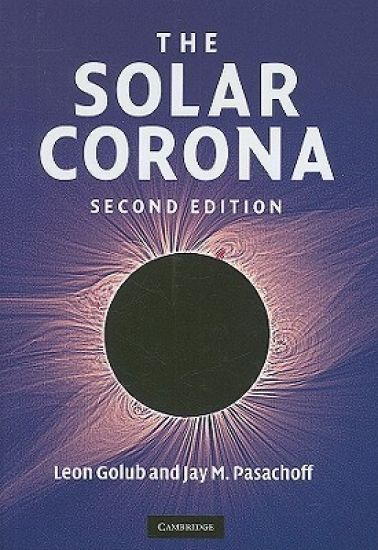
The Solar Corona

The Solar Corona

Leon Golub; Jay M. Pasachoff

Cambridge University Press
2009
sidottu
Intended for graduate students and astronomers seeking an introduction to coronal physics, this textbook strikes a balance between the observational and theoretical aspects of the subject. This second edition takes into account the major observational and theoretical developments of recent years to provide an up-to-date treatment of our understanding of the solar corona. After reviewing the latest observations of the solar corona, the authors explain how the studies have advanced and shaped our understanding of coronal physics. The textbook introduces a wide variety of exciting physics, including dynamo theory and magnetohydrodynamics, and shows how the transient effects of the solar cycle affect space weather. Each subject area is introduced using basic physics, and refers readers to fundamental papers on the topic, key new studies in each area, and extensive discussions in recent review articles.
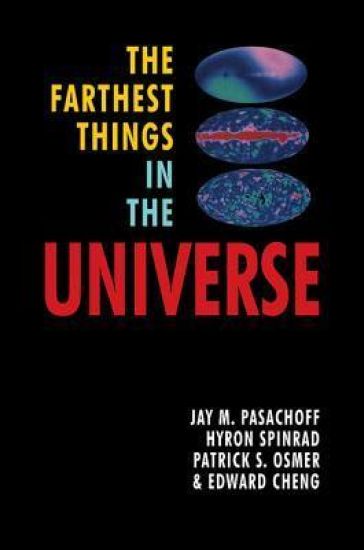
The Farthest Things in the Universe

The Farthest Things in the Universe

Jay M. Pasachoff; Hyron Spinrad; Patrick Osmer; Edward S. Cheng

Cambridge University Press
1994
pokkari
The quest for the farthest objects in the Universe remains one of the most challenging to modern astronomy. Peering deeper and deeper into space reveals the most distant and powerful objects known and so probes back to the embryonic epochs of the Universe not long after its birth in the Big Bang. Four world experts - chosen for their ability to communicate research astronomy to popular audiences - each contribute a chapter to this lucid survey. In clear terms they bring to the general audience the excitement and challenge of studying the Universe on the largest scales. They address the fundamental issues of scale in the Universe; the ghostly etchings seen on the cosmic background radiation; quasars and their evolution; and galaxy birth. This survey offers an exceptional chance for the general audience to share in the excitement of today’s forefront research of the early Universe in an accessible and stimulating way.
The Farthest Things in the Universe

The Farthest Things in the Universe

Jay M. Pasachoff; Hyron Spinrad; Patrick Osmer; Edward S. Cheng

Cambridge University Press
1994
sidottu
The quest for the farthest objects in the Universe remains one of the most challenging to modern astronomy. Peering deeper and deeper into space reveals the most distant and powerful objects known and so probes back to the embryonic epochs of the Universe not long after its birth in the Big Bang. Four world experts - chosen for their ability to communicate research astronomy to popular audiences - each contribute a chapter to this lucid survey. In clear terms they bring to the general audience the excitement and challenge of studying the Universe on the largest scales. They address the fundamental issues of scale in the Universe; the ghostly etchings seen on the cosmic background radiation; quasars and their evolution; and galaxy birth. This survey offers an exceptional chance for the general audience to share in the excitement of today’s forefront research of the early Universe in an accessible and stimulating way.