Kirjojen hintavertailu – 12 903 725 kirjaa ja 27 kauppaa
Kirjailija
Jean Bethke Elshtain
Kirjat ja teokset yhdessä paikassa: 14 kirjaa, julkaisuja vuosilta 1990–2024, suosituimpiin kuuluu Just War Against Terror. Vertaile teosten hintoja ja tarkista saatavuus suomalaisista kirjakaupoista.
Jean Bethke Elshtain, the 1996 Hesburgh Lecturer on Ethics and Public Policy, challenges a powerful strand in western political thinking that separates the political and ethical realms. This is manifest above all in the claim that although the rule of justice might pertain between citizens, force is the ultimate arbiter between states and would-be states. But this claim fails to capture the many complex ways that political bodies deal with one another through norms and rules and not simply by force. Elshtain captures this alternative dimension by examining two dominant currents in international politics: sovereignty and nationalism. She shows the ways in which the historic understanding of sovereignty was deeply dependent on theological concepts, and demonstrates that much of contemporary life is marked by the mapping of concepts of sovereignty onto our understanding, not just of states but of persons. Over the years, many experts predicted confidently that the power of nationalism would abate as "rationalism" and "internationalism" spread. Elshtain explains why this prediction was flawed and accounts for the emergence of today's "new nationalism," the political passion of our time. She asks, Knowing the terrible cost of nationalistic excess, is there a defensible version of national identity and loyalty? With the late Sir Isaiah Berlin, Elshtain argues "yes." In her provocative epilogue, Elshtain asks whether there is room for forgiveness in international politics, and concludes on the speculative and hopeful note that ways might be found to break repetitive cycles of vengeance. Together with Elshtain's lectures, this volume offers responses by Fred Dallmayr and Martha Merritt and a foreword by Raimo Väyrynen, John M. Regan, Jr. Director of the Kroc Institute.
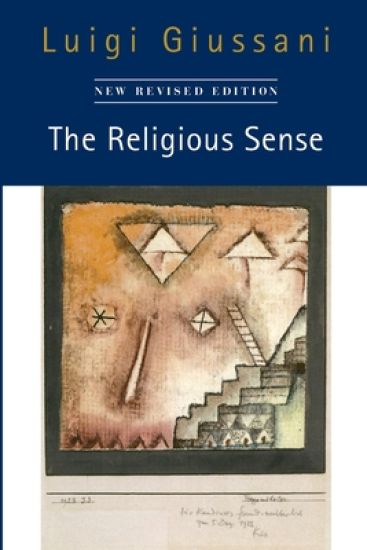
The Religious Sense, the fruit of many years of dialogue with students, is an exploration of the search for meaning in life. Luigi Giussani shows that the nature of reason expresses itself in the ultimate need for truth, goodness, and beauty. These needs constitute the fabric of the religious sense, which is evident in every human being everywhere and in all times. So strong is this sense that it leads one to desire that the answer to life’s mystery might reveal itself in some way. Giussani challenges us to penetrate the deepest levels of experience to discover our essential selves, breaking through the layers of opinions and judgments that have obscured our true needs. Asserting that all the tools necessary for self-discovery are inherent within us, he focuses primarily on reason, not as narrowly defined by modern philosophers, but as an openness to existence, a capacity to comprehend and affirm reality in all of its dimensions. Part of the so-called new religious revival, The Religious Sense avoids any sentimental or irrational reduction of the religious experience. It is a forthright and refreshing call to reassess our lives. In this revised edition, John Zucchi offers a new translation of this seminal and best-selling work.
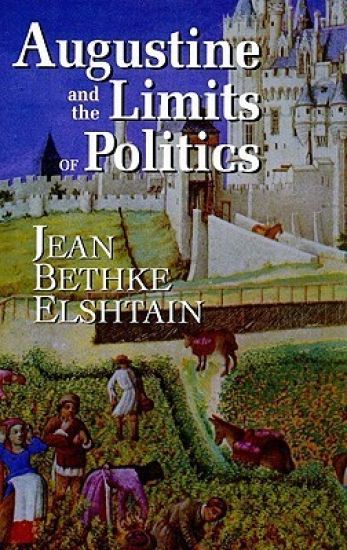
Now with a new foreword by Patrick J. Deneen. Jean Bethke Elshtain brings Augustine's thought into the contemporary political arena and presents an Augustine who created a complex moral map that offers space for loyalty, love, and care, as well as a chastened form of civic virtue. The result is a controversial book about one of the world's greatest and most complex thinkers whose thought continues to haunt all of Western political philosophy. What is our business "within this common mortal life?" Augustine asks and bids us to ask ourselves. What can Augustine possibly have to say about the conditions that characterize our contemporary society and appear to put democracy in crisis? Who is Augustine for us now and what do his words have to do with political theory? These are the underlying questions that animate Jean Bethke Elshtain's fascinating engagement with the thought and work of Augustine, the ancient thinker who gave no political theory per se and refused to offer up a positive utopia. In exploring the questions, Why Augustine, why now? Elshtain argues that Augustine's great works display a canny and scrupulous attunement to the here and now and the very real limits therein. She discusses other aspects of Augustine's thought as well, including his insistence that no human city can be modeled on the heavenly city, and further elaborates on Hannah Arendt's deep indebtedness to Augustine's understanding of evil. Elshtain also presents Augustine's arguments against the pridefulness of philosophy, thereby linking him to later currents in modern thought, including Wittgenstein and Freud.
Jean Bethke Elshtain advocates "just war" in times of crisis and mounts a reasoned attack against the anti-war contingent in American intellectual life. Advocating an ethic of responsibility, Elshtain forces us to ask tough questions not only about the nature of terrorism, but about ourselves. This paperback edition features a new introduction by the author, addressing the Iraq war and other events in the Middle East.
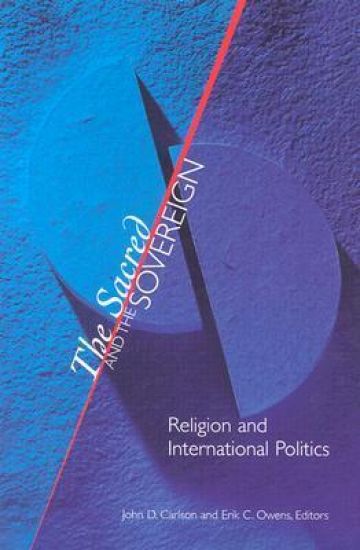
Until September 11th, 2001, few in the West fully appreciated the significance of religion in international politics. The terrible events of that day refocused our attention on how thoroughly religion and politics intermingle, sometimes with horrific results. But must this intermingling always be so deadly? The Sacred and the Sovereign brings together leading voices to consider the roles that religion should-and should not-play in a post-Cold War age distinguished by humanitarian intervention, terrorism, globalization, and challenges to state sovereignty. But these challenges to state sovereignty have deep and abiding roots in religion that invite us to revisit just what values we hold sacred. Offsetting the commonly shared idea that religion is politics' perennial nemesis, this volume demonstrates that religious traditions, institutions, and ideas are essential elements of the political quest for human rights, peace, order, legitimacy, and justice. The Sacred and the Sovereign brings distinguished scholars of religious studies, theology, and politics together with ranking members of the military and government to reflect seriously about where-and if-safe boundaries can be drawn between religion and politics in the international arena.
Jane Addams was a prolific and elegant writer. Her twelve books consist largely of published essays, but to appreciate her life work one must also read her previously uncollected speeches and editorials. This artfully compiled collection begins with Addams's youthful Junior Class Oration on women as "Breadgivers," features thoughtful examinations of topics as diverse as "Tolstoy and Gandhi" and "The Public School and the Immigrant Child," and even includes popular essays on "The Subtle Problems of Charity," from The Atlantic Monthly, and "Need a Woman Over Fifty Feel Old?" from Ladies' Home Journal. Along with the writings themselves, Elshtain's insightful commentary offers powerful evidence of Addams's remarkable ability to frame social problems in an ethical context, her unwillingness to succumb to ideological dogma, her political courage, and her lifelong devotion to civic and moral life.
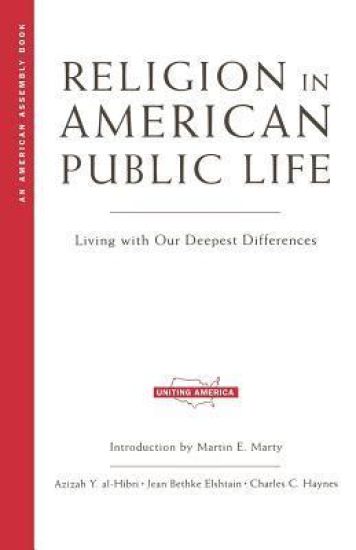
Raise any number of public issues—health care, education, welfare—and religious beliefs inevitably shape Americans' viewpoints. On certain topics the introduction of religion can be explosive. This book discusses how we can and why we should hear religious voices in the public square. An American Assembly Book.
The "City of God" or the "City of Man"? This is the choice St. Augustine offered 1500 years ago--and according to Pierre Manent the modern West has decisively and irreversibly chosen the latter. In this subtle and wide-ranging book on the Western intellectual and political condition, Manent argues that the West has rejected the laws of God and of nature in a quest for human autonomy. But in declaring ourselves free and autonomous, he contends, we have, paradoxically, lost a sense of what it means to be human. In the first part of the book, Manent explores the development of the social sciences since the seventeenth century, portraying their growth as a sign of increasing human "self-consciousness." But as social scientists have sought to free us from the intellectual confines of the ancient world, he writes, they have embraced modes of analysis--economic, sociological, and historical--that treat only narrow aspects of the human condition and portray individuals as helpless victims of impersonal forces. As a result, we have lost all sense of human agency and of the unified human subject at the center of intellectual study. Politics and culture have come to be seen as mere foam on the tides of historical and social necessity. In the second half of the book, titled "Self-Affirmation," Manent examines how the West, having discovered freedom, then discovered arbitrary will and its dangers. With no shared touchstones or conceptions of virtue, for example, we have found it increasingly hard to communicate with each other. This is a striking contrast to the past, he writes, when even traditions as different as the Classical and the Christian held many of these conceptions in common. The result of these discoveries, according to Manent, is the disturbing rootlessness that characterizes our time. By gaining autonomy from external authority, we have lost a sense of what we are. In "giving birth" to ourselves, we have abandoned that which alone can nurture and sustain us. With penetrating insight and remarkable erudition, Manent offers a profound analysis of the confusions and contradictions at the heart of the modern condition.
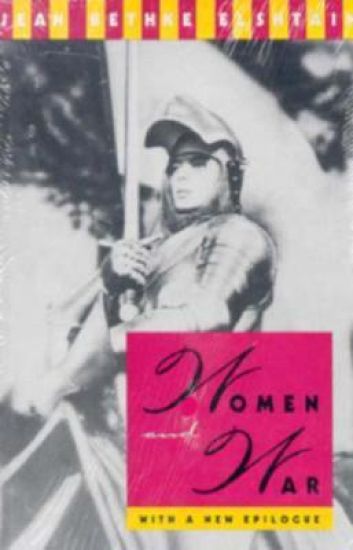
Jean Elshtain examines how the myths of Man as "Just Warrior" and Woman as "Beautiful Soul" serve to recreate and secure women's social position as noncombatants and men's identity as warriors. Elshtain demonstrates how these myths are undermined by the reality of female bellicosity and sacrificial male love, as well as the moral imperatives of just wars.
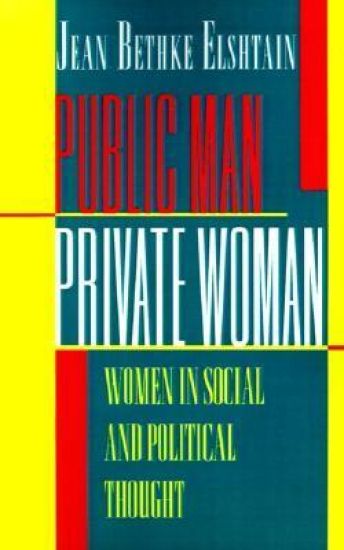
Focusing on the Western philosophical tradition and the work of contemporary feminists, Jean Elshtain explores the general tendency to assert the primacy of the public world-the political sphere dominated by men-and to denigrate the private world-the familial sphere dominated by women. She offers her own positive reconstruction of the public and the private in a feminist theory that reaffirms the importance of the family and envisions an "ethical polity."
Each chapter of this book treats a particular historical or contemporary topic of civic concern. Some are centered on current family crises and issues (the family wage, child abuse, the new eugenics ) while others look to the wider national and international polity. Yet each, insistently, returns to common themes: the many faces and forms of power; struggles for autonomy; the need for human sociality and community. Elshtain s essays on controversial domestic subjects demonstrate her independence of mind, her understanding of politics as the art of the possible, and her openness to debate. In the last section, related essays on women s power and powerlessness, on patriotism, and on just war track a movement from domestic politics to foreign affairs. They are cautionary tales which simultaneously express realizable hopes and honor those, like the Mothers of the Disappeared in Argentina, who have taught us, through their desperation and triumph, what it means to fashion a politics of hope and justice against a politics of vengeance and despair."