
Kirjailija
Jean-Christophe Bailly
Kirjat ja teokset yhdessä paikassa: 8 kirjaa, julkaisuja vuosilta 2011–2026, suosituimpiin kuuluu A Silent Apostrophe. Vertaile teosten hintoja ja tarkista saatavuus suomalaisista kirjakaupoista.
8 kirjaa
Kirjojen julkaisuvuodet: 2011–2026.
The City in the Distance
Jean-Luc Nancy; Jean-Christophe Bailly
FORDHAM UNIVERSITY PRESS
2024
sidottu
FINALIST, 38th ANNUAL FRENCH-AMERICAN FOUNDATION TRANSLATION PRIZE Exploring the ever-changing philosophy of city life with Jean-Luc Nancy In The City in the Distance, Jean-Luc Nancy embarks on nothing less than a philosophy of the city. Drawing on his widely discussed accounts of sense and of the fraught question of community, Nancy views the city as the site of a disposition that is constantly undergoing metamorphoses. Far from an abstract account, Nancy attends in the most concrete way possible to the workings of a city not typically taken as paradigmatic, Los Angeles. As Jean-Christophe Bailly suggests in his foreword, Nancy joins Walter Benjamin in thinking the city not from an external vantage point, but on its own terms.
The City in the Distance
Jean-Luc Nancy; Jean-Christophe Bailly
FORDHAM UNIVERSITY PRESS
2024
pokkari
FINALIST, 38th ANNUAL FRENCH-AMERICAN FOUNDATION TRANSLATION PRIZE Exploring the ever-changing philosophy of city life with Jean-Luc Nancy In The City in the Distance, Jean-Luc Nancy embarks on nothing less than a philosophy of the city. Drawing on his widely discussed accounts of sense and of the fraught question of community, Nancy views the city as the site of a disposition that is constantly undergoing metamorphoses. Far from an abstract account, Nancy attends in the most concrete way possible to the workings of a city not typically taken as paradigmatic, Los Angeles. As Jean-Christophe Bailly suggests in his foreword, Nancy joins Walter Benjamin in thinking the city not from an external vantage point, but on its own terms.
A compelling and innovative reflection on the way photography captures and condenses time Two photographs, connected by a ladder, separated by a century. First, William Henry Fox Talbot photographed a faithfully realistic image of a ladder against a haystack in the English countryside. One hundred years later, an anonymous photographer captured another ladder, "photographed" alongside an incinerated man by the blinding light of the atomic bomb. These two images underpin a poetic and theoretical reflection on the origins of photographic technique, the imaginative power of montage, and the relation of photography to time itself in Jean-Christophe Bailly's The Instant and Its Shadow, translated into English for the very first time. A rare find of intellectual caliber and theoretical rigor, The Instant and Its Shadow pursues a unique and powerful reflection on the first hundred years of photography's history and on the essence of the photographic art in general. Inspired by the unexpected coming together of these two iconic images, the book begins by retracing Talbot's invention of the photographic calotype in the early nineteenthcentury, highlighting the paradox that saw Talbot wishing to imitate the representative arts of painting and drawing while simultaneously liberating the image from any imitative paradigm. This analysis leads Bailly to elucidate photography's relation to material and visual reality. A meditation on photography's seeming ability to stop time follows, concluding with the photographs of Hiroshima and the photographic nature of the atomic bomb. Building on an inspired juxtaposition of The Haystack with the Hiroshima photographs, the book becomes a testament to the potency of photomontage, arguing that "the more singular an image, the greater its connective power." Bailly's book is at once a lyrical homage to some of the founding texts of photographic theory and a startling reminder of the uncanny power of photography itself. Part theoretical reflection, part lyrical reverie, The Instant and Its Shadow is packed with profound and stellar insights about the medium.
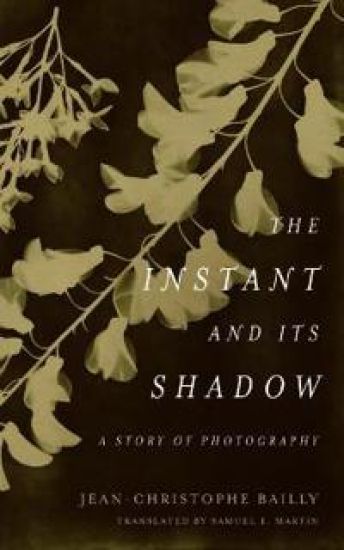
A compelling and innovative reflection on the way photography captures and condenses time Two photographs, connected by a ladder, separated by a century. First, William Henry Fox Talbot photographed a faithfully realistic image of a ladder against a haystack in the English countryside. One hundred years later, an anonymous photographer captured another ladder, "photographed" alongside an incinerated man by the blinding light of the atomic bomb. These two images underpin a poetic and theoretical reflection on the origins of photographic technique, the imaginative power of montage, and the relation of photography to time itself in Jean-Christophe Bailly's The Instant and Its Shadow, translated into English for the very first time. A rare find of intellectual caliber and theoretical rigor, The Instant and Its Shadow pursues a unique and powerful reflection on the first hundred years of photography's history and on the essence of the photographic art in general. Inspired by the unexpected coming together of these two iconic images, the book begins by retracing Talbot's invention of the photographic calotype in the early nineteenthcentury, highlighting the paradox that saw Talbot wishing to imitate the representative arts of painting and drawing while simultaneously liberating the image from any imitative paradigm. This analysis leads Bailly to elucidate photography's relation to material and visual reality. A meditation on photography's seeming ability to stop time follows, concluding with the photographs of Hiroshima and the photographic nature of the atomic bomb. Building on an inspired juxtaposition of The Haystack with the Hiroshima photographs, the book becomes a testament to the potency of photomontage, arguing that "the more singular an image, the greater its connective power." Bailly's book is at once a lyrical homage to some of the founding texts of photographic theory and a startling reminder of the uncanny power of photography itself. Part theoretical reflection, part lyrical reverie, The Instant and Its Shadow is packed with profound and stellar insights about the medium.
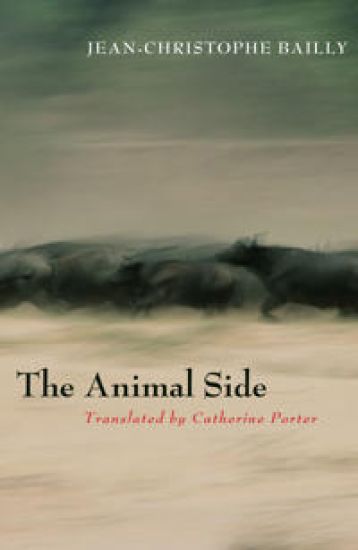
The Animal Side is a manifesto on the importance of animals for human thought. It attempts to characterize the importance, for human beings, of the fact that animals exist. Adopting a philosophical and poetic approach, the book seeks to show that animals' ways of inhabiting the earth are, for human consciousness, an expansion and an exploration of what philosophers and poets have tried to name by speaking of the Open. Beginning with the story of an encounter with a deer on a road at night, the book proceeds by showing that, beyond the diversity of animal life and the ways animals differ from human beings, there is a "layer of the perceptible" on which we all draw, humans and animals alike, in our own ways. At present, however, this layer itself is at risk. Thus the book can also be read as a defense and illustration of animals' modes of being, and as a plea for their survival.

The Animal Side is a manifesto on the importance of animals for human thought. It attempts to characterize the importance, for human beings, of the fact that animals exist. Adopting a philosophical and poetic approach, the book seeks to show that animals' ways of inhabiting the earth are, for human consciousness, an expansion and an exploration of what philosophers and poets have tried to name by speaking of the Open. Beginning with the story of an encounter with a deer on a road at night, the book proceeds by showing that, beyond the diversity of animal life and the ways animals differ from human beings, there is a "layer of the perceptible" on which we all draw, humans and animals alike, in our own ways. At present, however, this layer itself is at risk. Thus the book can also be read as a defense and illustration of animals' modes of being, and as a plea for their survival.