Kirjailija
Jean Cocteau
Kirjat ja teokset yhdessä paikassa: 63 kirjaa, julkaisuja vuosilta 1951–2026, suosituimpiin kuuluu Fiche de lecture La Difficulté d'être de Jean Cocteau (Analyse littéraire de référence et résumé complet). Vertaile teosten hintoja ja tarkista saatavuus suomalaisista kirjakaupoista.
63 kirjaa
Kirjojen julkaisuvuodet: 1951–2026.


Cinquanti me anniversaire de la mort de Jean CocteauIsabeau de Bavi re, Jeanne d'Arc, Marie de M dicis, Madame de Pompadour, Marie-Antoinette, Sarah Bernhardt ne furent pas toutes couronn es, mais aucune ne manquait de noblesse, d'esprit, de courage. Dans cette galerie d di e l'Eternel f minin, Cocteau esquisse la pointe s che vingt portraits d'h ro nes qui firent l'histoire, la litt rature, le th tre, la mode et... l'amour.
English summary: Jean Cocteau was always interested in music, as shown by these 310 texts written over the course of the artist's life. This critical edition of Cocteau's writings present his thoughts on musical subjects as diverse as Russian ballet, classical composers, jazz, and music-hall, as well as his own musical pieces and shows. French text. French description: Jean Cocteau s'est toujours interesse a la musique. Les 310 textes qui en temoignent se trouvent rassembles ici pour la premiere fois en un volume; le premier date de 1910, le dernier de 1963. Divers themes recurrents y apparaissent: les Ballets russes, ses promoteurs, ses danseurs ou ses ballets (Diaghilev, Misia Sert, Leon Bakst, Vaslav Nijinsky, Ida Rubinstein, Salome, Scheherazade, L'Apres-midi d'un faune); les compositeurs (Satie, Stravinsky, Ravel, Debussy, Le Groupe des Six); les artistes de varietes (Mistinguett, Marianne Oswald, Maurice Chevalier, Edith Piaf, Charles Trenet); le jazz, le music-hall. Et bien entendu, Cocteau s'etend aussi sur ses propres spectacles: Le Dieu bleu, Parade, Les Maries de la Tour Eiffel, Le Boeuf sur le toit, Le Jeune Homme et la Mort. Cette edition critique fournit pour l'ensemble de ces textes les variantes significatives des manuscrits et des differentes publications. D'abondantes annotations restituent le contexte des personnes et des oeuvres citees. L'ouvrage est accompagne de 137 illustrations originales de la main du poete.
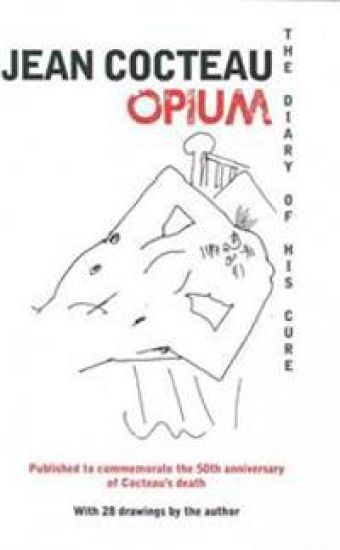
Jean Cocteau is regarded as one of France's greatest men of arts and letters. Opium is perhaps his most celebrated piece of non-fiction, a truly gripping account of his drug addiction and cure. The masterly illustrations also contained in this handsome volume, combined with his vivid, luxuriant prose can give no finer rendering of the agonies - and ecstasies - of addiction.
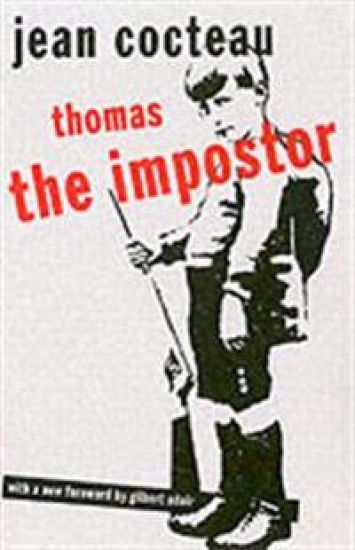
Too young to fight, he assumes for himself a noble ancestry and a few extra years and becomes a soldier. In this guise he meets the society star Princess de Bormes and her impressionable daughter Henriette. While the princess pursues charity work with the wounded, Henriette falls in love with Guillaume. However, Guillaume, resplendent in army uniform and issued with a shiny revolver, is lost like a child in a fantasy land of their own creation. At the novel's denouement he clings to his imposture but in mind, if not body, he has grasped the real meaning of war. Jean Cocteau's visionary novel is a 'hymn to the cult of youth' in which the First World War battlefields become an exaggerated spectacle where fiction and reality are inseparable.
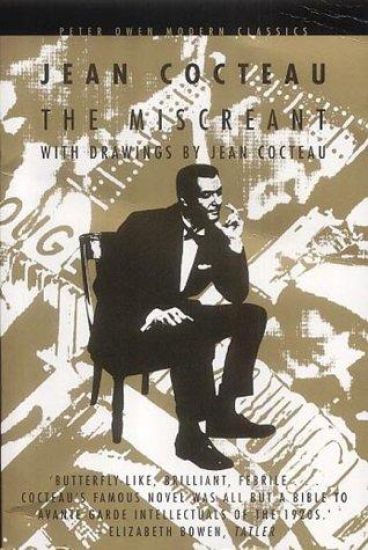
Jacques Forestier, the central character of Cocteau's famous first novel from 1921, is a parasite and dilettante who responds readily to beauty in both sexes. Leaving his provincial family he comes to Paris to study for his degree. Indulging in a life of dissipation with a group of students and their mistresses, he falls in love with Germaine, a chorus girl kept by a rich banker. The affair, doomed from the start, forces Jacques to come to terms not so much with society as he finds it but with himself.
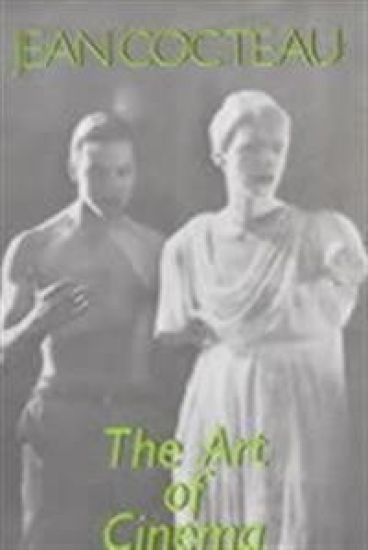
This posthumous collection of writings illuminates Cocteau's own work for the cinema with detailed discussions of his aims, responses to criticism and his reflections on the relationship between poetry, theatre and film. He also comments on the movie stars he admires-Marlene Dietrich, James Dean, Brigitte Bardot-together with such great directors as Charlie Chaplin and Orson Welles.
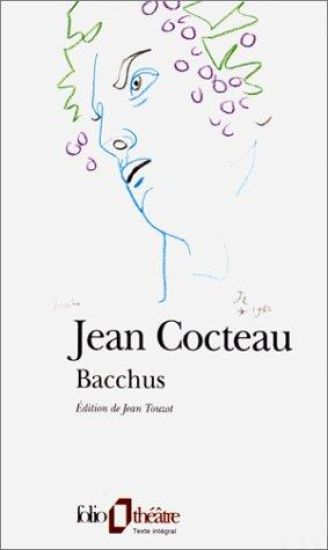
En 1523, en Allemagne, on couronne un paysan, Hans, qui sera, sous le nom de Bacchus, roi pendant sept jours. Il se lance dans de grandes réformes, se réclame d’un Christ révolutionnaire, ami du peuple, dont il soulève pourtant la colère. Il finit mal. En 1951, Cocteau, au sommet de sa gloire, et qui s’est imprégné des livres sur la Réforme et Luther, propose, par la bouche de son héros, une explication de l’univers, où la vérité apparaît comme la valeur suprême. À la scène, l’écrivain a toujours représenté un éternel suspect (lui-même ?), selon des procédés dramatiques éprouvés, jusqu’au meurtre final. Ici, l’actualité compte autant que l’Histoire, par les attaques contre l’Église catholique, les revendications ouvrières, le rejet radical de l’ordre établi, l’évocation du désarroi de la jeunesse. Bacchus est, avec La Machine infernale, la pièce la plus importante de celui qui peindra, à la chapelle de Milly, le Christ en croix et le Christ ressuscité.
This student edition consists of the French text of Cocteau's Orphee with English introduction and explanatory notes.
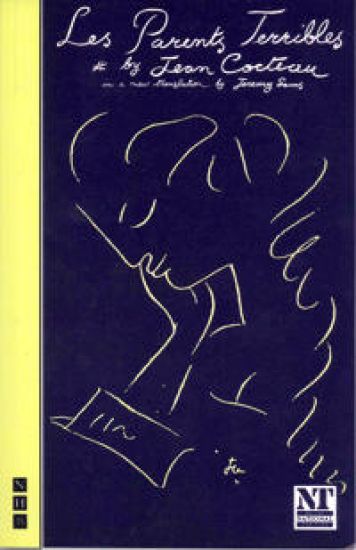
Written in eight opium-sodden days, Jean Cocteau's Les Parents Terribles is a frank, ironic, bruisingly melodramatic play dealing with incest and the diseased love from which it stems. The play was first performed at the Théâtre des Ambassadeurs, Paris, in November 1938. Its run was soon terminated amid accusations of immorality, and the production was transferred to the Théâtre des Bouffes-Parisiens in January 1939, where it continued until the outbreak of World War II. This English version by Jeremy Sams was first performed at the National Theatre, London, in 1994, directed by Sean Mathias. This edition of the play includes an introduction by Simon Callow.
A modern, accessible translation of Cocteau's monologue Le Bel Indifferent which combines black humour and tragedy. The woman awaits the return of her lover, a notorious gigolo. As the hours tick by she becomes increasingly frustrated. When Emile finally arrives he calmly ignores her outburst, preparing to leave again as the woman rushes to the window.-1 woman, 1 man