
Kirjojen hintavertailu – 12 859 819 kirjaa ja 27 kauppaa

Kirjailija

Jean-François Lejeune

Kirjat ja teokset yhdessä paikassa: 2 kirjaa, julkaisuja vuodelta 2021, suosituimpiin kuuluu Cuban Modernism. Vertaile teosten hintoja ja tarkista saatavuus suomalaisista kirjakaupoista.

Nimi esiintyy myös muodoissa: Jean-Francois Lejeune

2 kirjaa

Cuban Modernism

Cuban Modernism

Victor Deupi; Jean-François Lejeune

Birkhauser
2021
sidottu
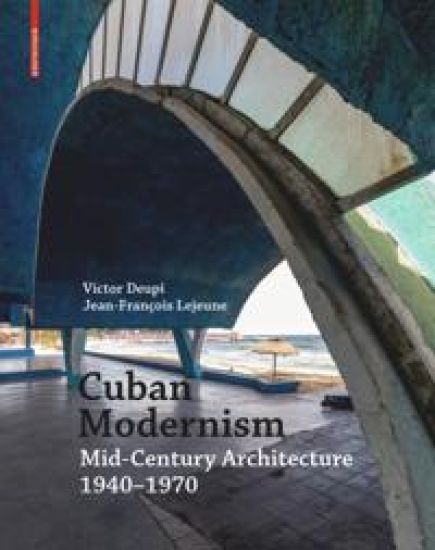
In the 20th century, modern architecture thrived in Cuba and a wealth of buildings was realized prior to the revolution 1959 and in its wake. The designs comprise luxurious nightclubs and stylish hotels, sports facilities, elegant private homes and apartment complexes. Drawing on the vernacular, their architects defined a way to be modern and Cuban at the same time – creating an architecture oscillating between tradition and avantgarde. Audacious concrete shells, curving ramps, elegant brises-soleils and a fluidity of interior and exterior spaces are characteristic of an airy, often colorful architecture well-suited to life in the tropics. New photographs and drawings were specially prepared for this publication. A biographical survey portraits the 40 most important Cuban architects of the era.
Rural Utopia and Water Urbanism

Rural Utopia and Water Urbanism

Jean-Francois Lejeune

DOM Publishers
2021
pokkari
Post-Civil War Spain used the countryside as locus and symbol for the reconstruction and modernisation of the state. The Modern Village in Franco’s Spain studies the reconstruction of the towns devastated between 1936 and 1939. It analyses the ideological, political, and urbanistic principles of Franco’s hydro-social programme of modernisation of the countryside through the creation of man-made landscapes (Kulturlandschaften) of dams, irrigation canals, electric power plants, and new settlements – a genuine experiment in water urbanism. The consequent strategy of interior colonisation entailed the construction of 300 new villages or pueblos, each designed as a ‘rural utopia’ centred on a plaza mayor, which embodied, between tradition and modernity, the political ideal of civil life under the national-catholic regime. In the 1950s – 1960s, a new generation of architects, including José Luis Fernández del Amo, Alejandro de la Sota, and Antonio Fernández Alba, reimagined the pueblos as platforms of urban and architectonic experimentation in their search for an abstracted rural vernacular and an organic urban form merging with the landscape.