Kirjojen hintavertailu – 12 903 725 kirjaa ja 27 kauppaa
Kirjailija
Jean-François Mattéi
Kirjat ja teokset yhdessä paikassa: 6 kirjaa, julkaisuja vuosilta 1994–2024, suosituimpiin kuuluu Le Procès de l'Europe: Grandeur Et Misère de la Culture Européenne. Vertaile teosten hintoja ja tarkista saatavuus suomalaisista kirjakaupoista.
Nimi esiintyy myös muodoissa: Jean-Francois Mattei, Jean-François Mattei
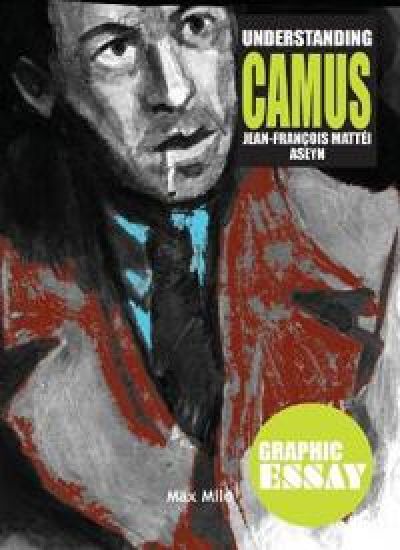
Albert Camus fait l'objet de nombreux malentendus. Jean-Fran ois Matt i propose de les dissiper en nous offrant une lecture novatrice du travail de ce philosophe. Il nous d montre que c'est en abordant les trois cycles de son oeuvre (l'absurde, la r volte, l'amour) que l'on comprend mieux ses diff rentes prises de position: son refus radical de la peine de mort et de la bombe atomique, sa m fiance en la r volution ou sa position par rapport l'Alg rie. Il prend galement en compte un l ment intime de la construction du philosophe et de sa pens e: l'amour qu'il portait sa m re. Un petit livre clair et passionnant pour (re)d couvrir Camus.
Une d fense philosophique de la culture europ enne par le philosophe renomm , Jean-Fran ois Matt i. L'Europe se trouve aujourd'hui en position d'accus e, souvent par les Europ ens eux-m mes, du fait de sa pr tention l'universalit , de sa sup riorit proclam e et de son arrogance intellectuelle. Qu'elle n'ait pas toujours t fid le ses principes, lors de la colonisation des autres peuples, ne met pourtant pas en cause sa l gitimit . La critique de l'Europe n'est en effet possible qu' l'aide des normes juridiques et des principes thiques qu'elle a diffus s aupr s de tous les peuples pour conna tre le monde plut t que pour le juger. Levinas n'avait donc pas tort de louer la g n rosit m me de la pens e occidentale qui, apercevant l'homme abstrait dans les hommes, a proclam la valeur absolue de la personne et a englob dans le respect qu'elle lui porte jusqu'aux cultures o ces personnes se tiennent et o elles s'expriment . Il faut en prendre son parti: il n'y a pas plus d' galit des cultures que de relativisme des valeurs. On ne saurait faire le proc s de l'universel sans faire appel la culture qui a donn cet universel en partage aux autres cultures. Publi en fran ais
Janicaud clarifies the project of "overcoming" metaphysics, a project that Heidegger himself recognized as open to innumerable misunderstandings, and Mattei inquires into the major Heideggerian texts produced between 1935 and 1969 to detect the cosmic figure of the Geviert, the initial Fourfold where "earth and sky, the divine ones and the mortals" gather." Philosophy has come to an end" claimed Heidegger in the final posthumously published interview he granted to Der Spiegel. The goal of Janicaud's chapters ("Overcoming Metaphysics?," "Heideggeriana," "Metamorphosis of the Undecidable," and the dialogue "Heidegger in New York") first of all is to clarify the project of "overcoming" metaphysics, a project that Heidegger himself recognized as open to innumerable misunderstandings. Is it really possible to surmount metaphysics, not by transgressing it, but by means of a patient elucidation of its key concepts? In the effort to underscore the originality of his own enterprise, doesn't Heidegger tend to project too harsh a dichotomy between the forgetfulness of Being and its authentic recollection? By raising these questions, Janicaud suggests that Heidegger himself does not elude the objections that he directs toward the great metaphysical thinkers. The final recourse to dialogue in the midst of twentieth-century New York—a landscape intentionally "different" from one expectedly Heideggerian—intends to hint at another possibility than the indefinite deconstruction of metaphysical texts. It suggests new ways for thoughtful meditation and a new cast for action. At the center of the book, Mattei evokes the "Heideggerian Chiasmus or the Setting-apart of Philosophy." Through an inquiry into the major Heideggerian texts produced between 1935 and 1969 and inspired by Holderlin's poetry, Mattei gradually detects the cosmic figure of the Geviert, the initial Fourfold where "earth and sky, the divine ones and the mortals" gather. Such a community, whose meaning Heidegger is the only one to decipher in our times, silently conforms to an archaic philosophy. The cosmic game of the Geviert also evokes, for Heidegger, the path of the Tao in the Chinese tradition. In this epoch characterized by the destruction of ontology, the two paths in which East and West meet may grant us moderns the hope one day of "dwelling" in the world.