Kirjojen hintavertailu – 12 903 725 kirjaa ja 27 kauppaa

Kirjailija

Jean Gayon

Kirjat ja teokset yhdessä paikassa: 5 kirjaa, julkaisuja vuosilta 1998–2024, suosituimpiin kuuluu Knowledge of Life Today. Vertaile teosten hintoja ja tarkista saatavuus suomalaisista kirjakaupoista.

5 kirjaa

Kirjojen julkaisuvuodet: 1998–2024.

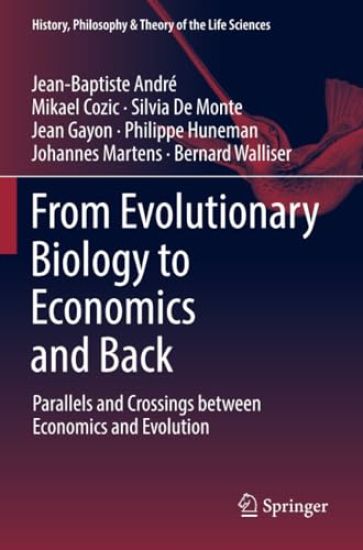
From Evolutionary Biology to Economics and Back

From Evolutionary Biology to Economics and Back

Jean-Baptiste André; Mikael Cozic; Silvia De Monte; Jean Gayon; Philippe Huneman; Johannes Martens; Bernard Walliser

Springer International Publishing AG
2024
nidottu
This book offers a comprehensive exploration of the major key concepts common to economics and evolutionary biology. Written by a group of philosophers of science, biologists and economists, it proposes analyses of the meaning of twenty-five concepts from the viewpoint respectively of economics and of evolutionary biology –each followed by a short synthesis emphasizing major discrepancies and commonalities. This analysis is surrounded by chapters exploring the nature of the analogy that connects evolution and economics, and chapters that summarize the major teachings of the analyses of the keywords. Most scholars in biology and in economics know that their science has something in common with the other one, for instance the notions of competition and resources. Textbooks regularly acknowledge that the two fields share some history – Darwin borrowing from Malthus the insistence on scarcity of resources, and then behavioral ecologists adapting and transforming game theory into evolutionary game theory in the 1980s, while Friedman famously alluded to a Darwinian process yielding the extant firms. However, the real extent of the similarities, the reasons why they are so close, and the limits and even the nature of the analogy connecting economics and biological evolution, remain inexplicit. This book proposes basis analyses that can sustain such explication. It is intended for researchers, grad students and master students in evolutionary and in economics, as well as in philosophy of science.
From Evolutionary Biology to Economics and Back

From Evolutionary Biology to Economics and Back

Jean-Baptiste André; Mikael Cozic; Silvia De Monte; Jean Gayon; Philippe Huneman; Johannes Martens; Bernard Walliser

Springer International Publishing AG
2023
sidottu
This book offers a comprehensive exploration of the major key concepts common to economics and evolutionary biology. Written by a group of philosophers of science, biologists and economists, it proposes analyses of the meaning of twenty-five concepts from the viewpoint respectively of economics and of evolutionary biology –each followed by a short synthesis emphasizing major discrepancies and commonalities. This analysis is surrounded by chapters exploring the nature of the analogy that connects evolution and economics, and chapters that summarize the major teachings of the analyses of the keywords. Most scholars in biology and in economics know that their science has something in common with the other one, for instance the notions of competition and resources. Textbooks regularly acknowledge that the two fields share some history – Darwin borrowing from Malthus the insistence on scarcity of resources, and then behavioral ecologists adapting and transforming game theory into evolutionary game theory in the 1980s, while Friedman famously alluded to a Darwinian process yielding the extant firms. However, the real extent of the similarities, the reasons why they are so close, and the limits and even the nature of the analogy connecting economics and biological evolution, remain inexplicit. This book proposes basis analyses that can sustain such explication. It is intended for researchers, grad students and master students in evolutionary and in economics, as well as in philosophy of science.
Knowledge of Life Today

Knowledge of Life Today

Jean Gayon; Victor Petit

ISTE Ltd
2019
sidottu
Knowledge of Life Today presents the thoughts of Jean Gayon, a major philosopher of science in France who is recognized across the Atlantic, especially for his work in philosophy and the history of life sciences. The book is structured around Gayon's personal answers to questions put forward by Victor Petit. This approach combines scientific rigor and risk-taking in answers that go back to the fundamentals of the subject. As well as the relationship between philosophy and the history of science, Gayon discusses the main questions of the history and philosophy of biology that marked his intellectual journey: Darwin, evolutionary biology, genetics and molecular biology, human evolution, and various aspects of the relationship between biology and society in contemporary times (racism, eugenics, biotechnology, biomedicine, etc.).
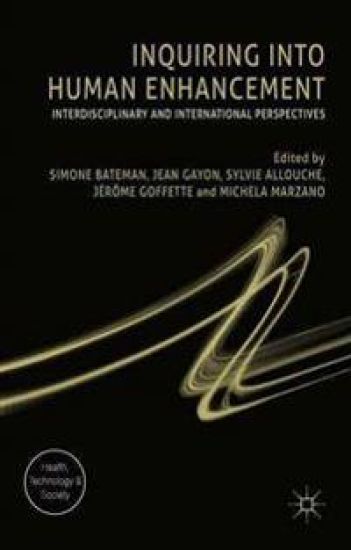
Inquiring into Human Enhancement

Inquiring into Human Enhancement

Sylvie Allouche; Jean Gayon; Michela Marzano; Jérôme Goffette

Palgrave Macmillan
2015
sidottu
Human enhancement has become a major concern in debates about the future of contemporary societies. This interdisciplinary book is devoted to clarifying the underlying ambiguities of these debates, and to proposing novel ways of exploring what human enhancement means and understanding what practices, goals and justifications it entails.
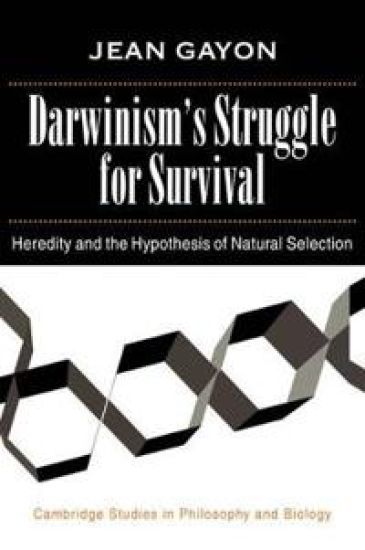
Darwinism's Struggle for Survival

Darwinism's Struggle for Survival

Jean Gayon

Cambridge University Press
1998
sidottu
In Darwinism’s Struggle for Survival Jean Gayon offers a philosophical interpretation of the history of theoretical Darwinism. He begins by examining the different forms taken by the hypothesis of natural selection in the nineteenth century (Darwin, Wallace, Galton) and the major difficulties which it encountered, particularly with regard to its compatibility with the theory of heredity. He then shows how these difficulties were overcome during the seventy years which followed the publication of Darwin’s Origin of Species, and he concludes by analysing the major features of the genetic theory of natural selection, as it developed from 1920 to 1960. This rich and wide-ranging study will appeal to philosophers and historians of science and to evolutionary biologists.