Kirjojen hintavertailu – 12 903 735 kirjaa ja 27 kauppaa

Kirjailija

Jean Grugel

Kirjat ja teokset yhdessä paikassa: 8 kirjaa, julkaisuja vuosilta 1995–2022, suosituimpiin kuuluu Critical Perspectives on Global Governance. Vertaile teosten hintoja ja tarkista saatavuus suomalaisista kirjakaupoista.

8 kirjaa

Kirjojen julkaisuvuodet: 1995–2022.

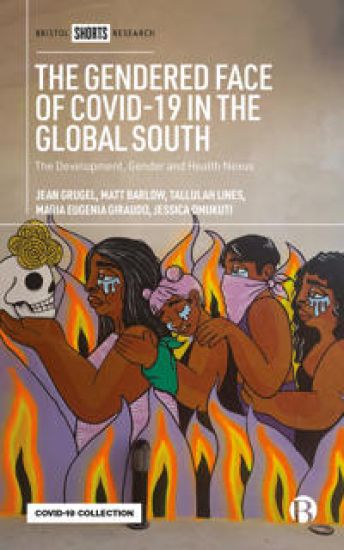
The Gendered Face of COVID-19 in the Global South

The Gendered Face of COVID-19 in the Global South

Jean Grugel; Matt Barlow; Tallulah Lines; Maria Eugenia Giraudo; Jessica Omukuti

Bristol University Press
2022
sidottu
In this important book, experts assess what the COVID-19 pandemic means for gender inequalities in the global south, examining how threats to equitable development will impact the most marginalized and at-risk women and girls in particular. The book draws on research across sub-Saharan Africa and Latin America to examine COVID-19-related issues around gender-based violence, work and care, education and health care, and asks whether global responses are enough to mitigate the negative outcomes of deepening gender inequality. It is a guide to stimulate the important debate about how to promote women’s rights during the management and recovery phases of the pandemic.
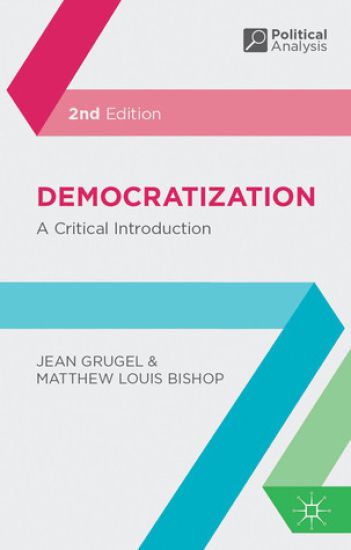
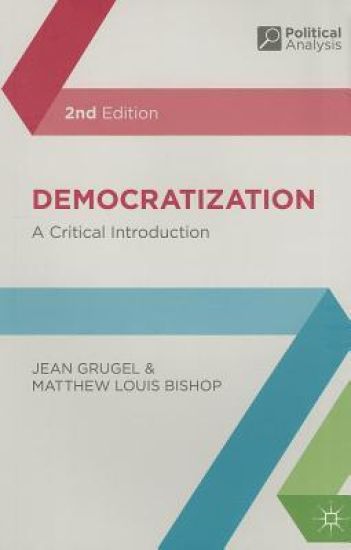
Democratization

Democratization

Jean Grugel; Matthew Louis Bishop

Red Globe Press
2013
sidottu
The second edition of this popular and authoritative text provides a truly global assessment of democratization in theory and practice in the contemporary world. It has been systematically revised and updated throughout to cover recent developments, from the impact of 9/11 and EU enlargement to the war in Iraq.
Democratization

Democratization

Jean Grugel; Matthew Louis Bishop

Red Globe Press
2013
nidottu
The second edition of this popular and authoritative text provides a truly global assessment of democratization in theory and practice in the contemporary world. It has been systematically revised and updated throughout to cover recent developments, from the impact of 9/11 and EU enlargement to the war in Iraq.
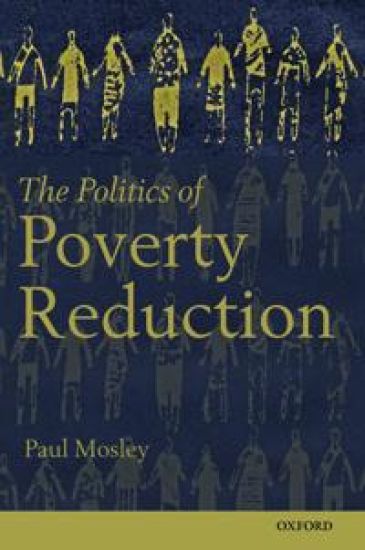
The Politics of Poverty Reduction

The Politics of Poverty Reduction

Paul Mosley; Blessing Chiripanhura; Jean Grugel; Ben Thirkell-White

Oxford University Press
2012
sidottu
Globally, there is a commitment to eliminate poverty; and yet the politics that have caused anti-poverty policies to succeed in some countries and to fail in others have been little studied. The Politics of Poverty Reduction focuses on these political processes. Analysis is based partly on global comparisons and partly on case-studies of nine countries that span the developing world. Where governments are politically weak, they need to make alliances with other groups to stay in power, and where these have been with low-income groups, the result may be a lasting and effective pro-poor strategy. Often pro-poor policies have been brought in not with progressive intentions, but out of fear that the state will fall apart unless pro-poor elements are incorporated into government, and the most effective regimes in reducing poverty have seldom been the kindest and most benevolent. Ability to provide the poor with access to key markets, in particular labour and capital, is crucial, and this in turn requires fiscal strength. Two crucial elements in the story are the ability to frame labour-intensive policies (given that labour is often the only thing that poor people are able to sell) and the design of effective tax and expenditure policies. Aid donors can make a key contribution, partly through reinforcing recipients' fiscal capacity, but much more through providing technical support of the right kind.
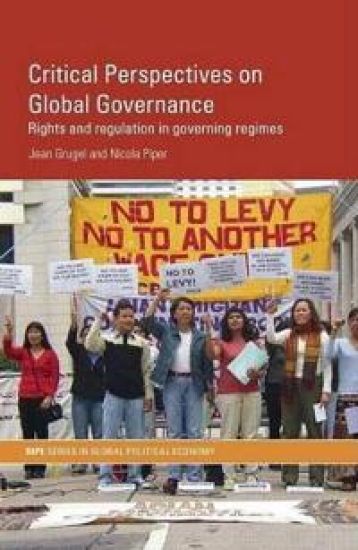
Critical Perspectives on Global Governance

Critical Perspectives on Global Governance

Jean Grugel; Nicola Piper

Routledge
2007
sidottu
The first in-depth analysis of how global governance impacts on the lives of ordinary people. This new volume includes four detailed case studies on labour, migration, children and development that explore the actual nature of governance policies in the GPE. Jean Grugel and Nicola Piper clearly show how global governance, the creation of global norms and regimes to regulate polities, economic and social actors, suggests and promotes ideals such as stable politics, democracy, human rights and individualism, with a strategy to create a more ordered and ultimately better world. They move away from the traditional focus on élites, states and global institutions to explore and analyze how liberal global governance is really affecting ordinary people and how this is often an obstacle to development, citizenship, voice and inclusion. Paying particular attention to the global South, Asia and Latin America, these expert authors trace the development of liberal global governance. They also clearly examine and study how this regulation has spread from areas such as trade and investment, to development, labour, migration, children and the environment.
Franco's Spain

Franco's Spain

Jean Grugel; Tim Rees

Hodder Arnold
1997
nidottu
A sibling of interwar Europe's other fascist regimes, Franco's Spain survived them all, growing to old age in an era of liberal democracy. It weathered the explosive social movements and student discontents of the 1960s and lingered into the 1970s, its earlier fascist ideology attenuated almost out of recognition, with simple survival its greatest preoccupation. Franco's Spain looks beyond the mythology surrounding the origins of the dictatorship to provide a critical overview of the regime - from its emergence from a bloody uprising against a democratic government; through the 'high period' of francoism with its poverty, hunger and fear, followed by a complex period of change and economic growth; to the final demise of the dictatorship, amid open opposition and internal defections. Economics and society are as integral a part of the story in 'Franco's Spain' as politics, and international relations find their place alongside purely domestic issues. The book also peers beyond the grave, examining the transition to democracy after the dictator's death in 1975.
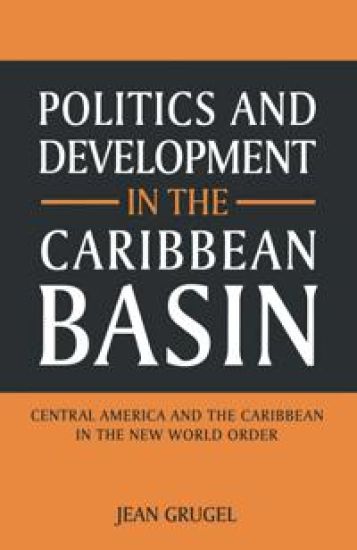
Politics and Development in the Caribbean Basin
This wide ranging thematic and comparative text analyses the origins and nature of the developmental and political crises of the region and the reasons for their recent intensification. It covers all the Central American states and the largest Caribbean island territories - Jamaica, Cuba, The Dominican Republic, Haiti and Puerto Rico - as well as Panama and Grenada, assessing their common experiences as small economies living in the shadow of the United States but also highlighting key differences.