Kirjojen hintavertailu – 12 859 819 kirjaa ja 27 kauppaa
Kirjailija
Jean Lau Chin
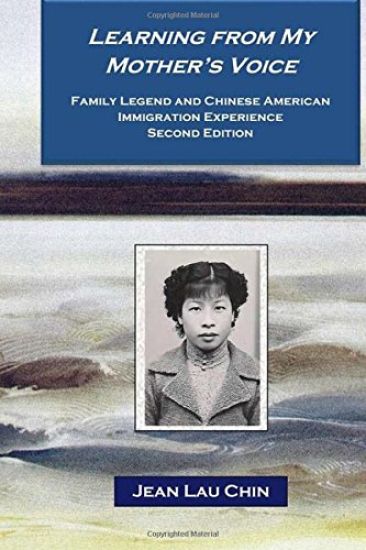
Kirjat ja teokset yhdessä paikassa: 11 kirjaa, julkaisuja vuosilta 1993–2017, suosituimpiin kuuluu Learning from My Mother's Voice - Black/White: Family Legend and the Chinese American Immigration Experience. Vertaile teosten hintoja ja tarkista saatavuus suomalaisista kirjakaupoista.
A compelling saga of a mother and daughter's Journey to the West capturing the themes of separation, loss, guilt, and bicultural identity in the journey of immigration. Blending mythology and symbols of East and West, past and present into a bonding and healing tapestry, the author captures the voice of her mother, Fung Gor Lee, in a moving account that will resonate with all Americans who have immigrant roots--and create the family legend that all families should have.
A compelling saga of a mother and daughter's Journey to the West capturing the themes of separation, loss, guilt, and bicultural identity in the journey of immigration. Blending mythology and symbols of East and West, past and present into a bonding and healing tapestry, the author captures the voice of her mother, Fung Gor Lee, in a moving account that will resonate with all Americans who have immigrant roots--and create the family legend that all families should have.
The story of the Toisanese and Cantonese Chinese, especially of those from New York City, are largely missing from our annals of history. The accomplishments of these peasant farmers and their offspring from southern China were extraordinary amidst enormous struggles. Known as the Jook Sing generation, their children went on to become responsible U. S. citizens and educated professionals. Many enter fields where no Chinese had gone before. They created, within New York City's Chinatown, a village and a community with its cobweb of family and social relationships. It was safe, supportive, and they belonged. This book is a collection of narratives about ordinary people who made extraordinary strides. It is a psychosocial account of narratives of the Toisanese and Cantonese Chinese growing up during the 1940s-1960s in the US-told for the next generation lest they be forgotten. While the Garden of Eden lies in the East for Westerners, the Jade Mountain of the Queen Mother, Hsi Wang Mu, lies in the West for Easterners. These pioneering Chinese made their Journey to the West. What made for their resilience and bonds that enabled them to succeed? Isn't it ironic that they came to America for economic opportunities, only to be mistrusted for their political allegiances? They were recruited for jobs that White Americans did not want; yet they became an economic threat because they took away American jobs. Chinatown was viewed as a secretive and isolated community; yet the anti-Chinese laws blatantly discriminated and excluded them from housing, immigration, and access to mainstream resources. Isn't it ironic how many Chinese Americans served in the military, yet faced more backlash from their American comrades than from the enemy? They continued to be viewed as foreigners despite sacrificing their lives for the US. But most of all, this story about the Cantonese and Toisanese Chinese is a story about the plight of all immigrants Volume 2 is a collection of stories for the New York City Chinatown Oral History Project, www.ceoservices.wix.com/nycchinatownoralhist. The project celebrates the lives of ordinary Chinese immigrants and Chinese American citizens, who shared similar experiences, and together made extraordinary strides as a community-forming bonds that have lasted a lifetime. Since the biennial NYC Chinatown Reunions in Las Vegas began in 2000, many felt the need to document these stories of a forgotten generation in the annals of U. S. history. Few Toisanese now immigrate to America. Yet, they were responsible for the initial introduction of cheap Chinese food to the American public-Chow Mein, Chop Suey, Wonton Soup and Egg rolls. What a difference today's more gourmet Cantonese cuisine is to the American palate While Volume I was foundational, Volume II builds on and expands these narratives of resilience and community support networks. Over 300 individuals have participated to this project. This volume includes stories collected between 2013 and 2016 from individual interviews, recorded project events, submitted stories, and taped conversations. All participants have given permission for their stories to be used. Common themes in Volume II include that of Chinatown as a village, the bonds among Chinese families, the sacrifice made by our pioneering parents, Chinese American identity, and how "we did it in one generation". Our Journey to the West marks the end of an era and how a unique Chinese American culture emerged. The challenges and resilience of this group in dealing with mobility, access, discrimination, and the stigma and pride of their Toisanese ways are inspiring. Most lived in poverty amidst a backdrop of cultural and community riches. They Lived the American Dream-their story is of accomplishments and successes, notable firsts and atypical paths as descendants of peasant farmers from Toisan to become productive Chinese American citizens. And We did it Our Way
The Cantonese Chinese were largely Toisanese peasant farmers from southern China and the original Chinese pioneers to the United States starting in the 1800s. Recruited as cheap labor to build the transcontinental railroad, they faced harsh discrimination and were viewed as an economic threat during the California Gold Rush. After its completion, they were omitted from the U. S. annals and the only national group ever to be barred from immigrating to the U. S. by the Chinese Exclusion Acts between 1882 and 1943. After World War II, they were then viewed as communist threats. As they migrated east to New York City, laundries and restaurants were the only occupations opened to them. They retreated to the safe havens of New York City's Chinatown or became the lone Asians in their neighborhoods in the outer boroughs. Their offspring are the voices in this book; they are the Chinese Americans growing up in New York City's Chinatown between the 1940s and 1960s, a generation sandwiched between post-World War II (1941-1945) and the Civil Rights Movement of the 1960s. What was life in New York City's Chinatown like during that time? Their stories are a psychosocial account capturing the bonds, the family and community networks, the struggles and the resiliency of growing up Chinese in New York City. Their parents came from working in the rice fields of southern China to toiling as laundry, restaurant, and garment workers in the United States. This generation went on to become upstanding citizens working in professional fields-mostly engineering and teaching. As a group, their accomplishments and achievements were unsurpassed. Because there were so few Chinese Americans outside of the laundries and restaurants, their entry into many fields were untraditional and exceptions. They often became the "first". As Ted Ho, one of our participants, said: "And we did it in one generation " Why this book about this group of ordinary people? Lest it be forgotten, we need to document these stories-struggles and accomplishments-of the early Chinese pioneers to the U. S. for the next generations. They grew up in a society intolerant of their differences-they were viewed as the perpetual foreigner and scapegoated by earlier immigrant groups. While the Toisanese were once the majority of the U. S. Chinese American population, they have been increasingly replaced by the Cantonese and Taiwanese in the 60s and 70s, by the Vietnamese Chinese in the 80s, and by "mainland Chinese" largely from Fujian province in 90s. This book is a psychosocial account of the resiliency and community networks amidst discrimination and assimilation in a bicultural world of Chinese Americans growing up in New York City in the 1940s-1960s-it is written in their voices. But it is also the story of all immigrants.
Although leadership theories have evolved to reflect changing social contexts, they remain silent on issues of equity, diversity, and social justice. Diversity and Leadership offers a new paradigm for examining leadership by bringing together two domains—research on leadership and research on diversity—to challenge existing notions of leadership and move toward a diverse and global view of society and its institutions. This compelling book delivers an approach to leadership that is inclusive, promotes access for diverse leaders, and addresses barriers that narrowly confine our perceptions and expectations of leaders. Redefining leadership as global and diverse, the authors impart new understanding of who our leaders are, the process of communication, exchange between leaders and their members, criteria for selecting, training, and evaluating leaders in the 21st century, and the organizational and societal contexts in which leadership is exercised.
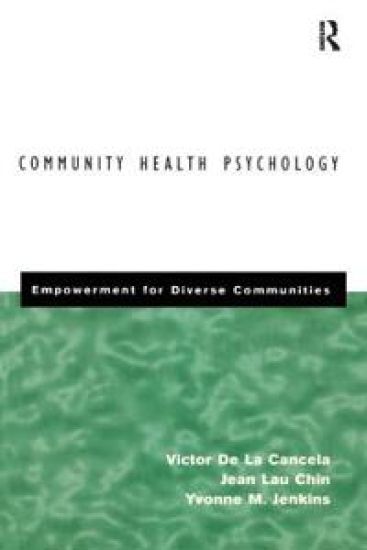
As the number of people of color rapidly grows within the US population, health providers in these communities have become increasingly aware of the need to address the concerns and problems particular to each group. It's also become clear that as the delivery of our health care systems evolve, a new approach must be summoned to build systems both cost-effective and socially responsible. Community Health Psychology offers a new and different perspective for redressing the gaps in our systems of care. The authors contend that in order to begin an attempt at eradicating the more intractable societal problems, health providers need to tailor themselves to a more culturally competent approach, which addresses all members of a community they claim to serve.
As the number of people of color rapidly grows within the US population, health providers in these communities have become increasingly aware of the need to address the concerns and problems particular to each group. It's also become clear that as the delivery of our health care systems evolve, a new approach must be summoned to build systems both cost-effective and socially responsible. Community Health Psychology offers a new and different perspective for redressing the gaps in our systems of care. The authors contend that in order to begin an attempt at eradicating the more intractable societal problems, health providers need to tailor themselves to a more culturally competent approach, which addresses all members of a community they claim to serve.
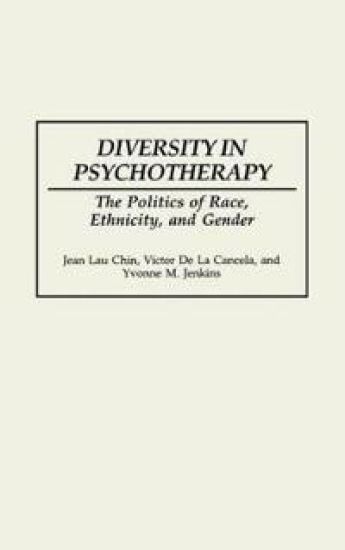
This challenging and insightful work wrestles with the difficult treatment problems confronting both culturally and socially oppressed clients and psychotherapists in a society where diversity has often been resisted. The authors question long-held assumptions within the profession and urge recognition of new ethnic, racial, and gender realities which significantly impact therapies. Recognizing the implications of cultural diversity in the society, the authors-clinicians seek to broaden health professionals' awareness of clients' needs and to promote the requisite empathy. They describe how ethnic, racial, and gender issues affect psychotherapy's progress and outcomes. Specific concerns about such key factors as self-esteem, gender roles, and social regard are addressed in a context supportive of diversity enhancement rather than one seeking uniformity. Case studies offer highly valuable resource material and, through the authors' explication, insights into their challenging perspectives on this highly important health service.
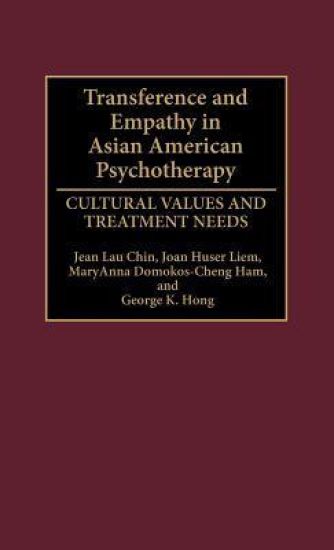
The Asian American population is increasing rapidly and, not unpredictably, so are its mental health needs. A number of cultural factors and stressors common to Asian Americans pose obstacles to the successful employment of Western psychotherapy approaches and counseling---for example, the central role of the family in Asian life and the culturally based, traditional stigma associated with mental health problems. The authors, all practicing psychotherapists, focus on the critical aspects of transference and empathy in their consideration of the mental health approaches and therapies appropriate to ethnic minority population. The work has value as a resource for professionals and as a training guide for those intending to practice as psychotherapists and counselors in minority communities. It offers extraordinary insights and practical guidance through the use of case studies. Not only do these identify problems stemming from the racial differences between client and therapist, but they also provide rich clinical examples of case diagnosis, treatment plans, and client status statements. This is an important book that will further both the theory and practice of psychotherapy among minority populations.