Kirjailija
Jean-Michel Rabaté
Kirjat ja teokset yhdessä paikassa: 29 kirjaa, julkaisuja vuosilta 1991–2024, suosituimpiin kuuluu James Joyce and the Politics of Egoism. Vertaile teosten hintoja ja tarkista saatavuus suomalaisista kirjakaupoista.
Nimi esiintyy myös muodoissa: Jean-Michel Rabate
29 kirjaa
Kirjojen julkaisuvuodet: 1991–2024.
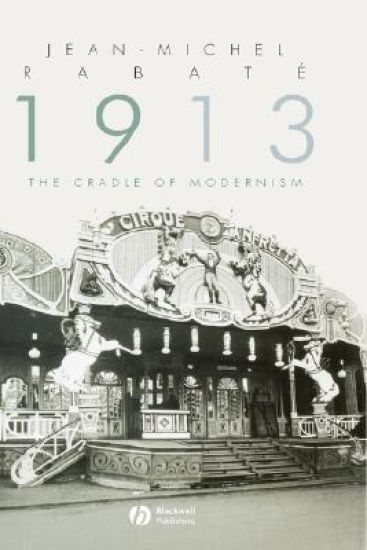
This innovative book puts modernist literature in its cultural, intellectual, and global context, within the framework of the year 1913. Broadens the analysis of canonical texts and artistic events by showing their cultural and global parallelsExamines a number of simultaneous artistic, literary, and political endeavours including those of Yeats, Pound, Joyce, Du Bois and StravinskyExplores Pound's Personae next to Apollinaire's Alcools and Rilke's Spanish Trilogy, Edith Wharton's The Custom of the Country next to Proust's Swann's Way
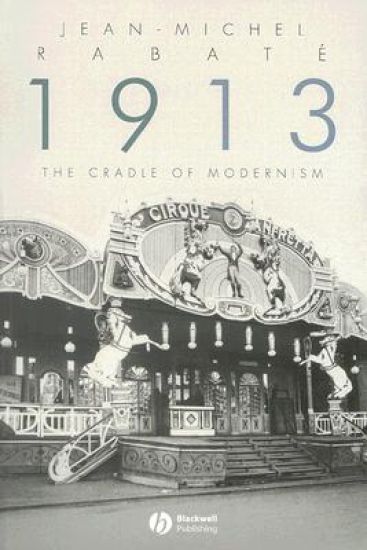
This innovative book puts modernist literature in its cultural, intellectual, and global context, within the framework of the year 1913. Broadens the analysis of canonical texts and artistic events by showing their cultural and global parallelsExamines a number of simultaneous artistic, literary, and political endeavours including those of Yeats, Pound, Joyce, Du Bois and StravinskyExplores Pound's Personae next to Apollinaire's Alcools and Rilke's Spanish Trilogy, Edith Wharton's The Custom of the Country next to Proust's Swann's Way
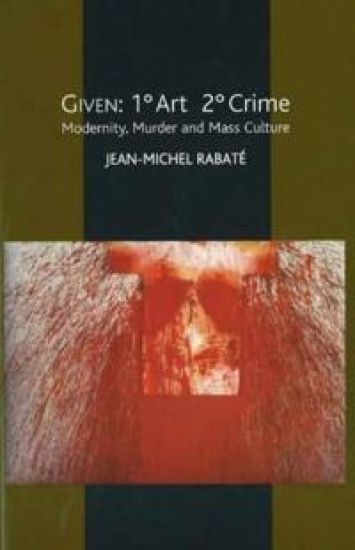
Investigates links between avant-garde art and the aesthetics of crime in order to bridge the gap between high modernism and mass culture, as emblematised by tabloid reports of unsolved crimes. Throughout Jean-Michel Rabate is concerned with two key questions: what is it that we enjoy when we read murder stories? and what has modern art to say about murder? Indeed, Rabate compels us to consider whether art itself is a form of murder. The book begins with Marcel Duchamp's fascination for trivia and found objects conjoined with his iconoclasm as an anti-artist. The visual parallels between the naked woman at the centre of his final work, 'Étant donnés', and a young woman who had been murdered in Los Angeles in January 1947, provides the specific point of departure. The text moves onward to Steven Hodel, the 'Black Dahlia' murder; Walter Benjamin's description of Eugene Atget's famous photographs of deserted Paris streets as presenting 'the scene of the crime'; and Ralph Roff's 1997 exhibition, which implied that modern art is indissociable from forensic gaze and a detective's outlook, a view first advanced by Edgar Allan Poe.
In this controversial manifesto, Jean-Michel Rabaté addresses current anxieties about the future of literary and cultural theory and proposes that it still has a crucial role to play.
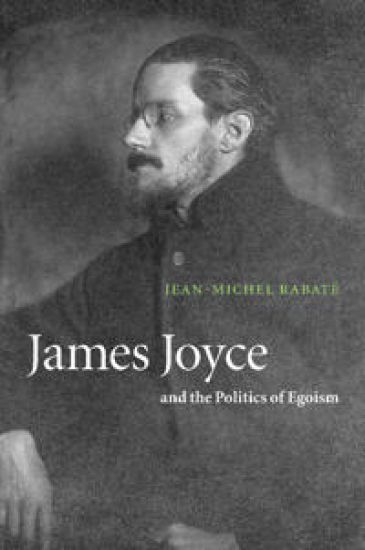
In James Joyce and the Politics of Egoism a leading scholar approaches the entire Joycean canon through the concept of ‘egoism’. This concept, Jean-Michel Rabaté argues, runs throughout Joyce’s work, and involves and incorporates its opposite, ‘hospitality’, a term Rabaté understands as meaning an ethical and linguistic opening to ‘the other’. For Rabaté both concepts emerge from the fact that Joyce published crucial texts in the London based review The Egoist and later moved on to forge strong ties with the international Paris avant-garde. Rabaté examines the theoretical debates surrounding these connections, linking Joyce’s engagement with Irish politics with the aesthetic aspects of his texts. Through egoism, he shows, Joyce defined a literary sensibility founded on negation; through hospitality, Joyce postulated the creation of a new, utopian readership. Rabaté explores Joyce’s complex negotiation between these two poles in a study of interest to all Joyceans and scholars of modernism.
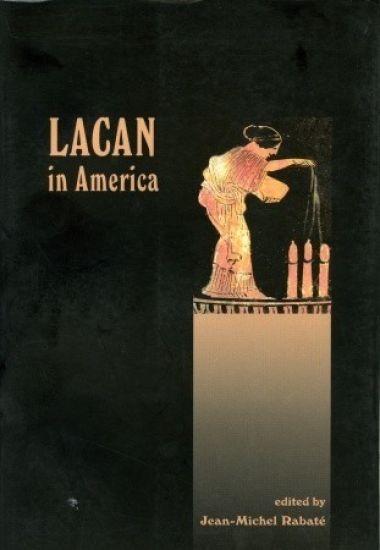
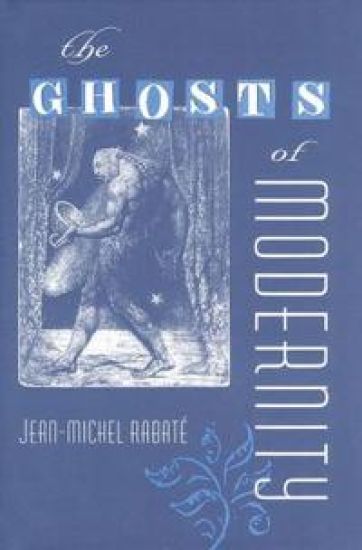
Attempting to provide a more precise meaning to the term ""modernism"", this text combines psychoanalytical and philosophical concepts in rereading the history of modernity. The author focuses throughout on a single theme - the ghostly nature of modernity.