Kirjojen hintavertailu – 12 903 724 kirjaa ja 27 kauppaa

Kirjailija

Jean Pisani-Ferry

Kirjat ja teokset yhdessä paikassa: 7 kirjaa, julkaisuja vuosilta 2004–2024, suosituimpiin kuuluu An Agenda for a Growing Europe. Vertaile teosten hintoja ja tarkista saatavuus suomalaisista kirjakaupoista.

Nimi esiintyy myös muodoissa: Jean Pisani–ferry

7 kirjaa

Kirjojen julkaisuvuodet: 2004–2024.

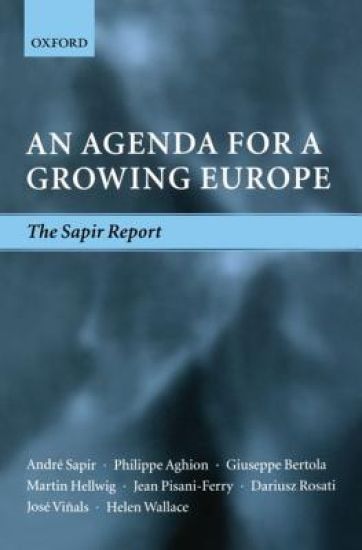
An Agenda for a Growing Europe

An Agenda for a Growing Europe

André Sapir; Philippe Aghion; Giuseppe Bertola; Martin Hellwig; Jean Pisani-Ferry; Dariusz Rosati; José Viñals; Helen Wallace; Marco Buti; Mario Nava; Peter M. Smith

Oxford University Press
2004
sidottu
Over the past decade European economic integration has seen considerable institutional success, but the economic performance of the EU has been varied. While macroeconomic stability has improved and an emphasis on cohesion preserved, the EU economic system has not delivered satisfactory growth performance. This book is the report of a high-level group commissioned by the President of the European Commission to review the EU economic system and propose a blueprint for an economic system capable of delivering faster growth along with stability and cohesion. It assesses the EU s economic performance, examines the challenges facing the EU in the coming years, and presents a series of recommendations. The report views Europe's unsatisfactory growth performance during the last decades as a symptom of its failure to transform into an innovation-based economy. It has now become clear that the context in which economic policies have been developed has changed fundamentally over the past thirty years. A system built around the assimilation of existing technologies, mass production generating economics of scale, and an industrial structure dominated by large firms with stable markets and long term employment patterns no longer delivers in the world of today, characterized by economic globalization and strong external competition. What is needed now is more opportunity for new entrants, greater mobility of employees within and across firms, more retraining, greater reliance on market financing, and higher investment in both R&D and higher education. This requires a massive and urgent change in economic policies in Europe.
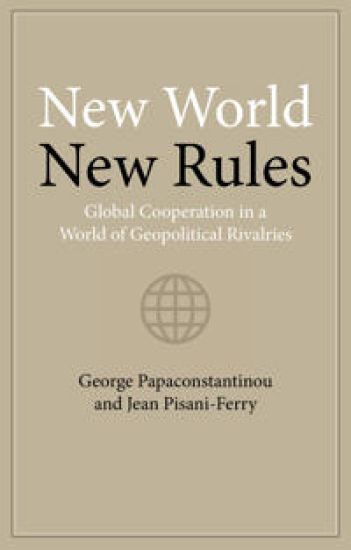
New World New Rules

New World New Rules

George Papaconstantinou; Jean Pisani-Ferry

AGENDA PUBLISHING
2024
sidottu
The need for collective action has never been greater, but geopolitics, structural changes and diverging preferences mean that existing global governance arrangements, devised at Bretton Woods in the 1940s, are either unravelling or outmoded. Reconciling this contradiction is today’s pressing global policy challenge. In this short book, two of Europe’s most-experienced policymakers and analysts outline a new agenda for global governance. They examine governance practices across several key policy areas – climate, health, trade and competition, banking and finance, taxation, migration and the digital economy – and consider what works and what doesn't, and why. The global governance solutions they put forward are ambitious but pragmatic. They require complexity, flexibility and compromise. Attributes that global governments are demonstrably short of, but today’s global crises urgently demand.
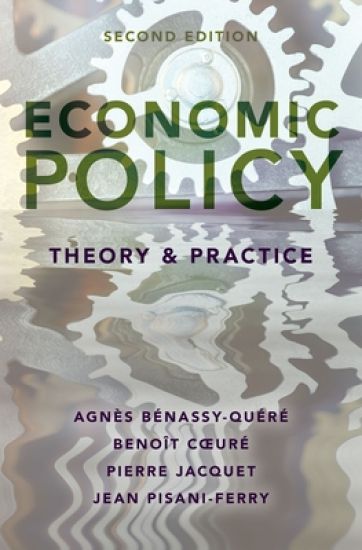
Economic Policy: Theory and Practice

Economic Policy: Theory and Practice

Agnes Benassy-Quere; Benoit Coeure; Pierre Jacquet; Jean Pisani-Ferry

Oxford University Press Inc
2018
sidottu
Economic Policy provides a unique combination of facts-based analysis, state-of-the art economic theory, and insights from first-hand policy experience at the national and international levels to shed light on current domestic and international policy challenges. It is ideally suited for students, practitioners, and scholars seeking understanding both of the pragmatic constraints of real-world policy making and the analytical tools that enhance inquiry and inform debates. The authors draw on their experiences as academics and as policy makers in European and international institutions to offer a deep dive into the rationale, design, and implementation of economic policy across a range of policy domains: fiscal policy, monetary policy, international finance, financial stability, taxes, long-term growth and inequality. Highlighting the ways experience, theories, and institutions interact, each chapter starts with historical examples of dilemmas and shows how theoretical approaches can help policy makers understand what is at stake and identify solutions. The authors highlight the differences between the positive approach to economic policy (how do policies impact the economy), the normative approach (what should be policymakers' objectives and against which criteria should their action be judged), and the political-economy constraints (what are the limits and obstacles to public intervention). They rely on the most recent academic research, providing technical boxes while explaining the mechanisms in plain English in the text, with appropriate illustrations. This new edition is informed by such important recent developments as the Great Recession, the strains on the European Union and the Euro, the challenges of public and private debt, the successes and setbacks to emerging markets, changes to labor markets along with the increased attention to inequality, the debates on secular stagnation and its implications for conventional and unconventional monetary policy, the re-regulation of the financial sector, the debt overhang in both the public and the private sector.
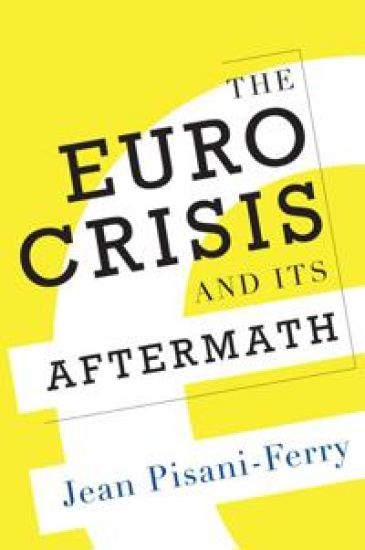
The Euro Crisis and Its Aftermath

The Euro Crisis and Its Aftermath

Jean Pisani-Ferry

Oxford University Press Inc
2014
sidottu
The euro's life, while only slightly more than a decade long, has been riddled by a series of challenges and crises. The disparity between the prosperous Northern countries of Germany and France and the plummeting Southern countries, including Italy and Greece, has exacerbated problems within the political and economic union of the Eurozone. The North, especially Germany, has debated where to draw the line between doing whatever is necessary to save the common currency and what they have viewed as a charity bailout of countries who flouted the rules for a decade and suffered predictable consequences. Meanwhile, Southern countries such as Italy, Spain, and Greece have grown increasingly bitter at the patronizing attitudes of their partners to the North. Amidst loud and frequent debates, solutions including routes for increased integration and punitive policies and reforms have been enacted and discarded to a limited degree of success. The struggles facing this monetary union continue to develop even today. The Euro Crisis and Its Aftermath was written to inform readers about the history of this enduring European crisis and the alternative proposals for ending it. In four parts, Jean Pisani-Ferry explains the origins of the European currency, the build-up of imbalances and oversights that led to the crisis, the choices European policymakers have both addressed and ignored since 2010, and the evolution of the policy agenda and possible options for the future. The book is as much of an informative and analytical history as it is a prescriptive solution for a more prosperous future world economy. Rather than putting forth and supporting a thesis, Pisani-Ferry helps readers understand the past and present of the euro crisis and form their own opinions about potential solutions.
Economic Policy

Economic Policy

Agnès Bénassy-Quéré; Benoît Coeuré; Pierre Jacquet; Jean Pisani-Ferry

Oxford University Press Inc
2010
sidottu
Written by four recognized experts with senior experience in research and government, this text is the first comprehensive survival kit for students and practitioners of economic policy. It is set to become an indispensable resource for everyone involved or interested in modern economic policy. Academic scholars willing to engage in policy discussions and students at graduate or advanced undergraduate levels will find it an essential bridge to the policy world. What makes the book unique is that it combines like no other, facts-based analysis, state-of-the art theories and models, and insights from first-hand policy experience at national and international levels. The book has grown out of ten years of experience teaching economic policy at the graduate level. It provides an intellectually coherent framework to understand the potentialities and limits of economic policy. It addresses positive dimensions (how do policies impact on modern economies?), normative dimensions (what should policymakers aim to achieve and against what should their action be judged?) and political-economy constraints (which are the limits and obstacles to public intervention?). It fills an important gap by reconciling in each major policy area stylized facts of recent economic history, key questions faced by contemporary policymakers, and essential lessons from theory which are captured and explained in a clear, concise, and self-contained way. All major areas of domestic and international policymaking are covered: fiscal policy, monetary policy, international finance and exchange-rate policy, tax policy, and long-term growth policies. The book concludes with a special chapter on the lessons of the financial crisis. The authors are intellectually non-partisan and they draw examples from various countries and experiences; from emerging markets to developing economies, shedding light when necessary on local specificities such as European Union rules and instruments. Economic Policy: Theory and Practice is the essential guide to economic policy in the new post-crisis context.
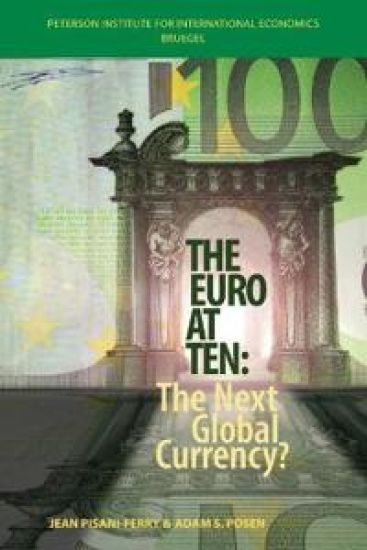
The Euro at Ten – The Next Global Currency?

The Euro at Ten – The Next Global Currency?

Jean Pisani–ferry; Adam Posen

The Peterson Institute for International Economics
2009
nidottu
Over the first ten years of its existence, the euro has proved to be more than a powerful symbol of collective identity. It has provided price stability to previously inflation-prone countries; it has offered a shelter against currency crises; and it has by and large been conducive to budgetary discipline. The eurozone has attracted five new members in addition to the initial eleven, and many countries in Europe wish to adopt it. The euro has also been successful internationally. Even though research presented in this volume confirms that it has not rivaled the dollar's world currency status, it has certainly become a strong regional currency in Europe and the Mediterranean region. Some countries in the region have de facto adopted it, several peg to it, and many have become at least partially euroized. However, the euro's impressive first decade is likely to be followed by a much more difficult period. The present financial crisis is posing at least two important challenges: real economic adjustment within the euro area and maintenance of fiscal and financial stability without a central government authority capable of taking appropriate financial and fiscal decisions in difficult times. The papers and remarks in this volume demonstrate that the euro has proved to be attractive as a fair weather currency for countries and investors well beyond its borders. But it remains to be seen whether it is equipped to also succeed as a stormy weather currency.
An Agenda for a Growing Europe

An Agenda for a Growing Europe

André Sapir; Philippe Aghion; Giuseppe Bertola; Martin Hellwig; Jean Pisani-Ferry; Dariusz Rosati; José Viñals; Helen Wallace; Marco Buti; Mario Nava; Peter M. Smith

Oxford University Press
2004
nidottu
Over the past decade European economic integration has seen considerable institutional success, but the economic performance of the EU has been varied. While macroeconomic stability has improved and an emphasis on cohesion preserved, the EU economic system has not delivered satisfactory growth performance. This book is the report of a high-level group commissioned by the President of the European Commission to review the EU economic system and propose a blueprint for an economic system capable of delivering faster growth along with stability and cohesion. It assesses the EU s economic performance, examines the challenges facing the EU in the coming years, and presents a series of recommendations. The report views Europe's unsatisfactory growth performance during the last decades as a symptom of its failure to transform into an innovation-based economy. It has now become clear that the context in which economic policies have been developed has changed fundamentally over the past thirty years. A system built around the assimilation of existing technologies, mass production generating economics of scale, and an industrial structure dominated by large firms with stable markets and long term employment patterns no longer delivers in the world of today, characterized by economic globalization and strong external competition. What is needed now is more opportunity for new entrants, greater mobility of employees within and across firms, more retraining, greater reliance on market financing, and higher investment in both R&D and higher education. This requires a massive and urgent change in economic policies in Europe.