
Kirjojen hintavertailu – 12 859 818 kirjaa ja 27 kauppaa

Kirjailija

Jean Sgard

Kirjat ja teokset yhdessä paikassa: 4 kirjaa, julkaisuja vuosilta 1991–2015, suosituimpiin kuuluu Dictionnaire des Journaux, 1600-1789: 1. Vertaile teosten hintoja ja tarkista saatavuus suomalaisista kirjakaupoista.

4 kirjaa

Kirjojen julkaisuvuodet: 1991–2015.

The Greek Girl's Story

The Greek Girl's Story

Abbé Prévost; Jean Sgard

Pennsylvania State University Press
2015
pokkari
With The Greek Girl’s Story, Alan Singerman presents the first reliable, stand-alone translation and critical edition of Abbé Prévost’s 1740 literary masterpiece Histoire d’une Grecque moderne. The text of this new English translation is based on Singerman’s 1990 French edition, which Jonathan Walsh called “arguably the most valuable critical edition” of Prévost’s novel to date. This new edition also includes a complete critical apparatus comprising a substantial introduction, notes, appendixes, and bibliography, all significantly updated from the 1990 French edition, taking into account recent scholarship on this work and providing some additional reflection on the question of Orientalism. Prévost’s roman à clef is based on a true story involving the French ambassador to the Ottoman Porte from 1699 to 1711. It is narrated from the ambassador’s viewpoint and is a model of subjective, unreliable narration (long before Henry James). It is remarkably modern in its presentation of an enigmatic, ambiguous character, as the truth about the heroine can never be established with certainty. It is the story of the tormented relationship between the diplomat and a beautiful young Greek concubine, Théophé, whom he frees from a pasha’s harem. While her benefactor becomes increasingly infatuated with her and bent on becoming her lover, the Greek girl becomes obsessed with the idea of becoming a virtuous and respected woman. Viewing the ambassador as a father figure, she condemns his quasi-incestuous passion and firmly rejects his repeated seduction attempts. Unable to possess the young woman or tolerate the thought that she might grant to someone else what she has refused him, the narrator subjects her behavior to minute scrutiny in an effort to catch her in an indiscretion. His investigations are fruitless, however, and Théophé, the victim of incessant persecution, simply dies, leaving all the questions about her behavior unanswered.

The Greek Girl's Story

The Greek Girl's Story

Abbé Prévost; Jean Sgard

Pennsylvania State University Press
2014
sidottu
With The Greek Girl’s Story, Alan Singerman presents the first reliable, stand-alone translation and critical edition of Abbé Prévost’s 1740 literary masterpiece Histoire d’une Grecque moderne. The text of this new English translation is based on Singerman’s 1990 French edition, which Jonathan Walsh called “arguably the most valuable critical edition” of Prévost’s novel to date. This new edition also includes a complete critical apparatus comprising a substantial introduction, notes, appendixes, and bibliography, all significantly updated from the 1990 French edition, taking into account recent scholarship on this work and providing some additional reflection on the question of Orientalism. Prévost’s roman à clef is based on a true story involving the French ambassador to the Ottoman Porte from 1699 to 1711. It is narrated from the ambassador’s viewpoint and is a model of subjective, unreliable narration (long before Henry James). It is remarkably modern in its presentation of an enigmatic, ambiguous character, as the truth about the heroine can never be established with certainty. It is the story of the tormented relationship between the diplomat and a beautiful young Greek concubine, Théophé, whom he frees from a pasha’s harem. While her benefactor becomes increasingly infatuated with her and bent on becoming her lover, the Greek girl becomes obsessed with the idea of becoming a virtuous and respected woman. Viewing the ambassador as a father figure, she condemns his quasi-incestuous passion and firmly rejects his repeated seduction attempts. Unable to possess the young woman or tolerate the thought that she might grant to someone else what she has refused him, the narrator subjects her behavior to minute scrutiny in an effort to catch her in an indiscretion. His investigations are fruitless, however, and Théophé, the victim of incessant persecution, simply dies, leaving all the questions about her behavior unanswered.
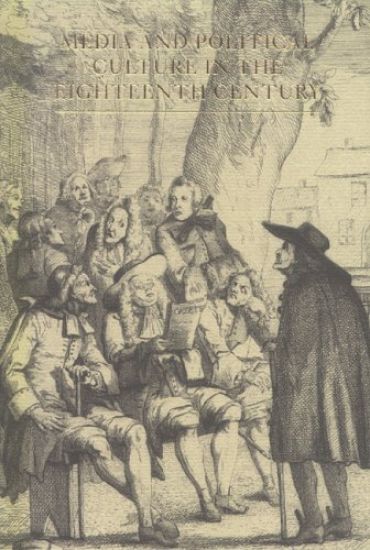
Media and political culture in the eighteenth century

Media and political culture in the eighteenth century

Marie-Christine Skuncke; Robert Darnton; Jean Sgard; John Brewer; Carla Hesse

Kungl. Vitterhetsakademien
2005
nidottu
The eighteenth century, in which the Royal Academy of Letters was created in Stockholm, was a time of intense political discussion. Concepts such as human rights and social equality were beginning to take shape in Europe and North America. Critical views spread through a variety of media which undermined the power structures of the Old Regime, gossip, newspapers, libels, memoirs, chroniques scandaleuses, engravings, etc. When the Royal Academy of Letters celebrated its 250th anniversary in 2003, one of the events was a symposium in Stockholm entitled ‘Media and Political Culture in the Eighteenth Century’. The present volume includes the contributions of the four keynote lecturers, John Brewer, Robert Darnton, Carla Hesse and Jean Sgard. The British historian JOHN BREWER is currently Professor of Humanities and Social Sciences at California Institute of Technology. The American scholar ROBERT DARNTON is Professor of European History at Princeton University. The American scholar CARLA HESSE is Professor of History at the University of California, Berkeley. The French press historian JEAN SGARD has been Professor of French Literature at the Université Stendhal in Grenoble 1969-1994. The editor, MARIE-CHRISTINE SKUNCKE, is Professor of Comparative Literature at Uppsala University.