
Kirjailija
Jean Toomer
Kirjat ja teokset yhdessä paikassa: 29 kirjaa, julkaisuja vuosilta 1995–2026, suosituimpiin kuuluu A Jean Toomer Reader. Vertaile teosten hintoja ja tarkista saatavuus suomalaisista kirjakaupoista.
29 kirjaa
Kirjojen julkaisuvuodet: 1995–2026.

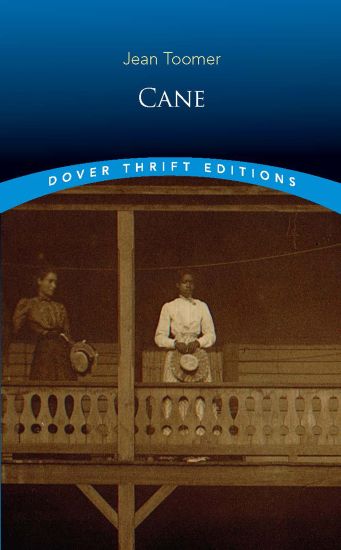
Cane explores spiritual and emotional frustration, failure of basic communication between individuals, and repression of natural energies. It reveals the chaos of contemporary black American life and calls for a spiritual awakening. A land mark novel that changed the way America looked at black writers.

Cane explores spiritual and emotional frustration, failure of basic communication between individuals, and repression of natural energies. It reveals the chaos of contemporary black American life and calls for a spiritual awakening. A land mark novel that changed the way America looked at black writers.
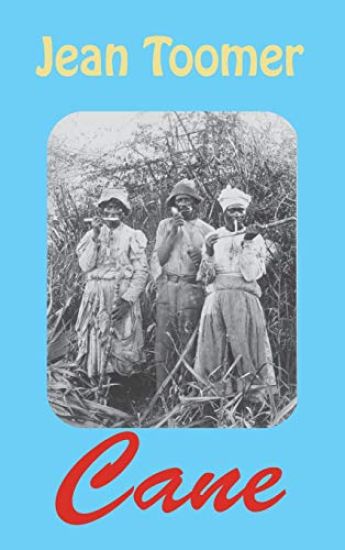
The book is structured as a series of vignettes revolving around the origins and experiences of African Americans in the United States. The vignettes alternate in structure between narrative prose, poetry, and play-like passages of dialogue. As a result, the novel has been classified as a composite novel or as a short story cycle. Though some characters and situations recur between vignettes, the vignettes are mostly freestanding, tied to the other vignettes thematically and contextually more than through specific plot details.
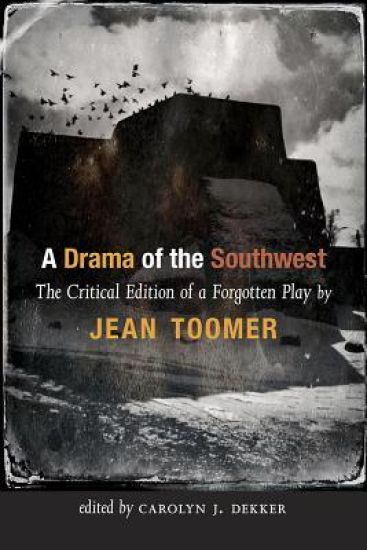
Jean Toomer (1894–1967) was a modernist writer, a member of the Harlem Renaissance, and briefly part of the literary and artistic community that grew up around Mabel Dodge Luhan in Taos, New Mexico. This book, a critical edition of a previously unpublished 1935 manuscript, makes A Drama of the Southwest available to readers for the first time. The play provides a vivid glimpse into the social world of the artists who mined Taos for creative and spiritual renewal in the early twentieth century, and editor Dekker provides cultural and literary historical context, arguing for Toomer’s continuing creative power and significance at a time in his career that has been largely overlooked by critics.
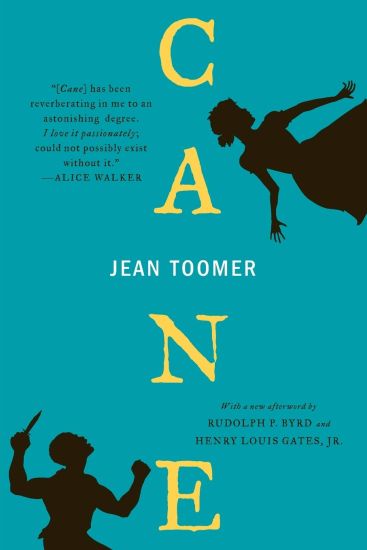
Cane
Jean Toomer; Rudolph P. Byrd; Henry Louis Gates
Liveright Publishing Corporation
2011
nidottu
Halvin toimitettuna 19,00 €
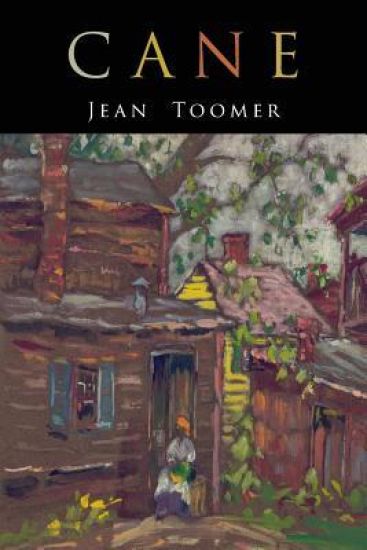
First published in 1923, Jean Toomer’s Cane is an innovative literary work—part drama, part poetry, part fiction—powerfully evoking black life in the South. Rich in imagery, Toomer’s impressionistic, sometimes surrealistic sketches of Southern rural and urban life are permeated by visions of smoke, sugarcane, dusk, and fire; the northern world is pictured as a harsher reality of asphalt streets. This iconic work of American literature is published with a new afterword by Rudolph Byrd of Emory University and Henry Louis Gates Jr. of Harvard University, who provide groundbreaking biographical information on Toomer, place his writing within the context of American modernism and the Harlem Renaissance, and examine his shifting claims about his own race and his pioneering critique of race as a scientific or biological concept.
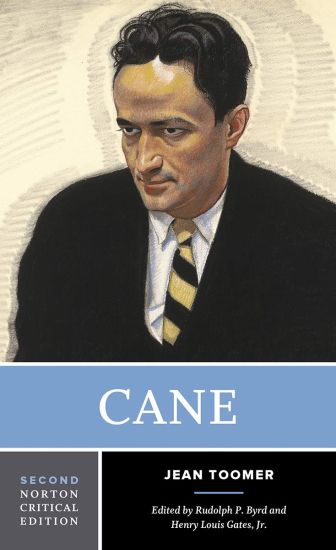
Originally published in 1923, Jean Toomer’s Cane remains an innovative literary work—part drama, party poetry, part fiction. This revised Norton Critical Edition builds upon the First Edition (1988), which was edited by the late Darwin T. Turner, a pioneering scholar in the field of African American studies. The Second Edition begins with the editors’ introduction, a major work of scholarship that places Toomer within the context of American Modernism and the Harlem Renaissance. The introduction provides groundbreaking biographical information on Toomer and examines his complex, contradictory racial position as well as his own pioneering views on race. Illustrative materials include government documents containing contradictory information on Toomer’s race, several photographs of Toomer, and a map of Sparta, Georgia—the inspiration for the first and third parts of Cane. The edition reprints the 1923 foreword to Cane by Toomer’s friend Waldo Frank, which helped introduce Toomer to a small but influential readership. Revised and expanded explanatory annotations are also included. “Backgrounds and Sources” collects a wealth of autobiographical writing that illuminates important phases in Jean Toomer’s intellectual life, including a central chapter from The Wayward and the Seeking and Toomer’s essay on teaching the philosophy of Russian psychologist and mystic Georges I. Gurdjieff, “Why I Entered the Gurdjieff Work.” The volume also reprints thirty of Toomer’s letters from 1919–30, the height of his literary career, to correspondents including Waldo Frank, Sherwood Anderson, Claude McKay, Horace Liveright, Georgia O’Keeffe, and James Weldon Johnson. An unusually rich “Criticism” section demonstrates deep and abiding interest in Cane. Five contemporary reviews—including those by Robert Littell and W. E. B. Du Bois and Alain Locke—suggest its initial reception. From the wealth of scholarly commentary on Cane, the editors have chosen twenty-one major interpretations spanning eight decades including those by Langston Hughes, Robert Bone, Darwin T. Turner, Charles T. Davis, Alice Walker, Gayl Jones, Barbara Foley, Mark Whalan, and Nellie Y. McKay. A Chronology, new to the Second Edition, and an updated Selected Bibliography are also included.
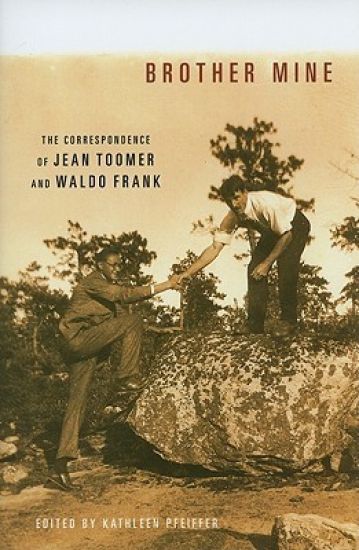
The friendship of Jean Toomer and Waldo Frank was one of the most emotionally intense, racially complicated, and aesthetically significant relationships in the history of American literary modernism. Waldo Frank was an established white writer who advised and assisted the younger African American Jean Toomer as he pursued a literary career. They met in 1920, began corresponding regularly in 1922, and were estranged by the end of 1923, the same year that Toomer published his ambitiously modernist debut novel, Cane. While individual letters between Frank and Toomer have been published separately on occasion, they have always been presented out of context. This volume presents for the first time their entire correspondence in chronological order, comprising 121 letters ranging from 200 to 800 words each. Kathleen Pfeiffer annotates and introduces the letters, framing the correspondence and explaining the literary and historical allusions in the letters themselves. Reading like an epistolary novel, Brother Mine captures the sheer emotional force of the story that unfolds in these letters: two men discover an extraordinary friendship, and their intellectual and emotional intimacy takes shape before our eyes. This unprecedented collection preserves the raw honesty of their exchanges, together with the developing drama of their ambition, their disappointments, their assessment of their world, and ultimately, the betrayal that ended the friendship.