Kirjojen hintavertailu – 12 903 724 kirjaa ja 27 kauppaa

Kirjailija

Jean Walton

Kirjat ja teokset yhdessä paikassa: 7 kirjaa, julkaisuja vuosilta 2001–2026, suosituimpiin kuuluu Dissident Gut. Vertaile teosten hintoja ja tarkista saatavuus suomalaisista kirjakaupoista.

7 kirjaa

Kirjojen julkaisuvuodet: 2001–2026.

Dissident Gut

Dissident Gut

Jean Walton

EDINBURGH UNIVERSITY PRESS
2024
sidottu
Explores the biopolitics of modern metabolism, of how humans manage the world through their peristaltic systems, as they ingest food and produce waste. Set against a backdrop of Marx's theory of how we mediate, regulate, and control our metabolic relation to nature, of the rise of a bourgeois faecal habitus, of the relegation of domestic waste management to female meta-industrial workers, of depleted agricultural fields and polluted urban centres, Dissident Gut performs three in-depth case studies of early twentieth-century English and European women whose wayward intestinal systems intervene in larger social, affective, and political networks, and who assert a peristaltic grammar of desire and resistance. Intervenes in theoretical discussions around the gut-brain axis, biopolitics and biopower, materialist feminism, psychoanalysis and hysteria, bodily habitus, and waste management.
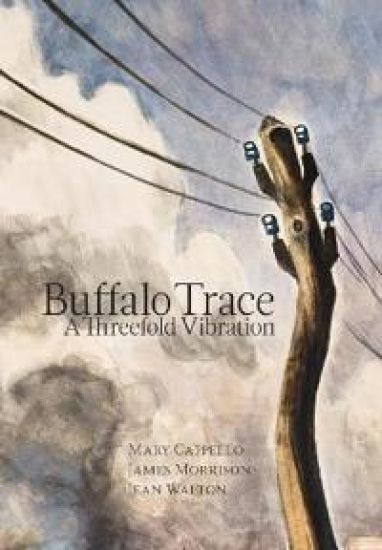
Buffalo Trace

Buffalo Trace

Mary Cappello; James Morrison; Jean Walton

Spuyten Duyvil
2018
sidottu
At a time when the university humanities are under siege, this heady, fascinating trio of novella-length autobiographical accounts of grad school literary studies is an absolute treat: bracingly honest, self-aware, witty, probing, exquisitely written, lucid and humane. What's been missing in most current memoirs is the subjects' intellectual growth, alongside their traumas or sexual adventures. This book has it both ways: the romance of learning and pedagogy merging with an education in eros. Its mixture of enchantment and rue feels just right. It should be read by every graduate student, every professor teaching in grad school, and everyone contemplating applying to grad school--plus everyone else looking for a lively, stimulating read. Phillip Lopate, author of A Mother's Tale and To Show and to Tell
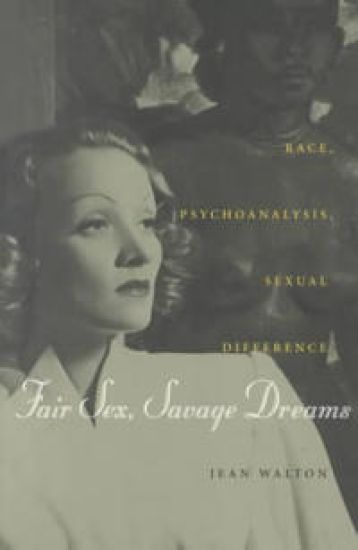
Fair Sex, Savage Dreams

Fair Sex, Savage Dreams

Jean Walton

Duke University Press
2001
sidottu
In Fair Sex, Savage Dreams Jean Walton examines the work of early feminist psychoanalytic writing to decipher in it the unacknowledged yet foundational role of race. Focusing on the 1920s and 1930s, a time when white women were actively refashioning Freud’s problematic accounts of sexual subjectivity, Walton rereads in particular the writing of British analysts Joan Riviere and Melanie Klein, modernist poet H. D., the eccentric French analyst Marie Bonaparte, and anthropologist Margaret Mead. Charting the fantasies of racial difference in these women’s writings, Walton establishes that race-particularly during this period-was inseparable from accounts of gender and sexuality. While arguing that these women remained notably oblivious to the racial meanings embedded in their own attempts to rearticulate feminine sexuality, Walton uses these very blindspots to understand how race and sex are deeply imbricated in the constitution of subjectivity. Challenging the notion that subjects acquire gender identities in isolation from racial ones, she thus demonstrates how white-centered psychoanalytic theories have formed the basis for more contemporary feminist and queer explorations of fantasy, desire, power, and subjectivity. Fair Sex, Savage Dreams will appeal to scholars of psychoanalysis, literary and cinematic modernism, race studies, queer theory, feminist theory, and anthropology.

Fair Sex, Savage Dreams

Fair Sex, Savage Dreams

Jean Walton

Duke University Press
2001
pokkari
In Fair Sex, Savage Dreams Jean Walton examines the work of early feminist psychoanalytic writing to decipher in it the unacknowledged yet foundational role of race. Focusing on the 1920s and 1930s, a time when white women were actively refashioning Freud’s problematic accounts of sexual subjectivity, Walton rereads in particular the writing of British analysts Joan Riviere and Melanie Klein, modernist poet H. D., the eccentric French analyst Marie Bonaparte, and anthropologist Margaret Mead. Charting the fantasies of racial difference in these women’s writings, Walton establishes that race-particularly during this period-was inseparable from accounts of gender and sexuality. While arguing that these women remained notably oblivious to the racial meanings embedded in their own attempts to rearticulate feminine sexuality, Walton uses these very blindspots to understand how race and sex are deeply imbricated in the constitution of subjectivity. Challenging the notion that subjects acquire gender identities in isolation from racial ones, she thus demonstrates how white-centered psychoanalytic theories have formed the basis for more contemporary feminist and queer explorations of fantasy, desire, power, and subjectivity. Fair Sex, Savage Dreams will appeal to scholars of psychoanalysis, literary and cinematic modernism, race studies, queer theory, feminist theory, and anthropology.