Kirjojen hintavertailu – 12 859 828 kirjaa ja 27 kauppaa
Kirjailija
Jeanne X Kasperson
Kirjat ja teokset yhdessä paikassa: 4 kirjaa, julkaisuja vuosilta 1993–2020, suosituimpiin kuuluu Global Environmental Risk. Vertaile teosten hintoja ja tarkista saatavuus suomalaisista kirjakaupoista.
In this book, representatives of government, industry, universities, and public interest groups consider the emerging art of risk assessment and discuss the issues and problems involved. They look at two failures in technological risk management–Three Mile Island and Love Canal; examine the dimensions of technological risk; tackle the difficult question of how safe is "safe enough"; and offer a set of research priorities.
In this book, representatives of government, industry, universities, and public interest groups consider the emerging art of risk assessment and discuss the issues and problems involved. They look at two failures in technological risk management–Three Mile Island and Love Canal; examine the dimensions of technological risk; tackle the difficult question of how safe is "safe enough"; and offer a set of research priorities.
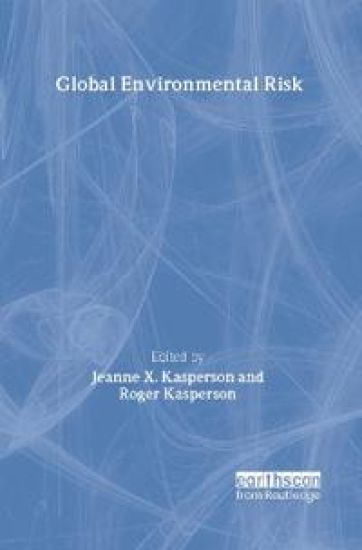
Despite international initiatives such as the Earth Summit in 1992 and ongoing efforts to implement the Kyoto Protocol, human activities continue to register a destructive toll on the planetary environment. At root, research on global environmental risk seeks new pathways for reversing unsustainable trends, curtailing ongoing destructive activities, and creating a life-sustaining planet. This book takes stock of the distinctive challenges posed by global environmental risks, the capacity of knowledge systems to identify and characterize such risks, and the competence of human society to manage the unprecedented complexity. Particular attention trains on engaging, in ways conducive to enhancing social learning and adaptation, the large uncertainties inherent in these risks. Various chapters enlist different scales of analysis to explore the manifestation and causes of global environmental risks in all the diversity of their regional expression. Throughout, the editors and contributors accord prominence to the vulnerability of people and places to environmental degradation. Understanding vulnerability is a neglected key to assessing the nature of the risks and determining strategies for altering trajectories of threat. Global risk futures, the editors argue, are not intractable, and are still amenable to a risk-analysis enterprise that is democratic in principle, humanistic in concept, and geared to the realities that pertain to the particular societies, locales, and regions that will ultimately bear the risk.
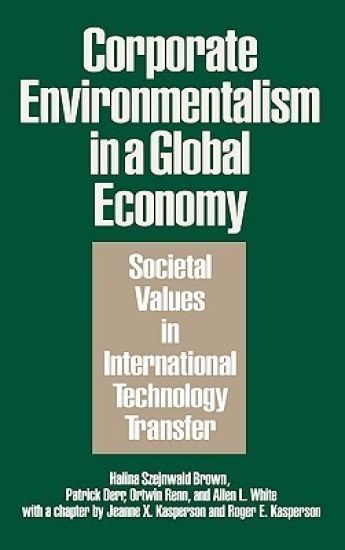
Brown and her colleagues offer an unprecedented analysis of how multinational corporations and developing countries manage, in the face of differing values, to relate as each proceeds in the interest of particular development objectives. Through three case studies involving Du Pont Agrichemical, Occidental Chemical, and Xerox and the countries of India and Thailand, the authors illustrate how the differing values of the host country and the corporation influence decisions. It offers valuable insights into the anatomy of decision-making in a highly sensitive and increasingly scrutinized segment of contemporary business. This is a particularly timely examination of multinational enterprises, of the impact of corporate cultures, sustainable development, hazard management and environmental issues seen in relationship to developing countries' values, needs, and objectives.