Kirjojen hintavertailu – 12 903 732 kirjaa ja 27 kauppaa
Kirjailija
Jefferey M. Sellers
Kirjat ja teokset yhdessä paikassa: 5 kirjaa, julkaisuja vuosilta 2002–2020, suosituimpiin kuuluu Multilevel Democracy. Vertaile teosten hintoja ja tarkista saatavuus suomalaisista kirjakaupoista.
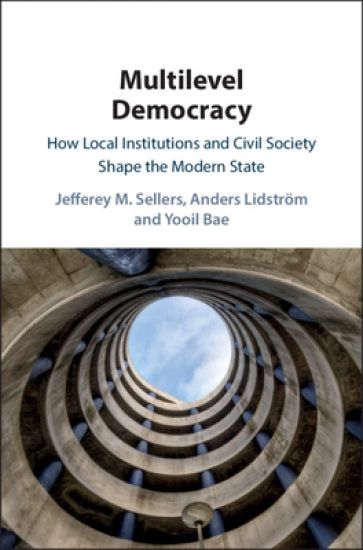
This volume presents the first systematic comparative analysis of national traditions of local democracy across the developed world, as well as their origins and evolution. It reveals how inclusive local institutions that integrate national and local governance make democracy work better. Across most of the developed world, early forms of the national state entrenched the local power of elites. In Anglo-American and Swiss democracies, state formation imposed enduring tensions with local civic governance. In contrast, inclusive, integrative local institutions in Northern Europe enabled close links with central government around common local and national agendas, producing better governance and fuller democracy to the present day. Through comparative analysis, the authors demonstrate how institutions for local governance and the participation of civil society differ widely among developed democracies, and how local democracy relates to national democracy. The resulting insights fundamentally recast our understanding of how to build and maintain more effective democracies.
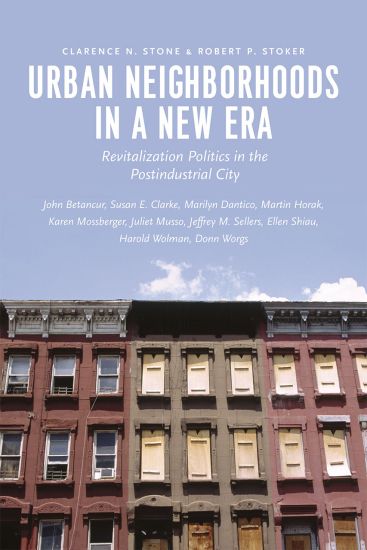
Clarence N. Stone; Robert P. Stoker; John Betancur; Susan E. Clarke; Marilyn Dantico; Martin Horak; Karen Mossberger; Juliet Musso; Jefferey M. Sellers; Ellen Shiau; Harold Wolman; Donn Worgs
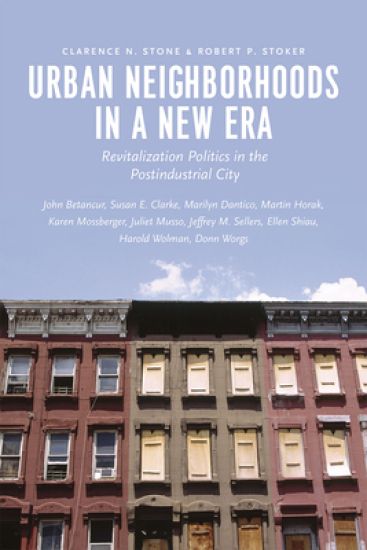
For decades, North American cities racked by deindustrialization and population loss have followed one primary path in their attempts at revitalization: a focus on economic growth in downtown and business areas. Neighborhoods, meanwhile, have often been left severely underserved. There are, however, signs of change. This collection of studies by a distinguished group of political scientists and urban planning scholars offers a rich analysis of the scope, potential, and ramifications of a shift still in progress. Focusing on neighborhoods in six cities-Baltimore, Chicago, Denver, Los Angeles, Phoenix, and Toronto-the authors show how key players, including politicians and philanthropic organizations, are beginning to see economic growth and neighborhood improvement as complementary goals. The heads of universities and hospitals in central locations also find themselves facing newly defined realities, adding to the fluidity of a new political landscape even as structural inequalities exert a continuing influence. While not denying the hurdles that community revitalization still faces, the contributors ultimately put forth a strong case that a more hospitable local milieu can be created for making neighborhood policy. In examining the course of experiences from an earlier period of redevelopment to the present postindustrial city, this book opens a window on a complex process of political change and possibility for reform.
Clarence N. Stone; Robert P. Stoker; John Betancur; Susan E. Clarke; Marilyn Dantico; Martin Horak; Karen Mossberger; Juliet Musso; Jefferey M. Sellers; Ellen Shiau; Harold Wolman; Donn Worgs
For decades, North American cities racked by deindustrialization and population loss have followed one primary path in their attempts at revitalization: a focus on economic growth in downtown and business areas. Neighborhoods, meanwhile, have often been left severely underserved. There are, however, signs of change. This collection of studies by a distinguished group of political scientists and urban planning scholars offers a rich analysis of the scope, potential, and ramifications of a shift still in progress. Focusing on neighborhoods in six cities-Baltimore, Chicago, Denver, Los Angeles, Phoenix, and Toronto-the authors show how key players, including politicians and philanthropic organizations, are beginning to see economic growth and neighborhood improvement as complementary goals. The heads of universities and hospitals in central locations also find themselves facing newly defined realities, adding to the fluidity of a new political landscape even as structural inequalities exert a continuing influence. While not denying the hurdles that community revitalization still faces, the contributors ultimately put forth a strong case that a more hospitable local milieu can be created for making neighborhood policy. In examining the course of experiences from an earlier period of redevelopment to the present postindustrial city, this book opens a window on a complex process of political change and possibility for reform.
Throughout the world more policy making and the politics that shape it take place in the urban regions where most people live. This book draws on eleven case studies of similar but disparate urban regions in France, Germany and the United States from the 1960s to the 1990s. It documents the growth of this urban governance and develops a pioneering analysis of its causes and consequences. It traces the origins to the expansion and devolution of policy making, to local business mobilization and institutional interests in high-tech and service activities, and the incorporation of local social movements. Nation-states shape the possibilities for this urban governance, but operate increasingly as infrastructures for local initiatives. Where urban governance has succeeded in combining environmental quality and social inclusion with local prosperity, local officials have built on supportive infrastructures from higher levels, the local economy, civil society, and favourable positions in the global economy.