

Kirjailija
Jefferson Davis
Kirjat ja teokset yhdessä paikassa: 102 kirjaa, julkaisuja vuosilta 1971–2025, suosituimpiin kuuluu Speeches Of The Hon. Jefferson Davis, Of Mississippi. Vertaile teosten hintoja ja tarkista saatavuus suomalaisista kirjakaupoista.
102 kirjaa
Kirjojen julkaisuvuodet: 1971–2025.

The Rise and Fall of the Confederate Government Part One V2
Jefferson Davis
Kessinger Pub
2007
sidottu


Speeches Of The Hon. Jefferson Davis Of Mississippi
Jefferson Davis
KESSINGER PUBLISHING, LLC
2007
nidottu

Rise And Fall Of The Confederate Government Part One V2
Jefferson Davis
KESSINGER PUBLISHING CO
2006
pokkari

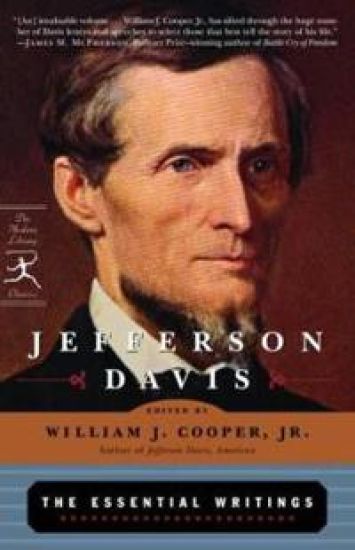
A definitive anthology of the writings by the president of the Confederacy presents a diverse array of letters, his inaugural address as Confederate president, writings from prison to his wife, and speeches on the Constitution, slavery, and other topics. Reprint. 12,500 first printing.
During the last nine months of the Civil War, virtually all of the news reports and President Jefferson Davis's correspondence confirmed the imminent demise of the Confederate States, the nation Davis had striven to uphold since 1861. But despite defeat after defeat on the battlefield, a recalcitrant Congress, nay-sayers in the press, disastrous financial conditions, failures in foreign policy and peace efforts, and plummeting national morale, Davis remained in office and tried to maintain the government, even after the fall of Richmond on April 2, until his capture by Union forces on May 10, 1865. The eleventh volume of The Papers of Jefferson Davis follows these tumultuous last months of the Confederacy and illuminates Davis's policies, feelings, ideas, and relationships, as well as the viewpoints of hundreds of southerners, critics and supporters, who asked favours, pointed out abuses, and offered advice on myriad topics. Printed here for the first time are many speeches and a number of new letters and telegrams. In the course of the volume, Robert E. Lee officially becomes general in chief, Joseph E. Johnston is given a final command, legislation is enacted to place slaves in the army as soldiers, and peace negotiations are opened at the highest levels. The closing pages chronicle Davis's dramatic flight from Richmond, including emotional correspondence with his wife as the two endeavor to find each other en route and make plans for the future in the wreckage of their lives. The holdings of seventy different manuscript repositories and private collections in addition to numerous published sources contribute to Volume 11, the fifth in the Civil War period.
The autumn of 1863 was a trying time for Jefferson Davis. Even as he expressed unwavering confidence about the eventual success of the Confederate movement, he had to realise that mounting economic problems, low morale, and rotating army leadership were threatening the welfare of the new nation. Less than a year after the October 1863 Confederate victory at Chickamauga, the South relinquished Atlanta to Sherman. During the tumultuous eleven months chronicled in Volume 10, Davis retained his fervor for southern nationalism as he struggled furiously to command a war and maintain a government. As the letters contained here illustrate, he soldiered bravely on.
The New Year . . . comes in auspiciously for us, Jefferson Davis proclaimed in January, 1863, and indeed there were grounds for optimism within the Confederacy. By September, however, various hopes for ending the confi‚ict with the North had given way to the harsh realities of a prolonged war, increasingly confined to southern soil. Although Davis suffered poor health during much of the nine-month period, he remained an active and vital leader. Volume 9 of The Papers of Jefferson Davis gives a vivid picture of the tasks he faced. Military matters consumed most of Davis' time. Already strained relations with Joseph E. Johnston worsened in the spring, and he was eventually relieved of his overall command of the western armies. Surrenders at Vicksburg and Port Hudson ended Confederate access to the Mississippi River, and in the East, Robert E. Lee's stunning victory at Chancellorsville was blotted out by bloody repulse south of Gettysburg. Correspondence from Europe reveals what Davis knew of the Erlanger loan and the diminishing chances of French and British intervention. As problems for the Confederacy mounted, discontent grew. Davis received complaints from across the young country, the conscription system being of particular concern. In April he saw firsthand the unhappiness over limited resources as he took to the streets to help calm the Richmond bread riot. Over 2,000 documents, many never before published, are included in Volume 9. Eighty-one are printed with annotation, 242 more in full text, and about 1,750 others are calendared in summary form. They show Davis fighting to maintain morale and military cohesion during one of the Confederacy's most difficult periods.
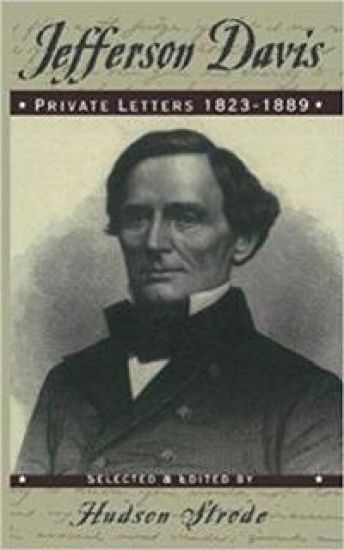
This fascinating collection of intimate letters from and to Jefferson Davis (1808-1889) illuminates the character and personality of the President of the Confederacy. These letters (the majority appearing fully in print for the first time) range widely over one of the most turbulent periods in American history, from his fifteenth year to his death at eighty-one. Here is Jefferson Davis in all aspects: in love and in house slippers as wounded war hero at dramatic heights of statesmanship in grief over four dead sons refusing Lee's resignation after Gettysburg and expressing unwavering confidence as shackled prisoner, stoic survivor, generous friend, adoring father and husband. Equally revealing are the letters written to him by such notable figures as Franklin Pierce, Zachary Taylor, Judah P. Benjamin, General and Mrs. Robert E. Lee, Davis's children, and of course his spirited wife, Varina. From this rich, varied correspondence there emerges a unique biography in letters, adding new dimensions and highlights to one of the most exalted, maligned, and remarkable men in American history.

Volume 8 of The Papers of Jefferson Davis brings the Confederate president to the second year of the War Between the States and shows that during 1862 Davis was almost completely overwhelmed by military matters. Indeed, early that year, in an address to the Confederate Congress, he admitted that in trying to defend every part of its far-flung territory, the ""Government had attempted more than it had power successfully to achieve.""During 1862, Judah P. Benjamin was replaced as secretary of war by George W. Randolph, who was then succeeded by James A. Seddon. As the year advanced, Davis' relationships with certain key generals continued to sour. Chief among them were P. G. T. Beauregard, who was finally removed from his last significant command, and Joseph E. Johnston, whose fall from grace precipitated Robert E. Lee's rise to influence as commander of the Army of Northern Virginia. Lee proved to be as adept in communicating and coordinating plans with the president as Johnston had been inept. At the inconclusive Battle of Shiloh, Davis lost Albert Sidney Johnston, a trusted friend and the general he had most admired. Like Shiloh, many other campaigns of 1862 ended in stalemate and withdrawal, including Henry H. Sibley's New Mexico campaign, Braxton Bragg's Kentucky campaign, Earl Van Dorn's battle at Elkhorn Tavern, and the Confederacy's greatest gamble, Lee's Invasion of Maryland. Correspondence with Davis' brother, Joseph E. Davis, reveals the ever-worsening situation in Mississippi. The Federal occupation of New Orleans, the fall of new Madrid and Island No. 10, and Grants repeated attempts to capture Vicksburg heightened anxiety about the area and persuaded the president to tour the western theater in December. Because the Union's springtime invasion of Richmond prompted Davis to send his wife and children away, Volume 8 contains an unusually rich collection of letters exchanged during their separation. This correspondence offers a rare glimpse into the minds and hearts of Davis and his wife. Altogether, more than 2,000 documents, many never before published, are included in Volume 8; 133 are printed in full. Culled from fifty-nine repositories, twenty-one private collections, and numerous printed sources, they reveal that despite the many setbacks he suffered in 1862, Davis maintained a deep devotion to duty and an unbending will to win.
Volume 7 of The Papers of Jefferson Davis offers a unique view of 1861, the first year of the Confederacy, Davis' presidency, and the Civil War. On January 21 Davis made his affecting farewell speech before a hushed Senate, then left for Mississippi. His uncertainty over a military or political course vanished when he received news of his unanimous election as president of the Confederate States of America. Inaugurated at Montgomery, Alabama, on February 18, Davis quickly set to work to forge a government, in a race with events to select a cabinet, establish departments, and plan for the common defense. Hopes for a peaceful separation from the North ended with the firing on Fort Sumter; subsequent documents reveal a president absorbed by the problems of waging a war that soon stretched from the Atlantic Coast to the Gulf of Mexico. Victory at Manassas produced euphoria among southerners but plunged the president into the first of several unfortunate controversies with his generals, this one over the failure to pursue the enemy and capitalize on success. Throughout 1861 the Confederate commissioners in Europe reported to Davis on their expectations of recognition, convinced that the demand for cotton would induce Great Britain and France to break the North's blockade of southern ports and help supply arms for the defense of the fledgling nation. Volume 7 provides a rare opportunity to assess anew Davis' strengths and weaknesses as executive, to reexamine his relationship with generals, governors, congressmen, cabinet officers, the press, and the public. Davis ended the year as he begun, aware of the difficulties of the course the South had adopted and confident that its cause would ultimately triumph. Containing illustrations, maps, and more than 2,500 documents drawn from numerous printed sources and more than seventy repositories and private collections, Volume 7 covers a year of paramount importance in our country's history.
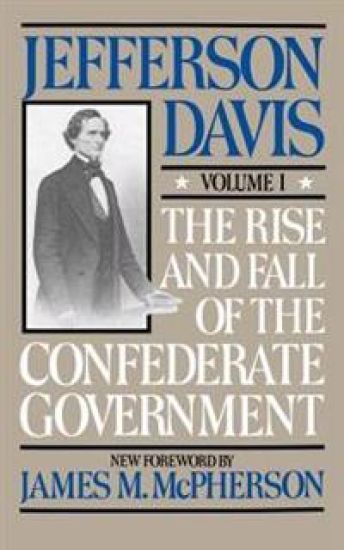
A decade after his release from federal prison, the 67-year-old Jefferson Davis,ex-president of the Confederacy, the "Southern Lincoln," popularly regarded as a martyr to the Confederate cause,began work on his monumental Rise and Fall of the Confederate Government . Motivated partially by his deep-rooted antagonism toward his enemies (both the Northern victors and his Southern detractors), partially by his continuing obsession with the cause," and partially by his desperate pecuniary and physical condition, Davis devoted three years and extensive research to the writing of what he termed "an historical sketch of the events which preceded and attended the struggle of the Southern states to maintain their existence and their rights as sovereign communities." The result was a perceptive two-volume chronicle, covering the birth, life, and death of the Confederacy, from the Missouri Compromise in 1820, through the tumultuous events of the Civil War, to the readmission of the Southern states to the U. S. Congress in the late 1860s. Supplemented with a new historical foreword by the Pulitzer Prize-winning James M. McPherson, The Rise and Fall of the Confederate Government, Volume I belongs in the library of anyone interested in the root causes, the personalities, and the events of America's greatest war.
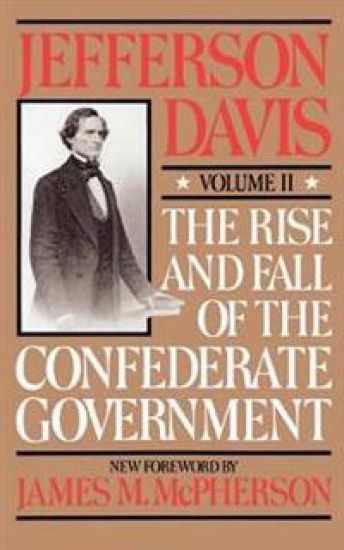
A decade after his release from Federal prison, the 67-year-old Jefferson Davis,ex-President of the Confederacy, the "Southern Lincoln," popularly regarded as a martyr to the Confederate cause,began work on his monumental Rise and Fall of the Confederate Government. Motivated partially by his deep-rooted antagonism toward his enemies (both the Northern victors and his Southern detractors), partially by his continuing obsession with the "cause," and partially by his desperate pecuniary and physical condition, Davis devoted three years and extensive research to the writing of what he termed "an historical sketch of the events which preceded and attended the struggle of the Southern states to maintain their existence and their rights as sovereign communities." The result was a perceptive two-volume chronicle, covering the birth, life, and death of the Confederacy, from the Missouri Compromise in 1820, through the tumultuous events of the Civil War, to the readmission of the Southern States to the Congress in the late 1860s. Supplemented with a new historical foreword by the Pulitzer Prize-winning James M. McPherson, The Rise and Fall of the Confederate Government, Volume I, belongs in the library of anyone interested in the root causes, the personalities, and the events of America's greatest war.
Volume 6 of The Papers of Jefferson Davis, spanning the five crucial years before 1861, chronicles Davis' last year as secretary of war and his return to the Senate, capstone of his long career of public service to the United States. Volume 6 includes 116 letters printed in full with annotation, a calendar of over 6,000 items, and summaries of 53 recently discovered documents dating from 1845 through 1855, as well as illustrations and maps prepared especially for the volume. Davis' correspondence and his final report to Franklin Pierce mirror the concerns of his last months as head of the War Department, turmoil in Kansas, protection of western settlements, construction of the Washington Aqueduct, the Capitol extension and new dome, surveys for the Pacific Railroad, Indian relations, the camel experiment, army reorganisation, and advances in weaponry. All these issues followed Davis to the Senate in March, 1857, but other questions soon claimed equal attention. As debates on abolition, state rights, fugitive slaves, and slavery in the territories became more frequent and more divisive, Davis found himself a major spokesman for his region. He was caught up in the momentous events testing the nation during James Buchanan's administration: ""bleeding Kansas,"" Preston Brook's attack on Charles Sumner, John Brown's raid on Harpers Ferry, the 1860 Democratic conventions, the election of a Republican president, and the secession of South Carolina. He debated at length with Stephen A. Douglas and others over ""squatter sovereignty"" and offered his own resolutions on the relations of states as the basis for the Democratic platform in 1860. Personal correspondence gives revealing word pictures of Varina Davis and the children, the family's sojourn in New England during the Summer of 1858, disastrous flooding at Brierfield in 1859, and Davis' persistent, debilitating illnesses. Volume 6 covers fateful years for the nation and for Jefferson Davis, a man moving toward a destiny that he is both creating and hoping to avoid.

The fifth volume of The Papers of Jefferson Davis presents 9,000 of the approximately 21,000 known Davis letters, papers, and speeches from the years 1853 through 1855, when Davis served as secretary of war under President Franklin Pierce. Most of the documents are included in summary form in an extensive calendar; 93 are published in full with annotation. Well prepared for the War Department position by his military education and experience, Davis was already known as a champion of the army and West Point from his years in Congress. As secretary, Davis administered a department of eight bureaus and a military establishment spread thinly from coast to coast. An increase and reorganisation of the army along with the establishment of new posts became top priorities as a tide of settlers encroached in Indian lands in the Mexican cession and Far West. Davis also supervised army engineering projects as varied as the Capitol extension, military roads, and river and harbor improvements. The curriculum of the Military Academy, new weapons and armaments development, the activities of the Crimea commission, the Pacific railroad surveys, and the camel expedition - all commanded his minute attention. Despite the burdens of office, Davis maintained a lively interest in the issues of the day, among them Latin American filibustering, the purchase of Cuba, states' rights, slavery, and the conflict in Kansas. The wide attention accorded his travels and speeches brought national prominence to him and speculation about his future candidacy for governor, a return to the Senate, the vice-presidency, and even the presidency. Personal correspondence includes letters that touch on Davis' long estrangement from his brother, the death of his first child, persistent health problems, and relationships with friends and family. Much of hiss official correspondence, especially several angry exchanges with army officers, reveals even more about Davis' personality. In addition to the documents published in full and calendared, an appendix includes over one hundred recently discovered personal and political items dates from 1838 through 1852, before Davis' selection as secretary of war.

In Volume 4 of The Papers of Jefferson Davis, which covers the years 1849 to 1852, Davis had clearly chosen politics ar his life's work. He relished in his role as Mississippi's senior senator and willingly assumed the responsibility of being a national spokesman for the South. This period also saw a number of events in Davis' personal life, notably the birth of his first child and the beginning of a long estrangement from his brother Joseph. In January, 1849, Davis signed the Southern Address, although he occasionally disagreed with the extreme positions of its author, John C. Calhoun. Outside the Senate, Davis supported the objectives of the Nashville Convention and, later, the idea of a southern congress. During the crisis of 1850 Davis spoke often on such key issues as the regulation of slavery in the territories, the extension of the Missouri Compromise line, the admission of California, the Texas-New Mexico boundary, the continuation of the slave trade in the District of Columbia, and the Fugitive Slave Act. In 1851 he proposed purchasing camels for military transportation and urged that a Pacific railroad route be considered in the definition of the Mexican boundary. As a loyal Democrat, Davis had supported Lewis Cass in 1848, but he was a conspicuous personal favourite of Zachary Taylor, the new Whig president and his former father-in-law. In 1850 Taylor reportedly intervened to prevent a duel between Illinois representative William H. Bissell and Davis, who was incensed by Bissell's remarks about the Mississippi regiment at Buena Vista. Soon after joining the Taylor family at the president's deathbed in July, 1850, Davis defended Taylor's Mexican War performance in well-publicized Senate speech. Between sessions in 1849 Davis canvassed Mississippi, addressing gatherings throughout the state in favour of congressional candidates. He warned of northern aggressions, yet urged the exhaustion of all means of peaceful resistance before secession be considered. When he returned home after the arduous 1850 session, he defended his course, denying charges that he was a disunionist. In February, 1850, Davis had been reelected to the Senate for a full six-year term, but in September, 1851, he resigned to accept the Sate Rights nomination for governor in opposition to Union nominee Henry Foote. Although illness precluded much active campaigning in the few weeks before the election, Davis substantially reduced the Union lead and lost by a narrow margin. A private citizen for the first time since 1845, Davis continued his involvement in politics. Despite nagging personal problems and ill health, he promoted Democratic unity and took to the stump for Franklin Pierce in 1852.
At the end of Volume 2 Jefferson Davis had left Congress to become a colonel in the First Mississippi Regiment. The first item in this volume is a speech as he prepares to leave on a riverboat to serve in the Mexican War. The years 1846 through 1848 see Davis play a conspicuous role in the war and in the subsequent political clashes and controversies over slavery. Volume 3 details Davis' first experience in battle as an officer of a regiment as well as his initial term as a U. S. senator. He received both praise and criticism for his leadership in Mexico. In 1847 he returned to Mississippi a wounded hero of national fame, refused a brigadier generalship, and took his place in the U. S. Senate. There are several items of correspondence with Zachary Taylor that shed light on Taylor's attitude toward the proposed nomination that would lead to his election as president in 1848. Davis' first wife was Taylor's daughter; and in spite of political and family differences the two men maintained a close friendship. In a major speech in July, 1848, Davis protested the formal prohibition of slavery from the Oregon Territory; he then voted for the Senate's compromise bill on Oregon. Volume 3 of The Papers of Jefferson Davis includes letters to and from Davis, his speeches in chronological order, and other documents, further illuminating Davis' character, opinions, philosophy, and personal relationships as well as continuing the development of his military career.