Kirjojen hintavertailu – 12 903 725 kirjaa ja 27 kauppaa
Kirjailija
Jeffery T. Walker
Kirjat ja teokset yhdessä paikassa: 10 kirjaa, julkaisuja vuosilta 2012–2025, suosituimpiin kuuluu Understanding Statistics for the Social Sciences, Criminal Justice, and Criminology. Vertaile teosten hintoja ja tarkista saatavuus suomalaisista kirjakaupoista.
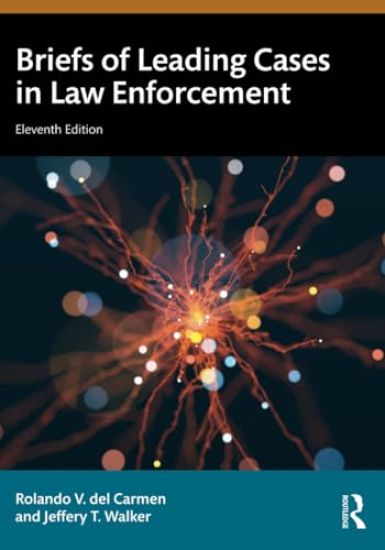
This essential resource offers extensive updates on the leading Supreme Court cases impacting law enforcement in the United States, creating a must-have reference for police officers to stay up-to-date and have a strong understanding of the law and their function within it. All cases are briefed in a common format to allow for comparisons among cases and include facts, relevant issues, and the Court’s decision and reasoning. The significance of each case is also explained, making clear its impact on citizens and law enforcement. This book provides students and practitioners with historical and social context for their role in criminal justice and the legal guidelines that should be followed in day-to-day policing activities. Resources for instructors include PowerPoint lecture slides, test banks, case studies, a sample course syllabus, and a selection of web-based resources.
Legal Guide for Police: Constitutional Issues, 12th Edition, is a valuable tool for criminal justice students and law enforcement professionals, bringing them up-to-date with developments in the law of arrest, search and seizure, police authority to detain, questioning suspects and pretrial identification procedures, police power and its limitations, and civil liability of police officers and agencies. Including specific case examples, this revised edition provides the most current information for students and law enforcement professionals needing to develop an up-to-date understanding of the law. Authors Walker and Hemmens have included introductory and summary chapters to aid readers in understanding the context, importance, and applicability of the case law. All chapters have been updated to reflect U. S. Supreme Court decisions up to and including the 2021 term of court. Important cases added to this edition include: Caniglia v. Strom (2021) (warrantless search), Kansas v. Glover (2020) (vehicle stop), Mitchell v. Wisconsin (2019) (warrantless drawing of blood), Rivas-Villegas v. Cortesluna (qualified immunity), and Nieves v. Bartlett (2018) (retaliatory arrest). A helpful Appendix contains the Bill of Rights and the Fourteenth Amendment, and a Table of Cases lists every case referenced in the text.
It is critical for students to have a complete understanding of how to collect and analyze social science data to understand the nature of crime and theories of crime causation. This updated Fifth Edition of Statistics in Criminology and Criminal Justice: Analysis and Interpretation provides students with a firm knowledge base in the theory and application of statistical analysis. It focuses on data collection, knowing which statistics to use with what data, how to interpret output of SPSS (an IBM company), explanations and demonstrations of statistical procedures, why procedures give the results they do, how to interpret the output of statistical analyses, and more. With this text, students will develop complete comprehension of how to collect, organize and record, analyze, interpret, and apply the statistical information to prepare them for their careers or graduate study.
In recent years, the fields of crime analysis and environmental criminology have grown in prominence for their advancements made in understanding crime. This book offers a theoretical and methodological introduction to crime analysis, covering the main techniques used in the analysis of crime and the foundation of crime mapping. Coverage includes discussions of: The development of crime analysis and the profession of the crime analyst, The theoretical roots of crime analysis in environmental criminology, Pertinent statistical methods for crime analysis, Spatio-temporal applications of crime analysis, Crime mapping and the intersection of crime analysis and police work, Future directions for crime analysis. Packed with case studies and including examples of specific problems faced by crime analysts, this book offers the perfect introduction to the analysis and investigation of crime. It is essential reading for students taking courses on crime analysis, crime mapping, crime prevention, and environmental criminology. A companion website offers further resources for students, including flashcards and video and website links. For instructors, it includes chapter-by-chapter PowerPoint slides.
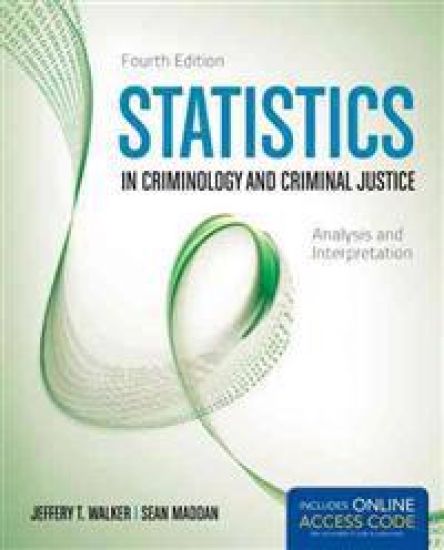
It is critical for students to have a complete understanding of how to collect and analyze social science data to understand the nature of crime and theories of crime causation. This updated Fourth Edition of Statistics in Criminology and Criminal Justice: Analysis and Interpretation provides students with a firm knowledge base in the theory and application of statistical analysis. It focuses on data collection, knowing which statistics to use with what data, how to interpret output of SPSS (an IBM company), explanations and demonstrations of statistical procedures, why procedures give the results they do, how to interpret the output of statistical analyses, and more. With this text, students will develop complete comprehension of how to collect, organize and record, analyze, interpret, and apply the statistical information to prepare them for their careers or graduate study. Key Features • Each chapter has been updated to include new information on statistical output, revised data files, additional data sets, and extensive use of flowcharts to increase students’ confidence in analyzing and conducting statistical research. • Features key terms, equation summaries, exercises, updated references, suggested readings for further knowledge, as well as “How Do You Do That” and “A Bit of History” explanations, making this Fourth Edition the ideal introductory statistics text for criminology, criminal justice, or other social science students. • Includes learning objectives at the start of every chapter as well as end-of-chapter webpointers that correspond to the accompanying student companion website. • Provides an extensive glossary and equation glossary for students to quickly reference key terms and equations when preparing for lectures and exams.
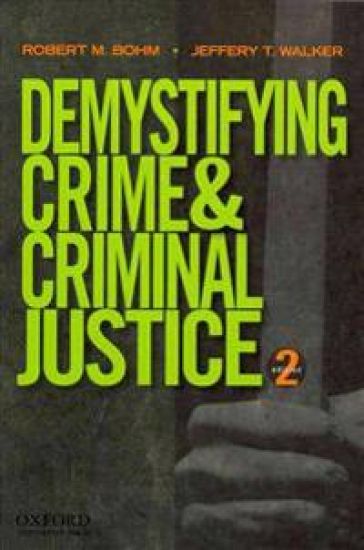
From myths about crime and punishment to dangerous misunderstandings about the administration of justice, Demystifying Crime and Criminal Justice, Second Edition, exposes--and aims to correct--many of the American public's misconceptions about the criminal justice system. Designed to stimulate critical thinking, this volume not only provides students with a deeper understanding of crime and criminal justice but also encourages them to question generally accepted beliefs more broadly. FEATURES* Revised and updated chapters contributed by a broad range of experts and scholars* Incorporates the most up-to-date research* Ten brand-new chapters covering misconceptions about juvenile offenders, the rehabilitation of sex offenders, the use of police force, and other controversial issues* Rich pedagogy: review questions, discussion/critical thinking questions, relevant websites, and additional reading suggestions
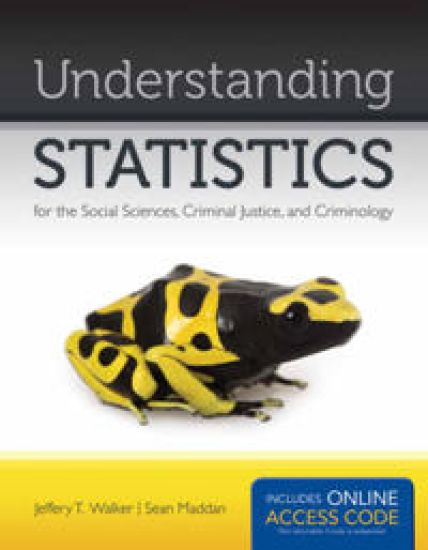
Designed for introductory-level statistics courses, Understanding Statistics for the Social Sciences, Criminal Justice, and Criminology presents the fundamentals of statistics in a clear and simplified format. This accessible text addresses all of the basics of statistical analysis while still providing the reader with the larger view of statistics. The authors focus on calculating the basic formulas yet preserve enough advanced material to prepare the student for further study. The book also provides information on deciding when to use particular statistical analyses, how to input and analyze data through programs such as Microsoft Excel and SPSS, the interpretation of statistical output, and making conclusions based on those results. The student-friendly and simplified presentation of Understanding Statistics makes it the ideal introductory statistics text and will provide readers with a strong foundation in statistics – conceptually and pragmatically. Understanding Statistics for the Social Sciences, Criminal Justice, and Criminology boasts a variety of in-text study aids, such as key terms, equation summaries, exercises, end-of-chapter references, and suggested readings, and an equation glossary as well as a collection of online study tools housed on the dedicated student companion website. The student-friendly presentation of the material coupled with the rich variety of student and instructor resources make Understanding Statistics the ideal introductory statistics text for undergraduate students! Every new printed copy is packaged with full access to the student companion website featuring a a rich variety of study tools! (eBook version does not include access to the student companion website. Standalone access can be purchased here http://www.jblearning.com/catalog/978 449 49234/) Student Resources: -Microsoft and Excel SPSS data sets -Companion website featuring: *interactive flashcards *interactive glossary *practice quiz (with answers) *student data sets, in Excel and SPSS, that correlate to the chapter material *weblinks