Kirjojen hintavertailu – 12 903 725 kirjaa ja 27 kauppaa

Kirjailija

Jeffrey Andrew Weinstock

Kirjat ja teokset yhdessä paikassa: 18 kirjaa, julkaisuja vuosilta 2004–2024, suosituimpiin kuuluu A Critical Companion to Neil Gaiman's "Neverwhere". Vertaile teosten hintoja ja tarkista saatavuus suomalaisista kirjakaupoista.

18 kirjaa

Kirjojen julkaisuvuodet: 2004–2024.

The Routledge Introduction to the American Ghost Story

The Routledge Introduction to the American Ghost Story

Scott Brewster; Jeffrey Andrew Weinstock

TAYLOR FRANCIS LTD
2024
sidottu
This book traces the historical development of the American ghost story from its Indigenous, Puritan, and Enlightenment origins to its heyday in the nineteenth century and continued vibrancy in modern literary and visual culture. It explores the main tropes, thematic preoccupations, principal settings, and stylistic innovations of literary ghost stories in the United States, and the ghost story’s rich afterlife in cinema, television, and digital culture. Throughout, the role played by ghost stories in nation-building, and the questions these tales raise about race, class, sexuality, religion, and science, will be examined. The book examines major practitioners in the field, such as Nathaniel Hawthorne, Washington Irving, Shirley Jackson, Henry James, Stephen King, Toni Morrison, Joyce Carol Oates, and Edith Wharton, alongside prominent ghost narratives in cinematic, televisual, and online form, including podcasts, gaming, and ghost-hunting apps. This study also gives a new prominence to neglected or less familiar authors, including BIPOC writers, who have helped to shape the American ghost story tradition.
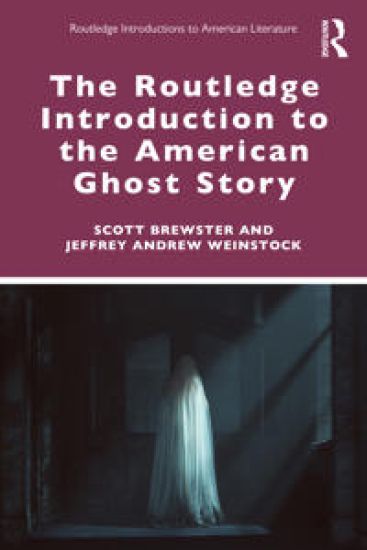
The Routledge Introduction to the American Ghost Story

The Routledge Introduction to the American Ghost Story

Scott Brewster; Jeffrey Andrew Weinstock

TAYLOR FRANCIS LTD
2024
nidottu
This book traces the historical development of the American ghost story from its Indigenous, Puritan, and Enlightenment origins to its heyday in the nineteenth century and continued vibrancy in modern literary and visual culture. It explores the main tropes, thematic preoccupations, principal settings, and stylistic innovations of literary ghost stories in the United States, and the ghost story’s rich afterlife in cinema, television, and digital culture. Throughout, the role played by ghost stories in nation-building, and the questions these tales raise about race, class, sexuality, religion, and science, will be examined. The book examines major practitioners in the field, such as Nathaniel Hawthorne, Washington Irving, Shirley Jackson, Henry James, Stephen King, Toni Morrison, Joyce Carol Oates, and Edith Wharton, alongside prominent ghost narratives in cinematic, televisual, and online form, including podcasts, gaming, and ghost-hunting apps. This study also gives a new prominence to neglected or less familiar authors, including BIPOC writers, who have helped to shape the American ghost story tradition.
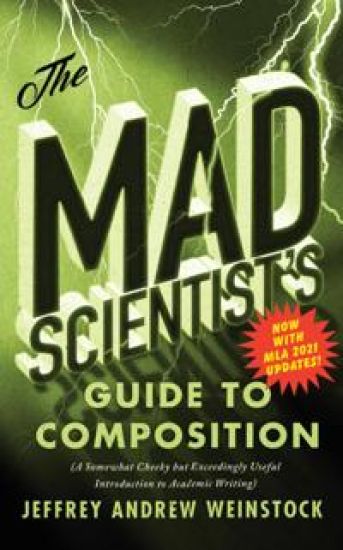
The Mad Scientist’s Guide to Composition - MLA 2021 Update

The Mad Scientist’s Guide to Composition - MLA 2021 Update

Jeffrey Andrew Weinstock

BROADVIEW PRESS LTD
2023
pokkari
Considering the composition classroom as a mad scientist's laboratory, The Mad Scientist's Guide to Composition introduces different kinds of writing as experiments. Writing an essay is a task that can strike fear into a student's heart, but performing an experiment licenses creativity and doesn't presume that one knows the outcome from the start. The Mad Scientist's Guide covers the kinds of writing most often required on college campuses, while also addressing important steps and activities frequently overlooked in composition guides, such as revision and peer reviewing. Actual examples of student writing are included throughout, as are helpful reminders and tips to help students polish their skills. Above all, the Mad Scientist's Guide seeks to make writing fun.
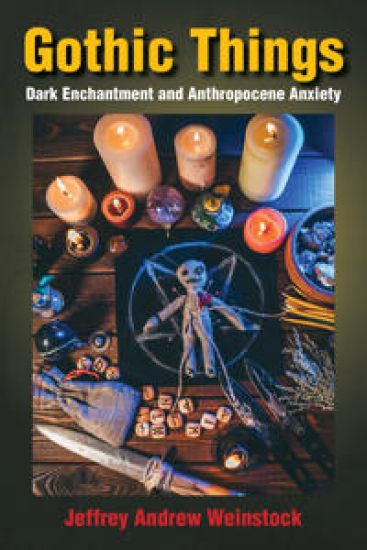
Gothic Things

Gothic Things

Jeffrey Andrew Weinstock

FORDHAM UNIVERSITY PRESS
2023
pokkari
SHORTLISTED, THE ALLAN LLOYD SMITH PRIZE FOR BEST MONOGRAPH Offering an innovative approach to the Gothic, Gothic Things: Dark Enchantment and Anthropocene Anxiety breaks ground with a new materialist analysis of the genre, highlighting the ways that, since its origins in the eighteenth century, the Gothic has been intensely focused on "ominous matter" and "thing power." In chapters attending to gothic bodies, spaces, books, and other objects, Gothic Things argues that the Gothic has always been about what happens when objects assume mysterious animacy or potency and when human beings are reduced to the status of just one thing among many—more powerful—others. In exploring how the Gothic insistently decenters the human, Jeffrey Andrew Weinstock reveals human beings to be enmeshed in networks of human and nonhuman forces mostly outside of their control. Gothic Things thus resituates the Gothic as the uncanny doppelgänger of twenty-first-century critical and cultural theory, lurking just beneath the surface (and sometimes explicitly surfacing) as it haunts considerations of how human beings interact with objects and their environment. In these pages the Gothic offers a dark reflection of the contemporary "nonhuman turn," expressing a twenty-first-century structure of feeling undergirded by anxiety over the fate of the human: spectrality, monstrosity, and apocalypse. Substituting horror for hope, the Gothic, Weinstock explains, has been a philosophical meditation on human relations to the nonhuman since its inception, raising significant questions about how we can counter anthropocentric thought in our quest to live more harmoniously with the world around us.
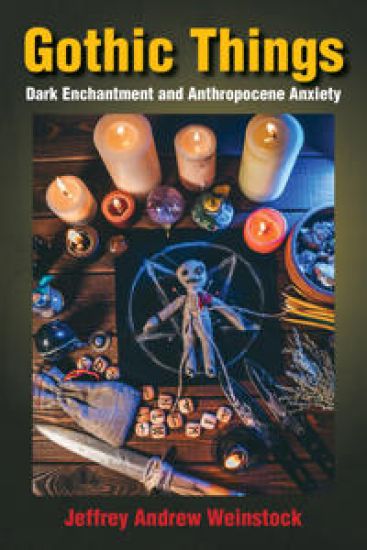
Gothic Things

Gothic Things

Jeffrey Andrew Weinstock

FORDHAM UNIVERSITY PRESS
2023
sidottu
SHORTLISTED, THE ALLAN LLOYD SMITH PRIZE FOR BEST MONOGRAPH Offering an innovative approach to the Gothic, Gothic Things: Dark Enchantment and Anthropocene Anxiety breaks ground with a new materialist analysis of the genre, highlighting the ways that, since its origins in the eighteenth century, the Gothic has been intensely focused on "ominous matter" and "thing power." In chapters attending to gothic bodies, spaces, books, and other objects, Gothic Things argues that the Gothic has always been about what happens when objects assume mysterious animacy or potency and when human beings are reduced to the status of just one thing among many—more powerful—others. In exploring how the Gothic insistently decenters the human, Jeffrey Andrew Weinstock reveals human beings to be enmeshed in networks of human and nonhuman forces mostly outside of their control. Gothic Things thus resituates the Gothic as the uncanny doppelgänger of twenty-first-century critical and cultural theory, lurking just beneath the surface (and sometimes explicitly surfacing) as it haunts considerations of how human beings interact with objects and their environment. In these pages the Gothic offers a dark reflection of the contemporary "nonhuman turn," expressing a twenty-first-century structure of feeling undergirded by anxiety over the fate of the human: spectrality, monstrosity, and apocalypse. Substituting horror for hope, the Gothic, Weinstock explains, has been a philosophical meditation on human relations to the nonhuman since its inception, raising significant questions about how we can counter anthropocentric thought in our quest to live more harmoniously with the world around us.
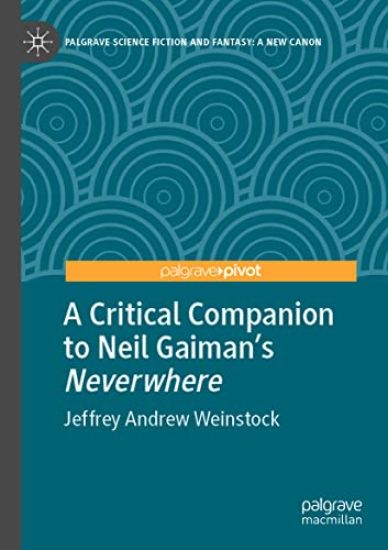
A Critical Companion to Neil Gaiman's "Neverwhere"

A Critical Companion to Neil Gaiman's "Neverwhere"

Jeffrey Andrew Weinstock

Springer Nature Switzerland AG
2023
nidottu
Fantasy author Neil Gaiman’s 1996 novel Neverwhere is not just a marvelous self-contained novel, but a terrifically useful text for introducing students to fantasy as a genre and issues of adaptation. Jeffrey Andrew Weinstock’s briskly written A Critical Companion to Neil Gaiman’s Neverwhere offers an introduction to the work; situates it in relation to the fantasy genre, with attention in particular to the Hero’s Journey, urban fantasy, word play, social critique, and contemporary fantasy trends; and explores it as a case study in transmedial adaptation. The study ends with an interview with Neil Gaiman that addresses the novel and a bibliography of scholarly works on Gaiman.
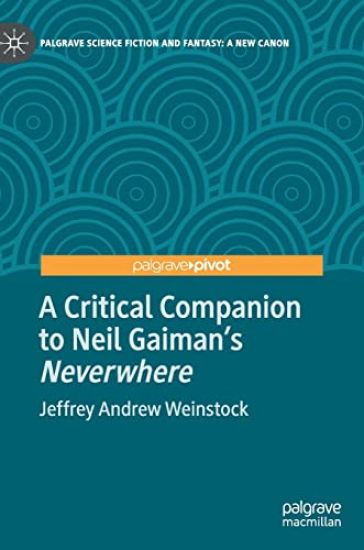
A Critical Companion to Neil Gaiman's "Neverwhere"

A Critical Companion to Neil Gaiman's "Neverwhere"

Jeffrey Andrew Weinstock

Springer Nature Switzerland AG
2022
sidottu
Fantasy author Neil Gaiman’s 1996 novel Neverwhere is not just a marvelous self-contained novel, but a terrifically useful text for introducing students to fantasy as a genre and issues of adaptation. Jeffrey Andrew Weinstock’s briskly written A Critical Companion to Neil Gaiman’s Neverwhere offers an introduction to the work; situates it in relation to the fantasy genre, with attention in particular to the Hero’s Journey, urban fantasy, word play, social critique, and contemporary fantasy trends; and explores it as a case study in transmedial adaptation. The study ends with an interview with Neil Gaiman that addresses the novel and a bibliography of scholarly works on Gaiman.
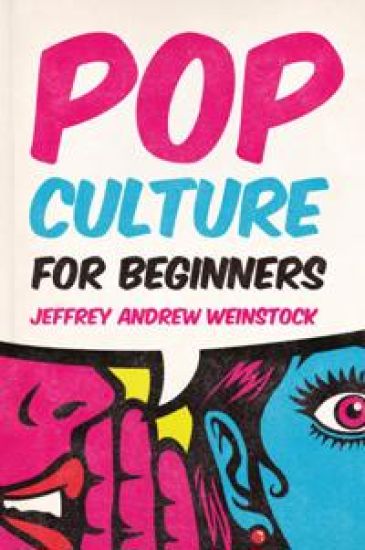
Pop Culture for Beginners

Pop Culture for Beginners

Jeffrey Andrew Weinstock

BROADVIEW PRESS LTD
2021
pokkari
Pop Culture for Beginners promotes reflective engagement with the world around us and provides a set of tools for thinking critically about how meaning is created, reinforced, and circulated. Privileging a semiotic approach, the book’s first part, “The Pop Culture Toolbox,” outlines the development of pop culture studies; explains the semiotic framework; introduces students to a variety of critical lenses including Marxism, feminism, postcolonialism, and Critical Race Theory; and then offers an overview of several pop culture “pivot points” including authenticity, convergence culture, intersectionality, intertextuality, and subculture. The book’s second part provides a series of units, prepared in consultation with subject area experts, built around topics central to popular culture studies: television and film, music, comics, gaming, social media, and fandom. Each chapter includes “Your Turn” activities and discussion questions, as well as possible assignments and suggestions for further reading. The unit chapters in part two also include enabling questions as beginning points for thinking critically and sample readings demonstrating relevant scholarly approaches to popular culture; important vocabulary terms throughout are included in a substantive glossary at the end.
Goth Music

Goth Music

Isabella van Elferen; Jeffrey Andrew Weinstock

Routledge
2020
nidottu
Is "goth music" a genre, and if so, how does it relate to the goth subculture? The music played at goth club nights and festivals encompasses a broad range of musical substyles, from gloomy Batcave reverberations to neo-medieval bagpipe drones and from the lush vocals of goth metal to the harsh distortion of goth industrial. Goth Music: From Sound to Subculture argues that within this variegated musical landscape a number of key consistencies exist. Not only do all these goth substyles share a number of musical and textual characteristics, but more importantly these aspects of the music are constitutive of goth social reality. Drawing on their own experiences in the European and American goth scenes, the authors explore the ways in which the sounds of goth inform the scene’s listening practices, its fantasies of other worlds, and its re-enchantment of their own world. Goth music, this book asserts, engenders a musical timespace of its own, a musical chronotope that is driven by nostalgic yearning. Goth Music: From Sound to Subculture reorients goth subcultural studies onto music: goth music must be recognized not only as simultaneously diverse and consistent, but also as the glue that holds together goth scenes from all over the world. It all starts with the music.
Scare Tactics

Scare Tactics

Jeffrey Andrew Weinstock

Fordham University Press
2016
pokkari
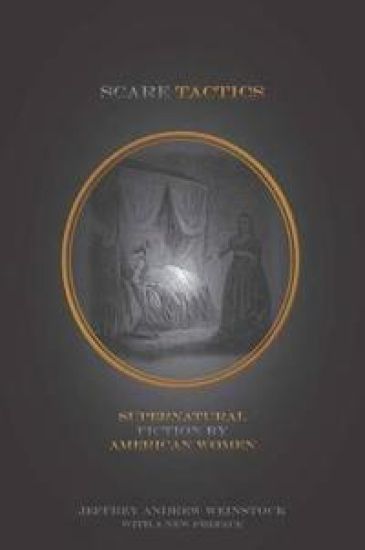
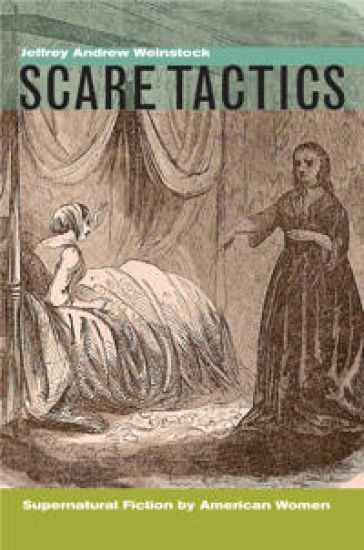
Scare Tactics identifies an important but overlooked tradition of supernatural writing by American women. Jeffrey Weinstock analyzes this tradition as an essentially feminist attempt to imagine alternatives to a world of limited possibilities. In the process, he recovers the lives and works of authors who were important during their lifetimes and in the development of the American literary tradition, but who are not recognized today for their contributions. Between the end of the Civil War and roughly 1930, hundreds of uncanny tales were published by women in the periodical press and in books. These include stories by familiar figures such as Edith Wharton, Harriet Beecher Stowe, and Charlotte Perkins Gilman, as well as by authors almost wholly unknown to twenty-first-century readers, such as Josephine Dodge Bacon, Alice Brown, Emma Frances Dawson, and Harriet Prescott Spofford. Focusing on this tradition of female writing offers a corrective to the prevailing belief within American literary scholarship that the uncanny tale, exemplified by the literary productions of Irving, Poe, and Hawthorne, was displaced after the Civil War by literary realism. Beyond the simple existence of an unacknowledged tradition of uncanny literature by women, Scare Tactics makes a strong case that this body of literature should be read as a specifically feminist literary tradition. Especially intriguing, Weinstock demonstrates, is that women authors repeatedly used Gothic conventions to express discontentment with circumscribed roles for women creating types of political intervention connected to the broader sphere of women's rights activism. Paying attention to these overlooked authors helps us better understand not only the literary marketplace of their time, but also more familiar American Gothicists from Edgar Allan Poe to Shirley Jackson to Stephen King.
Goth Music

Goth Music

Isabella van Elferen; Jeffrey Andrew Weinstock

Routledge
2015
sidottu
Is "goth music" a genre, and if so, how does it relate to the goth subculture? The music played at goth club nights and festivals encompasses a broad range of musical substyles, from gloomy Batcave reverberations to neo-medieval bagpipe drones and from the lush vocals of goth metal to the harsh distortion of goth industrial. Goth Music: From Sound to Subculture argues that within this variegated musical landscape a number of key consistencies exist. Not only do all these goth substyles share a number of musical and textual characteristics, but more importantly these aspects of the music are constitutive of goth social reality. Drawing on their own experiences in the European and American goth scenes, the authors explore the ways in which the sounds of goth inform the scene’s listening practices, its fantasies of other worlds, and its re-enchantment of their own world. Goth music, this book asserts, engenders a musical timespace of its own, a musical chronotope that is driven by nostalgic yearning. Goth Music: From Sound to Subculture reorients goth subcultural studies onto music: goth music must be recognized not only as simultaneously diverse and consistent, but also as the glue that holds together goth scenes from all over the world. It all starts with the music.
Critical Approaches to the Films of M. Night Shyamalan

Critical Approaches to the Films of M. Night Shyamalan

Jeffrey Andrew Weinstock

Palgrave Macmillan
2015
nidottu
Critical Approaches to the Films of M. Night Shyamalan represents the first serious academic engagement with auteur director M. Night Shyamalan and his work. The essays, including contributions from established film scholars David Sterritt, Murray Pomerance, Emmanuel Burdeau, R. Barton Palmer, Matt Hills, and Katherine Fowkes, explore the Hollywood blockbusters from The Sixth Sense to The Happening in terms of their themes, aesthetics, and marketing. Taken together, the collection recognizes and explores Shyamalan s "star status" and offers the concerted analysis that this cultural phenomenon requires.
Reading Rocky Horror

Reading Rocky Horror

Jeffrey Andrew Weinstock

Palgrave Macmillan
2015
nidottu
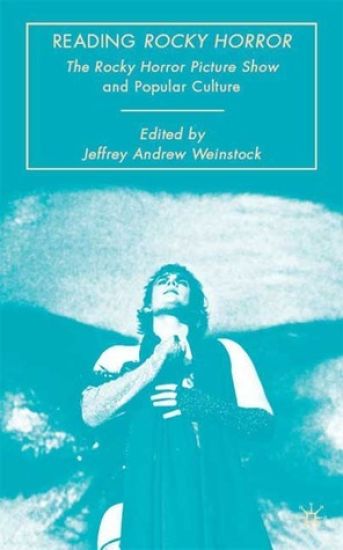
The first scholarly collection devoted to The Rocky Horror Picture Show, dissecting the film from diverse perspectives including gender and queer studies, disability studies, cultural studies, genre studies, and film studies.
Critical Approaches to the Films of M. Night Shyamalan

Critical Approaches to the Films of M. Night Shyamalan

Jeffrey Andrew Weinstock

Palgrave Macmillan
2010
sidottu
Critical Approaches to the Films of M. Night Shyamalan represents the first serious academic engagement with auteur director M. Night Shyamalan and his work. The essays, including contributions from established film scholars David Sterritt, Murray Pomerance, Emmanuel Burdeau, R. Barton Palmer, Matt Hills, and Katherine Fowkes, explore the Hollywood blockbusters from The Sixth Sense to The Happening in terms of their themes, aesthetics, and marketing. Taken together, the collection recognizes and explores Shyamalan s "star status" and offers the concerted analysis that this cultural phenomenon requires.
Reading Rocky Horror

Reading Rocky Horror

Jeffrey Andrew Weinstock

Palgrave Macmillan
2008
nidottu
The first scholarly collection devoted to The Rocky Horror Picture Show, dissecting the film from diverse perspectives including gender and queer studies, disability studies, cultural studies, genre studies, and film studies.
Reading Rocky Horror

Reading Rocky Horror

Jeffrey Andrew Weinstock

Palgrave Macmillan
2008
sidottu
The first scholarly collection devoted to The Rocky Horror Picture Show, dissecting the film from diverse perspectives including gender and queer studies, disability studies, cultural studies, genre studies, and film studies.
Scare Tactics

Scare Tactics

Jeffrey Andrew Weinstock

Fordham University Press
2008
sidottu
Scare Tactics identifies an important but overlooked tradition of supernatural writing by American women. Jeffrey Weinstock analyzes this tradition as an essentially feminist attempt to imagine alternatives to a world of limited possibilities. In the process, he recovers the lives and works of authors who were important during their lifetimes and in the development of the American literary tradition, but who are not recognized today for their contributions. Between the end of the Civil War and roughly 1930, hundreds of uncanny tales were published by women in the periodical press and in books. These include stories by familiar figures such as Edith Wharton, Harriet Beecher Stowe, and Charlotte Perkins Gilman, as well as by authors almost wholly unknown to twenty-first-century readers, such as Josephine Dodge Bacon, Alice Brown, Emma Frances Dawson, and Harriet Prescott Spofford. Focusing on this tradition of female writing offers a corrective to the prevailing belief within American literary scholarship that the uncanny tale, exemplified by the literary productions of Irving, Poe, and Hawthorne, was displaced after the Civil War by literary realism. Beyond the simple existence of an unacknowledged tradition of uncanny literature by women, Scare Tactics makes a strong case that this body of literature should be read as a specifically feminist literary tradition. Especially intriguing, Weinstock demonstrates, is that women authors repeatedly used Gothic conventions to express discontentment with circumscribed roles for women creating types of political intervention connected to the broader sphere of women's rights activism. Paying attention to these overlooked authors helps us better understand not only the literary marketplace of their time, but also more familiar American Gothicists from Edgar Allan Poe to Shirley Jackson to Stephen King.
Spectral America

Spectral America

Jeffrey Andrew Weinstock

University of Wisconsin Press
2004
nidottu

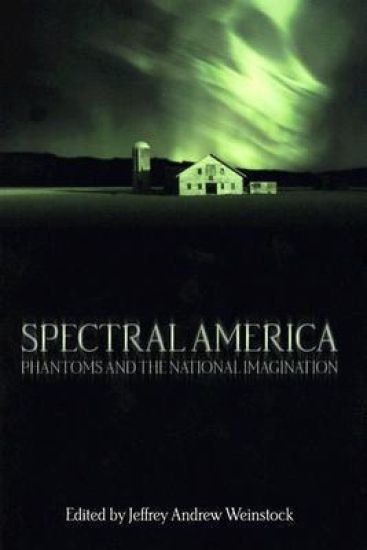
Halvin toimitettuna 27,70 €

From essays about the Salem witch trials to literary uses of ghosts by Twain, Wharton, and Bierce to the cinematic blockbuster The Sixth Sense, this book is the first to survey the importance of ghosts and hauntings in American culture across time. From the Puritans' conviction that a thousand preternatural beings appear every day before our eyes, to today's resurgence of spirits in fiction and film, the culture of the United States has been obsessed with ghosts. In each generation, these phantoms in popular culture reflect human anxieties about religion, science, politics, and social issues.