Kirjojen hintavertailu – 12 876 363 kirjaa ja 26 kauppaa

Kirjailija

Jeffrey Braithwaite

Kirjat ja teokset yhdessä paikassa: 4 kirjaa, julkaisuja vuosilta 2013–2017, suosituimpiin kuuluu Resilient Health Care. Vertaile teosten hintoja ja tarkista saatavuus suomalaisista kirjakaupoista.

4 kirjaa

Kirjojen julkaisuvuodet: 2013–2017.

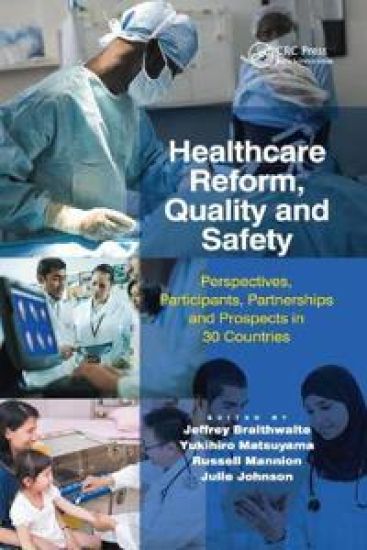
Healthcare Reform, Quality and Safety

Healthcare Reform, Quality and Safety

Jeffrey Braithwaite; Yukihiro Matsuyama; Julie Johnson

CRC Press
2017
nidottu
This book offers a global perspective on healthcare reform and its relationship with efforts to improve quality and safety. It looks at the ways reforms have developed in 30 countries, and specifically the impact national reform initiatives have had on the quality and safety of care. It explores how reforms drive quality and safety improvement, and equally how they act to negate such goals. Every country included in this book is involved in a reform and improvement process, but each takes place in a particular social, cultural, economic and developmental context, leading to differing emphases and varied progress. Methods for tackling common problems - financing, efficiencies, effectiveness, evidence-based practice, institutional reforms, quality improvement, and patient safety initiatives - also differ. Representatives from each nation provide a chapter to convey their own situation.
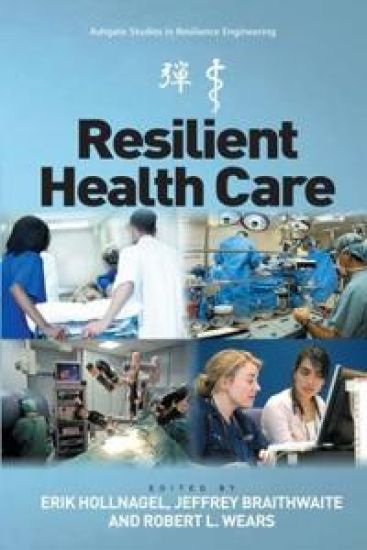
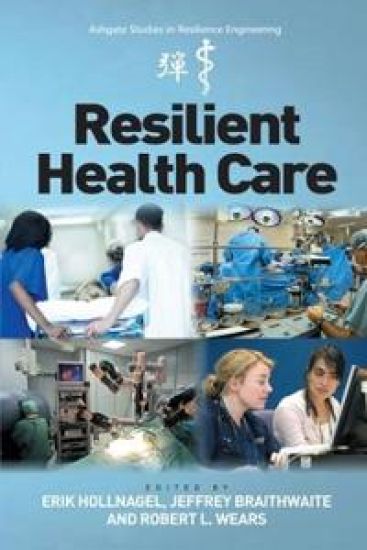
Resilient Health Care

Resilient Health Care

Erik Hollnagel; Jeffrey Braithwaite

CRC Press
2015
nidottu
Health care is everywhere under tremendous pressure with regard to efficiency, safety, and economic viability - to say nothing of having to meet various political agendas - and has responded by eagerly adopting techniques that have been useful in other industries, such as quality management, lean production, and high reliability. This has on the whole been met with limited success because health care as a non-trivial and multifaceted system differs significantly from most traditional industries. In order to allow health care systems to perform as expected and required, it is necessary to have concepts and methods that are able to cope with this complexity. Resilience engineering provides that capacity because its focus is on a system’s overall ability to sustain required operations under both expected and unexpected conditions rather than on individual features or qualities. Resilience engineering’s unique approach emphasises the usefulness of performance variability, and that successes and failures have the same aetiology. This book contains contributions from acknowledged international experts in health care, organisational studies and patient safety, as well as resilience engineering. Whereas current safety approaches primarily aim to reduce or eliminate the number of things that go wrong, Resilient Health Care aims to increase and improve the number of things that go right. Just as the WHO argues that health is more than the absence of illness, so does Resilient Health Care argue that safety is more than the absence of risk and accidents. This can be achieved by making use of the concrete experiences of resilience engineering, both conceptually (ways of thinking) and practically (ways of acting).
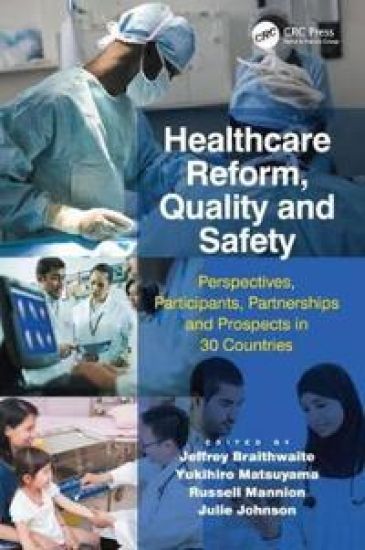
Healthcare Reform, Quality and Safety

Healthcare Reform, Quality and Safety

Jeffrey Braithwaite; Yukihiro Matsuyama; Julie Johnson

CRC Press
2015
sidottu
This book offers a global perspective on healthcare reform and its relationship with efforts to improve quality and safety. It looks at the ways reforms have developed in 30 countries, and specifically the impact national reform initiatives have had on the quality and safety of care. It explores how reforms drive quality and safety improvement, and equally how they act to negate such goals. Every country included in this book is involved in a reform and improvement process, but each takes place in a particular social, cultural, economic and developmental context, leading to differing emphases and varied progress. Methods for tackling common problems - financing, efficiencies, effectiveness, evidence-based practice, institutional reforms, quality improvement, and patient safety initiatives - also differ. Representatives from each nation provide a chapter to convey their own situation. The editors draw a conclusion from these numerous contributions and synthesize the themes emerging into a coherent ’lessons learned’ summary that delivers value to the numerous stakeholders. Healthcare Reform, Quality and Safety forms a compendium of the current ’state of the art’ in global healthcare reform. This is the first book of its type, and offers a unique opportunity for cross-fertilization of ideas to the mutual benefit of countries involved in the project. The content will be of interest to governments, policymakers, managers and leaders, clinicians, teaching academics, researchers and students.
Resilient Health Care

Resilient Health Care

Erik Hollnagel; Jeffrey Braithwaite

Ashgate Publishing Limited
2013
sidottu
Health care is everywhere under tremendous pressure with regard to efficiency, safety, and economic viability - to say nothing of having to meet various political agendas - and has responded by eagerly adopting techniques that have been useful in other industries, such as quality management, lean production, and high reliability. This has on the whole been met with limited success because health care as a non-trivial and multifaceted system differs significantly from most traditional industries. In order to allow health care systems to perform as expected and required, it is necessary to have concepts and methods that are able to cope with this complexity. Resilience engineering provides that capacity because its focus is on a system’s overall ability to sustain required operations under both expected and unexpected conditions rather than on individual features or qualities. Resilience engineering’s unique approach emphasises the usefulness of performance variability, and that successes and failures have the same aetiology. This book contains contributions from acknowledged international experts in health care, organisational studies and patient safety, as well as resilience engineering. Whereas current safety approaches primarily aim to reduce or eliminate the number of things that go wrong, Resilient Health Care aims to increase and improve the number of things that go right. Just as the WHO argues that health is more than the absence of illness, so does Resilient Health Care argue that safety is more than the absence of risk and accidents. This can be achieved by making use of the concrete experiences of resilience engineering, both conceptually (ways of thinking) and practically (ways of acting).