Kirjojen hintavertailu – 12 903 725 kirjaa ja 27 kauppaa

Kirjailija

Jeffrey Crouch

Kirjat ja teokset yhdessä paikassa: 4 kirjaa, julkaisuja vuosilta 2007–2022, suosituimpiin kuuluu Newt Gingrich. Vertaile teosten hintoja ja tarkista saatavuus suomalaisista kirjakaupoista.

4 kirjaa

Kirjojen julkaisuvuodet: 2007–2022.

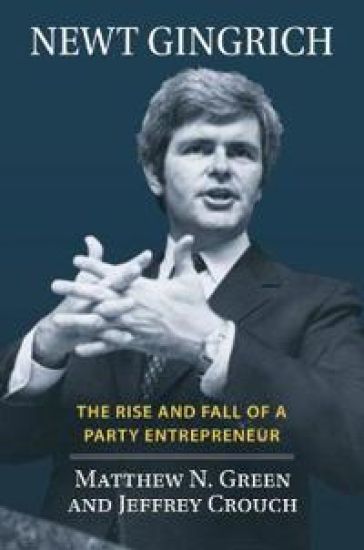
Newt Gingrich

Newt Gingrich

Matthew N. Green; Jeffrey Crouch

UNIVERSITY PRESS OF KANSAS
2022
sidottu
Newt Gingrich is one of the most polarizing and consequential figures in US politics. First elected to the House of Representatives in 1978, he rose from a minority party backbencher to become the first Republican Speaker of the House in forty years. Though much has been written about Gingrich, accounts of his time in Congress are incomplete and often skewed. In their book Newt Gingrich: The Rise and Fall of a Party Entrepreneur, political scientists Matthew N. Green and Jeffrey Crouch draw from newly uncovered archival material, original interviews, and other data to provide a fresh and insightful look at Gingrich’s entire congressional career. Green and Crouch argue that Gingrich is best understood as a “party entrepreneur,” someone who works primarily to achieve their congressional party's collective goals. From the moment he entered Congress, Gingrich was laser-focused on achieving two party-related objectives—a Republican majority in the House and a more conservative society—as well as greater influence for himself. Using a conceptual framework taken from theories of military strategy, the authors explain how Gingrich initially struggled because of a mismatch between his lofty goals and the resources available to him. After years of patiently cultivating allies, tempering his immediate objectives, and waiting for favorable circumstances to emerge, Gingrich finally claimed victory in 1994, with Republicans winning control of the House and electing Gingrich as Speaker. Yet while Gingrich had been creative, patient, and ultimately successful at gaining power for himself and his party, he proved ineffective at balancing his goals with the demands of the Speakership, and he resigned from Congress just four years later. Newt Gingrich: The Rise and Fall of a Party Entrepreneur, the latest contribution to the Congressional Leaders series, sheds new light on a historically important congressional leader whose complicated legacy is still debated today by scholars, journalists, and politicians.
The Presidential Pardon Power

The Presidential Pardon Power

Jeffrey Crouch

University Press of Kansas
2009
sidottu
Until President Gerald Ford pardoned former president Richard Nixon for the Watergate scandal, most members of the public probably paid little attention to the president's use of the clemency power. Ford's highly controversial pardon of Nixon, however, ignited such a firestorm of protest that, fairly or unfairly, it may have cost him the presidency in 1976. Ever since, presidential pardons have been the subject of increased scrutiny and the focus of news media with a voracious appetite for scandal. This first book-length treatment of presidential pardons in twenty years updates the clemency controversy to consider its more recent uses - or misuses. Blending history, law, and politics into a seamless narrative, Jeffrey Crouch provides a close look at the application and scrutiny of this power. His book is a virtual primer on the subject, covering all facets from its background in English law to current applications. Crouch considers the framers' vision of how clemency would fit into the separation of powers as an 'act of grace' or a check on injustice, then explains how the president and Congress have struggled for supremacy over the pardon power, with the Supreme Court generally deferring to the executive branch's desire for its broadest possible application. Before the modern era, presidents rarely interfered in the justice system to protect aides from prosecution, and Crouch examines some of the more controversial pardons in our history, from the Whiskey rebels to Jimmy Hoffa. In the wake of Watergate, he shows, the use of presidential pardons has become more controversial. Crouch assesses whether independent counsel investigations and special prosecutors have prompted the executive to use the pardon as a weapon in interbranch political warfare. He argues that the clemency power has been misused by recent presidents, who have used it to protect themselves or their subordinates, or to reward supporters. And although he concedes that Ford's pardon of Nixon reflected the framers' concerns about preserving government in a time of crisis, he argues that more recent cases involving the Iran-Contra conspirators, commodities trader Marc Rich, and vice-presidential chief-of-staff 'Scooter' Libby have demonstrated a disturbing misapplication of power. In fleshing out these misuses of clemency, Crouch weighs the pros and cons of proposed amendments to the pardon power, one of the few powers that are virtually unlimited in the Constitution. ""The Presidential Pardon Power"" takes up a key issue in debates over the imperial presidency and urges that public and scholars alike pay closer attention to a dangerous trend.