Kirjojen hintavertailu – 12 903 725 kirjaa ja 27 kauppaa

Kirjailija

Jeffrey Goldsworthy

Kirjat ja teokset yhdessä paikassa: 6 kirjaa, julkaisuja vuosilta 1999–2020, suosituimpiin kuuluu Protecting Rights Without a Bill of Rights. Vertaile teosten hintoja ja tarkista saatavuus suomalaisista kirjakaupoista.

6 kirjaa

Kirjojen julkaisuvuodet: 1999–2020.

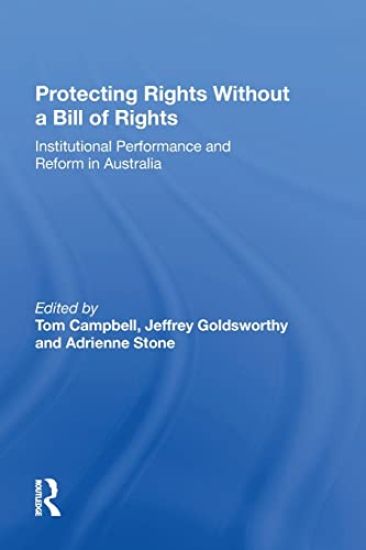
Protecting Rights Without a Bill of Rights

Protecting Rights Without a Bill of Rights

Jeffrey Goldsworthy; Tom Campbell; Adrienne Stone

Routledge
2020
nidottu
Australia is now the only major Anglophone country that has not adopted a Bill of Rights. Since 1982 Canada, New Zealand and the UK have all adopted either constitutional or statutory bills of rights. Australia, however, continues to rely on common law, statutes dealing with specific issues such as racial and sexual discrimination, a generally tolerant society and a vibrant democracy. This book focuses on the protection of human rights in Australia and includes international perspectives for the purpose of comparison and it provides an examination of how well Australian institutions, governments, legislatures, courts and tribunals have performed in protecting human rights in the absence of a Bill of Rights.
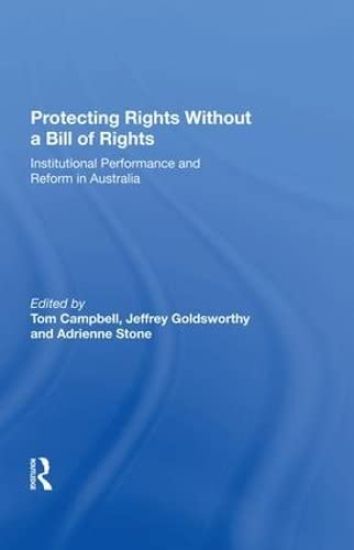
Protecting Rights Without a Bill of Rights

Protecting Rights Without a Bill of Rights

Jeffrey Goldsworthy; Tom Campbell; Adrienne Stone

CRC Press Inc
2017
sidottu
Australia is now the only major Anglophone country that has not adopted a Bill of Rights. Since 1982 Canada, New Zealand and the UK have all adopted either constitutional or statutory bills of rights. Australia, however, continues to rely on common law, statutes dealing with specific issues such as racial and sexual discrimination, a generally tolerant society and a vibrant democracy. This book focuses on the protection of human rights in Australia and includes international perspectives for the purpose of comparison and it provides an examination of how well Australian institutions, governments, legislatures, courts and tribunals have performed in protecting human rights in the absence of a Bill of Rights.
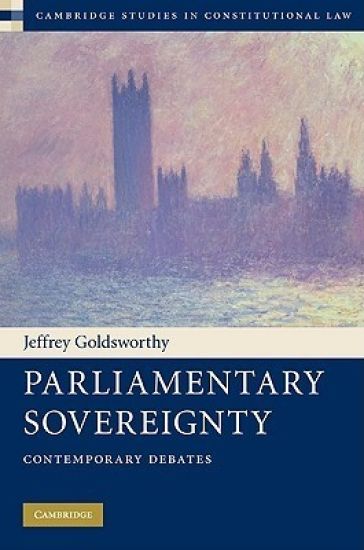
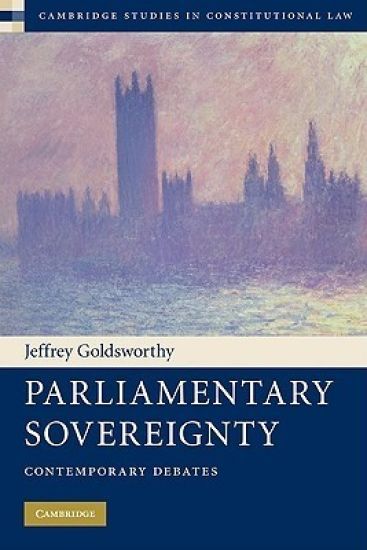
Parliamentary Sovereignty

Parliamentary Sovereignty

Jeffrey Goldsworthy

Cambridge University Press
2010
sidottu
This book has four main themes: (1) a criticism of 'common law constitutionalism', the theory that Parliament's authority is conferred by, and therefore is or can be made subordinate to, judge-made common law; (2) an analysis of Parliament's ability to abdicate, limit or regulate the exercise of its own authority, including a revision of Dicey's conception of sovereignty, a repudiation of the doctrine of implied repeal and the proposal of a novel theory of 'manner and form' requirements for law-making; (3) an examination of the relationship between parliamentary sovereignty and statutory interpretation, defending the reality of legislative intentions, and their indispensability to sensible interpretation and respect for parliamentary sovereignty; and (4) an assessment of the compatibility of parliamentary sovereignty with recent constitutional developments, including the expansion of judicial review of administrative action, the Human Rights and European Communities Acts and the growing recognition of 'constitutional principles' and 'constitutional statutes'.
Parliamentary Sovereignty

Parliamentary Sovereignty

Jeffrey Goldsworthy

Cambridge University Press
2010
pokkari
This book has four main themes: (1) a criticism of 'common law constitutionalism', the theory that Parliament's authority is conferred by, and therefore is or can be made subordinate to, judge-made common law; (2) an analysis of Parliament's ability to abdicate, limit or regulate the exercise of its own authority, including a revision of Dicey's conception of sovereignty, a repudiation of the doctrine of implied repeal and the proposal of a novel theory of 'manner and form' requirements for law-making; (3) an examination of the relationship between parliamentary sovereignty and statutory interpretation, defending the reality of legislative intentions, and their indispensability to sensible interpretation and respect for parliamentary sovereignty; and (4) an assessment of the compatibility of parliamentary sovereignty with recent constitutional developments, including the expansion of judicial review of administrative action, the Human Rights and European Communities Acts and the growing recognition of 'constitutional principles' and 'constitutional statutes'.
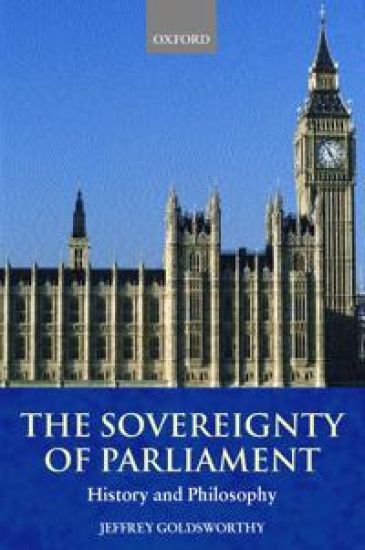
The Sovereignty of Parliament

The Sovereignty of Parliament

Jeffrey Goldsworthy

Oxford University Press
2001
nidottu
The doctrine of parliamentary sovereignty has long been regarded as the most fundamental element of the British Constitution. It holds that Parliament has unlimited legislative authority, and that the courts have no authority to judge statutes invalid. This doctrine has now been criticized on historical and philosophical grounds and critics claim that it is a relatively recent invention of academic lawyers that superseded an earlier tradition in which Parliament's authority was limited to common law. The critics also argue that it is based on a misunderstanding of the relationship between statutory and common law, and is morally indefensible. The Sovereignty of Parliament: History and Philosophy responds to these criticisms. It first defines and clarifies the concept of legislative sovereignty and then describes the historical origins and the development of the doctrine from the thirteenth to the end of the nineteenth century. Professor Goldsworthy goes on to identify many different reasons why persuaded statesmen, lawyers, and political theorists have endorsed the doctrine. He discusses the ideas of a large number of legal and political thinkers, including Fortescue, St German, Hooker, Coke, Bacon, Parker, Milton, Hobbes, Hale, Locke, Bolingbroke, Blackstone, and Burke. He shows that judges in Great Britain have never had authority to invalidate statutes, and that the doctrine is much older than is generally realized. The book concludes by dealing with philosophical criticisms of the doctrine. Combining the insights of earlier thinkers with those of contemporary legal philosophers, it demonstrates that these criticisms are based on a defective understanding of the nature and foundations of law, and of the relationship between legislative authority and the common law. It argues that the doctrine is morally defensible, and refutes the thesis that the judges have authority to modify or reject it.
The Sovereignty of Parliament

The Sovereignty of Parliament

Jeffrey Goldsworthy

Clarendon Press
1999
sidottu
The doctrine of parliamentary sovereignty has long been regarded as the most fundamental element of the British Constitution. It holds that Parliament has unlimited legislative authority, and that the courts have no authority to judge statutes invalid. This doctrine has now been criticized on historical and philosophical grounds and critics claim that it is a relatively recent invention of academic lawyers that superseded an earlier tradition in which Parliament's authority was limited to common law. The critics also argue that it is based on a misunderstanding of the relationship between statutory and common law, and is morally indefensible. The Sovereignty of Parliament: History and Philosophy responds to these criticisms. It first defines and clarifies the concept of legislative sovereignty and then describes the historical origins and the development of the doctrine from the thirteenth to the end of the nineteenth century. Professor Goldsworthy goes on to identify many different reasons why persuaded statesmen, lawyers, and political theorists have endorsed the doctrine. He discusses the ideas of a large number of legal and political thinkers, including Fortescue, St German, Hooker, Coke, Bacon, Parker, Milton, Hobbes, Hale, Locke, Bolingbroke, Blackstone, and Burke. He shows that judges in Great Britain have never had authority to invalidate statutes, and that the doctrine is much older than is generally realized. The book concludes by dealing with philosophical criticisms of the doctrine. Combining the insights of earlier thinkers with those of contemporary legal philosophers, it demonstrates that these criticisms are based on a defective understanding of the nature and foundations of law, and of the relationship between legislative authority and the common law. It argues that the doctrine is morally defensible, and refutes the thesis that the judges have authority to modify or reject it.