Kirjojen hintavertailu – 12 859 829 kirjaa ja 27 kauppaa

Kirjailija

Jeffrey Hopkins

Kirjat ja teokset yhdessä paikassa: 14 kirjaa, julkaisuja vuosilta 1981–2025, suosituimpiin kuuluu Jeffrey Hurdles. Vertaile teosten hintoja ja tarkista saatavuus suomalaisista kirjakaupoista.

14 kirjaa

Kirjojen julkaisuvuodet: 1981–2025.

Meditation on Emptiness

Meditation on Emptiness

Jeffrey Hopkins

WISDOM PUBLICATIONS,U.S.
2025
sidottu

Halvin toimitettuna 38,00 €

A comprehensive and in-depth survey of the philosophical underpinnings of the Dalai Lama's Geluk tradition written by one of the founding figures of Tibetan Buddhist studies in the West. In this classic work of Buddhist studies scholarship, Jeffrey Hopkins--one of the world's foremost scholar-practitioners of Tibetan Buddhism--offers a clear exposition of the Prasangika-Madhyamaka view of emptiness as presented in the Geluk tradition of Tibetan Buddhism. In bringing this remarkable and complex philosophy to life, he describes the meditational practices by which emptiness can be realized and shows throughout that, far from being merely abstract scholasticism, these classic teachings can be vivid and utterly practical. Treating subjects ranging from the progressive path of meditation to the nature of emptiness and how it can be directly realized, this wide-ranging book guides the reader on an itinerary of intellectual and spiritual discovery, unpacking the distinctive Geluk synthesis of scholastic and meditative practices. The first study in any Western language to provide a comprehensive treatment of the doctrines and practices of a Tibetan Buddhist school, this book is indispensable for those wishing to delve deeply into Buddhist thought and its practical relevance.

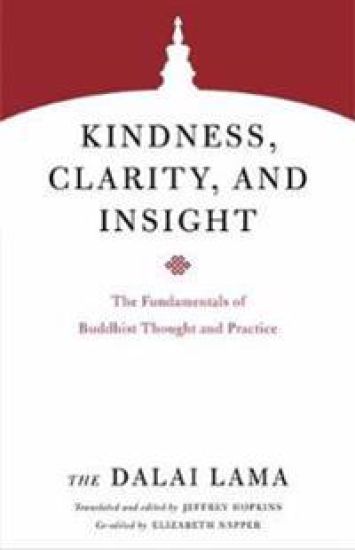
Kindness, Clarity, and Insight

Kindness, Clarity, and Insight

Dalai Lama; Jeffrey Hopkins

Shambhala Publications Inc
2020
nidottu
This beloved classic brings together in one volume all the major themes of the Dalai Lama's teachings such as religious values, the four noble truths, karma, compassion, and meditation. Drawn from the lectures he gave during his first three visits to North America, the book covers the core subject matter of Tibetan Buddhism, as presented for the first time to an English-speaking audience. The chapters are arranged developmentally from simple to complex topics, which include the luminous nature of the mind, the four noble truths, karma, the common goals of the world's religions, meditation, deities, and selflessness. Central to all these teachings is the necessity of compassion--which the Dalai Lama says is "the essence of religion" and "the most precious thing there is."
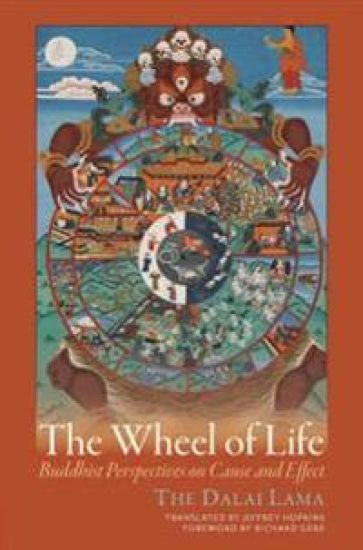
The Wheel of Life

The Wheel of Life

Dalai Lama XIV; Jeffrey Hopkins

Wisdom Publications,U.S.
2015
nidottu
Using the traditional Buddhist allegorical image of the Wheel of Life and the teaching of the twelve links of dependent origination, the Dalai Lama deftly illustrates how our existence, though fleeting and often full of woes, brims with the potential for peace and happiness. We can realize that potential by cultivating a wise appreciation of the interdependency of actions and experience, and by living a kind and compassionate life. A life thus lived, the Dalai Lama teaches, becomes thoroughly meaningful for both oneself and for others. This book was originally published under the title"The Meaning of Life.""
Emptiness in the Mind-Only School of Buddhism

Emptiness in the Mind-Only School of Buddhism

Jeffrey Hopkins

University of California Press
2003
pokkari
Dzong-ka-ba's (1357-1419) "The Essence of Eloquence" is the one book on wisdom that the Dalai Lama carries with him wherever he goes. Composed by Tibet's great yogi-scholar and founder of the Ge-luk-ba school, it stands as a landmark in Buddhist philosophy. In this first of a three-volume series, Jeffrey Hopkins focuses on how the conflict between appearance and reality is presented in the Mind-Only, or Yogic Practice, School. "The Essence of Eloquence" is so rich that for the last six centuries numerous Tibetan and Mongolian scholars have been drawn into a dynamic process of both finding and creating consistency in Dzong-ka-ba's often terse and cryptic tract. Hopkins makes extensive use of these commentaries to annotate the translation. Included are historical and doctrinal introductions and a critical edition of the text, as well as a lengthy synopsis to aid the general reader. Specialists and nonspecialists alike will find this important book indispensable. This book is the first of a three-volume series of related but stand-alone works on the first two sections of Dzong-ka-ba's "The Essence of Eloquence". The focus of all three volumes is the exposition of emptiness in the Mind-Only School according to numerous Tibetan and Mongolian scholars over the last six centuries who have tried both to find and to create consistency in his often terse and cryptic tract. This first volume is in four parts: a historical and doctrinal introduction; a translation of the General Explanation and the Section on the Mind-Only School in "The Essence of Eloquence" with frequent annotations in brackets, footnotes, and backnotes; a detailed synopsis of the translation; and, a critical edition in Tibetan script of these sections in "The Essence of Eloquence".
Reflections on Reality

Reflections on Reality

Jeffrey Hopkins

University of California Press
2002
sidottu
This is the second volume in Jeffrey Hopkins's valuable series on the Mind-Only School of Buddhism. Dzong-ka-ba (1357-1419) is generally regarded as one of the greatest Tibetan philosophers, and his "Mind-Only" discourse on emptiness is considered a landmark in Buddhist philosophy. In Volume 2, Emptiness in the Mind-Only School of Buddhism, Hopkins provided a translation of the introduction and section on the Mind-Only School in The Essence of Eloquence. The present volume places this enigmatic and influential exposition in its historical and philosophical contexts. Reflections on Reality conveys the intellectual vibrancy of the different cultural interpretations of this text and expands the key philosophical issues it addresses.
Death, Intermediate State, and Rebirth in Tibetan Buddhism

Death, Intermediate State, and Rebirth in Tibetan Buddhism

Lati; Jeffrey Hopkins

Snow Lion Publications
1981
pokkari
This fascinating book unfolds in detail the complex Tibetan Buddhist system of subtle physiology, providing a complete exposition of the channels, drops, and winds which serve as foundations for consciousness. Highest Yoga Tantra simulates processes of death, intermediate states, and rebirth, so it is important for the practitioner to know how humans die the stages of death, and the physiological reasons behind them."