Kirjojen hintavertailu – 12 859 827 kirjaa ja 27 kauppaa

Kirjailija

Jeffrey R. Di Leo

Kirjat ja teokset yhdessä paikassa: 26 kirjaa, julkaisuja vuosilta 2010–2026, suosituimpiin kuuluu Late Academe. Vertaile teosten hintoja ja tarkista saatavuus suomalaisista kirjakaupoista.

26 kirjaa

Kirjojen julkaisuvuodet: 2010–2026.

This is Not the End of Theory

This is Not the End of Theory

Jeffrey R. Di Leo

ANTHEM PRESS
2026
sidottu
By eliminating theory from the academy, the valiant warriors of antitheory believe that they are saving it from appreciative peril. This Is Not the End of Theory presents a host of arguments against this claim. It demonstrates that the elimination of theory from the academy has quite the opposite effect. Namely, it foreshadows the death of the academy. This is not the end of theory because our ability to think, interpret, and judge critically depends on it—and a world without theory is one where critical thinking, interpretation, and judgment will soon vanish in the darkness. This Is Not the End of Theory is a warning to all who value critical theory, humanities, and pedagogy to be wary of new directions in antitheory regardless of their source—and to do everything they can to avoid them taking root.

Contemporary Literary and Cultural Theory

Contemporary Literary and Cultural Theory

Jeffrey R. Di Leo

BLOOMSBURY PUBLISHING PLC
2025
nidottu

Halvin toimitettuna 37,00 €

The most exhaustive mapping of contemporary literary theory to date, this book offers a comprehensive overview of the current state of the field of contemporary literary theory. Examining 75 key topics across 15 chapters, it provides an approachable and encyclopedic introduction to the most important areas of contemporary theory today. Proceeding broadly chronologically from early theory all the way through to postcritique, Di Leo masterfully unpacks established topics such as psychoanalysis, structuralism and Marxism, as well as newer topics such as trans* theory, animal studies, disability studies, blue humanities, speculative realism and many more. Featuring accessible discussion of the work of foundational theorists such as Lacan, Derrida and Freud as well as contemporary theorists such as Haraway, Braidotti and Hayles, it offers a magisterial examination of an enormously rich and varied body of work.
Contemporary Literary and Cultural Theory

Contemporary Literary and Cultural Theory

Jeffrey R. Di Leo

BLOOMSBURY PUBLISHING PLC
2025
nidottu
The most exhaustive mapping of contemporary literary theory to date, this book offers a comprehensive overview of the current state of the field of contemporary literary theory. Examining 75 key topics across 15 chapters, it provides an approachable and encyclopedic introduction to the most important areas of contemporary theory today. Proceeding broadly chronologically from early theory all the way through to postcritique, Di Leo masterfully unpacks established topics such as psychoanalysis, structuralism and Marxism, as well as newer topics such as trans* theory, animal studies, disability studies, blue humanities, speculative realism and many more. Featuring accessible discussion of the work of foundational theorists such as Lacan, Derrida and Freud as well as contemporary theorists such as Haraway, Braidotti and Hayles, it offers a magisterial examination of an enormously rich and varied body of work.
Dark Academe

Dark Academe

Jeffrey R. Di Leo

Springer International Publishing AG
2025
nidottu
This book argues that a critical understanding of dark academe is vital to the futures of democracy and education. Drawing upon contemporary literary and cultural theory, particularly, affect theory, queer epistemology, and critical race theory as well as critiques of capitalism and accounts of the death drive, it builds a case for identifying dark academe as anything that prohibits the pursuit of democratic education and critical citizenship. It also argues that dark times require a reassessment of the ways theory and knowledge are approached in the humanities. This is necessary if the aim is to truly understand the darkness at the heart of the higher education today. Dark academe works to negate education and learning by continuously telling us that the quest for knowledge is empty, and the pursuit of critique is blind. In this educational darkness, the death drive of neoliberal academe becomes a force that works against intellectual transformation and the deepening of critical sights.
Selling the Humanities

Selling the Humanities

Jeffrey R. Di Leo; H. Aram Veeser

Texas Review Press
2024
pokkari
Selling the Humanities explores the challenges facing literature, philosophy, and theory at a time when the humanities appear to some as burnt out. There is incredible pressure to demonstrate the value of the humanities within institutions dedicated to economic feasibility and job placement, not intellectual power and social commitment. This situation is further intensified by the demand that one must always be prepared to sell the humanities to others in an effort to save them. But is it even possible to commodify the humanities? And if so, might our efforts to sell the humanities also have the potential to kill them in the process?
Dark Academe

Dark Academe

Jeffrey R. Di Leo

Springer International Publishing AG
2024
sidottu
This book argues that a critical understanding of dark academe is vital to the futures of democracy and education. Drawing upon contemporary literary and cultural theory, particularly, affect theory, queer epistemology, and critical race theory as well as critiques of capitalism and accounts of the death drive, it builds a case for identifying dark academe as anything that prohibits the pursuit of democratic education and critical citizenship. It also argues that dark times require a reassessment of the ways theory and knowledge are approached in the humanities. This is necessary if the aim is to truly understand the darkness at the heart of the higher education today. Dark academe works to negate education and learning by continuously telling us that the quest for knowledge is empty, and the pursuit of critique is blind. In this educational darkness, the death drive of neoliberal academe becomes a force that works against intellectual transformation and the deepening of critical sights.
Happiness

Happiness

Jeffrey R. Di Leo

TAYLOR FRANCIS LTD
2023
nidottu
This book introduces the reader to the ways in which happiness has been explored in philosophy and literature for thousands of years, in order to understand the newest theoretical approaches to happiness. Jeffrey R. Di Leo draws on its long and rich history as a window into our present obsession with happiness. Each of the four chapters of this book provides a substantially different literary-theoretical account of how and why literature matters with respect to considerations of happiness. From the neoliberal happiness industry and the psychoanalytic rejection of happiness to aesthetic hedonism and revolutionary happiness, literature viewed from the perspective of happiness becomes a story about what is and is not the goal of life. The multidisciplinary approach of this book will appeal to a variety of readers from literary studies, critical theory, philosophy and psychology and anyone with an interest in happiness and theories of emotion.
Contemporary Literary and Cultural Theory

Contemporary Literary and Cultural Theory

Jeffrey R. Di Leo

BLOOMSBURY PUBLISHING PLC
2023
sidottu
The most exhaustive mapping of contemporary literary theory to date, this book offers a comprehensive overview of the current state of the field of contemporary literary theory. Examining 75 key topics across 15 chapters, it provides an approachable and encyclopedic introduction to the most important areas of contemporary theory today. Proceeding broadly chronologically from early theory all the way through to postcritique, Di Leo masterfully unpacks established topics such as psychoanalysis, structuralism and Marxism, as well as newer topics such as trans* theory, animal studies, disability studies, blue humanities, speculative realism and many more. Featuring accessible discussion of the work of foundational theorists such as Lacan, Derrida and Freud as well as contemporary theorists such as Haraway, Braidotti and Hayles, it offers a magisterial examination of an enormously rich and varied body of work.
Catastrophe and Higher Education

Catastrophe and Higher Education

Jeffrey R. Di Leo

Springer Nature Switzerland AG
2021
nidottu
This book asks what it means to live in a higher educational world continuously tempered by catastrophe. Many of the resources for response and resistance to catastrophe have long been identified by thinkers ranging from Ralph Waldo Emerson and William James to H. G. Wells and Emanuel Haldeman-Julius. Di Leo posits that hope and resistance are possible if we are willing to resist a form of pessimism that already appears to be drawing us into its arms. Catastrophe and Higher Education argues that the future of the humanities is tied to the fate of theory as a form of resistance to neoliberalism in higher education. It also offers that the fate of the academy may very well be in the hands of humanities scholars who are tasked with either rejecting theory and philosophy in times of catastrophe—or embracing it.
Happiness

Happiness

Jeffrey R. Di Leo

TAYLOR FRANCIS LTD
2021
sidottu
This book introduces the reader to the ways in which happiness has been explored in philosophy and literature for thousands of years, in order to understand the newest theoretical approaches to happiness. Jeffrey R. Di Leo draws on its long and rich history as a window into our present obsession with happiness. Each of the four chapters of this book provides a substantially different literary-theoretical account of how and why literature matters with respect to considerations of happiness. From the neoliberal happiness industry and the psychoanalytic rejection of happiness to aesthetic hedonism and revolutionary happiness, literature viewed from the perspective of happiness becomes a story about what is and is not the goal of life. The multidisciplinary approach of this book will appeal to a variety of readers from literary studies, critical theory, philosophy and psychology and anyone with an interest in happiness and theories of emotion.
Catastrophe and Higher Education

Catastrophe and Higher Education

Jeffrey R. Di Leo

Springer Nature Switzerland AG
2020
sidottu
This book asks what it means to live in a higher educational world continuously tempered by catastrophe. Many of the resources for response and resistance to catastrophe have long been identified by thinkers ranging from Ralph Waldo Emerson and William James to H. G. Wells and Emanuel Haldeman-Julius. Di Leo posits that hope and resistance are possible if we are willing to resist a form of pessimism that already appears to be drawing us into its arms. Catastrophe and Higher Education argues that the future of the humanities is tied to the fate of theory as a form of resistance to neoliberalism in higher education. It also offers that the fate of the academy may very well be in the hands of humanities scholars who are tasked with either rejecting theory and philosophy in times of catastrophe—or embracing it.
Vinyl Theory

Vinyl Theory

Jeffrey R. Di Leo

Michigan Publishing Services
2020
nidottu
Why are vinyl records making a comeback? How is their resurgence connected to the political economy of music? Vinyl Theory responds to these and other questions by exploring the intersection of vinyl records with critical theory. In the process, it asks how the political economy of music might be connected with the philosophy of the record. The young critical theorist and composer Theodor Adorno’s work on the philosophy of the record and the political economy of music of the contemporary French public intellectual, Jacques Attali, are brought together with the work of other theorists in order to understand the fall and resurrection of vinyl records. The major argument of Vinyl Theory is that the very existence of vinyl records may be central to understanding the resiliency of neoliberalism. This argument is made by examining the work of Adorno, Attali, Friedrich Nietzsche, and others on music through the lens of Michel Foucault’s biopolitics.
The End of American Literature

The End of American Literature

Jeffrey R. Di Leo

Texas Review Press
2019
nidottu
The End of American Literature explores the dynamics and stakes of the late age of print. A time when one day it seems like printed books and bookstores are on the decline, whereas on another it is ebooks and the digital utopia showing signs of slippage. The feeling that something is ending—not that something is beginning—is seen both in our prognostications on the fate of capitalism, democracy, and America as well as in declarations of the end of the book, literature, and theory. The essays here take up these timely topics not with a nostalgic nod to the past or utopian utterances to the future, but rather firmly situated in the expansiveness of the present.
Higher Education under Late Capitalism

Higher Education under Late Capitalism

Jeffrey R. Di Leo

Springer International Publishing AG
2018
nidottu
This book explores questions concerning personal identity and individual conduct within neoliberal academe. The author suggests that neoliberal academe is normal academe in the new millennium though well aware of its contested nature and destructive capacities. Examining higher education through a number of ideals, such as austerity and transparency, brings readers on a journey into its present as well as its past. If some of these ideals can be identified and critiqued, there is a chance that the foundations of neoliberal academe can be weakened. This book actively pursues pathways out of the neoliberal abyss--and offers that demanding a role for pleasure in higher education may be one of them.
Higher Education under Late Capitalism

Higher Education under Late Capitalism

Jeffrey R. Di Leo

Springer International Publishing AG
2017
sidottu
This book explores questions concerning personal identity and individual conduct within neoliberal academe. The author suggests that neoliberal academe is normal academe in the new millennium though well aware of its contested nature and destructive capacities. Examining higher education through a number of ideals, such as austerity and transparency, brings readers on a journey into its present as well as its past. If some of these ideals can be identified and critiqued, there is a chance that the foundations of neoliberal academe can be weakened. This book actively pursues pathways out of the neoliberal abyss--and offers that demanding a role for pleasure in higher education may be one of them.
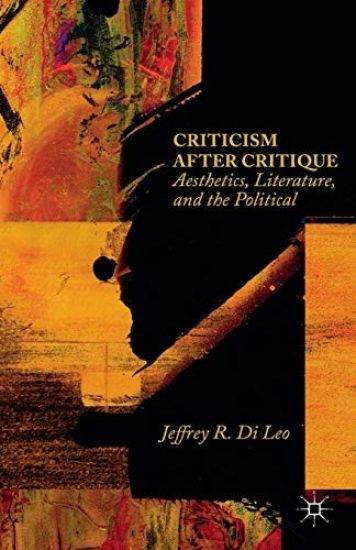
Criticism after Critique

Criticism after Critique

Jeffrey R. Di Leo

Palgrave Macmillan
2015
nidottu
Presenting different ways to imagine criticism without critique, this collection provides a survey of both the difficult times facing ideological critique and the ways in which literary criticism and aesthetics have been affected by changing attitudes toward critique.
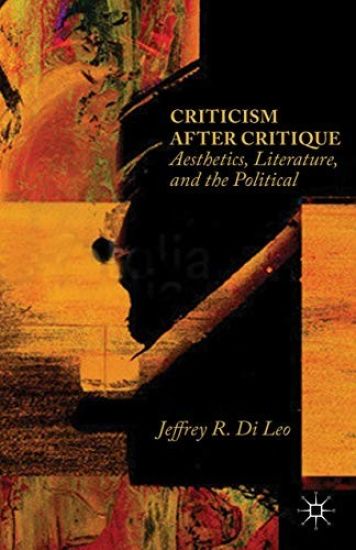
Criticism after Critique

Criticism after Critique

Jeffrey R. Di Leo

Palgrave Macmillan
2014
sidottu
Presenting different ways to imagine criticism without critique, this collection provides a survey of both the difficult times facing ideological critique and the ways in which literary criticism and aesthetics have been affected by changing attitudes toward critique.
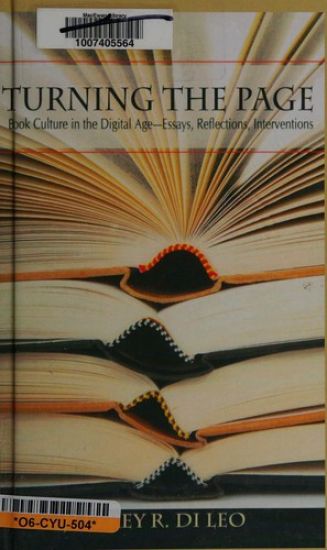
Turning the Page

Turning the Page

Jeffrey R. Di Leo

Texas Review Press
2014
nidottu
American Book Review is not just a book review—it is also the heart and soul of writerly writing and small press publishing. In 2006, the publication was relocated to Victoria, Texas, where cultural critic and philosopher Jeffrey R. Di Leo became editor and publisher. Turning the Page collects Di Leo’s contributions to American Book Review from his more recent “Page 2” entries on “social reading” and book bannings in Arizona to his early engagements with the work of Raymond Federman and Harold Jaffe. The common themes are book and publishing culture, and how they intersect with current problems in the humanities, including the rise of neoliberalism.