Kirjojen hintavertailu – 12 903 725 kirjaa ja 27 kauppaa

Kirjailija

Jeffrey Richards

Kirjat ja teokset yhdessä paikassa: 24 kirjaa, julkaisuja vuosilta 1994–2026, suosituimpiin kuuluu Best of British. Vertaile teosten hintoja ja tarkista saatavuus suomalaisista kirjakaupoista.

24 kirjaa

Kirjojen julkaisuvuodet: 1994–2026.

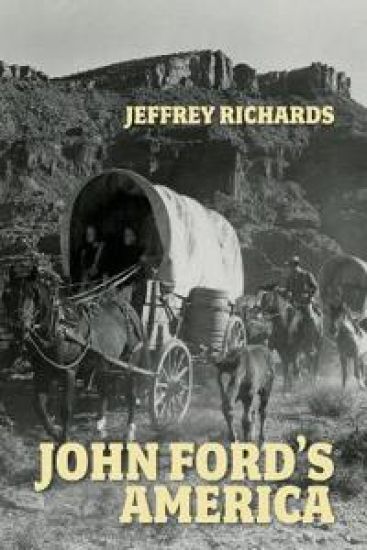
John Ford's America

John Ford's America

Jeffrey Richards

MANCHESTER UNIVERSITY PRESS
2026
nidottu

Halvin toimitettuna 50,40 €

By the time of his death in 1973, John Ford was probably the most celebrated director of Hollywood’s golden age. The winner of four best director Oscars, he was the first filmmaker to be awarded his country’s highest civilian honour, the Medal of Freedom, and the man chosen by the American Film Institute to receive its first life achievement award. In his work, Ford returned regularly to the same themes, employed the same actors and had a visual style that was personal and distinctive. This volume explores his preoccupations throughout his long, garlanded career, showing how he attempted to come to terms with American history, with how America kept changing its relationship with history and with how many of the myths of the ‘West’ were just that – myths.
John Ford's America

John Ford's America

Jeffrey Richards

MANCHESTER UNIVERSITY PRESS
2024
sidottu
By the time of his death in 1973, John Ford was probably the most celebrated director of Hollywood’s golden age. The winner of four best director Oscars, he was the first filmmaker to be awarded his country’s highest civilian honour, the Medal of Freedom, and the man chosen by the American Film Institute to receive its first life achievement award. In his work, Ford returned regularly to the same themes, employed the same actors and had a visual style that was personal and distinctive. This volume explores his preoccupations throughout his long, garlanded career, showing how he attempted to come to terms with American history, with how America kept changing its relationship with history and with how many of the myths of the ‘West’ were just that – myths.
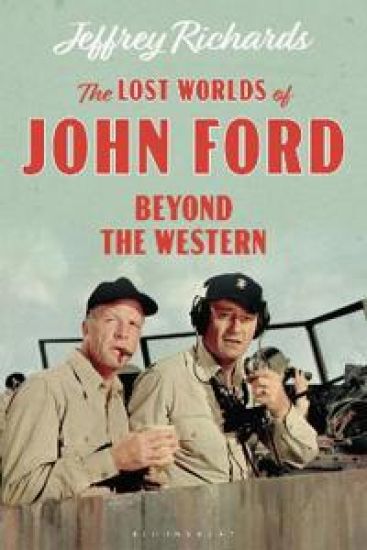
The Lost Worlds of John Ford

The Lost Worlds of John Ford

Jeffrey Richards

Bloomsbury Academic
2021
nidottu
The great director John Ford (1894-1973) is best known for classic westerns, but his body of work encompasses much more than this single genre. Jeffrey Richards develops and broadens our understanding of Ford's film-making oeuvre by studying his non-Western films through the lens of Ford’s life and abiding preoccupations. Ford's other cinematic worlds included Ireland, the Family, Catholicism, War and the Sea, which share with his westerns the recurrent themes of memory and loss, the plight of outsiders and the tragedy of family breakup. Richards' revisionist study both provides new insights into familiar films such as The Fugitive (1947); The Quiet Man (1952), Gideon’s Way and The Informer (1935) and reclaims neglected masterpieces, among them Wee Willie Winkie (1937) and the extraordinary The Long Voyage Home. (1940).
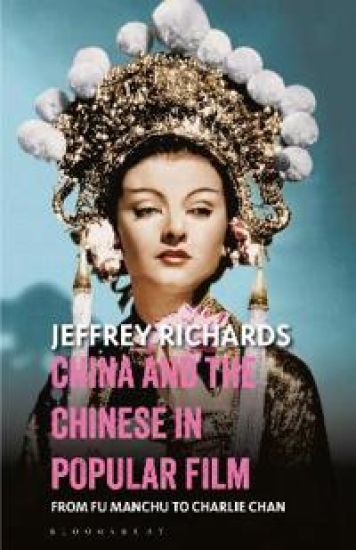
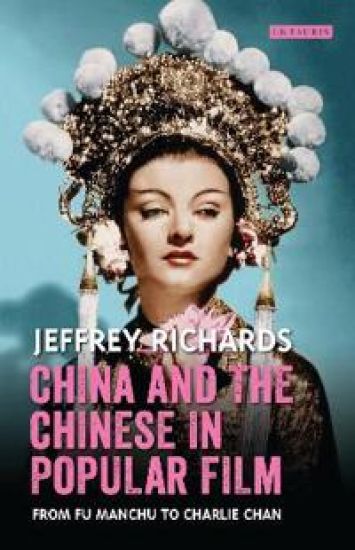
China and the Chinese in Popular Film

China and the Chinese in Popular Film

Jeffrey Richards

Bloomsbury Academic
2020
nidottu
There's a folk memory of China in which numberless yellow hordes pour out of the 'mysterious East' to overwhelm the vulnerable West, accompanied by a stereotype of the Chinese as cruel, cunning and depraved. Hollywood films played their part in perpetuating these myths and stereotypes that constituted 'The Yellow Peril'. Jeffrey Richards examines in detail how and why they did it. He shows how the negative image was embodied in recurrent cinematic depictions of opium dens, tong wars, sadistic dragon ladies and corrupt warlords and how, in the 1930s and 1940s, a countervailing positive image involved the heroic peasants of The Good Earth and Dragon Seed fighting against Japanese invasion in wartime tributes to the West's ally, Nationalist China. The cinema's split level response is also traced through the images of the ultimate Oriental villain, the sinister Dr. Fu Manchu and the timeless Chinese hero, the intelligent and benevolent detective Charlie Chan. Filling a longstanding gap in Cinema and Cultural History, the book is founded in fresh research into Hollywood's shifting representations of China and its people.
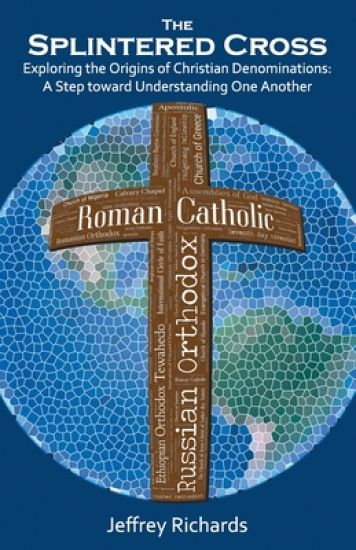
The Splintered Cross: Exploring the Origins of Christian Denominations: A Step Toward Understanding One Another
Christianity is the world's largest religion, but it is far from unified. Its denominations number in the tens of thousands, and each has its own recipe of doctrines, practices, and governance. Christianity's splintered condition is not a benign form of diversity. Rather, believers are divided into denominational camps and have limited understanding of others' beliefs. All too often, these divisions have fostered mistrust, intolerance, persecution, and even war. This denominationally neutral book is intended to foster understanding by challenging all Christians to explore outside the figurative walls of their respective denominational fortress. The history of Christian splintering is the origin story of Christianity's denominations and is therefore a starting point in an effort to understand fellow Christians. A journey through the history of the religion's splintering, messy as it is, is not without risk. Thoughtful explorers will grapple with tough questions relative to Christian truth and denominational certainty. If in the end, the intrepid explorer finds renewed faith, a broader and more mature perspective, a more receptive heart and mind, and a clearer view of fellow Christians, then the journey will be well worth the effort.
The Lost Worlds of John Ford

The Lost Worlds of John Ford

Jeffrey Richards

Bloomsbury Academic
2020
sidottu

Halvin toimitettuna 65,00 €

The great director John Ford (1894-1973) is best known for classic westerns, but his body of work encompasses much more than this single genre. Jeffrey Richards develops and broadens our understanding of Ford's film-making oeuvre by studying his non-Western films through the lens of Ford’s life and abiding preoccupations. Ford's other cinematic worlds included Ireland, the Family, Catholicism, War and the Sea, which share with his westerns the recurrent themes of memory and loss, the plight of outsiders and the tragedy of family breakup. Richards' revisionist study both provides new insights into familiar films such as The Fugitive (1947); The Quiet Man (1952), Gideon’s Way and The Informer (1935) and reclaims neglected masterpieces, among them Wee Willie Winkie (1937) and the extraordinary The Long Voyage Home. (1940).
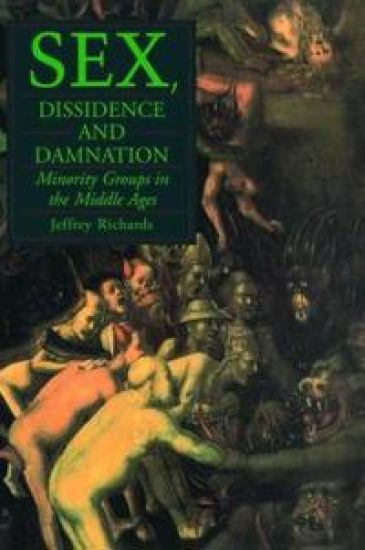
Sex, Dissidence and Damnation

Sex, Dissidence and Damnation

Jeffrey Richards

Routledge
2017
sidottu
For the authorities in medieval Europe, dissent struck at the roots of an ordered, settled world. It was to be crushed - initially by reason and argument, eventually by torture. Jeffrey Richards examines the wretched lives of heretics, witches, Jews, lepers and homosexuals and uncovers a common motive for their persecution: sexual aberrance.
China and the Chinese in Popular Film

China and the Chinese in Popular Film

Jeffrey Richards

I.B. Tauris
2016
sidottu
There's a folk memory of China in which numberless yellow hordes pour out of the 'mysterious East' to overwhelm the vulnerable West, accompanied by a stereotype of the Chinese as cruel, cunning and depraved. Hollywood films played their part in perpetuating these myths and stereotypes that constituted 'The Yellow Peril'. Jeffrey Richards examines in detail how and why they did it. He shows how the negative image was embodied in recurrent cinematic depictions of opium dens, tong wars, sadistic dragon ladies and corrupt warlords and how, in the 1930s and 1940s, a countervailing positive image involved the heroic peasants of The Good Earth and Dragon Seed fighting against Japanese invasion in wartime tributes to the West's ally, Nationalist China. The cinema's split level response is also traced through the images of the ultimate Oriental villain, the sinister Dr. Fu Manchu and the timeless Chinese hero, the intelligent and benevolent detective Charlie Chan. Filling a longstanding gap in Cinema and Cultural History, the book is founded in fresh research into Hollywood's shifting representations of China and its people.
Visions of Yesterday

Visions of Yesterday

Jeffrey Richards

Routledge
2016
nidottu
Film is an important source of social history, as well as having been a popular art form from the early twentieth century. This study shows how a society, consciously or unconsciously, is mirrored in its cinema. It considers the role of the cinema in dramatizing popular beliefs and myths, and takes three case studies – American populism, British imperialism, German Nazism – to explain how a nation’s pressures, tensions and hopes come through in its films. Examining the American cinema is accomplished by analysing the careers of three great directors, John Ford, Frank Capra and Leo McCarey, while the British and German cinemas are studied by theme. The analysis of the British Empire as seen in film broke exciting new ground with a pioneering account of ‘the cinema of Empire’ when it was first published in 1973. With full filmographies and a carefully selected bibliography it is an outstanding work of reference and its lively approach makes it a delight to read. Reviews of the original edition:‘A work of considerable force and considerable wit.’ – Clive James, Observer‘…a work that is original, mentally stimulating and most pleasurable to read.’ – Focus on Film
Cinema and Radio in Britain and America, 1920–60

Cinema and Radio in Britain and America, 1920–60

Jeffrey Richards

Manchester University Press
2016
nidottu
Cinema and radio in Britain and America, 1920–60 charts the evolving relationship between the two principal mass media of the period. It explores, for the first time in print, the creative symbiosis that developed between the two, including regular film versions of popular radio series as well as radio versions of hit films. This fascinating volume, now available in paperback, examines specific genres (comedy and detective stories) to identify similarities and differences in their media appearances, and in particular issues arising from the nature of film as predominantly visual and radio as exclusively aural. Richards also highlights the interchange of personnel, such as Orson Welles, between the two media. Throughout the book runs the theme of comparison and contrast between the experiences of the two media in Britain and America. The book culminates with an in-depth analysis of the media appearances of three enduring mythic figures in popular culture: Sherlock Holmes, Tarzan and The Scarlet Pimpernel. Students, scholars and lay enthusiasts of cinema history, cultural history and media studies will find this an accessible yet scholarly read.
Swordsmen of the Screen

Swordsmen of the Screen

Jeffrey Richards

Routledge
2016
nidottu
This fascinating study of the genre of swashbuckling films received wide critical acclaim when it was first published in 1977. Jeffrey Richards assesses the contributions to the genre of directors, designers and fencing masters, as well as of the stars themselves, and devotes several chapters to the principal subjects if the swashbucklers – pirates, highwaymen, cavaliers and knights. The result is to recall, however fleetingly, the golden days of the silver screen. Reviews of the original edition:‘An intelligent, scholarly, well-written account of adventure films, this work is sensitive both to cinema history and to the literary origins of the "swashbuckler"…. Essential for any library with books on film, it may very well be the definitive book on its subject.’ – Library Journal
The Popes and the Papacy in the Early Middle Ages (Routledge Revivals)
There has been a tendency to the view the history of the early medieval papacy predominantly in ideological terms, which has resulted in the over-exaggeration of the idea of the papal monarchy. In this study, first published in 1979, Jeffrey Richards questions this view, arguing that whilst the papacy’s power and responsibility grew during the period under discussion, it did so by a series of historical accidents rather than a coherent radical design. The title redresses the imbalance implicit in the monarchical interpretation, and emphasizes other important political, administrative and social aspects of papal history. As such it will be of particular value to students interested in the history of the Church; in particular, the development of the early medieval papacy, and the shifting policies and characteristics of the popes themselves.
Consul of God (Routledge Revivals)

Consul of God (Routledge Revivals)

Jeffrey Richards

Routledge
2015
nidottu
Gregory the Great, whose reign spanned the years between 590 and 604 A. D., was one of the most remarkable figures of the early medieval Papacy. Aristocrat, administrator, teacher and scholar, he ascended the throne of St Peter at a time of acute crisis for the Roman Church. Consul of God, first published in 1980, revises the traditional picture of Pope Gregory. It examines how he organised the central administration of the Papacy and his unremitting war on heresy and schism. Gregory also pioneered a new pastoral tradition in learning, promoted monasticism, and trained the episcopate. Jeffrey Richards demonstrates that Gregory was both a conservative and a pioneer, and just as his reign looked forward to the medieval world it also looked back to a vanishing world of imperial unity. He was thus the last representative of those Roman senators whose fortitude and energy he emulated, earning the epitaph ‘Consul of God’.
The Popes and the Papacy in the Early Middle Ages (Routledge Revivals)
There has been a tendency to the view the history of the early medieval papacy predominantly in ideological terms, which has resulted in the over-exaggeration of the idea of the papal monarchy. In this study, first published in 1979, Jeffrey Richards questions this view, arguing that whilst the papacy’s power and responsibility grew during the period under discussion, it did so by a series of historical accidents rather than a coherent radical design. The title redresses the imbalance implicit in the monarchical interpretation, and emphasizes other important political, administrative and social aspects of papal history. As such it will be of particular value to students interested in the history of the Church; in particular, the development of the early medieval papacy, and the shifting policies and characteristics of the popes themselves.
Consul of God (Routledge Revivals)

Consul of God (Routledge Revivals)

Jeffrey Richards

Routledge
2014
sidottu
Gregory the Great, whose reign spanned the years between 590 and 604 A. D., was one of the most remarkable figures of the early medieval Papacy. Aristocrat, administrator, teacher and scholar, he ascended the throne of St Peter at a time of acute crisis for the Roman Church. Consul of God, first published in 1980, revises the traditional picture of Pope Gregory. It examines how he organised the central administration of the Papacy and his unremitting war on heresy and schism. Gregory also pioneered a new pastoral tradition in learning, promoted monasticism, and trained the episcopate. Jeffrey Richards demonstrates that Gregory was both a conservative and a pioneer, and just as his reign looked forward to the medieval world it also looked back to a vanishing world of imperial unity. He was thus the last representative of those Roman senators whose fortitude and energy he emulated, earning the epitaph ‘Consul of God’.
Swordsmen of the Screen

Swordsmen of the Screen

Jeffrey Richards

Routledge
2013
sidottu
This fascinating study of the genre of swashbuckling films received wide critical acclaim when it was first published in 1977. Jeffrey Richards assesses the contributions to the genre of directors, designers and fencing masters, as well as of the stars themselves, and devotes several chapters to the principal subjects if the swashbucklers – pirates, highwaymen, cavaliers and knights. The result is to recall, however fleetingly, the golden days of the silver screen. Reviews of the original edition:‘An intelligent, scholarly, well-written account of adventure films, this work is sensitive both to cinema history and to the literary origins of the "swashbuckler"…. Essential for any library with books on film, it may very well be the definitive book on its subject.’ – Library Journal
Visions of Yesterday

Visions of Yesterday

Jeffrey Richards

Routledge
2013
sidottu
Film is an important source of social history, as well as having been a popular art form from the early twentieth century. This study shows how a society, consciously or unconsciously, is mirrored in its cinema. It considers the role of the cinema in dramatizing popular beliefs and myths, and takes three case studies – American populism, British imperialism, German Nazism – to explain how a nation’s pressures, tensions and hopes come through in its films. Examining the American cinema is accomplished by analysing the careers of three great directors, John Ford, Frank Capra and Leo McCarey, while the British and German cinemas are studied by theme. The analysis of the British Empire as seen in film broke exciting new ground with a pioneering account of ‘the cinema of Empire’ when it was first published in 1973. With full filmographies and a carefully selected bibliography it is an outstanding work of reference and its lively approach makes it a delight to read. Reviews of the original edition:‘A work of considerable force and considerable wit.’ – Clive James, Observer‘…a work that is original, mentally stimulating and most pleasurable to read.’ – Focus on Film
The Railway Station

The Railway Station

Jeffrey Richards; John M Mackenzie

Faber Faber
2010
pokkari
In the preface the authors describe their approach, 'In examining the social history of railway stations we were concerned to treat them not as inanimate objects, but as living, breathing places which, better than any other building type of the last 150 years, reflected the societies around them, public buildings which people used in all sorts of ways and whose significance they instantly recognized when depicted in the theatre, the cinema, paintings, photographs, poetry, novels, and travel works. For this reason we have chosen to allow other voices to tell part of the story, to illustrate through quotation the central, but often differing, role of the station in so many societies and so many lives.'They succeed triumphantly in this aim. After the introduction aptly called 'The Mystique of the Railway Station' there are fifteen absorbing chapters covering: The Station in Architecture (three chapters); The Station and Society; The Station in Politics; Class, Race, and Sex; Some Station Types; The Station in the Economy (two chapters); The Station as Place of Work; The Station in Wartime (two chapters); The Usual Offices; The Station in Painting and Poetry, Postcard and Poster; and The Station in Literature and Film. The scope is comprehensive, the achievement magnificent.'written with great enthusiasm . . . packed with rich detail. This is real social history.' Asa Briggs'full of good quotations, and (the authors) write with the infectious enthusiasm of addicts, captivated by the romance of railways' Times Literary Supplement'remarkable . . . the railway station in all its aspects' A. N. Wilson.
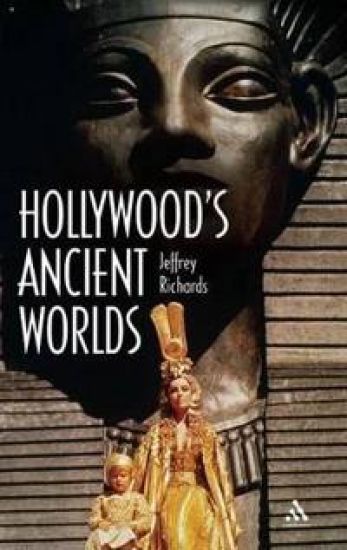
Hollywood's Ancient Worlds

Hollywood's Ancient Worlds

Jeffrey Richards

Hambledon Continuum
2008
sidottu
This book offers a new, full analysis of the Ancient World epic and how this film genre continues to comment on modern-day issues. Few genres have been subject to such critical scorn as the Ancient World epic. Yet they have regularly achieved huge box office success. This book tells the history of the Ancient World epic from the silent screen successes of "Intolerance" and "The King of Kings" through the 'golden age of the epic' in the 1950s (Quo Vadis, Ben-Hur, Spartacus, Cleopatra etc) through to the 1990s revival with "Gladiator", its successors in cinema (Alexander, Troy, 300) and on television (Rome). Geoffrey Richards examines the cultural, social, economical and technological circumstances that dictated the rise and decline of each successive cycle of Ancient World epics, analysing each of the great films and assessing their critical and box office success or failure. He also seeks to tease out the hidden messages concealed in the narrative. For historical films are always as much about the time in which they are made as they are about the time in which they are set. Close examination reveals the recurrent use of the Ancient World to deliver messages to the contemporary audience about the present: messages such as hostility to totalitarian regimes both Fascist and Communist, concern at the decline of Christianity, support for the new state of Israel, celebrations of equality and democracy, and concern about changing gender roles. The whole adds up to a fresh look at a body of films that people think they know, but about which they will learn a good deal more.
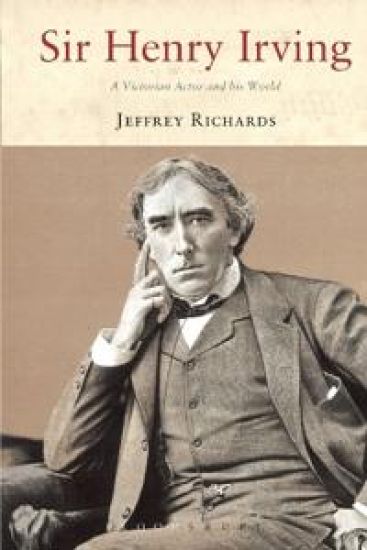
Sir Henry Irving

Sir Henry Irving

Jeffrey Richards

Hambledon Continuum
2006
nidottu
Sir Henry Irving was the greatest actor of the Victorian age and was thought of by Gladstone as his greatest contemporary. He transformed the theatre, in Britain and America, from a disreputable and marginal entertainment into a respected, civilising and uplifting art form. Irving's enthusiastic supporters, eager to see his every appearance, ranged from Queen Victoria to working men and housewives. At the Lyceum Theatre from 1878 to 1902, he set new standards in acting, often partnered by Ellen Terry, and in production. In 1895, he became the first actor to receive a knighthood. His tours to America brought a revolution in acting practice to the New World. In "Sir Henry Irvine: A Victorian Actor and his World", published to mark the centenary of Irving's death, Jeffrey Richards gives an account not only of Irving himself but also of his impact on the Victorian theatre and on Victorian life as a whole.