Kirjojen hintavertailu – 12 872 013 kirjaa ja 27 kauppaa

Kirjailija

Jeffrey Spier

Kirjat ja teokset yhdessä paikassa: 6 kirjaa, julkaisuja vuosilta 2015–2022, suosituimpiin kuuluu Rings of the Ancient World: Egyptian, Near Eastern, Greek, and Roman Rings from the Slava Yevdayev Collection. Vertaile teosten hintoja ja tarkista saatavuus suomalaisista kirjakaupoista.

6 kirjaa

Kirjojen julkaisuvuodet: 2015–2022.

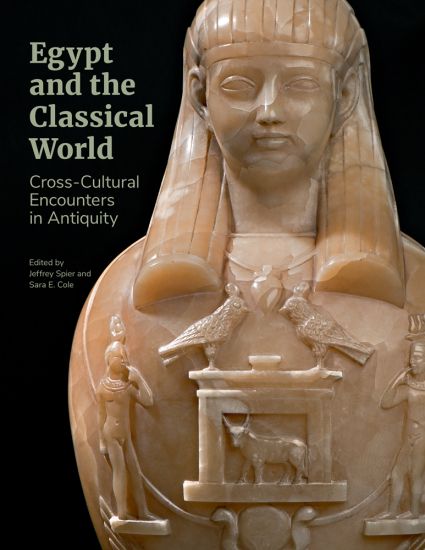
Egypt and the Classical World - Cross-Cultural Encounters in Antiquity

Egypt and the Classical World - Cross-Cultural Encounters in Antiquity

Jeffrey Spier; Sara E. Cole

GETTY TRUST PUBLICATIONS
2022
nidottu
From Mycenaean weaponry found among the cargo of a Bronze Age shipwreck off the Turkish coast to the Egyptian-inspired domestic interiors of a luxury villa built in Greece during the Roman Empire, Egypt and the Classical World documents two millennia of cultural and artistic interconnectedness in the ancient Mediterranean. This open-access volume gathers pioneering research from the Getty scholars' symposium that helped shape the major international loan exhibition Beyond the Nile: Egypt and the Classical World (J. Paul Getty Museum, 2018). Generously illustrated essays consider a range of artistic and other material evidence, including archaeological finds, artworks, and inscriptions, to shed light on cultural interactions between Egypt, Greece, and Rome from the Late Period and Ptolemaic dynasty to the Roman Empire. The military's role as a conduit of knowledge and ideas in the Bronze Age Aegean, and an in-depth study of hieroglyphic Egyptian inscriptions found on Roman obelisks offer but two examples of scholarly lacunae addressed by this publication. Specialists across the fields of art history, archaeology, Classics, Egyptology, and philology will benefit from the volume's investigations into syncretic processes that enlivened and informed nearly twenty-five hundred years of dynamic cultural exchange. The free online edition of this publication is available at getty.edu/publications/egypt-classical-world and includes zoomable, high-resolution photography. Also available are free PDF, EPUB, and Kindle/MOBI downloads of the book.
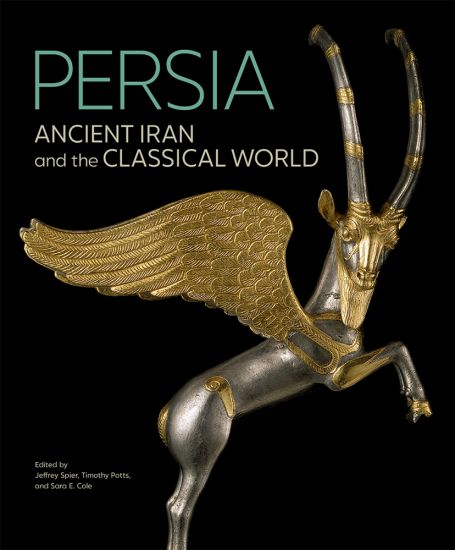
Persia - Ancient Iran and the Classical World

Persia - Ancient Iran and the Classical World

Jeffrey Spier; Timothy Potts; Sara E. Cole

GETTY TRUST PUBLICATIONS
2022
sidottu
The founding of the first Persian Empire by the Achaemenid king Cyrus the Great in the sixth century BCE established one of the greatest world powers of antiquity. Extending from the borders of Greece to northern India, Persia was seen by the Greeks as a vastly wealthy and powerful rival and often as an existential threat. When the Macedonian king Alexander the Great finally conquered the Achaemenid Empire in 330 BCE, Greek culture spread throughout the Near East, but local dynasties-first the Parthian (247 BCE-224 CE) and then the Sasanian (224-651 CE)-reestablished themselves. The rise of the Roman Empire as a world power quickly brought it, too, into conflict with Persia, despite the common trade that flowed through their territories. Persia addresses the political, intellectual, religious, and artistic relations between Persia, Greece, and Rome from the seventh century BCE to the Arab conquest of 651 CE. Essays by international scholars trace interactions and exchanges of influence. With more than three hundred images, this richly illustrated volume features sculpture, jewelry, silver luxury vessels, coins, gems, and inscriptions that reflect the Persian ideology of empire and its impact throughout Persia's own diverse lands and the Greek and Roman spheres.
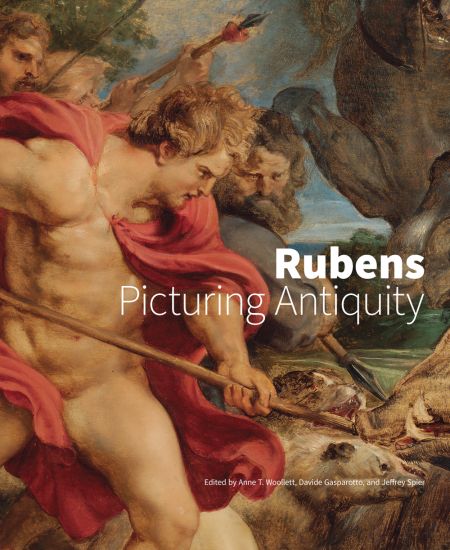
Rubens - Picturing Antiquity

Rubens - Picturing Antiquity

Davide Gasparotto; Jeffrey Spier; Anne T. Woolett

Getty Publications
2021
sidottu
The first study devoted to classical art's vital creative impact on the work of the Flemish master Peter Paul Rubens. For the great Peter Paul Rubens (1577-1640), the classical past afforded lifelong creative stimulus and the camaraderie of humanist friends. A formidable scholar, Rubens ingeniously transmitted the physical ideals of ancient sculptors, visualized the spectacle of imperial occasions, rendered the intricacies of mythological tales, and delineated the character of gods and heroes in his drawings, paintings, and designs for tapestries. His passion for antiquity profoundly informed every aspect of his art and life. Including more than 150 color illustrations, this volume addresses the creative impact of Rubens's remarkable knowledge of the art and literature of antiquity through the consideration of key themes. The book's lively interpretive essays explore the formal and thematic relationships between ancient sources and Baroque expressions: the significance of neo-Stoic philosophy, the compositional and iconographic inspiration provided by exquisite carved gems, Rubens's study of Roman marble sculpture, and his inventive translation of ancient sources into new subjects made vivid by his dynamic painting style. This volume is published to accompany an exhibition on view at the J. Paul Getty Museum at the Getty Villa October 21, 2020, to January 11, 2021.
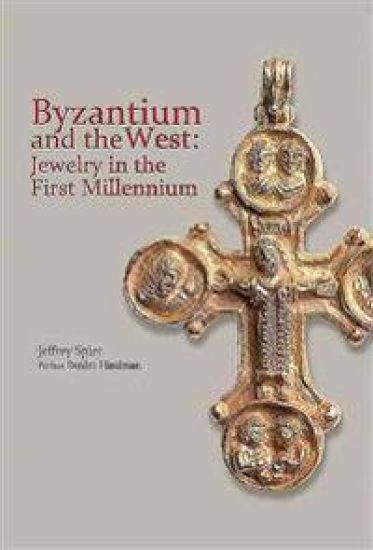
Byzantium and the West

Byzantium and the West

Jeffrey Spier

Les Enluminures, Limited
2020
pokkari
This full-color catalog explores the interrelationships between the East and West during the first millennium. This was the first time that the Roman Empire was gradually replaced by barbarian invaders, who spread through Europe and created new styles of jewelry; it was also when the capital shifted eastward to the newly founded city of Constantinople. Among the themes treated are the transition from Late Roman types to Byzantine ones, including the design of new shapes; an interest in exotic stones and changes in fashion; the function of rings (marriage, personal monograms, official status and religious iconography); and the Western Gothic imitation and development of Byzantine prototypes. Examples from the early third and fourth centuries in Rome feature an elaborate 'key' ring, pierced with the words utere felix (use with luck) and an ornate yet sophisticated band set entirely with emeralds. There is a late fifth-century Byzantine Parure that includes a pendant cross and related earrings. From the same era, an Ostogothic group is comprised of polyhedral earrings, a pendant cross and a ring, all with beautiful garnet inlay. Jeffrey Spier is a university associate and adjunct professor at the University of Arizona. He has published extensively on Greek and Roman gems and jewelry and on early Christian and Byzantine art. His publications include: Treasures of the Ferrell Collection (2010); Picturing the Bible. The Earliest Christian Art (2007); Late Antiquity and Early Christian Gems (2007); and Ancient Gems and Finger Rings: Catalogue of the Collections. The J. Paul Getty Museum (1993). The Preface is by Sandra Hindman, a medievalist and owner of Les Enluminures (Paris, Chicago and New York). Accompanying the exhibition, Byzantium and the West: Jewelry in the First Millennium, held in November 2012 at Les Enluminures, New York
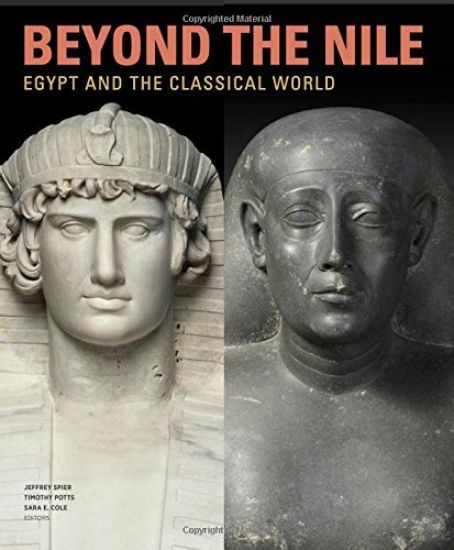
Beyond the Nile - Egypt and the Classical World

Beyond the Nile - Egypt and the Classical World

Jeffrey Spier; Timothy Potts; Sarah E. Cole

Getty Publications
2018
sidottu
From about 2000 BCE onward, Egypt served as an important nexus for cultural exchange in the eastern Mediterranean, importing and exporting not just wares but also new artistic techniques and styles. Egyptian, Greek, and Roman craftsmen imitated one another's work, creating cultural and artistic hybrids that transcended a single tradition. Yet in spite of the remarkable artistic production that resulted from these interchanges, the complex vicissitudes of exchange between Egypt and the Classical world over the course of nearly 2500 years have not been comprehensively explored in a major exhibition or publication in the United States. It is precisely this aspect of Egypt's history, however, that Beyond the Nile uncovers. Renowned scholars have come together to provide compelling analyses of the constantly evolving dynamics of cultural exchange, first between Egyptians and Greeks-during the Bronze Age, then the Archaic and Classical periods of Greece, and finally Ptolemaic Egypt-and later when Egypt passed to Roman rule with the defeat of Cleopatra. Beyond the Nile is milestone publication on the occasion of a major international exhibition and one that will become an indispensable contribution to the field. With gorgeous photographs of more than two hundred rare objects, including frescoes, statues, obelisks, jewellery, papyri, pottery, and coins, this volume offers an essential and interdisciplinary approach to the rich world of artistic cross-pollination during antiquity.
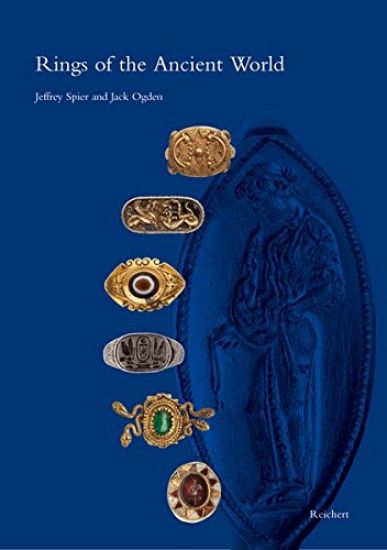
Rings of the Ancient World: Egyptian, Near Eastern, Greek, and Roman Rings from the Slava Yevdayev Collection
The Yevdayev Collection of ancient rings comprises 59 superb examples from Egypt, Phoenicia, Persia, Greece, Etruria, and Rome, dating from the second millennium BC to the fourth century AD. The rings are of many different shapes, most made of gold or silver and often set with gems, but some are carved from semiprecious stone, amber and shell. The collection begins with four Egyptian rings of the New Kingdom period of various types and materials, including an amethyst scarab set in a gold swivel-ring, a ring carved from cornelian with the cartouche of Pharaoh Thutmose III, and a silver ring with the name of Amenhotep II. These are followed by rare examples of a Hittite gold ring and a Persian ring carved from shell. There is a good selection of Phoenician rings dating from the seventh to fifth century BC, including rings in gold and stone scarabs set in rings. Other unusual rings include Persian examples of the Achaemenid and Sasanian period, a unique diamond ring that is likely Kushan, a Central Asian ring in Scythian style, and a gold ring with South Arabian inscription. Greek and Roman rings are particularly well represented. Classical Greek rings dating from the fifth and fourth centuries BC include examples in gold with engraved bezels, bezels decorated with filigree and granulation, and a rare ring with a swivel bezel decorated with figures in gold foil under glass. Hellenistic rings, dating from the third to first centuries BC are often set with large and fine gems, often engraved, and hoops carved in architectural style. There is also a Hellenistic ring carved from black glass and a fine example of a gold snake ring decorated with an emerald. The Roman rings date from the time of Augustus in the late 1st century BC to the fourth century AD. Many of the rings are gold set with finely engraved gems in amethyst, cornelian, green chalcedony, red jasper, and nicolo and include important portraits of Agrippina Senior in cameo and Septimius Severus in chalcedony. Other rings are set with rare gems, including an aquamarine and a diamond. There are also rings carved from other materials, including rock crystal and amber. The catalogue concludes with gold rings of the later empire (third-fourth century AD), typically with large, carved gold hoops and unengraved gems. The rings in the Yevdayev collection are notable not only for their exceptional design and craftsmanship, but for their rich imagery engraved on the rings and gems. The publication will appeal to both students of ancient art and history and to collectors and lovers of jewelry and fine art. The accompanying text places the rings in their historical and artistic context and provides valuable technical observations.