Kirjojen hintavertailu – 12 903 725 kirjaa ja 27 kauppaa

Kirjailija

Jehanne Dubrow

Kirjat ja teokset yhdessä paikassa: 13 kirjaa, julkaisuja vuosilta 2012–2026, suosituimpiin kuuluu Writing the Self-Elegy. Vertaile teosten hintoja ja tarkista saatavuus suomalaisista kirjakaupoista.

13 kirjaa

Kirjojen julkaisuvuodet: 2012–2026.

Writing the Self-Elegy

Writing the Self-Elegy

Teresa Leo; Jennifer McCauley; John Chavez; Kasey Jueds; Catherine Kyle; Adam Crittenden; Rigoberto Gonzalez; Kyle McCord; Jane Wong; Naomi Ortiz; Denise Leto; Carol Berg; Kristy Bowen; Floydd Michael Elliot; Jehanne Dubrow; Carl Phillips; Bruce Bond; Kevin Prufer; Rusty Morrison; Sheila Black; Lauren Berry; Anne Kaier; TC Tolbert; Raymond Luczak; Stephanie Heit; Juliet Cook; Tanaya Winder

SOUTHERN ILLINOIS UNIVERSITY PRESS
2023
nidottu
An innovative roadmap to facing our past and present selves Honest, aching, and intimate, self-elegies are unique poems focusing on loss rather than death, mourning versions of the self that are forgotten or that never existed. Within their lyrical frame, multiple selves can coexist—wise and nai¨ve, angry and resigned—along with multiple timelines, each possible path stemming from one small choice that both creates new selves and negates potential selves. Giving voice to pain while complicating personal truths, self-elegies are an ideal poetic form for our time, compelling us to question our close-minded certainties, heal divides, and rethink our relation to others. In Writing the Self-Elegy, poet Kara Dorris introduces us to this prismatic tradition and its potential to forge new worlds. The self-elegies she includes in this anthology mix autobiography and poetics, blending craft with race, gender, sexuality, ability and disability, and place—all of the private and public elements that build individual and social identity. These poems reflect our complicated present while connecting us to our past, acting as lenses for understanding, and defining the self while facilitating reinvention. The twenty-eight poets included in this volume each practice self-elegy differently, realizing the full range of the form. In addition to a short essay that encapsulates the core value of the genre and its structural power, each poet’s contribution concludes with writing prompts that will be an inspiration inside the classroom and out. This is an anthology readers will keep close and share, exemplifying a style of writing that is as playful as it is interrogative and that restores the self in its confrontation with grief.
Frivolity

Frivolity

Jehanne Dubrow

Columbia University Press
2026
pokkari
Why must everything be so important—so dour and solemn, so grim and austere? How about a feather boa, some frilly lace, and a bright splash of pink? In Frivolity, Jehanne Dubrow stands up for the seemingly shallow and trifling, calling for a reconsideration of what we find worthy and what we dismiss. This book is a provocation. It offers a defense of the pursuits, objects, and people denigrated as frivolous, asking why we so readily scorn them and why, in particular, the label is so often tied to femininity and queerness. Its 101 sections move lightly across literature, art, and popular culture, from Susan Sontag, Sei Shonagon, Jane Austen, and Mozart to Barbie, Nora Ephron rom-coms, exclamation points, and Dubrow’s own “Year of Perfect Skin.” Written in a lyrical style, this book takes both an intimate and a rigorous approach to thinking about the frivolous, blending personal essay with scholarship. For Dubrow, frivolity is a way of affirming the importance of joy and silliness. And don’t we need a little more of both these things in an era made all too serious by autocracy and terror?
Frivolity

Frivolity

Jehanne Dubrow

Columbia University Press
2026
sidottu
Why must everything be so important—so dour and solemn, so grim and austere? How about a feather boa, some frilly lace, and a bright splash of pink? In Frivolity, Jehanne Dubrow stands up for the seemingly shallow and trifling, calling for a reconsideration of what we find worthy and what we dismiss. This book is a provocation. It offers a defense of the pursuits, objects, and people denigrated as frivolous, asking why we so readily scorn them and why, in particular, the label is so often tied to femininity and queerness. Its 101 sections move lightly across literature, art, and popular culture, from Susan Sontag, Sei Shonagon, Jane Austen, and Mozart to Barbie, Nora Ephron rom-coms, exclamation points, and Dubrow’s own “Year of Perfect Skin.” Written in a lyrical style, this book takes both an intimate and a rigorous approach to thinking about the frivolous, blending personal essay with scholarship. For Dubrow, frivolity is a way of affirming the importance of joy and silliness. And don’t we need a little more of both these things in an era made all too serious by autocracy and terror?
Civilians

Civilians

Jehanne Dubrow

LOUISIANA STATE UNIVERSITY PRESS
2025
pokkari
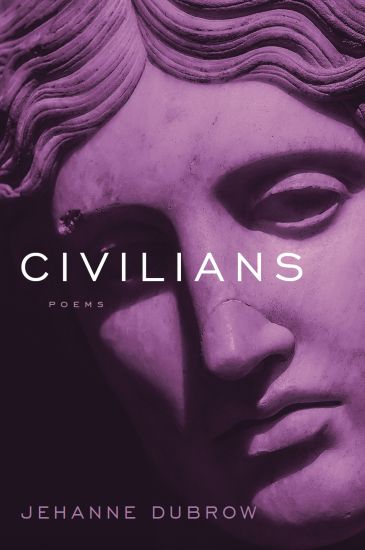
The final volume in Jehanne Dubrow's groundbreaking trilogy about the experience of being a modern military spouse, Civilians examines a significant moment of transformation in a military marriage: the shift from active-duty service to civilian life. After twenty years in the U. S. Navy, Dubrow's husband came to the end of his tenure as an officer. Civilians addresses what it means when someone who has been trained for war returns from the confining, restrictive space of a naval vessel. Set amid America's seemingly endless conflicts, Dubrow's poems confront pressing questions about the process of transitioning to a new reality as a noncombatant: What happens to the sailor removed from a world of uniforms and uniformity? How is his language changed? His geography? And what happens to a wife once physical and emotional distances are erased and she is reunited with her husband, a man made strange and foreign by his contact with war? Civilians is a book both shadowed by and in conversation with the classics, including Ovid's Metamorphoses, Homer's Odyssey, Euripides's The Trojan Women, and Sophocles's Philoctetes. Blending formal and free verse, with materials ranging from the historical to the personal, Dubrow offers readers a candid look at the experience of watching a loved one adjust to homelife after a career of military service.
Exhibitions

Exhibitions

Jehanne Dubrow

UNIVERSITY OF NEW MEXICO PRESS
2023
pokkari
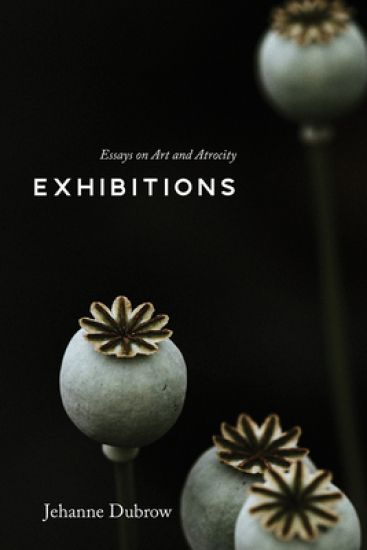
What happens when beauty intersects with horror? In her newest nonfiction collection, Jehanne Dubrow interrogates the ethical questions that arise when we aestheticize atrocity. The daughter of US diplomats, she weaves memories of growing up overseas among narratives centered on art objects created while working under oppressive regimes. Ultimately Exhibitions is a collection concerned with how art both evinces and elicits emotion and memory and how, through the making and viewing of art, we are--for better or for worse--changed.
Taste

Taste

Jehanne Dubrow

Columbia University Press
2022
pokkari
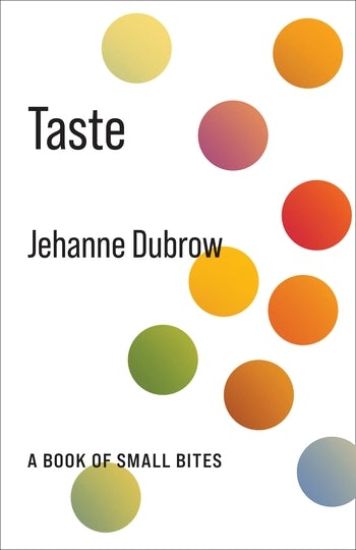
Taste is a lyric meditation on one of our five senses, which we often take for granted. Structured as a series of “small bites,” the book considers the ways that we ingest the world, how we come to know ourselves and others through the daily act of tasting. Through flavorful explorations of the sweet, the sour, the salty, the bitter, and umami, Jehanne Dubrow reflects on the nature of taste. In a series of short, interdisciplinary essays, she blends personal experience with analysis of poetry, fiction, music, and the visual arts, as well as religious and philosophical texts. Dubrow considers the science of taste and how taste transforms from a physical sensation into a metaphor for discernment. Taste is organized not so much as a linear dinner served in courses but as a meal consisting of meze, small plates of intensely flavored discourse.
Taste

Taste

Jehanne Dubrow

Columbia University Press
2022
sidottu
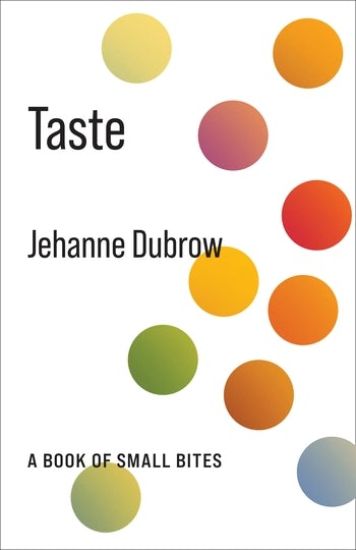
Taste is a lyric meditation on one of our five senses, which we often take for granted. Structured as a series of “small bites,” the book considers the ways that we ingest the world, how we come to know ourselves and others through the daily act of tasting. Through flavorful explorations of the sweet, the sour, the salty, the bitter, and umami, Jehanne Dubrow reflects on the nature of taste. In a series of short, interdisciplinary essays, she blends personal experience with analysis of poetry, fiction, music, and the visual arts, as well as religious and philosophical texts. Dubrow considers the science of taste and how taste transforms from a physical sensation into a metaphor for discernment. Taste is organized not so much as a linear dinner served in courses but as a meal consisting of meze, small plates of intensely flavored discourse.
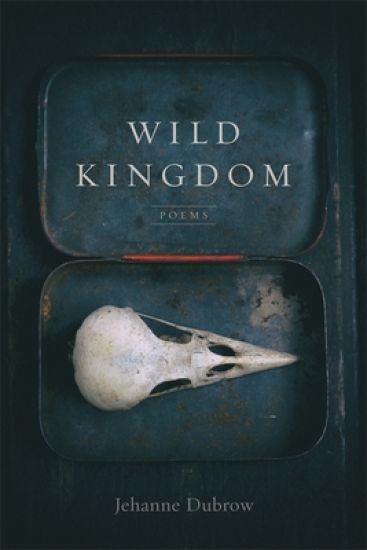
Wild Kingdom

Wild Kingdom

Jehanne Dubrow

Louisiana State University Press
2021
nidottu
Wild Kingdom explores the world of academia, examining this strange landscape populated by faculty, administrators, and students. Using what she calls ""received academic forms,"" Jehanne Dubrow crafts poems that recall the language of academic documents such as syllabi, grading rubrics, and departmental minutes. ""Honor Board Hearing,"" a series of prose poems, depicts challenges frequently faced by undergraduates, offering fictionalized accounts of cases involving plagiarism, theft, sexual assault, and substance abuse. As a rejoinder to the famous dictum that ""academic politics is the most vicious and bitter form of politics, because the stakes are so low,"" Dubrow maintains that, given the current moment, the stakes could not be higher. Even as it acknowledges the cruelty that exists within the academy, Wild Kingdom asks how scholars and educators can work to ensure that institutions of higher learning continue to nurture students and remain places of rigorous critical thinking.
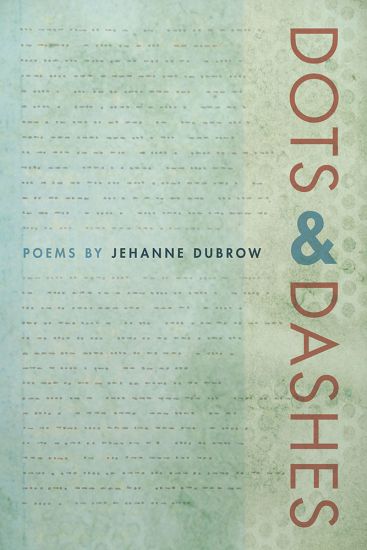
Dots & Dashes

Dots & Dashes

Jehanne Dubrow

Southern Illinois University Press
2017
nidottu
Moving between the languages of love and war, Jehanne Dubrow’s latest book offers valuable testimony to the experiences of military wives. Frequently employing rhyme, meter, and traditional forms, these poems examine what it means to be both a military spouse and an academic, straddling two communities that speak in very different and often conflicting terms. As in the poet’s earlier collection, Stateside, the poems in Dots & Dashes are explicitly feminist, exploring the experiences of women whose husbands are deployed. But, while Stateside looked to masculine stories of war, Dots & Dashes incorporates the views and voices of female poets who have written about combat. Looking to Sappho and Emily Dickinson, the poet considers how the act of writing allows her autonomy and agency rarely granted to military spouses, even in the twenty-first century. Dubrow catalogs the domestic life of a military spouse, illustrating what it is like to live in a tightly constructed world of rules and regulations, ceremony and tradition, where “every sacrifice already / knows its place.” Navigating the rough seas of marriage alongside questions about how civilians and those in the military can learn to communicate with one another, Dubrow argues for compassion and empathy on both sides. In this timely collection, Dubrow offers the hope that if we can break apart our preconceptions and stereotypes, we can find what connects all of us.
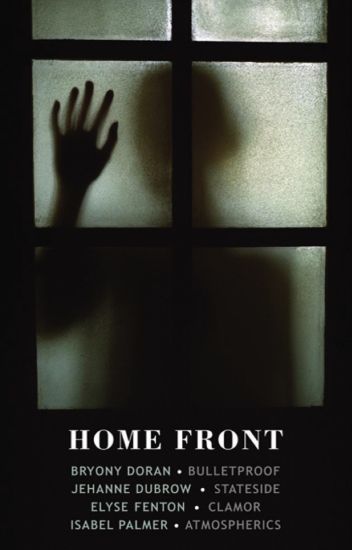
Home Front

Home Front

Bryony Doran; Jehanne Dubrow; Isabel Palmer; Elyse Fenton

Bloodaxe Books Ltd
2016
nidottu
Even in peacetime, many women find themselves isolated in a wartime of their own when their loved ones are involved in conflicts overseas. As mothers or wives they live in a state of separation, from husbands, sons or daughters in permanent danger - or so they feel - as well as from an often alienating everyday world of people who have no idea of what anxieties and fears grip them every minute. They also find themselves switching back and forth between two time zones, between the present moment and what might have been happening several hours ago in the Middle East. Home Front presents the poetry of four such women, Bryony Doran and Isabel Palmer, both mothers of young British soldiers serving in Afghanistan; and two American poets, Jehanne Dubrow, wife of a serving US naval officer deployed to the Persian Gulf and other conflict zones, and Elyse Fenton, wife of a US army medic posted to Iraq. It brings together four full-length collections by these writers; those by the two British poets are debut collections first published in full in this book. The poems in Bryony Doran's Bulletproof tell a chronological story, from her son's unexpected decision to join the army through his tours in and returns from Afghanistan. Covering every emotion from fear to fury, yet lifted by humour and details of everyday domestic life, these are poems written to preserve a pacifist mother's sanity as each day plays itself out. They show her coping with The News, her fantasies, his short spells of home leave, and her realisation that both are imprisoned in a modern myth. The narrative in Isabel Palmer's Atmospherics begins with seeing her only son go to war in Afghanistan soon after his 21st birthday in 2011 and ends with his final, safe return in 2015. His role there was to lead foot patrols and to operate machines for detecting improvised explosive devices. While he was on tour, she wrote one poem every week reflecting on their experiences. The earlier poems appeared in Ground Signs (Flarestack Poets, 2014), a Poetry Book Society Pamphlet Choice. Driven by intellectual curiosity and emotional exploration, the poems in Jehanne Dubrow's Stateside (2010) are remarkable for their subtlety, sensual imagery and technical control. The speaker attempts to understand her own life through the long history of military wives left to wait and wonder, invoking Penelope's plight in Homer's Odyssey as a model but also as a source of mystery. Dubrow is fearless in her contemplation of the far-reaching effects of war but even more so in her excavation of a marriage under duress. At times quiet, at others cacophonous, the poems of Elyse Fenton's Clamor turn a lyric lens on the language we use to talk about war and atrocity, and the irreconcilable rifts - between lover and beloved, word and thing - such work unearths. Originally published in the US - but not in the UK - in 2010, Clamor was the first book of poetry to win Britain's Dylan Thomas Prize.
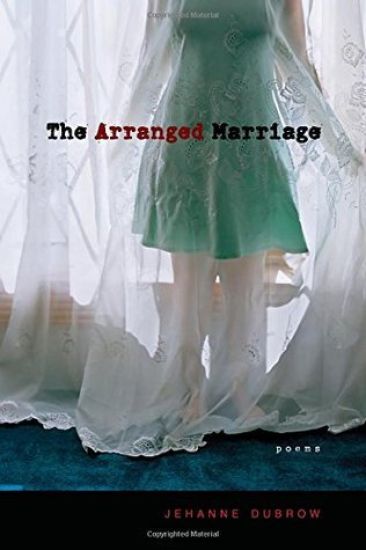
The Arranged Marriage

The Arranged Marriage

Jehanne Dubrow

University of New Mexico Press
2015
nidottu
With her characteristic music and precision, Dubrow’s prose poems delve unflinchingly into a mother’s story of trauma and captivity. The poet proves that truth telling and vision can give meaning to the gravest situations, allowing women to create a future on their own terms.
Red Army Red

Red Army Red

Jehanne Dubrow

Northwestern University Press
2012
nidottu
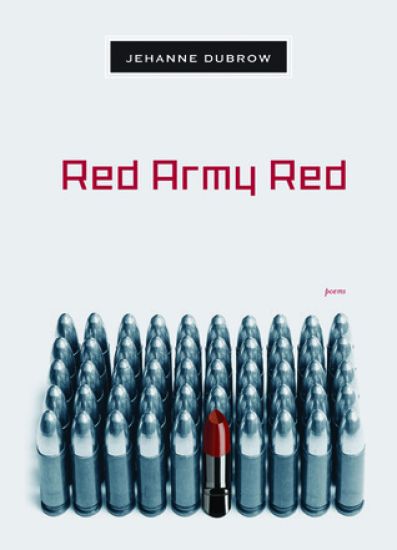
Displaying a sure sense of craft and a sharp facility for linking personal experience to the public realms of history and politics, Jehanne Dubrow’s Red Army Red chronicles the coming of age of a child of American diplomats in Eastern Europe in the 1980s. In the last moments of the Cold War, Poland—the setting for many of the poems—lurches fitfully from a society characterised by hardship and deprivation toward a free-market economy. The contradictions and turmoil generated by this transition are the context in which an adolescent girl awakens to her sexuality. With wit and subtlety, Dubrow makes apparent the parallels between the body and the body politic, between the fulfilment of individual and collective desires.