Kirjojen hintavertailu – 12 903 725 kirjaa ja 27 kauppaa

Kirjailija

Jehuda Reinharz

Kirjat ja teokset yhdessä paikassa: 13 kirjaa, julkaisuja vuosilta 1985–2024, suosituimpiin kuuluu Chaim Weizmann. Vertaile teosten hintoja ja tarkista saatavuus suomalaisista kirjakaupoista.

13 kirjaa

Kirjojen julkaisuvuodet: 1985–2024.

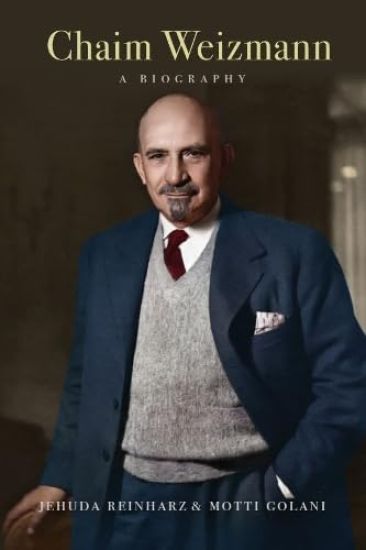
Chaim Weizmann

Chaim Weizmann

Jehuda Reinharz; Motti Golani

Brandeis University Press
2024
sidottu
A magisterial biography of Israel’s first president. In Chaim Weizmann: A Biography, Jehuda Reinharz and Motti Golani show how Weizmann, a leader of the World Zionist Organization who became the first president of Israel, advocated for a Jewish state by gaining the support of influential politicians and statesmen as well as Jews around the world. Beginning with his childhood in Belorussia and concluding with his tenure as president, Reinharz and Golani describe how a Russian Jew, who immigrated to the United Kingdom in the early twentieth century, was able to advance the goals of Theodor Herzl, the founder of the Zionist Organization. Weizmann is also shown as a man of human foibles—his infatuations, political machinations, and elitism—as well as a man of admirable qualities—intelligence, wit, charisma, and dedication. Weizmann, who came to the UK to work as a biochemist, was in regular communication with British political figures, including prime ministers Arthur James Balfour, David Lloyd George, Winston Churchill, and Ramsay MacDonald. He also met presidents of the United States from Woodrow Wilson to Harry Truman. His success in earning the support of British political figures helped lead to the Balfour Declaration, which advocated for a “national home” for the Jewish people in Palestine. As the authors show in this authoritative account of Weizmann’s life, Weizmann was guided by the belief that “Zion shall be redeemed in justice,” a phrase that recurs often in his writings.
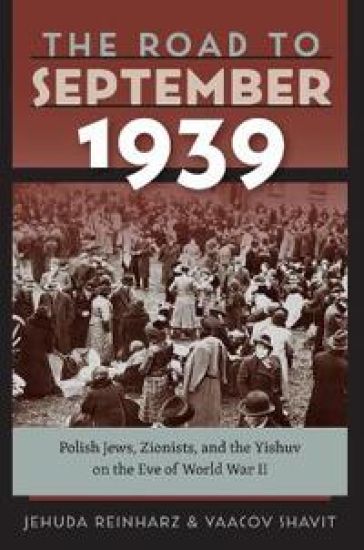
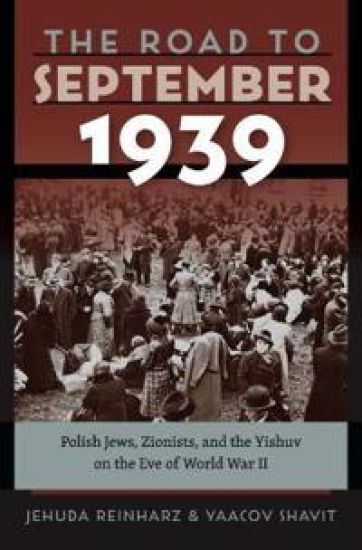
The Road to September 1939 – Polish Jews, Zionists, and the Yishuv on the Eve of World War II
In European and Holocaust historiography, it is generally believed that neither the Zionist movement nor the Yishuv were mindful of the plight of European Jews in the face of the Nazi threat during the 1930s. Drawing on a wide variety of memoirs, letters, and institutional reports by people from all walks of life, this volume sheds new light on a troubled period in Jewish history. Jehuda Reinharz and Yaacov Shavit trace Jewish responses to developments in Eastern and Central Europe, as well as reactions to British policy on the question of a Jewish homeland, to show that Zionists in the Yishuv worked tirelessly on the international stage on behalf of their coreligionists in Europe. Nevertheless, their efforts were all too often shattered by the realities of their powerlessness and lack of resources. Piercing to the heart of conversations about how or whether to save Jews in an increasingly hostile Europe, this volume provides a nuanced assessment of what could and could not be achieved in the years just prior to World War II and Holocaust.
The Road to September 1939

The Road to September 1939

Jehuda Reinharz; Yaacov Shavit

Dartmouth College Press
2018
sidottu
In European and Holocaust historiography, it is generally believed that neither the Zionist movement nor the Yishuv, acting primarily out of self-interest, energetically attempted to help European Jews escape the Nazi threat. Drawing on the memoirs, letters, and institutional reports of Chaim Weizmann, Ze’ev Jabotinsky, David Ben-Gurion, and many others, this volume sheds new light on a troubled period in Jewish history. Reinharz and Shavit trace Jewish responses to developments in Eastern and Central Europe to show that—contrary to recent scholarship and popular belief—Zionists in the Yishuv worked tirelessly on the international stage on behalf of their co-religionists in Europe. Focusing particularly on Poland, while explicating conditions in Germany and Czechoslovakia as well, the authors examine the complicated political issues that arose not just among Jews themselves, but within national governments in Britain, Europe, and America. Piercing to the heart of conversations about how or whether to save Jews in an increasingly hostile Europe, this volume provides a nuanced and thoughtful assessment of what could and could not be achieved in the years just prior to World War II and the Holocaust.
Die Sprache der Judenfeindschaft im 21. Jahrhundert

Die Sprache der Judenfeindschaft im 21. Jahrhundert

Monika Schwarz-Friesel; Jehuda Reinharz

de Gruyter
2017
isokokoinen pokkari
Wie artikuliert sich im 21. Jahrhundert judenfeindliches Gedankengut? Und wann ist eine Äußerung antisemitisch? Mit diesen Fragen beschäftigen sich die Sprach- und Kognitionswissenschaftlerin Monika Schwarz-Friesel und der Historiker Jehuda Reinharz anhand einer datenreichen Untersuchung des aktuellen judenfeindlichen Sprachgebrauchs. Die detaillierte Analyse der diversen Manifestationsformen von direktem und indirektem Verbal-Antisemitismus zeigt, welche geistigen Konzepte und emotionalen Ressentiments judeophoben Einstellungen zugrundeliegen. Diese äußern sich in uralten Klischees und Verschwörungstheorien ebenso wie in neuen, israelbezogenen Stereotypen. Die Studie zeigt, wie Juden als Juden verbal ausgegrenzt und beleidigt, belehrt, ermahnt und bedroht werden, und dass judenfeindliche Äußerungen von vielen Menschen artikuliert werden, als hätte es den Holocaust und seine intensive Aufarbeitung nie gegeben.
Inside the Antisemitic Mind

Inside the Antisemitic Mind

Monika Schwarz-Friesel; Jehuda Reinharz

Brandeis University Press
2017
nidottu
Antisemitism never disappeared in Europe. In fact, there is substantial evidence that it is again on the rise, manifest in violent acts against Jews in some quarters, but more commonly noticeable in everyday discourse in mainstream European society. This innovative empirical study examines written examples of antisemitism in contemporary Germany. It demonstrates that hostility against Jews is not just a right-wing phenomenon or a phenomenon among the uneducated, but is manifest among all social classes, including intellectuals. Drawing on 14,000 letters and e-mails sent between 2002 and 2012 to the Central Council of Jews in Germany and to the Israeli embassy in Berlin, as well as communications sent between 2010 and 2011 to Israeli embassies in in Austria, Switzerland, Belgium, England, Ireland, the Netherlands, Sweden, and Spain, this volume shows how language plays a crucial role in activating and re-activating antisemitism. In addition, the authors investigate the role of emotions in antisemitic argumentation patterns and analyze “anti-Israelism” as the dominant form of contemporary hatred of Jews.
Inside the Antisemitic Mind

Inside the Antisemitic Mind

Monika Schwarz-Friesel; Jehuda Reinharz

Dartmouth College Press
2017
sidottu
Antisemitism never disappeared in Europe. In fact, there is substantial evidence that it is again on the rise, manifest in violent acts against Jews in some quarters, but more commonly noticeable in everyday discourse in mainstream European society. This innovative empirical study examines written examples of antisemitism in contemporary Germany. It demonstrates that hostility against Jews is not just a right-wing phenomenon or a phenomenon among the uneducated, but is manifest among all social classes, including intellectuals. Drawing on 14,000 letters and e-mails sent between 2002 and 2012 to the Central Council of Jews in Germany and to the Israeli embassy in Berlin, as well as communications sent between 2010 and 2011 to Israeli embassies in in Austria, Switzerland, Belgium, England, Ireland, the Netherlands, Sweden, and Spain, this volume shows how language plays a crucial role in activating and re-activating antisemitism. In addition, the authors investigate the role of emotions in antisemitic argumentation patterns and analyze “anti-Israelism” as the dominant form of contemporary hatred of Jews.
Die Sprache der Judenfeindschaft im 21. Jahrhundert

Die Sprache der Judenfeindschaft im 21. Jahrhundert

Monika Schwarz-Friesel; Jehuda Reinharz

de Gruyter
2012
sidottu
This study considers the question of how specific ideas about Jews are constructed and activated. At which point can a statement be regarded as anti-Semitic? The two authors examine the various verbal manifestations of current anti-Semitism and the mental images on which these are based, applying both a historical perspective and the perspective of linguistic and cognitive science.
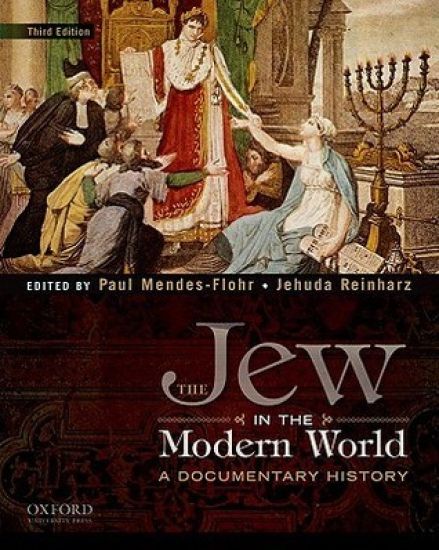
The Jew in the Modern World: A Documentary History

The Jew in the Modern World: A Documentary History

Paul Mendes-Flohr; Jehuda Reinharz

Oxford University Press
2010
nidottu
The last two centuries have witnessed a radical transformation of Jewish life. Marked by such profound events as the emancipation from the ghettoes of Europe, the Holocaust and the establishment of the State of Israel, Judaism's long journey through the modern age has been a complex and tumultuous one, leading many Jews to ask themselves not only where they have been and where they are going, but what it means to be a Jew in today's world. Tracing the dramatic changes in Jewish religion, culture, and identity from the seventeenth century to 1948, The Jew in the Modern World, Third Edition, remains the most complete sourcebook on modern Jewish history available. Now thoroughly expanded and updated, this critically acclaimed volume of primary materials features previously unpublished and inaccessible sources concerning the Jewish experience in Eastern Europe, the Middle East, and North Africa; women in Jewish history; American Jewish life; the Holocaust; and Zionism and the nascent Jewish community in Palestine on the eve of the establishment of the State of Israel. The documents are arranged chronologically in each chapter and are meticulously and extensively annotated and cross-referenced. Providing useful tables detailing Jewish demographic trends, this unique text is ideal for courses in modern Jewish history, Zionism and Israel, the Holocaust, or modern European history.
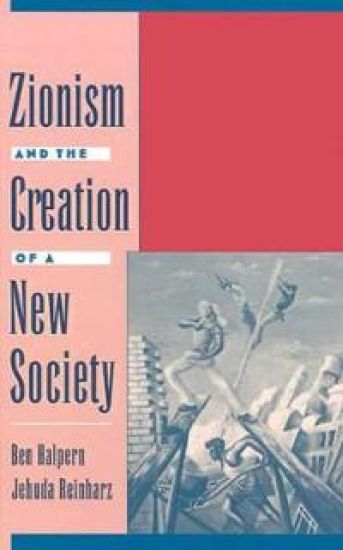
Zionism and the Creation of a New Society

Zionism and the Creation of a New Society

Ben Halpern; Jehuda Reinharz

Oxford University Press Inc
1998
sidottu
Zionism and the Creation of a New Society is the history of the development of the Jewish State from the early idea of Jewish nationalism. Ranging from the Zionist movements in the late nineteenth century to the establishment of Israel in 1948, this study clearly demonstrates the continuity between the principles and practices of those early movements and the social and political structure of Israel today. Jehuda Reinharz and the late Ben Halpern, the two foremost students of Zionism in the United States, have produced the most comprehensive and incisive history of Zionism in the English language.
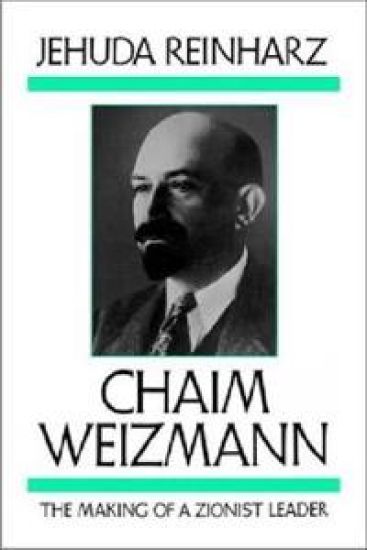
Chaim Weizmann

Chaim Weizmann

Jehuda Reinharz

Brandeis University Press
1985
nidottu
This massively researched, deftly written narrative follows Weizmann's life from the beginning of World War I through some of his greatest triumphs, including the Balfour Declaration, the founding of the Hebrew University, and the British Mandate for Palestine.
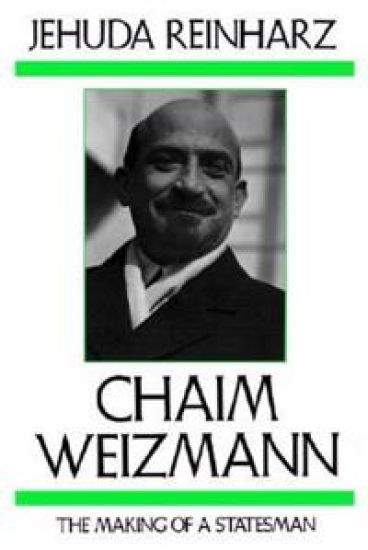
Chaim Weizmann

Chaim Weizmann

Jehuda Reinharz

Brandeis University Press
1985
nidottu
This massively researched, deftly written narrative follows Weizmann's life from the beginning of World War I through some of his greatest triumphs, including the Balfour Declaration, the founding of the Hebrew University, and the British Mandate for Palestine.