Kirjojen hintavertailu – 12 859 824 kirjaa ja 27 kauppaa
Kirjailija
Jennifer Higgins
Kirjat ja teokset yhdessä paikassa: 6 kirjaa, julkaisuja vuosilta 2008–2020, suosituimpiin kuuluu The Paradoxes of High Stakes Testing. Vertaile teosten hintoja ja tarkista saatavuus suomalaisista kirjakaupoista.
Emilee never imagined she'd find herself twenty-eight and alone. For seven years she waited for the man she loved to fully commit to her. Begin a future with her. Start a family. Instead, her only reward for her patience ... betrayal. For as long as she can remember, Emilee has dreamed of being a mother. Not wanting to start all over with another man -- she decides to take matters into her own hands, and have a baby on her own. Searching profiles in pursuit of her baby-daddy, Emilee comes across sperm donor 10378; a man with talent, intellect and charisma. But what most attracts her to him ... his eyes. Dark, smouldering, almond-shaped eyes, with gentle creases fanning out from their corners. Caring eyes. Understanding eyes. Emilee can't stop thinking about him. Wondering if those eyes are meant for her, she knows she must get to know him -- somehow. When a twist of fate has him pursuing Emilee, she learns the truth behind his Eyes for Her.
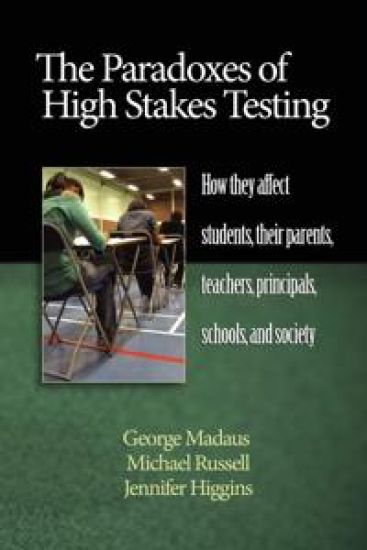
As a nation, we spend more than $1 billion a year on federally mandated educational tests that 30 million students must take each year. The country spends an additional $1.2 billion on test preparation materials designed to help students pass these tests. While test mandates were put in place with good intentions, increasingly educational leaders and policy makers are questioning these test based reform efforts. Some question whether these programs are doing more harm than good. Others call for the development of more and better tests. Given the vast amount of resources our nation pours into testing, is it time we pay closer attention to these testing programs? Is it time we hold the testing industry and policy makers accountable for the tests they make and use? Is it time we invest resources to develop new ways of testing our students? The Paradoxes of High-Stakes Testing explores these and other questions, as it helps parents, teachers, educational leaders, and policy makers better understand the complexities of educational policies that use tests as a lever for improving the quality of education. The book explores: -how testing is used to enable teachers and schools to be more effective and improve student learning, -why testing is so ingrained in the American psyche and why policy makers rely on testing policies to reform our educational system, -what we can learn from a long history of test-based reform efforts that have occurred over centuries and across continents, -what effects testing has on teaching and learning in our schools when it is used to solve political, social, or economic problems. Most importantly, the book describes several ways in which testing can be improved to provide more accurate and more useful measures of student learning. Many of these improvements capitalize on technology to provide teachers with more detailed, diagnostic information about student learning and measure skills that some leaders argue are essential for the 21st century work force. Exploring what is within reach is critical because current testing policies are hindering these improvements. Finally, given that testing is and will continue to be an integral part of our educational system, the book concludes that, like other sectors of our society, educational testing must be more closely monitored to ensure that high quality tests are used to measure student achievement and to minimize the negative effects that testing has on students, schools, and our society. Given the opportunity our nation has to rethink and redesign its testing policies, The Paradoxes of High-Stakes Testing presents a clear strategy to maximize the positive effects of educational testing.
As a nation, we spend more than $1 billion a year on federally mandated educational tests that 30 million students must take each year. The country spends an additional $1.2 billion on test preparation materials designed to help students pass these tests. While test mandates were put in place with good intentions, increasingly educational leaders and policy makers are questioning these test based reform efforts. Some question whether these programs are doing more harm than good. Others call for the development of more and better tests. Given the vast amount of resources our nation pours into testing, is it time we pay closer attention to these testing programs? Is it time we hold the testing industry and policy makers accountable for the tests they make and use? Is it time we invest resources to develop new ways of testing our students? The Paradoxes of High-Stakes Testing explores these and other questions, as it helps parents, teachers, educational leaders, and policy makers better understand the complexities of educational policies that use tests as a lever for improving the quality of education. The book explores: -how testing is used to enable teachers and schools to be more effective and improve student learning, -why testing is so ingrained in the American psyche and why policy makers rely on testing policies to reform our educational system, -what we can learn from a long history of test-based reform efforts that have occurred over centuries and across continents, -what effects testing has on teaching and learning in our schools when it is used to solve political, social, or economic problems. Most importantly, the book describes several ways in which testing can be improved to provide more accurate and more useful measures of student learning. Many of these improvements capitalize on technology to provide teachers with more detailed, diagnostic information about student learning and measure skills that some leaders argue are essential for the 21st century work force. Exploring what is within reach is critical because current testing policies are hindering these improvements. Finally, given that testing is and will continue to be an integral part of our educational system, the book concludes that, like other sectors of our society, educational testing must be more closely monitored to ensure that high quality tests are used to measure student achievement and to minimize the negative effects that testing has on students, schools, and our society. Given the opportunity our nation has to rethink and redesign its testing policies, The Paradoxes of High-Stakes Testing presents a clear strategy to maximize the positive effects of educational testing.