Kirjojen hintavertailu – 12 903 725 kirjaa ja 27 kauppaa

Kirjailija

Jennifer K. Robbennolt

Kirjat ja teokset yhdessä paikassa: 3 kirjaa, julkaisuja vuosilta 2016–2022, suosituimpiin kuuluu Psychology for Lawyers. Vertaile teosten hintoja ja tarkista saatavuus suomalaisista kirjakaupoista.

3 kirjaa

Kirjojen julkaisuvuodet: 2016–2022.

Psychology for Lawyers

Psychology for Lawyers

Jennifer K. Robbennolt; Jean R. Sternlight

American Bar Association
2022
pokkari
Law is a profession centered on human interaction. Virtually every aspect of the practice of law can be enhanced by a well-grounded understanding of psychology—the science of how people think, feel, and behave. Lawyers who harness the insights of psychology will be more effective interviewers and counselors, engage in more successful negotiations, conduct more efficient and useful discovery, communicate more ably, better identify and avoid ethical problems, and even be more productive and happy. Psychology for Lawyers, Second Edition introduces lawyers to some of the key insights offered by the field of psychology, drawn from research on perception, memory, judgment, decision making, emotion, persuasion and influence, communication, and the psychology of justice. It then applies these insights tasks to the daily tasks of lawyering, including interviewing, negotiating, counseling, and conducting discovery. Case studies and examples throughout the text illustrate concepts in an approachable, relatable way. The authors also include recommendations for relevant books, podcasts, and other media for further exploration.
The Psychology of Tort Law

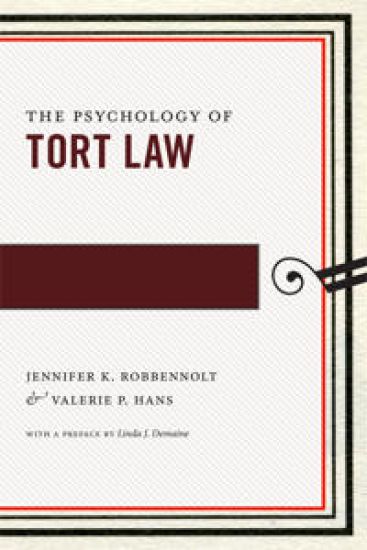
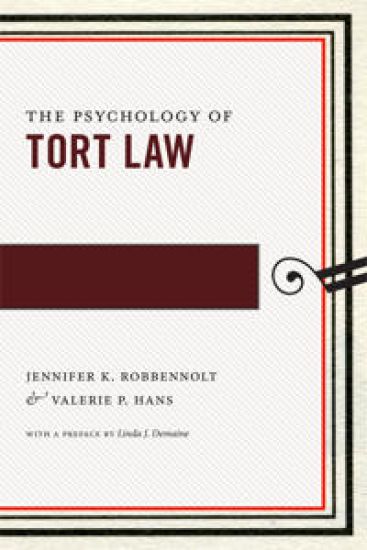
The Psychology of Tort Law

Jennifer K. Robbennolt; Valerie P. Hans

New York University Press
2016
pokkari
Tort law regulates most human activities: from driving a car to using consumer products to providing or receiving medical care. Injuries caused by dog bites, slips and falls, fender benders, bridge collapses, adverse reactions to a medication, bar fights, oil spills, and more all implicate the law of torts. The rules and procedures by which tort cases are resolved engage deeply-held intuitions about justice, causation, intentionality, and the obligations that we owe to one another. Tort rules and procedures also generate significant controversy—most visibly in political debates over tort reform. The Psychology of Tort Law explores tort law through the lens of psychological science. Drawing on a wealth of psychological research and their own experiences teaching and researching tort law, Jennifer K. Robbennolt and Valerie P. Hans examine the psychological assumptions that underlie doctrinal rules. They explore how tort law influences the behavior and decision-making of potential plaintiffs and defendants, examining how doctors and patients, drivers, manufacturers and purchasers of products, property owners, and others make decisions against the backdrop of tort law. They show how the judges and jurors who decide tort claims are influenced by psychological phenomena in deciding cases. And they reveal how plaintiffs, defendants, and their attorneys resolve tort disputes in the shadow of tort law. Robbennolt and Hans here shed fascinating light on the tort system, and on the psychological dynamics which undergird its functioning.
The Psychology of Tort Law

The Psychology of Tort Law

Jennifer K. Robbennolt; Valerie P. Hans

New York University Press
2016
sidottu
Tort law regulates most human activities: from driving a car to using consumer products to providing or receiving medical care. Injuries caused by dog bites, slips and falls, fender benders, bridge collapses, adverse reactions to a medication, bar fights, oil spills, and more all implicate the law of torts. The rules and procedures by which tort cases are resolved engage deeply-held intuitions about justice, causation, intentionality, and the obligations that we owe to one another. Tort rules and procedures also generate significant controversy—most visibly in political debates over tort reform. The Psychology of Tort Law explores tort law through the lens of psychological science. Drawing on a wealth of psychological research and their own experiences teaching and researching tort law, Jennifer K. Robbennolt and Valerie P. Hans examine the psychological assumptions that underlie doctrinal rules. They explore how tort law influences the behavior and decision-making of potential plaintiffs and defendants, examining how doctors and patients, drivers, manufacturers and purchasers of products, property owners, and others make decisions against the backdrop of tort law. They show how the judges and jurors who decide tort claims are influenced by psychological phenomena in deciding cases. And they reveal how plaintiffs, defendants, and their attorneys resolve tort disputes in the shadow of tort law. Robbennolt and Hans here shed fascinating light on the tort system, and on the psychological dynamics which undergird its functioning.