
Kirjailija
Jennifer L. Morgan
Kirjat ja teokset yhdessä paikassa: 9 kirjaa, julkaisuja vuosilta 2004–2025, suosituimpiin kuuluu The Future of American Power. Vertaile teosten hintoja ja tarkista saatavuus suomalaisista kirjakaupoista.
Nimi esiintyy myös muodoissa: Jennifer L Morgan
9 kirjaa
Kirjojen julkaisuvuodet: 2004–2025.
Celia, a Slave
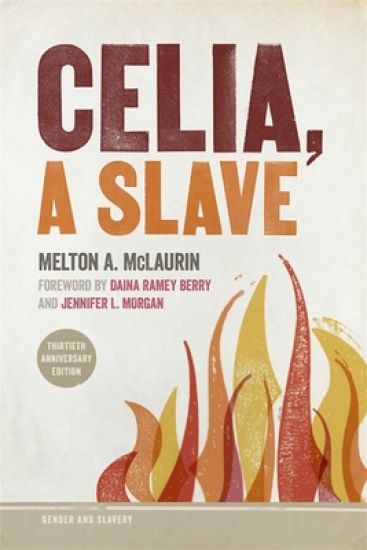
Melton A. McLaurin; Daina Ramey Berry; Jennifer L. Morgan
University of Georgia Press
2021
nidottu
Originally published in 1991, Celia, a Slave illuminates the moral dilemmas that lie at the heart of a slaveholding society by telling the story of a young slave who was sexually exploited by her enslaver and ultimately executed for his murder. Melton A. McLaurin uses Celia’s story to reveal the tensions that strained the fabric of antebellum southern society by focusing on the role of gender and the manner in which the legal system was used to justify slavery. An important addition to our understanding of the pre–Civil War era, Celia, a Slave is also an intensely compelling narrative of one woman pushed beyond the limits of her endurance by a system that denied her humanity at the most basic level.
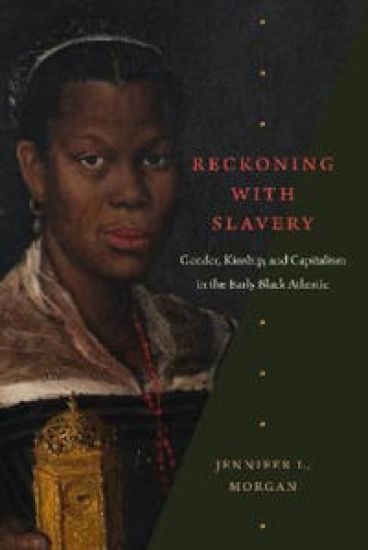
In Reckoning with Slavery Jennifer L. Morgan draws on the lived experiences of enslaved African women in the sixteenth and seventeenth centuries to reveal the contours of early modern notions of trade, race, and commodification in the Black Atlantic. From capture to transport to sale to childbirth, these women were demographically counted as commodities during the Middle Passage, vulnerable to rape, separated from their kin at slave markets, and subject to laws that enslaved their children upon birth. In this way, they were central to the binding of reproductive labor with kinship, racial hierarchy, and the economics of slavery. Throughout this groundbreaking study, Morgan demonstrates that the development of Western notions of value and race occurred simultaneously. In so doing, she illustrates how racial capitalism denied the enslaved their kinship and affective ties while simultaneously relying on kinship to reproduce and enforce slavery through enslaved female bodies.
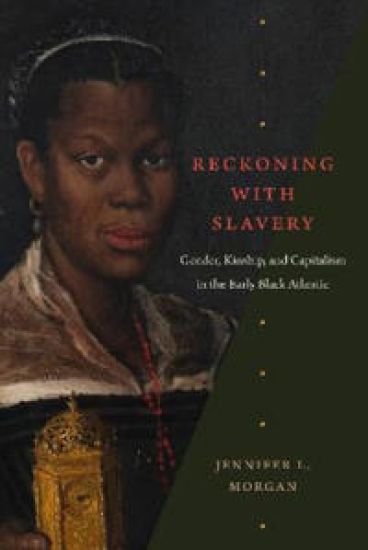
In Reckoning with Slavery Jennifer L. Morgan draws on the lived experiences of enslaved African women in the sixteenth and seventeenth centuries to reveal the contours of early modern notions of trade, race, and commodification in the Black Atlantic. From capture to transport to sale to childbirth, these women were demographically counted as commodities during the Middle Passage, vulnerable to rape, separated from their kin at slave markets, and subject to laws that enslaved their children upon birth. In this way, they were central to the binding of reproductive labor with kinship, racial hierarchy, and the economics of slavery. Throughout this groundbreaking study, Morgan demonstrates that the development of Western notions of value and race occurred simultaneously. In so doing, she illustrates how racial capitalism denied the enslaved their kinship and affective ties while simultaneously relying on kinship to reproduce and enforce slavery through enslaved female bodies.
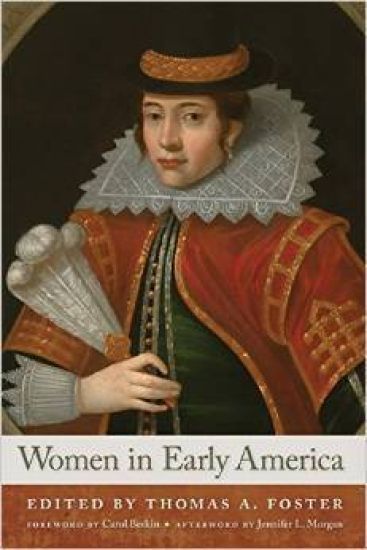
Tells the fascinating stories of the myriad women who shaped the early modern North American world from the colonial era through the first years of the Republic Women in Early America, edited by Thomas A. Foster, goes beyond the familiar stories of Pocahontas or Abigail Adams, recovering the lives and experiences of lesser-known women—both ordinary and elite, enslaved and free, Indigenous and immigrant—who lived and worked in not only British mainland America, but also New Spain, New France, New Netherlands, and the West Indies. In these essays we learn about the conditions that women faced during the Salem witchcraft panic and the Spanish Inquisition in New Mexico; as indentured servants in early Virginia and Maryland; caught up between warring British and Native Americans; as traders in New Netherlands and Detroit; as slave owners in Jamaica; as Loyalist women during the American Revolution; enslaved in the President's house; and as students and educators inspired by the air of equality in the young nation. Foster showcases the latest research of junior and senior historians, drawing from recent scholarship informed by women's and gender history—feminist theory, gender theory, new cultural history, social history, and literary criticism. Collectively, these essays address the need for scholarship on women's lives and experiences. Women in Early America heeds the call of feminist scholars to not merely reproduce male-centered narratives, "add women, and stir," but to rethink master narratives themselves so that we may better understand how women and men created and developed our historical past.
Tells the fascinating stories of the myriad women who shaped the early modern North American world from the colonial era through the first years of the Republic Women in Early America, edited by Thomas A. Foster, goes beyond the familiar stories of Pocahontas or Abigail Adams, recovering the lives and experiences of lesser-known women—both ordinary and elite, enslaved and free, Indigenous and immigrant—who lived and worked in not only British mainland America, but also New Spain, New France, New Netherlands, and the West Indies. In these essays we learn about the conditions that women faced during the Salem witchcraft panic and the Spanish Inquisition in New Mexico; as indentured servants in early Virginia and Maryland; caught up between warring British and Native Americans; as traders in New Netherlands and Detroit; as slave owners in Jamaica; as Loyalist women during the American Revolution; enslaved in the President's house; and as students and educators inspired by the air of equality in the young nation. Foster showcases the latest research of junior and senior historians, drawing from recent scholarship informed by women's and gender history—feminist theory, gender theory, new cultural history, social history, and literary criticism. Collectively, these essays address the need for scholarship on women's lives and experiences. Women in Early America heeds the call of feminist scholars to not merely reproduce male-centered narratives, "add women, and stir," but to rethink master narratives themselves so that we may better understand how women and men created and developed our historical past.

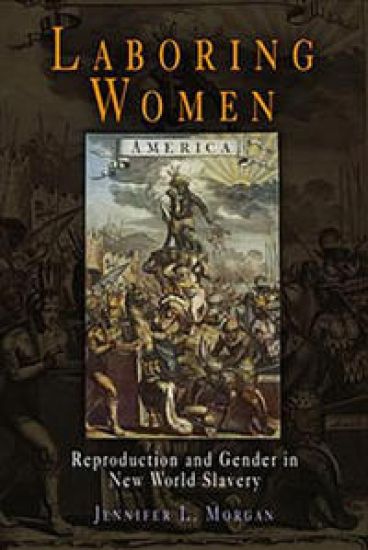
When black women were brought from Africa to the New World as slave laborers, their value was determined by their ability to work as well as their potential to bear children, who by law would become the enslaved property of the mother's master. In Laboring Women: Reproduction and Gender in New World Slavery, Jennifer L. Morgan examines for the first time how African women's labor in both senses became intertwined in the English colonies. Beginning with the ideological foundations of racial slavery in early modern Europe, Laboring Women traverses the Atlantic, exploring the social and cultural lives of women in West Africa, slaveowners' expectations for reproductive labor, and women's lives as workers and mothers under colonial slavery. Challenging conventional wisdom, Morgan reveals how expectations regarding gender and reproduction were central to racial ideologies, the organization of slave labor, and the nature of slave community and resistance. Taking into consideration the heritage of Africans prior to enslavement and the cultural logic of values and practices recreated under the duress of slavery, she examines how women's gender identity was defined by their shared experiences as agricultural laborers and mothers, and shows how, given these distinctions, their situation differed considerably from that of enslaved men. Telling her story through the arc of African women's actual lives-from West Africa, to the experience of the Middle Passage, to life on the plantations-she offers a thoughtful look at the ways women's reproductive experience shaped their roles in communities and helped them resist some of the more egregious effects of slave life. Presenting a highly original, theoretically grounded view of reproduction and labor as the twin pillars of female exploitation in slavery, Laboring Women is a distinctive contribution to the literature of slavery and the history of women.