Kirjojen hintavertailu – 12 903 733 kirjaa ja 27 kauppaa

Kirjailija

Jennifer R. Mercieca

Kirjat ja teokset yhdessä paikassa: 4 kirjaa, julkaisuja vuosilta 2014–2020, suosituimpiin kuuluu Columns to Characters. Vertaile teosten hintoja ja tarkista saatavuus suomalaisista kirjakaupoista.

4 kirjaa

Kirjojen julkaisuvuodet: 2014–2020.

Columns to Characters

Columns to Characters

Peter Baker; Martha Joynt Kumar; Rita Kirk; David Demarest; Roderick P Hart; Thomas M. DeFrank; Stephen A Smith; Tony Pedersen; Robert W Mong; George C Edwards; Jennifer R. Mercieca; Stacia Deshishku; Jon Meacham

Texas A M University Press
2017
sidottu
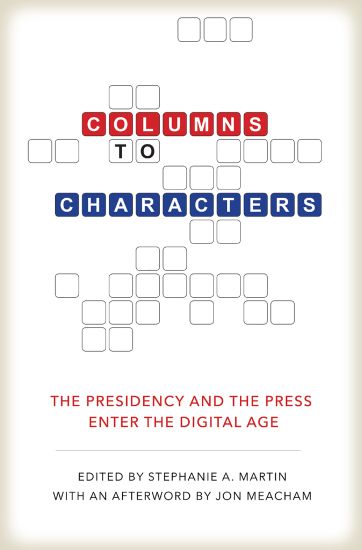
The relationship between the presidency and the press has transformed—seemingly overnight—from one where reports and columns were filed, edited, and deliberated for hours before publication into a brave new world where texts, tweets, and sound bites race from composition to release within a matter of seconds. This change, which has ultimately made political journalism both more open and more difficult, brings about many questions, but perhaps the two most important are these: Are the hard questions still being asked? Are they still being answered? In Columns to Characters, Stephanie A. Martin and top scholars and journalists offer a fresh perspective on how the evolution of technology affects the way presidents interact with the public. From Bill Clinton’s saxophone playing on the Arsenio Hall Show to Barack Obama’s skillful use of YouTube, Twitter, and Reddit as the first “social media president,” political communication appears to reflect the increasing fragmentation of the American public. The accessible essays here explore these implications in a variety of real-world circumstances: the “narcotizing” numbness of information overload and voter apathy; the concerns over privacy, security, and civil liberties; new methods of running political campaigns and mobilizing support for programs; and a future “post-rhetorical presidency” in which the press is all but irrelevant. Each section of the book concludes with a “reality check,” a short reflection by a working journalist (or, in one case, a former White House insider) on the presidential beat.

Demagogue for President

Demagogue for President

Jennifer R. Mercieca

Texas A M University Press
2020
sidottu

Halvin toimitettuna 27,90 €

Historic levels of polarization, a disaffected and frustrated electorate, and widespread distrust of government, the news media, and traditional political leadership set the stage in 2016 for an unexpected, unlikely, and unprecedented presidential contest. Donald Trump's campaign speeches and other rhetoric seemed on the surface to be simplistic, repetitive, and disorganized to many. As Demagogue for President shows, Trump's campaign strategy was anything but simple. Political communication expert Jennifer Mercieca shows how the Trump campaign expertly used the common rhetorical techniques of a demagogue, a word with two contradictory definitions - 'a leader who makes use of popular prejudices and false claims and promises in order to gain power' or 'a leader championing the cause of the common people in ancient times' (Merriam-Webster, 2019). These strategies, in conjunction with post-rhetorical public relations techniques, were meant to appeal to a segment of an already distrustful electorate. It was an effective tactic. Mercieca analyzes rhetorical strategies such as argument ad hominem, argument ad baculum, argument ad populum, reification, paralipsis, and more to reveal a campaign that was morally repugnant to some but to others a brilliant appeal to American exceptionalism. By all accounts, it fundamentally changed the discourse of the American public sphere.
The Rhetoric of Heroic Expectations

The Rhetoric of Heroic Expectations

Justin S. Vaughn; Jennifer R. Mercieca

Texas A M University Press
2014
sidottu
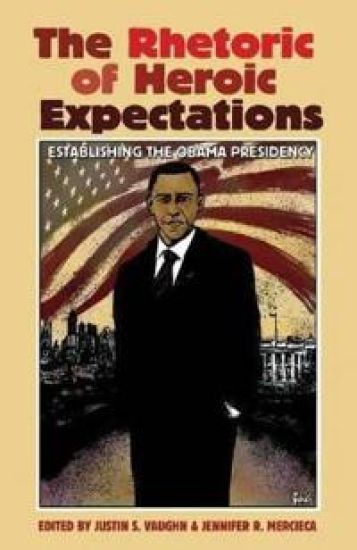
Campaign rhetoric helps candidates to get elected, but its effects last well beyond the counting of the ballots; this was perhaps never truer than in Barack Obama’s 2008 campaign. Did Obama create such high expectations that they actually hindered his ability to enact his agenda? Should we judge his performance by the scale of the expectations his rhetoric generated, or against some other standard? The Rhetoric of Heroic Expectations: Establishing the Obama Presidency grapples with these and other important questions. Barack Obama’s election seemed to many to fulfill Martin Luther King Jr.’s vision of the “long arc of the moral universe . . . bending toward justice.” And after the terrorism, war, and economic downturn of the previous decade, candidate Obama’s rhetoric cast broad visions of a change in the direction of American life. In these and other ways, the election of 2008 presented an especially strong example of creating expectations that would shape the public’s views of the incoming administration. The public’s high expectations, in turn, become a part of any president’s burden upon assuming office. The interdisciplinary scholars who have contributed to this volume focus their analysis upon three kinds of presidential burdens: institutional burdens (specific to the office of the presidency); contextual burdens (specific to the historical moment within which the president assumes office); and personal burdens (specific to the individual who becomes president).
The Rhetoric of Heroic Expectations

The Rhetoric of Heroic Expectations

Justin S. Vaughn; Jennifer R. Mercieca

Texas A M University Press
2014
nidottu
Campaign rhetoric helps candidates to get elected, but its effects last well beyond the counting of the ballots; this was perhaps never truer than in Barack Obama’s 2008 campaign. Did Obama create such high expectations that they actually hindered his ability to enact his agenda? Should we judge his performance by the scale of the expectations his rhetoric generated, or against some other standard? The Rhetoric of Heroic Expectations: Establishing the Obama Presidency grapples with these and other important questions. Barack Obama’s election seemed to many to fulfill Martin Luther King Jr.’s vision of the “long arc of the moral universe . . . bending toward justice.” And after the terrorism, war, and economic downturn of the previous decade, candidate Obama’s rhetoric cast broad visions of a change in the direction of American life. In these and other ways, the election of 2008 presented an especially strong example of creating expectations that would shape the public’s views of the incoming administration. The public’s high expectations, in turn, become a part of any president’s burden upon assuming office. The interdisciplinary scholars who have contributed to this volume focus their analysis upon three kinds of presidential burdens: institutional burdens (specific to the office of the presidency); contextual burdens (specific to the historical moment within which the president assumes office); and personal burdens (specific to the individual who becomes president).