Kirjojen hintavertailu – 12 859 829 kirjaa ja 27 kauppaa

Kirjailija

Jennifer Raab

Kirjat ja teokset yhdessä paikassa: 24 kirjaa, julkaisuja vuosilta 2012–2024, suosituimpiin kuuluu Prozentrechnung: "Für welches Angebot entscheidest Du Dich?". Rabatte berechnen (Mathematik, Klasse 7). Vertaile teosten hintoja ja tarkista saatavuus suomalaisista kirjakaupoista.

24 kirjaa

Kirjojen julkaisuvuodet: 2012–2024.

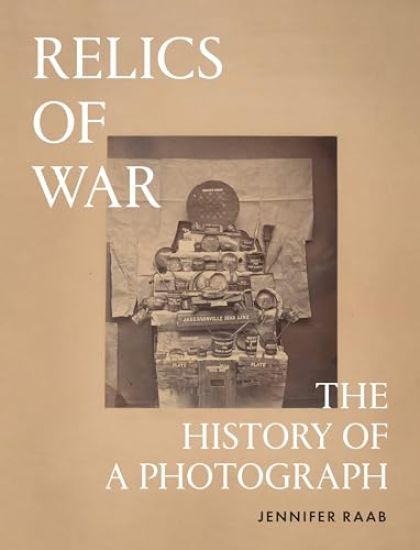
Relics of War

Relics of War

Jennifer Raab

PRINCETON UNIVERSITY PRESS
2024
sidottu
How a single haunting image tells a story about violence, mourning, and memoryIn 1865, Clara Barton traveled to the site of the notorious Confederate prison camp in Andersonville, Georgia, where she endeavored to name the missing and the dead. The future founder of the American Red Cross also collected their relics—whittled spoons, woven reed plates, a piece from the prison’s “dead line,” a tattered Bible—and brought them back to her Missing Soldiers Office in Washington, DC, presenting them to politicians, journalists, and veterans’ families before having them photographed together in an altar-like arrangement. Relics of War reveals how this powerful image, produced by Mathew Brady, opens a window into the volatile relationship between suffering, martyrdom, and justice in the wake of the Civil War. Jennifer Raab shows how this photograph was a crucial part of Barton’s efforts to address the staggering losses of a war in which nearly half of the dead were unnamed and from which bodies were rarely returned home for burial. The Andersonville relics gave form to these absent bodies, offered a sacred site for grief and devotion, mounted an appeal on behalf of the women and children left behind, and testified to the crimes of war. The story of the photograph illuminates how military sacrifice was racialized as political reconciliation began, and how the stories of Black soldiers and communities were silenced. Richly illustrated, Relics of War vividly demonstrates how one photograph can capture a precarious moment in history, serving as witness, advocate, evidence, and memory.
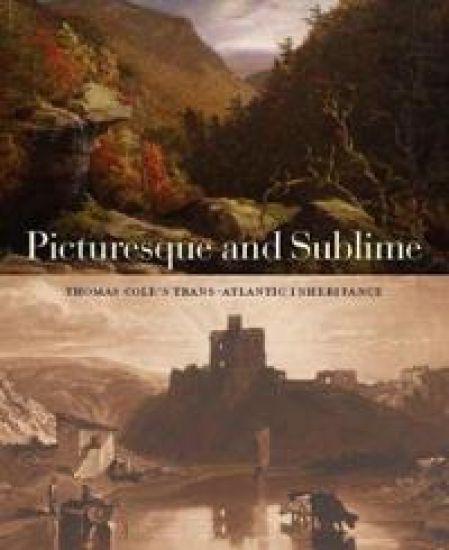
Picturesque and Sublime

Picturesque and Sublime

Tim Barringer; Gillian Forrester; Jennifer Raab

Yale University Press
2018
pokkari
Landscape art in the early 19th century was guided by two rival concepts: the picturesque, which emphasized touristic pleasures and visual delight, and the sublime, an aesthetic category rooted in notions of fear and danger. British artists including J. M. W. Turner and John Constable raised landscape painting to new heights and their work reached global audiences through the circulation of engravings. Thomas Cole, born in England, emigrated to the United States in 1818, and first absorbed the picturesque and sublime through print media. Cole transformed British and continental European traditions to create a distinctive American form of landscape painting. The authors here explore the role of prints as agents of artistic transmission and look closely at how Cole’s own creative process was driven by works on paper such as drawings, notebooks, letters, and manuscripts. Also considered is the importance of the parallel works of William Guy Wall, best known for his pioneering Hudson River Portfolio. Beautifully illustrated with works on paper ranging from watercolors to etchings, mezzotints, aquatints, engravings, and lithographs, as well as notable paintings, this book offers important insights into Cole’s formulation of a profound new category in art—the American sublime. Published in association with the Thomas Cole National Historic SiteExhibition Schedule:Thomas Cole National Historic Site (05/01/18–11/04/18)
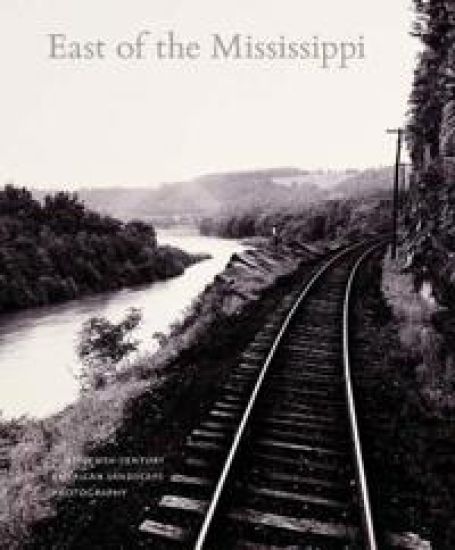
East of the Mississippi

East of the Mississippi

Diane Waggoner; Russell Lord; Jennifer Raab

Yale University Press
2017
sidottu
An important reconsideration of landscape photography in 19th-century America, exploring crucial but neglected geographies, practitioners, and themes Although pictures of the West have dominated our perception of 19th-century American landscape photography, many photographers were working in the eastern half of the United States during that period. Their pictures, with the exception of Civil War images, have received relatively scant attention. Redressing this imbalance is East of the Mississippi, the first book to focus exclusively on the arresting eastern photographs that helped shape America’s national identity. Celebrating natural wonders such as Niagara Falls and the White Mountains as well as capturing a cultural landscape fundamentally altered by industrialization, these works also documented the impact of war, promoted tourism, and played a role in an emerging environmentalism. Showcasing more than 180 photographs from 1839 to 1900 in a rich variety of media and formats—from daguerreotypes, salted paper prints, tintypes, cyanotypes, and albumen prints to stereo cards and photograph albums—this volume traces the evolution of eastern landscape photography and introduces the artists who explored this subject. Also considered are the dynamic ties with other media—for instance, between painters and photographers such as the Bierstadt and Moran brothers—and the distinctive development of landscape photography in America. Published in association with the National Gallery of Art, Washington, D. C. Exhibition Schedule:National Gallery of Art, Washington, D. C. (03/12/17–07/16/17)New Orleans Museum of Art (10/05/17–01/07/18)
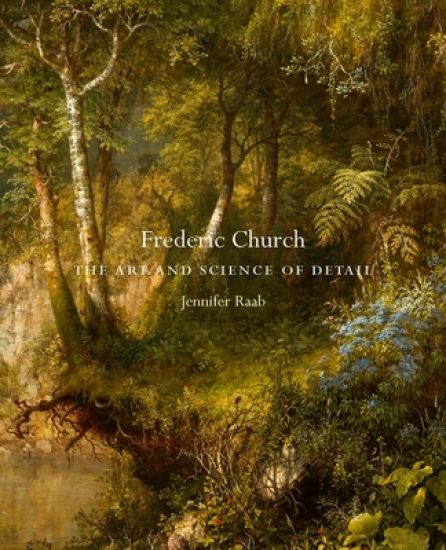
Frederic Church

Frederic Church

Jennifer Raab

Yale University Press
2015
sidottu
Frederic Church (1826–1900), the most celebrated painter in the United States during the mid-19th century, created monumental landscapes of North and South America, the Arctic, and the Middle East. These paintings were unsurpassed in their attention to detail, yet the significance of this pictorial approach has remained largely unexplored. In this important reconsideration of Church’s works, Jennifer Raab offers the first sustained examination of the aesthetics of detail that fundamentally shaped 19th-century American landscape painting. Moving between historical context and close readings of famous canvases—including Niagara, The Heart of the Andes, and The Icebergs—Raab argues that Church’s art challenged an earlier model of painting based on symbolic unity, revealing a representation of nature with surprising connections to scientific discourses of the time. The book traces Church’s movement away from working in oil on canvas to shaping the physical landscape of Olana, his self-designed estate on the Hudson River, a move that allowed the artist to rethink scale and process while also engaging with pressing ecological questions. Beautifully illustrated with dramatic spreads and striking details of Church’s works, Frederic Church: The Art and Science of Detail offers a profoundly new understanding of this canonical artist.