Kirjojen hintavertailu – 12 859 828 kirjaa ja 27 kauppaa

Kirjailija

Jennifer Richards

Kirjat ja teokset yhdessä paikassa: 10 kirjaa, julkaisuja vuosilta 1999–2022, suosituimpiin kuuluu Writing Flash Fiction. Vertaile teosten hintoja ja tarkista saatavuus suomalaisista kirjakaupoista.

10 kirjaa

Kirjojen julkaisuvuodet: 1999–2022.

Writing Flash Fiction

Writing Flash Fiction

Jennifer Richards

Simon Dough
2022
pokkari
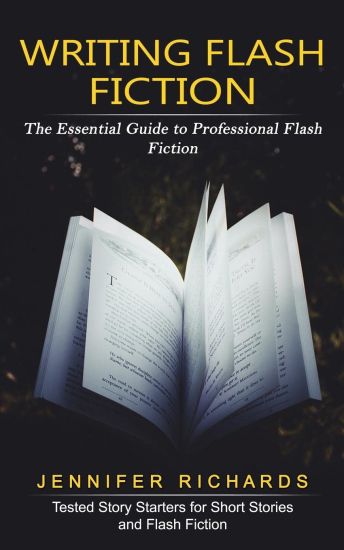
This book helps authors of all experience levels to understand the elements of short stories and flash fiction so that they can effectively write them for the current market. Look for combinations that amuse and intrigue you. Feel free to make changes, substitutions, and additions. You might find a garbage man in the list - but you'll soon discover that your garbage man is actually a garbage woman, or a trash-picking hobo, or an environmentally sensitive vampire who sleeps in a landfill. Let your characters drive the story. In this book include: Crafting charactersUsing dialoguePerspective and structureExperimentationReflectionEditing and rewritingFlash fiction consists of writing an entire story in a thousand words or less. This constraint imposes significant restrictions on what the writer can do, but written right, flash fiction tales can pack power way out of proportion to their length. The tricks and techniques needed to write effective flash fiction, though, are different from those used for novel-length, or even traditional short stories. Until now, these tricks and techniques had to be learned the hard way...through the path of rejection.
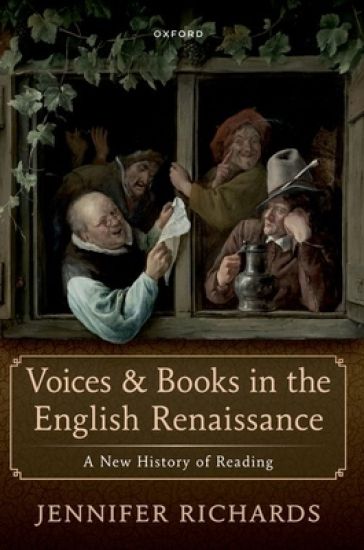
Voices and Books in the English Renaissance

Voices and Books in the English Renaissance

Jennifer Richards

Oxford University Press
2022
nidottu
Voices and Books in the English Renaissance offers a new history of reading that focuses on the oral reader and the voice- or performance-aware silent reader, rather than the historical reader, who is invariably male, silent, and alone. It recovers the vocality of education for boys and girls in Renaissance England, and the importance of training in pronuntiatio (delivery) for oral-aural literary culture. It offers the first attempt to recover the voice—and tones of voice especially—from textual sources. It explores what happens when we bring voice to text, how vocal tone realizes or changes textual meaning, and how the literary writers of the past tried to represent their own and others' voices, as well as manage and exploit their readers' voices. The volume offers fresh readings of key Tudor authors who anticipated oral readers including Anne Askew, William Baldwin, and Thomas Nashe. It rethinks what a printed book can be by searching the printed page for vocal cues and exploring the neglected role of the voice in the printing process. Renaissance printed books have often been misheard and a preoccupation with their materiality has led to a focus on them as objects. Indeed, Renaissance printed books are alive with possible voices, but we will not understand this while we focus on the silent reader.
Rhetoric

Rhetoric

Jennifer Richards

Routledge
2007
sidottu
Rhetoric has shaped our understanding of the nature of language and the purpose of literature for over two millennia. It is of crucial importance in understanding the development of literary history as well as elements of philosophy, politics and culture. The nature and practise of rhetoric was central to Classical, Renaissance and Enlightenment cultures and its relevance continues in our own postmodern world to inspire further debate. Examining both the practice and theory of this controversial concept, Jennifer Richards explores: historical and contemporary definitions of the term ‘rhetoric’uses of rhetoric in literature, by authors such as William Shakespeare, Mary Shelley, William Wordsworth, Jane Austen, W. B. Yeats and James Joyceclassical traditions of rhetoric, as seen in the work of Plato, Aristotle and Cicero the rebirth of rhetoric in the Renaissance and the Enlightenment the current status and future of rhetoric in literary and critical theory as envisaged by critics such as Kenneth Burke, Paul de Man and Jacques Derrida. This insightful volume offers an accessible account of this contentious yet unavoidable term, making this book invaluable reading for students of literature, philosophy and cultural studies.
Rhetoric

Rhetoric

Jennifer Richards

Routledge
2007
nidottu
Rhetoric has shaped our understanding of the nature of language and the purpose of literature for over two millennia. It is of crucial importance in understanding the development of literary history as well as elements of philosophy, politics and culture. The nature and practise of rhetoric was central to Classical, Renaissance and Enlightenment cultures and its relevance continues in our own postmodern world to inspire further debate. Examining both the practice and theory of this controversial concept, Jennifer Richards explores: historical and contemporary definitions of the term ‘rhetoric’uses of rhetoric in literature, by authors such as William Shakespeare, Mary Shelley, William Wordsworth, Jane Austen, W. B. Yeats and James Joyceclassical traditions of rhetoric, as seen in the work of Plato, Aristotle and Cicero the rebirth of rhetoric in the Renaissance and the Enlightenment the current status and future of rhetoric in literary and critical theory as envisaged by critics such as Kenneth Burke, Paul de Man and Jacques Derrida. This insightful volume offers an accessible account of this contentious yet unavoidable term, making this book invaluable reading for students of literature, philosophy and cultural studies.
Rhetoric and Courtliness in Early Modern Literature

Rhetoric and Courtliness in Early Modern Literature

Jennifer Richards

Cambridge University Press
2007
pokkari
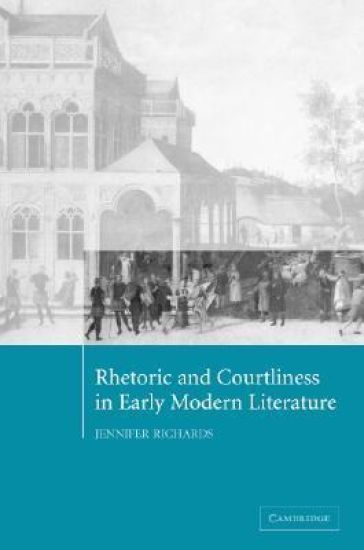
Rhetoric and Courtliness in Early Modern Literature explores the early modern interest in conversation as a newly identified art. Conversation was widely accepted to have been inspired by the republican philosopher Cicero. Recognizing his influence on courtesy literature - the main source for 'civil conversation' - Jennifer Richards uncovers alternative ways of thinking about humanism as a project of linguistic and social reform. She argues that humanists explored styles of conversation to reform the manner of association between male associates; teachers and students, buyers and sellers, and settlers and colonial others. They reconsidered the meaning of 'honesty' in social interchange in an attempt to represent the tension between self-interest and social duty. Richards explores the interest in civil conversation among mid-Tudor humanists, John Cheke, Thomas Smith and Roger Ascham, as well as their self-styled successors, Gabriel Harvey and Edmund Spenser.
King James VI and I

King James VI and I

Neil Rhodes; Jennifer Richards

Ashgate Publishing Limited
2003
sidottu
'Yet hath it been ever esteemed a matter commendable to collect [works] together, and incorporate them into one body, that we may behold at once, what divers Off-springs have proceeded from one braine.' This observation from the Bishop of Winchester in his preface to King James's 1616 Workes is particularly appropriate, since James's writings cross the boundaries of so many different fields. While several other monarchs engaged in literary composition, King James VI and I stands out as 'an inveterate scribbler' and is certainly the most extensively published of all British rulers. King James VI and I provides a broad representative selection of King James's writings on a range of secular and religious topics. Each text is provided in full, creating an invaluable reference tool for 16th and 17th century scholars working in different disciplines and a fascinating collection for students and general readers interested in early modern history and literature. In contrast to other editions of James's writings, which have been confined to a single aspect of his work, the present edition brings together for the first time his poetry and his religious writing, his political works and his treatises on witchcraft and tobacco, in a single volume. What makes this collection of James's writings especially significant is the distinctiveness of his position as both writer and ruler, an author of incontestable authority. All his authorly roles, as poet, polemicist, theologian, political theorist and political orator are informed by this fact. James's writings were also inevitably influenced by the circumstances of his reigns and this volume reflects the turbulent issues of religion, politics and nationhood that troubled his three kingdoms.
Elizabeth Singer [Rowe]

Elizabeth Singer [Rowe]

Jennifer Richards

Ashgate Publishing Limited
2003
sidottu
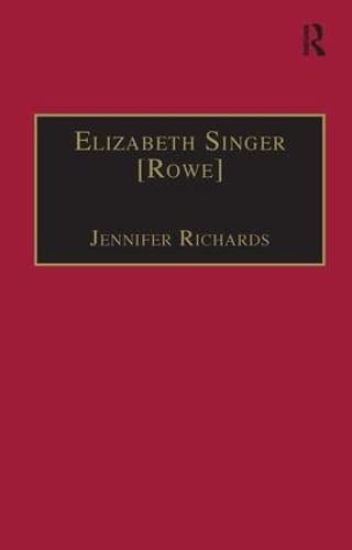
Printed Writings 1641-1700: Series II, Part Two, consists of seven volumes of writings as follows: Volume 1: An Collins Volume 2: Alicia D'Anvers Volume 3: 'Eliza' Volume 4: Amey Hayward Volume 5: Anne Killigrew Volume 6: Elizabeth Major Volume 7: Elizabeth Singer [Rowe]
Rhetoric and Courtliness in Early Modern Literature

Rhetoric and Courtliness in Early Modern Literature

Jennifer Richards

Cambridge University Press
2003
sidottu
Rhetoric and Courtliness in Early Modern Literature explores the early modern interest in conversation as a newly identified art. Conversation was widely accepted to have been inspired by the republican philosopher Cicero. Recognizing his influence on courtesy literature - the main source for 'civil conversation' - Jennifer Richards uncovers alternative ways of thinking about humanism as a project of linguistic and social reform. She argues that humanists explored styles of conversation to reform the manner of association between male associates; teachers and students, buyers and sellers, and settlers and colonial others. They reconsidered the meaning of 'honesty' in social interchange in an attempt to represent the tension between self-interest and social duty. Richards explores the interest in civil conversation among mid-Tudor humanists, John Cheke, Thomas Smith and Roger Ascham, as well as their self-styled successors, Gabriel Harvey and Edmund Spenser.
Shakespeare's Late Plays

Shakespeare's Late Plays

Jennifer Richards; James Knowles

Edinburgh University Press
1999
sidottu
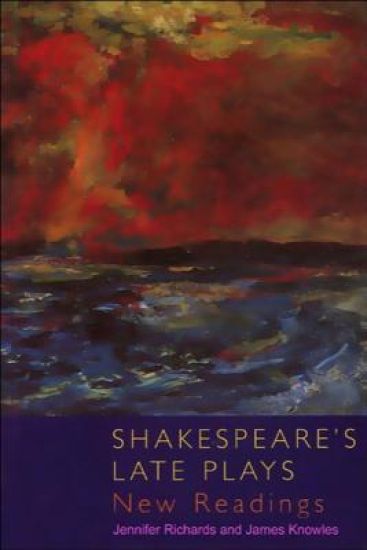
This new collection reflects a resurgence of interest in Shakespeare's plays performed between 1608 and 1613: Pericles, Cymbeline, The Winter's Tale, The Tempest, All is True (Henry VIII), The Two Noble Kinsmen, and Cardenio. It offers a broad range of new, historicist approaches, touching upon key topics in current Shakespearean studies, such as kinship relations, manliness, magic, medico-politics, nationalism, rhetoric, schism, sexuality and staging conventions. The plays are explored both individually and within generic, thematic and chronological groups. Each author combines new research with their experience of teaching the plays, offering innovative approaches to some well-known works, as well as encouraging readers to explore less familiar dramas such as Pericles, Cymbeline, All is True and The Two Noble Kinsmen. The volume is unusual in its coverage of the lost 'late' play Cardenio, and considers its significance for our conception of the 'lateness' of these plays. This book will fill a large gap in the market for a broad-ranging critical introduction to this important and increasingly popular area in Shakespeare's work, and is suitable as a textbook for undergraduate, graduate and more general readers.
Shakespeare's Late Plays

Shakespeare's Late Plays

Jennifer Richards; James Knowles

Edinburgh University Press
1999
nidottu
This new collection reflects a resurgence of interest in Shakespeare's plays performed between 1608 and 1613: Pericles, Cymbeline, The Winter's Tale, The Tempest, All is True (Henry VIII), The Two Noble Kinsmen, and Cardenio. It offers a broad range of new, historicist approaches, touching upon key topics in current Shakespearean studies, such as kinship relations, manliness, magic, medico-politics, nationalism, rhetoric, schism, sexuality and staging conventions. The plays are explored both individually and within generic, thematic and chronological groups. Each author combines new research with their experience of teaching the plays, offering innovative approaches to some well-known works, as well as encouraging readers to explore less familiar dramas such as Pericles, Cymbeline, All is True and The Two Noble Kinsmen. The volume is unusual in its coverage of the lost 'late' play Cardenio, and considers its significance for our conception of the 'lateness' of these plays. This book will fill a large gap in the market for a broad-ranging critical introduction to this important and increasingly popular area in Shakespeare's work, and is suitable as a textbook for undergraduate, graduate and more general readers.