
Kirjailija
Jenny Chan
Kirjat ja teokset yhdessä paikassa: 11 kirjaa, julkaisuja vuosilta 2016–2026, suosituimpiin kuuluu State of Suspension. Vertaile teosten hintoja ja tarkista saatavuus suomalaisista kirjakaupoista.
11 kirjaa
Kirjojen julkaisuvuodet: 2016–2026.
Marutas of Unit 731
Jenny Chan
Pacific Atrocities Education
2020
pokkari
Halvin toimitettuna 17,40 €
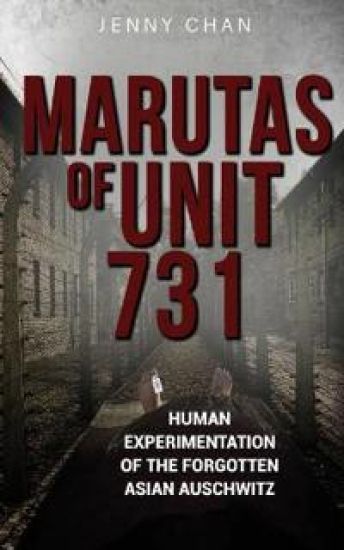
Euphemistically labeled as the "Water Supply and Prophylaxis Administration" and "HippoEpizootic Administration" of the Imperial Japanese Army, Unit 731 and Unit 100, as well as their subsidiary branches, performed human experimentation on the innocents under the leadership of Dr. Ishii Shiro. The Kempeitai, AKA, the military police captured any patriots for Unit 731's prison. The prisoners included Chinese patriots, civilians, Russians, and allied POWs. Although the exact number of victims is unclear since the Japanese destroyed most of the evidence at the end of the war, but it ranged from 3,000-250,000 innocent men, women, and children. The cruel experiments and medical procedures were carried out by the brightest medical students and staff that Imperial Japan had to offer. For the scientists to treat the prisoners less like humans, they called them "Marutas" or logs. The experimentations included their reaction to bubonic plague, typhoid, paratyphoid A and B, typhus, anthrax, smallpox, tularemia, infectious jaundice, gas gangrene, tetanus, cholera, dysentery, glanders, scarlet fever, undulant fever, tick encephalitis, "songo" or epidemic hemorrhagic fever, whooping cough, diphtheria, pneumonia, erysipelas, epidemic cerebrospinal meningitis, venereal diseases, tuberculosis, salmonella, frostbites, and many other viruses and bacteria. To observe the real-time effects of these deadly diseases and bacteria, these prisoners were often subject to vivisections without the use of anesthesia. Then there was the ANTA testing ground where the human test subjects were exposed to bacterial weapons under field conditions. For example, to test weapons developed with gas gangrene, ten Chinese prisoners were tied to stakes from 10-20 meters apart, and a bomb was set off by electricity. All ten prisoners were injured by shrapnel contaminated with gas gangrene. Within a week, they all died in severe torment. The study of the pathogens was also conducted with human experimentation. Vaccines were then developed to protect the Imperial Japanese Army in case they were to face a total war where they employ the bacteriological weapons produced by Unit 731. In the case where a human experimental subject was exhausted from the experiments, they were to be killed one way or another. Some test subjects were handed potassium cyanides, while others had porridge with heroin. These "medical doctors" who performed routine human experiments were allowed to escape persecution, unlike their Nazi counterparts in Europe. Most of them were rewarded handsomely with great careers after the war. Not only did they not face any consequences, but most of them also lived successfully after the war was over.
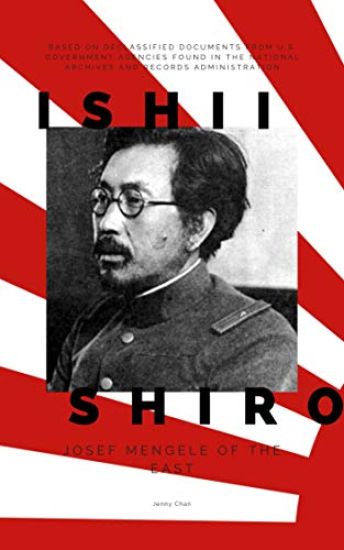
The Japanese occupation of Manchuria promised many opportunities for young scientists who wanted to utilize their training and curiosity to advance Japanese military capabilities. Recently graduated medical student Ishii Shiro seized this occasion, and with funding from the War Ministry of Imperial Japan, founded Unit 731, a biological and chemical warfare research and development arm of the IJA. With consent and funding from the military and government, he recruited the brightest minds from Japan to conduct fatal human experimentation, develop bubonic plague bombs to unleash on nearby villages, and test biological and chemical weapons. Within a few years, he rapidly climbed the ranks, going from Captain to General for the Imperial Japanese Army. His impact and power overshadowed his European counterpart, Josef Mengele. After the war, he faked his death, but the CIA was able to locate him. However, he negotiated immunity and was never brought to justice in what came to be known as the elaborate American coverup of Japanese war crimes.

Suicides, excessive overtime, and hostility and violence on the factory floor in China. Drawing on vivid testimonies from rural migrant workers, student interns, managers and trade union staff, Dying for an iPhone is a devastating expose of two of the world's most powerful companies: Foxconn and Apple. As the leading manufacturer of iPhones, iPads, and Kindles, and employing one million workers in China alone, Taiwanese-invested Foxconn's drive to dominate global electronics manufacturing has aligned perfectly with China's goal of becoming the world leader in technology. This book reveals the human cost of that ambition and what our demands for the newest and best technology means for workers. Foxconn workers have repeatedly demonstrated their power to strike at key nodes of transnational production, challenge management and the Chinese state, and confront global tech behemoths. Dying for an iPhone allows us to assess the impact of global capitalism's deepening crisis on workers.'

Suicides, excessive overtime, and hostility and violence on the factory floor in China. Drawing on vivid testimonies from rural migrant workers, student interns, managers and trade union staff, Dying for an iPhone is a devastating expose of two of the world's most powerful companies: Foxconn and Apple. As the leading manufacturer of iPhones, iPads, and Kindles, and employing one million workers in China alone, Taiwanese-invested Foxconn's drive to dominate global electronics manufacturing has aligned perfectly with China's goal of becoming the world leader in technology. This book reveals the human cost of that ambition and what our demands for the newest and best technology means for workers. Foxconn workers have repeatedly demonstrated their power to strike at key nodes of transnational production, challenge management and the Chinese state, and confront global tech behemoths. Dying for an iPhone allows us to assess the impact of global capitalism's deepening crisis on workers.'

Suicides, excessive overtime, hostility and violence on the factory floor in China. Drawing on vivid testimonies from rural migrant workers, student interns, managers and trade union staff, Dying for an iPhone is a devastating expose of two of the world's most powerful companies: Foxconn and Apple. As the leading manufacturer of iPhones, iPads and Kindles, and employing one million workers in China alone, Taiwanese-invested Foxconn's drive to dominate global electronics manufacturing has aligned perfectly with China's goal of becoming the world leader in technology. This book reveals the human cost of that ambition and what our demands for the newest and best technology mean for workers. Foxconn workers have repeatedly demonstrated their power to strike at key nodes of transnational production, challenge management and the Chinese state, and confront global tech behemoths. Dying for an iPhone allows us to assess the impact of global capitalism's deepening crisis on workers.

Suicides, excessive overtime, hostility and violence on the factory floor in China. Drawing on vivid testimonies from rural migrant workers, student interns, managers and trade union staff, Dying for an iPhone is a devastating expose of two of the world's most powerful companies: Foxconn and Apple. As the leading manufacturer of iPhones, iPads and Kindles, and employing one million workers in China alone, Taiwanese-invested Foxconn's drive to dominate global electronics manufacturing has aligned perfectly with China's goal of becoming the world leader in technology. This book reveals the human cost of that ambition and what our demands for the newest and best technology mean for workers. Foxconn workers have repeatedly demonstrated their power to strike at key nodes of transnational production, challenge management and the Chinese state, and confront global tech behemoths. Dying for an iPhone allows us to assess the impact of global capitalism's deepening crisis on workers.

The Undrowning Lotus: A WW2 Historical Novel, Based on a True Story of a Sexual Slavery Survivor
Jenny Chan
Pacific Atrocities Education
2020
nidottu
Based on a true story, Undrowning Lotus centers on Chunhua who grew up during the opium crisis in Shanxi, located in Northern China. After being sold as a child bride, her feet were bounded by her in-laws, a popular practice in China at the time. She worked on the farm day and night while trying to find meaning in her life. As communism rose in China, she became a revolutionary. This allowed her to contribute to her country at a time of civil war in China. During the invasion of China by the Imperial Japanese Army, she was captured and put into sexual slavery known as comfort women station. According to Iris Chang, the author of the Rape of Nanking, these women were called "public toilets" by Japanese soldiers. This is a story of survival through the comfort woman station in Northern China, where our heroine escaped and was recaptured a couple of times before the war ended. This book features interviews from 2014 with Chinese comfort women from Shanxi before they passed away as well as rare photos of a comfort station from Northern China.

Memoir by Prince Konoe: The Secret Negotiations Between Japan and the U.S. Before Pearl Harbor
Barbara Halperin; Jenny Chan
Pacific Atrocities Education
2020
nidottu
On December 16, 1945, Prince Konoe committed suicide after refusing to collaborate with U. S. Army officer Bonner Fellers in "Operation Blacklist." His refusal to exonerate Emperor Hirohito and the imperial family of war crimes responsibilities. A week before he took the cyanide, he wrote a memoir regarding his experience governing Imperial Japan during World War 2. Although Prince Fumimaro Konoe was born into one of the most ancient and noble families of Japan and was a descendant of the "Gosekke"(fiver regent families), he faced poverty at 14 after his father passed away. He was then groomed by his uncle Prince Saionji Kinmochi, who was a Prime Minister at the time, for an essential role in government. By 1937, Prince Konoe became the Prime Minister of Imperial Japan, during a time when Japan had occupied Manchuria. At the age of 46, Prince Konoe was the second youngest Prime Minister in Japan's history. During his first year of being a Prime Minister, the "China Incident" happened, and the Sino-Japanese War raged on. The memoir shows many efforts of Prince Konoe's efforts for negotiations with Chinese and U. S. government officials to try to end the war early as well as his governing during a time of crisis during the Pacific Asia War. This book will include A biographical report of Prince Fumimaro Konoe by the Interim Research and Intelligence Service of the Research and Analysis Branch of the Department of StateHis translated memoir

The Khabarovsk War Crimes Trial: Unearthing Biological Warfare in WWII
Jenny Chan
Pacific Atrocities Education
2020
nidottu
3607 members of Unit 731, 12 brought to trial at Khabarovsk. Did justice ever prevail? Although the west often dismissed the Khabarovsk War Crimes Trial as "Communist Propaganda," it was the first time the scientists from the "Epidemic Prevention and Water Purification Department" of the Imperial Japanese Army(IJA) came forward with the crimes they committed during World War 2. The Khabarovsk War Crime Trials were hearings held between 25-31 December 1949 in the Soviet Union's Stalinist courts, and it lasted for five days. It was after the 10-month long Nuremberg trials and the two-year-long Far Eastern War Crimes Tribunal in Tokyo. Although it was a shorter war crimes trial, it unearthed cruel biological weapon development and human experimentation practices by the Japanese Imperial Army. This book contains confessions from the scientists who worked in Unit 100 and Unit 731 regarding their duties. Here is an example from the interrogation as documented, "At the beginning of September 1944, two Russians were shot dead in my presence by a gendarme at the cattle cemetery, and were buried there. This was doneon the orders of Lieutenant Nakazima. They were shot because no more experiments could be performed on them in view of their exhausted state and unsuitability for further experimentation." Another testimony, ". . . An expedition against the Chinese troops was carried out in the middle of 1942, with General Ishii in charge. ... As a preliminary to this expedition, 130 kilograms of paratyphoid and anthrax bacteria were prepared under my direction, again on the orders of Major Suzuki. According to my information, fleas were also used as epidemic carriers in this expedition. ... To carry out the expedition, General Ishii left with a party for Central China, where the Japanese troops were retreating at that time. The members of the expedition took advantage of the retreat to disseminate bacteria in the abandoned territory in order to cause outbreaks of epidemic among the advancing Chinese troops." This book will contain not only the testimonies from defendants at interrogation, but also from witnesses and their colleagues in Unit 731 and Unit 100. It uncovers their experimentation at the ANTA testing grounds where they were testing new weapons, human experimentation, the cause of bubonic plague outbreak in China, as well as anthrax and glanders attacks on Russia.

Flipped Classrooms for Legal Education
Lutz-Christian Wolff; Jenny Chan
Springer Verlag, Singapore
2016
nidottu
This book discusses comprehensively the use of Flipped Classrooms in the context of legal education. The Flipped Classroom model implies that lecture modules are delivered online to provide more time for in-class interactivity. This book analyses the pedagogical viability, costs and other resource-related implications, technical aspects as well as the production and online distribution of Flipped Classrooms. It compares the Flipped Classroom concept with traditional law teaching methods and details its advantages and limitations. The findings are tested by way of a case study which serves as the basis for the development of comprehensive guidelines for the concept’s practical implementation. As Flipped Classrooms have become a very hot topic across disciplines in recent years, this book offers a unique resource for law teachers, law school managers as well as researchers in the field of legal education. It is a must-have for anyone interested in innovative law teaching methodologies.