Kirjojen hintavertailu – 12 903 725 kirjaa ja 27 kauppaa

Kirjailija

Jenny Jacobs

Kirjat ja teokset yhdessä paikassa: 21 kirjaa, julkaisuja vuosilta 2017–2020, suosituimpiin kuuluu Wie Dating-Apps das menschliche Paarungsverhalten verändern. Vertaile teosten hintoja ja tarkista saatavuus suomalaisista kirjakaupoista.

21 kirjaa

Kirjojen julkaisuvuodet: 2017–2020.

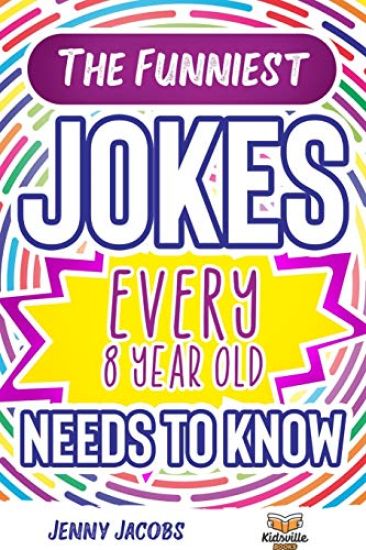
The Funniest Jokes EVERY 8 Year Old Needs to Know
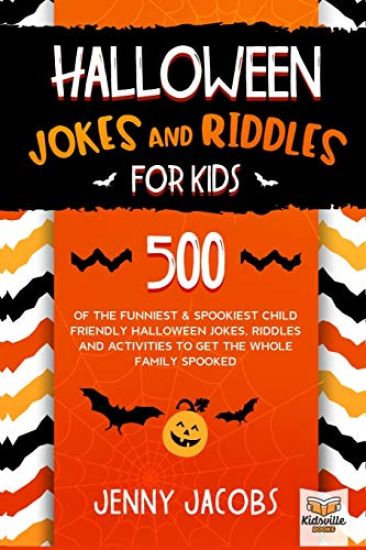
Introducing The Hilarious Collection Of 501 Jokes That Every 8 Year Old Deserves To Know (Especially Those Who Love To Laugh ) Why did Adele cross the road? To say "Hello " from the other side. What's the difference between a fish and piano? You can't Tuna fish. What did the grape say when it got crushed? Not much, just a little wine. Now wouldn't your child love another 500+ jokes to laugh at just like those 4 examples? Not only that, Jokes are the perfect way for you to spend quality time & bond deeply with your child, without any screens intervening Oh, and when your little comedian is telling you their latest joke, you'll be surprised how funny the jokes actually are And, since finding funny 8 year old friendly Jokes can take a LOT of time and effort we've made it incredibly convenient with the best 501 all in one place (we're great I know )Anyways, here's a slither of what's inside...● 7+ Categories Of Jokes So Your 8 Year Old Will NEVER Get Bored ● 500+ Child Friendly Laugh-Out-Loud Jokes The Whole Family Can Appreciate ● Easy To Understand & Comprehend Jokes That All 8 Year Olds Will Easily Digest ● The Perfect Opportunity For Screen-Free Family Fun With Hours Worth Of Jokes To Choose From And SO Much More Our biggest issues with most 'Joke' books is that they jokes just aren't funny and the jokes are repetitive & boring That's why at Kidsville our #1 priority to find the 500 funniest & original jokes that all 8 year olds will LOVE So, If Your 8 Year Old Is Ready To Create Hours Upon Hours Of Laughter For Them, Their Family & Friends, While Becoming The Class Clown Then Buy This Book Today
The Funniest Jokes EVERY 8 Year Old Needs to Know
Introducing The Hilarious Collection Of 501 Jokes That Every 8 Year Old Deserves To Know (Especially Those Who Love To Laugh ) Why did Adele cross the road? To say "Hello " from the other side. What's the difference between a fish and piano? You can't Tuna fish. What did the grape say when it got crushed? Not much, just a little wine. Now wouldn't your child love another 500+ jokes to laugh at just like those 4 examples? Not only that, Jokes are the perfect way for you to spend quality time & bond deeply with your child, without any screens intervening Oh, and when your little comedian is telling you their latest joke, you'll be surprised how funny the jokes actually are And, since finding funny 8 year old friendly Jokes can take a LOT of time and effort we've made it incredibly convenient with the best 501 all in one place (we're great I know )Anyways, here's a slither of what's inside...● 7+ Categories Of Jokes So Your 8 Year Old Will NEVER Get Bored ● 500+ Child Friendly Laugh-Out-Loud Jokes The Whole Family Can Appreciate ● Easy To Understand & Comprehend Jokes That All 8 Year Olds Will Easily Digest ● The Perfect Opportunity For Screen-Free Family Fun With Hours Worth Of Jokes To Choose From And SO Much More Our biggest issues with most 'Joke' books is that they jokes just aren't funny and the jokes are repetitive & boring That's why at Kidsville our #1 priority to find the 500 funniest & original jokes that all 8 year olds will LOVE So, If Your 8 Year Old Is Ready To Create Hours Upon Hours Of Laughter For Them, Their Family & Friends, While Becoming The Class Clown Then Buy This Book Today
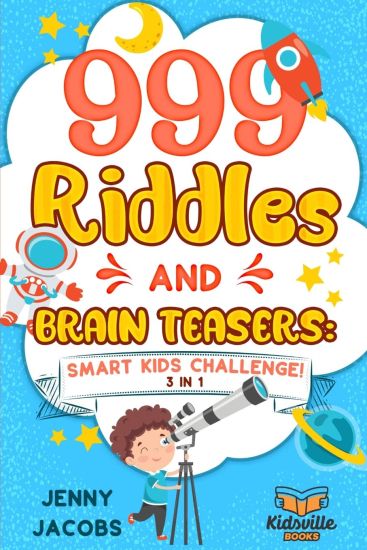
999 Riddles and Brain Teasers
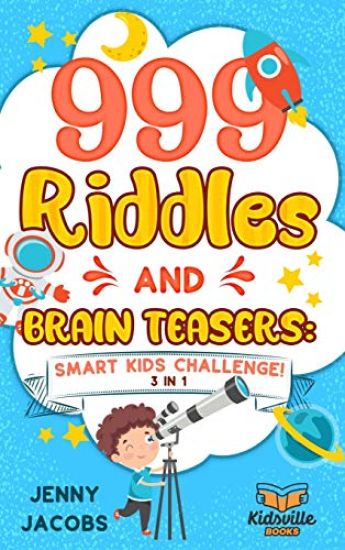
Introducing 1000 Of The FUNNEST Riddles, Brain Teasers & Trick Questions Only The Smartest Kids Will Be Able To Solve Can you spell cold using only two letters? 'IC'Why should you not tell a joke when you're Ice skating? 'Because the Ice might crack up.' There is a word that has six letters, if you take one letter out of it, then it's twice the amount of six. What is it? 'Dozens' What sport are waiters excellent at? 'Tennis, because they are great at serving ' And, that's just 4 examples, wouldn't your child LOVE another 900+ just like that? Riddles have been creating amazing thinkers for thousands of years, while providing screen free family fun to Children of all ages. Inside 999 Riddles & Brain Teasers: Smart Kids Challenge you will find the BEST collection of Riddles perfect for a Family game night. Not only will it get your kids laughing & expressing themselves, but Psychologists have shown it to help with- Expanding vocabulary, critical thinking & problem solving, With these HUGE benefits of solving Riddles with your child, why wouldn't anyone make this a part of their family time, and implement it into their Child's life It's time to bring playing & learning together again, your Kids will love you for it And, the added element of 'Smart Kids Challenge' will get their competitive juices flowing and get them even more involved in the riddles. Also, Inside 999 Riddles And Brain Teasers: Smart Kids Challenge You'll Discover...1000 Head-Scratching Riddles, Brain Teasers And Trick Questions That Will Challenge The ENTIRE Family Screen-Free Entertainment That Stimulates Your Child's Mind AND Creates Hours of Fun Varying Levels Of Difficulty, With Only The Smartest Kids Being Able To Solve The Hardest Riddles (Or Smartest Adults ) A Wide Range of Categories To Choose From Such As- Sports, Boredom Busters, Icebreakers & Even Riddles About Your Favorite CharactersAnd that is BARELY scratching the surface Our biggest pet peeve is 'Riddle' books that just recycle the same old boring Riddles we've seen before, which is why we made it our job to find the 999 Most Fun & Most Challenging riddles around This way you'll find out who the real Smarty Pants is in your family. WARNING: this may get your child off the addictive screens, and addicted to spending time with the family So, If You Want The Best Way To Increase Quality Time With Your Family, While Educating Your Children And Improving Their Critical Thinking Skills... Get This Book Today P. S. This makes the PERFECT gift for any child, not only will it give them hours of laughter but it will help them develop their thinking abilities rapidly
999 Riddles and Brain Teasers
Introducing 1000 Of The FUNNEST Riddles, Brain Teasers & Trick Questions Only The Smartest Kids Will Be Able To Solve Can you spell cold using only two letters? 'IC'Why should you not tell a joke when you're Ice skating? 'Because the Ice might crack up.' There is a word that has six letters, if you take one letter out of it, then it's twice the amount of six. What is it? 'Dozens' What sport are waiters excellent at? 'Tennis, because they are great at serving ' And, that's just 4 examples, wouldn't your child LOVE another 900+ just like that? Riddles have been creating amazing thinkers for thousands of years, while providing screen free family fun to Children of all ages. Inside 999 Riddles & Brain Teasers: Smart Kids Challenge you will find the BEST collection of Riddles perfect for a Family game night. Not only will it get your kids laughing & expressing themselves, but Psychologists have shown it to help with- Expanding vocabulary, critical thinking & problem solving, With these HUGE benefits of solving Riddles with your child, why wouldn't anyone make this a part of their family time, and implement it into their Child's life It's time to bring playing & learning together again, your Kids will love you for it And, the added element of 'Smart Kids Challenge' will get their competitive juices flowing and get them even more involved in the riddles. Also, Inside 999 Riddles And Brain Teasers: Smart Kids Challenge You'll Discover...1000 Head-Scratching Riddles, Brain Teasers And Trick Questions That Will Challenge The ENTIRE Family Screen-Free Entertainment That Stimulates Your Child's Mind AND Creates Hours of Fun Varying Levels Of Difficulty, With Only The Smartest Kids Being Able To Solve The Hardest Riddles (Or Smartest Adults ) A Wide Range of Categories To Choose From Such As- Sports, Boredom Busters, Icebreakers & Even Riddles About Your Favorite CharactersAnd that is BARELY scratching the surface Our biggest pet peeve is 'Riddle' books that just recycle the same old boring Riddles we've seen before, which is why we made it our job to find the 999 Most Fun & Most Challenging riddles around This way you'll find out who the real Smarty Pants is in your family. WARNING: this may get your child off the addictive screens, and addicted to spending time with the family So, If You Want The Best Way To Increase Quality Time With Your Family, While Educating Your Children And Improving Their Critical Thinking Skills... Get This Book Today P. S. This makes the PERFECT gift for any child, not only will it give them hours of laughter but it will help them develop their thinking abilities rapidly
Inclusive Collegiality and Nontenure-Track Faculty

Inclusive Collegiality and Nontenure-Track Faculty

Don Haviland; Nathan F. Alleman; Cara Cliburn Allen; Jenny Jacobs

Stylus Publishing
2020
sidottu
This book focuses on the status and work of full-time non-tenure-track faculty (NTTF) whose ranks are increasing as tenure track faculty (TTF) make up a smaller percentage of the professoriate. NTTF experience highly uneven and conditional access to collegiality, are often excluded from decision-making spaces, and receive limited respect from their TTF colleagues because of outdated notions that link perceived expertise almost exclusively to scholarship. The result is often a sub-class of faculty marginalized in their departments, which reduces the inclusion of diverse voices in academic governance, professional relationships, and student learning. Given these implications, the authors ask, how can departments, institutions, and the profession do more to engage NTTF as full and active colleagues? The limited access of NTTF to the rights and responsibilities of collegiality harms institutional success in several ways. Given the full-time nature of their work and the heavy (but not exclusive) focus on instruction, NTTF are likely to be on campus as much or more than TTF, and thus be engaged with students, colleagues, and administrators in ways that more closely resemble TTF than part-time faculty. Their limited access to collegial spaces makes it harder for them to do their jobs by restricting access to information and input into decision-making. Moreover, since the greatest growth among women faculty and faculty of color is in NTTF roles, their exclusion from collegiality and decision-making negates the very diversity the profession claims to seek. Finally, colleges and universities face financial, curricular, and organizational challenges which require broad input, although the burden of governance is falling on fewer shoulders as the percentage of TTF declines and NTTF are excluded from these spaces. Ultimately, NTTF must be engaged as partners and colleagues in supporting institutional health. This book – the fruit of extensive data collection at two institutions over a five-year period – describes lessons learned from and benefits experienced by departments that have successfully supported and engaged NTTF as colleagues. Drawing on their research data and analysis of “healthy” departments that integrate NTTF, the authors identify the practices, policies, and approaches that support NTTF inclusion, shape a more positive workplace environment, improve morale, satisfaction, and commitment, and fully leverage the expertise of NTTF and the valuable human capital they represent. The authors argue that this more inclusive collegiality improves governance, supports institutional success, and serves diverse institutional missions. Though primarily addressed to institutional leaders, department chairs, tenure-line faculty, and leaders in the academic profession, it is hoped that the findings will be useful to NTTF who are engaged as advocates for and partners in the change process required to address the evolving structure of the university faculty.
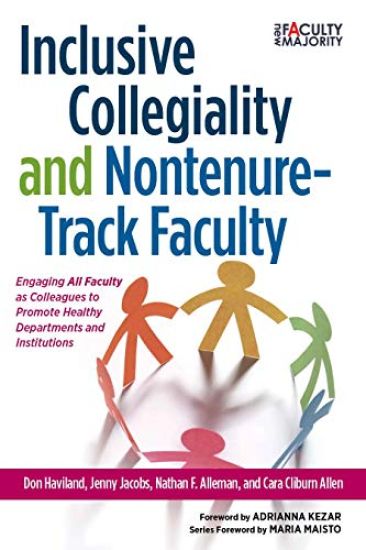
Inclusive Collegiality and Nontenure-Track Faculty

Inclusive Collegiality and Nontenure-Track Faculty

Don Haviland; Nathan F. Alleman; Cara Cliburn Allen; Jenny Jacobs

Stylus Publishing
2020
nidottu
This book focuses on the status and work of full-time non-tenure-track faculty (NTTF) whose ranks are increasing as tenure track faculty (TTF) make up a smaller percentage of the professoriate. NTTF experience highly uneven and conditional access to collegiality, are often excluded from decision-making spaces, and receive limited respect from their TTF colleagues because of outdated notions that link perceived expertise almost exclusively to scholarship. The result is often a sub-class of faculty marginalized in their departments, which reduces the inclusion of diverse voices in academic governance, professional relationships, and student learning. Given these implications, the authors ask, how can departments, institutions, and the profession do more to engage NTTF as full and active colleagues? The limited access of NTTF to the rights and responsibilities of collegiality harms institutional success in several ways. Given the full-time nature of their work and the heavy (but not exclusive) focus on instruction, NTTF are likely to be on campus as much or more than TTF, and thus be engaged with students, colleagues, and administrators in ways that more closely resemble TTF than part-time faculty. Their limited access to collegial spaces makes it harder for them to do their jobs by restricting access to information and input into decision-making. Moreover, since the greatest growth among women faculty and faculty of color is in NTTF roles, their exclusion from collegiality and decision-making negates the very diversity the profession claims to seek. Finally, colleges and universities face financial, curricular, and organizational challenges which require broad input, although the burden of governance is falling on fewer shoulders as the percentage of TTF declines and NTTF are excluded from these spaces. Ultimately, NTTF must be engaged as partners and colleagues in supporting institutional health. This book – the fruit of extensive data collection at two institutions over a five-year period – describes lessons learned from and benefits experienced by departments that have successfully supported and engaged NTTF as colleagues. Drawing on their research data and analysis of “healthy” departments that integrate NTTF, the authors identify the practices, policies, and approaches that support NTTF inclusion, shape a more positive workplace environment, improve morale, satisfaction, and commitment, and fully leverage the expertise of NTTF and the valuable human capital they represent. The authors argue that this more inclusive collegiality improves governance, supports institutional success, and serves diverse institutional missions. Though primarily addressed to institutional leaders, department chairs, tenure-line faculty, and leaders in the academic profession, it is hoped that the findings will be useful to NTTF who are engaged as advocates for and partners in the change process required to address the evolving structure of the university faculty.