Kirjojen hintavertailu – 12 903 725 kirjaa ja 27 kauppaa

Kirjailija

Jenny Palm

Kirjat ja teokset yhdessä paikassa: 5 kirjaa, julkaisuja vuosilta 2011–2025, suosituimpiin kuuluu Improving Energy Efficiency in Industrial Energy Systems. Vertaile teosten hintoja ja tarkista saatavuus suomalaisista kirjakaupoista.

5 kirjaa

Kirjojen julkaisuvuodet: 2011–2025.

Svensk politik och EU : hur svensk politik har förändrats av medlemskapet i EU

Svensk politik och EU : hur svensk politik har förändrats av medlemskapet i EU

Andreas Anderberg; Therese Bjärstig; John Brauer; Tobias Bromander; Fredrik Bynander; Katarina Eckerberg; Camilla Eriksson; Anne Haglund-Morrissey; Brian Kuns; Martin Nilsson; Jenny Palm; Anna Parkhouse; Charlotte Silander; Daniel Silander; Mats Öhlén

Santérus Förlag
2025
nidottu
I denna bok analyseras vad det svenska EU-medlem­skapet inneburit för svensk politik sedan inträdet i unionen 1995. Syftet är att studera förändringen av hur svensk politik organiseras och vilket innehåll ett fördjupat medlemskap har inneburit. Utifrån antagandet att svensk politik ingår i ett flernivåstyre på lokal, regional, nationell och europeisk nivå, ligger fokus på mötet mellan svensk nationell politik och EU. Det innebär att boken analyserar dels hur svensk politik styrs och utformas, dels hur politikens innehåll förändrats i mötet mellan svenska politiska institutioner och EU. För att förstå hur svensk politik påverkas, introduceras begreppen europeisering, governance och policyprocesser. Med hjälp av dessa ges möjlighet till en djupare förståelse för hur och varför svensk politik förändrats. Med svensk politik avses följande tolv politikområden : asyl- och migrationspolitik, biståndspolitik och utvecklingssamarbete, brottsbekämpning, energipolitik, grannskapspolitik, jordbrukspolitik, jämställdhetspolitik, miljöpolitik, närings­politik, social­politik, utbildningspolitik samt utrikes- och säkerhetspolitik. Varje politikområde skärskådas över tid från EU-medlemskapets inträde fram till i dag.

Allt går, sa Gunnar

Allt går, sa Gunnar

Jenny Palm

Jo! Förlag
2014
sidottu
Detta är historien om göteborgaren Gunnar Mattsson, en person som bäst beskrivs som "mannen som gör vad som faller honom in". Han är den som permanentade håret så krulligt att inte ens hans egen som kände igen honom. Det är mannen som ville hålla avskedsfest för en anställd - trots att hon just stulit hela hans kundregister. Han är den som startade Club 100, för dem som besökt minst 100 länder. När han ändå var igång beslöt han sig för att resa till världens samtliga 193 stater - och genomförde det. Han är arbetargrabben som blev förmögen genom fastigheter i spanska Torrevieja. Han är mannen som av sina vänner beskrivs som generös, knäpp, egoistisk, varmhjärtad och, framför allt - den som alltid gör precis som han vill Det här är boken om hans liv.
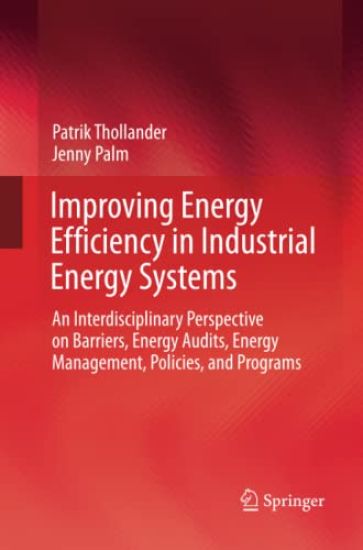
Improving Energy Efficiency in Industrial Energy Systems

Improving Energy Efficiency in Industrial Energy Systems

Patrik Thollander; Jenny Palm

Springer London Ltd
2014
nidottu
Industrial energy efficiency is one of the most important means of reducing the threat of increased global warming. Research however states that despite the existence of numerous technical energy efficiency measures, its deployment is hindered by the existence of various barriers to energy efficiency. The complexity of increasing energy efficiency in manufacturing industry calls for an interdisciplinary approach to the issue. Improving energy efficiency in industrial energy systems applies an interdisciplinary perspective in examining energy efficiency in industrial energy systems, and discusses how “cross-pollinating” perspectives and theories from the social and engineering sciences can enhance our understanding of barriers, energy audits, energy management, policies, and programmes as they pertain to improved energy efficiency in industry. Apart from classical technical approaches from engineering sciences, Improving energy efficiency in industrial energy systems couples a sociotechnical perspective to increased energy efficiency in industry, showing that industrial energy efficiency can be expected to be shaped by social and commercial processes and built on knowledge, routines, institutions, and methods established in networks. The book can be read by researchers and policy-makers, as well as scholars and practicians in the field. “This book is extremely valuable for anyone who is designing or executing energy efficiency policies, schemes or projects aiming at SMEs. Both authors deserve the highest respect, and the combination of their expertise makes the results truly unique.” - Daniel Lundqvist, programme manager at the Swedish energy agency “For anyone interested in improving energy efficiency in industry, this is a must-read. The book combines tools from social science and engineering to discuss the state of art today as well as possible development path tomorrow. This is a compelling book that I find useful both in my teaching and my research.” - Kajsa Ellegård, Professor at Linköping University, Sweden "The book Improving energy efficiency in industrial energy systems is a novel approach on how improved levels of energy efficiency can be reached in industrial energy systems by merging engineering with social sciences. It is with delight that I can recommend their book to anyone interested in the field.”- Mats Söderström, Director Energy Systems Programme, Linköping University, Sweden
Improving Energy Efficiency in Industrial Energy Systems

Improving Energy Efficiency in Industrial Energy Systems

Patrik Thollander; Jenny Palm

Springer London Ltd
2012
sidottu
Industrial energy efficiency is one of the most important means of reducing the threat of increased global warming. Research however states that despite the existence of numerous technical energy efficiency measures, its deployment is hindered by the existence of various barriers to energy efficiency. The complexity of increasing energy efficiency in manufacturing industry calls for an interdisciplinary approach to the issue. Improving energy efficiency in industrial energy systems applies an interdisciplinary perspective in examining energy efficiency in industrial energy systems, and discusses how “cross-pollinating” perspectives and theories from the social and engineering sciences can enhance our understanding of barriers, energy audits, energy management, policies, and programmes as they pertain to improved energy efficiency in industry. Apart from classical technical approaches from engineering sciences, Improving energy efficiency in industrial energy systems couples a sociotechnical perspective to increased energy efficiency in industry, showing that industrial energy efficiency can be expected to be shaped by social and commercial processes and built on knowledge, routines, institutions, and methods established in networks. The book can be read by researchers and policy-makers, as well as scholars and practicians in the field. “This book is extremely valuable for anyone who is designing or executing energy efficiency policies, schemes or projects aiming at SMEs. Both authors deserve the highest respect, and the combination of their expertise makes the results truly unique.” - Daniel Lundqvist, programme manager at the Swedish energy agency “For anyone interested in improving energy efficiency in industry, this is a must-read. The book combines tools from social science and engineering to discuss the state of art today as well as possible development path tomorrow. This is a compelling book that I find useful both in my teaching and my research.” - Kajsa Ellegård, Professor at Linköping University, Sweden "The book Improving energy efficiency in industrial energy systems is a novel approach on how improved levels of energy efficiency can be reached in industrial energy systems by merging engineering with social sciences. It is with delight that I can recommend their book to anyone interested in the field.”- Mats Söderström, Director Energy Systems Programme, Linköping University, Sweden
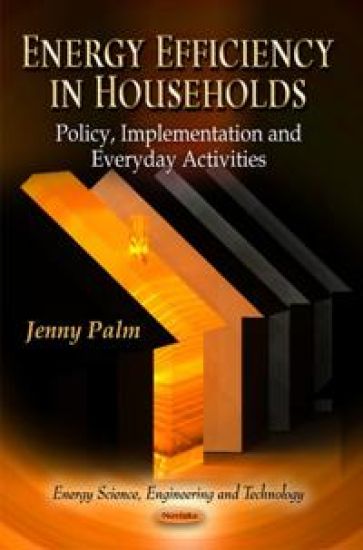
Energy Efficiency in Households

Energy Efficiency in Households

Jenny Palm

Nova Science Publishers Inc
2011
nidottu
In this book, energy consumption in the household sector is examined. Barriers to and enablers of energy efficiency in households in relation to governmental policy formulation, the implementation and appropriation of technology are discussed. This represents a shift away from the conventional focus on energy supply toward a focus on energy use in everyday life. This shift is urgently needed, since households, policy makers, housing companies, and researchers need deeper knowledge of how energy facilitates necessary functions in people's daily lives. New paths must be developed to smart and climate-friendly energy use that continue to facilitate those lives. This book discusses the existing opportunities to improve energy efficiency, by starting to implement existing knowledge as well as energy efficient technology and solutions.