Kirjojen hintavertailu – 12 903 725 kirjaa ja 27 kauppaa

Kirjailija

Jenny Sunden

Kirjat ja teokset yhdessä paikassa: 6 kirjaa, julkaisuja vuosilta 2002–2026, suosituimpiin kuuluu Hot Connections. Vertaile teosten hintoja ja tarkista saatavuus suomalaisista kirjakaupoista.

Nimi esiintyy myös muodoissa: Jenny Sundén

6 kirjaa

Kirjojen julkaisuvuodet: 2002–2026.

Hot Connections

Hot Connections

Jenny Sundén; Susanna Paasonen

MIT PRESS LTD
2026
nidottu
A rethinking of "the social" in social media which includes the sexual. What can we learn from including sexual platforms in definitions of social media and, by extension, from including sex in definitions of "the social" itself? Hot Connections explores three locally operating sexual platforms: the Swedish Darkside, used by kink and BDSM practitioners; the Estonian Libertine Center, used mainly by non-monogamous people; and the Finnish Alastonsuomi, used for a wide variety of nude and sexual self-expression. What avenues do these platforms open for understanding the role that sexuality plays in people's networked routines, social bonds, and forms of relating? Sexual social media affords freedom of worldmaking, belonging, and a right to sexually exist. While providing vital spaces for sexual self-expression--and indeed, hot connections--platform connectivity also involves friction as expectations, wishes, and desires clash and collide. Intervening in debates on the value of sexual social media, Hot Connections discusses what it means to research sexuality when sexual data is understood as sensitive by default; what platform governance may look like if viewed from the margins; and how sex and intimacy are not the same thing in networked sexuality.
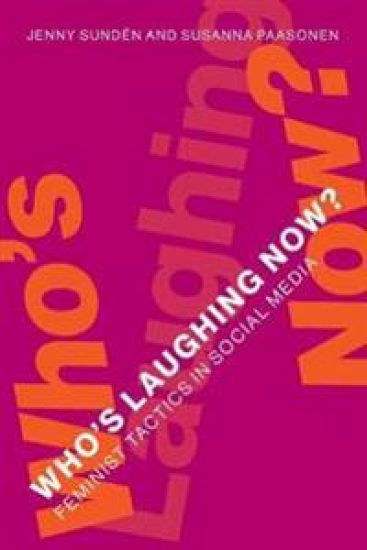
Who's Laughing Now?

Who's Laughing Now?

Jenny Sunden; Susanna Paasonen

MIT Press
2020
sidottu
Online sexism, hate, and harassment aim to silence women through shaming and fear. In Who's Laughing Now? Jenny Sunden and Susanna Paasonen examine a somewhat counterintuitive form of resistance- humor. Sunden and Paasonen argue that feminist social media tactics that use humor, laughter, and a sense of the absurd to answer name-calling, offensive language, and unsolicited dick pics can rewire the affective circuits of sexual shame and acts of shaming. Using laughter as both a theme and a methodological tool, Sunden and Paasonen explore examples of the subversive deployment of humor that range from @assholesonline to the Tumblr "Congrats, you have an all-male panel!" They consider the distribution and redistribution of shame, discuss Hannah Gadsby's Nanette, and describe tactical retweeting and commenting (as practiced by Stormy Daniels, among others). They explore the appropriation of terms meant to hurt and insult-for example, self-proclaimed Finnish "tolerance whores"-and what effect this rerouting of labels may have. They are interested not in lulz (amusement at another's expense)-not in what laughter pins down, limits, or suppresses but rather in what grows with and in it. The contagiousness of laughter drives the emergence of networked forms of feminism, bringing people together (although it may also create rifts). Sunden and Paasonen break new ground in exploring the intersection of networked feminism, humor, and affect, arguing for the political necessity of inappropriate laughter.
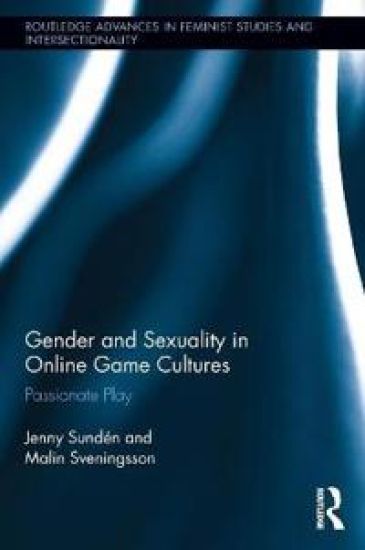
Gender and Sexuality in Online Game Cultures

Gender and Sexuality in Online Game Cultures

Jenny Sundén; Malin Sveningsson

Routledge
2013
nidottu
How do gender and sexuality come to matter in online game cultures? Why is it important to explore "straight" versus "queer" contexts of play? And what does it mean to play together with others over time, as co-players and researchers? Gender and Sexuality in Online Game Cultures is a book about female players and their passionate encounters with the online game World of Warcraft and its player cultures. It takes seriously women’s passions in games, and as such draws attention to questions of pleasure in and desire for technology. The authors use a unique approach of what they term a "twin ethnography" that develops two parallel stories. Sveningsson studies "straight" game culture, and makes explicit that which is of the norm by exploring the experiences of female gamers in a male-dominated gaming context. Sundén investigates "queer" game culture through the queer potentials of mainstream World of Warcraft culture, as well as through the case of a guild explicitly defined as LGBT. Academic research on game culture is flourishing, yet feminist accounts of gender and sexuality in games are still in the making. Drawing on feminist notions of performance, performativity and positionality, as well as the recent turn to affect and phenomenology within cultural theory, the authors develop queer, feminist studies of online player cultures in ways that are situated and embodied.
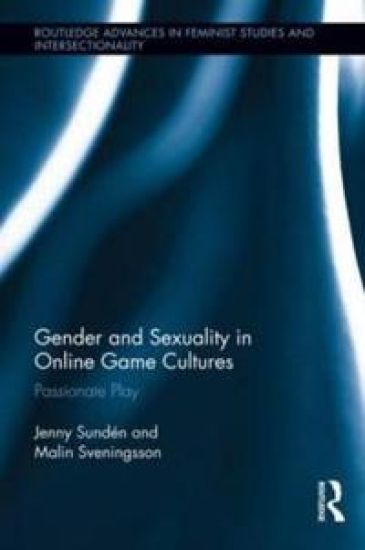
Gender and Sexuality in Online Game Cultures

Gender and Sexuality in Online Game Cultures

Jenny Sundén; Malin Sveningsson

Routledge
2011
sidottu
How do gender and sexuality come to matter in online game cultures? Why is it important to explore "straight" versus "queer" contexts of play? And what does it mean to play together with others over time, as co-players and researchers? Gender and Sexuality in Online Game Cultures is a book about female players and their passionate encounters with the online game World of Warcraft and its player cultures. It takes seriously women’s passions in games, and as such draws attention to questions of pleasure in and desire for technology. The authors use a unique approach of what they term a "twin ethnography" that develops two parallel stories. Sveningsson studies "straight" game culture, and makes explicit that which is of the norm by exploring the experiences of female gamers in a male-dominated gaming context. Sundén investigates "queer" game culture through the queer potentials of mainstream World of Warcraft culture, as well as through the case of a guild explicitly defined as LGBT. Academic research on game culture is flourishing, yet feminist accounts of gender and sexuality in games are still in the making. Drawing on feminist notions of performance, performativity and positionality, as well as the recent turn to affect and phenomenology within cultural theory, the authors develop queer, feminist studies of online player cultures in ways that are situated and embodied.
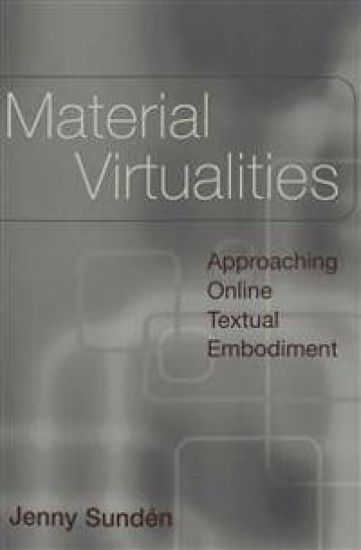
Material Virtualities

Material Virtualities

Jenny Sunden

Peter Lang Publishing Inc
2003
nidottu
What does it mean to be embodied online? What are the conditions of cybersubjectivity? In Material Virtualities, Jenny Sund n explores the rarely acknowledged borderland between typists and textual bodies, speaking and writing, and physicality and imagination in online encounters. Through careful ethnographic investigations of a text-based virtual world called WaterMOO, Sund n shows how texts, bodies, and machines are linked together in ways that demand a new understanding of the writing subject. Drawing on contemporary feminist and queer theory, she questions the opposition between disembodied, high-tech masculinity and embodied, earth-bound femininity, insisting on the need for a radical materialization of cybercultural studies that discloses the virtual as itself embodied.
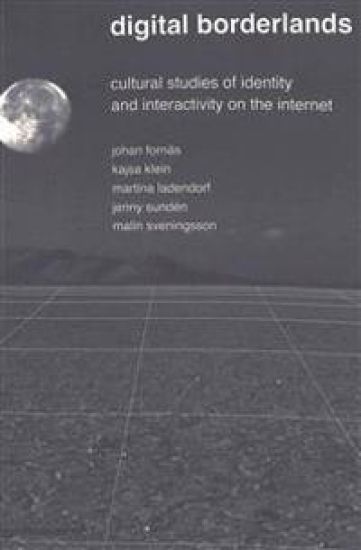
Digital Borderlands

Digital Borderlands

Johan Fornaes; Kajsa Klein; Martina Ladendorf; Jenny Sunden

Peter Lang Publishing Inc
2002
nidottu
The Internet crosses established boundaries of previously separate fields of communication and research. In its wake, new borderlands are opened up - characterized by mixes of private and public, production and consumption, and play and politics. This book explores those borderlands and overviews key issues in the study of Internet culture. Digital Borderlands investigates four ways in which identities are shaped through interactive uses of the Internet - love relations, gendered bodies, girl webzines, and cosmopolitan sites all exemplify how new media transforms older forms of popular entertainment and political culture.