

Kirjailija
Jens Andermann
Kirjat ja teokset yhdessä paikassa: 6 kirjaa, julkaisuja vuosilta 2007–2026, suosituimpiin kuuluu Mundus immundus. Vertaile teosten hintoja ja tarkista saatavuus suomalaisista kirjakaupoista.
6 kirjaa
Kirjojen julkaisuvuodet: 2007–2026.
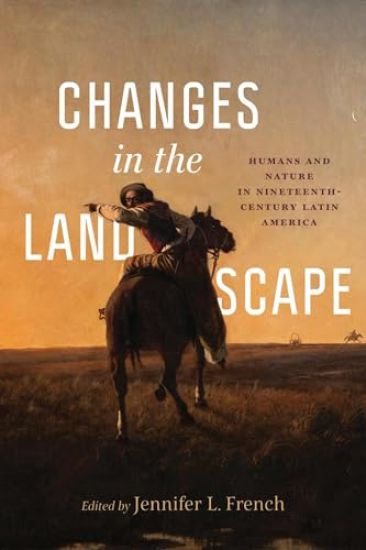
Changes in the Landscape
Jens Andermann; Ronald Briggs; Gisela Heffes; Aarti S. Madan; Vanesa Miseres; Lizabeth Paravisini-Gebert; Jorge Quintana Navarrete; Catalina Rodríguez; Emmanuel A Velayos Larrabure; Lesley Wylie
VANDERBILT UNIVERSITY PRESS
2025
nidottu
Changes in the Landscape is a collection of timely essays that bring the methodologies and commitments of ecocriticism to bear on the study of Latin American literature and cultural production. The book’s eleven chapters, written by some of the leading voices in the field, invite readers to consider how the relationship between humans and nonhuman nature was fundamentally transformed during a period when new modes of capitalist production were emerging in the region and around the world. Jennifer L. French’s introductory essay provides a historical and theoretical framework for the collection. Ranging from the immediate aftermath of the Spanish-American Wars of Independence (1810–1826) to the early twentieth century (1925), the volume’s essays cover a wide variety of genres and forms of cultural production, from JosÉ HernÁndez’s epic poem MartÍn Fierro to prose fiction, painting and photography, and the personal albums compiled by Spanish-American women. Individually and collectively, the essays engage with scientific writing as both a discourse of power and a source of potentially significant, even revelatory information about human and nonhuman nature. Changes in the Landscape enables readers to more fully understand the transition from colonial regimes to the ecocidal extractivism of the export boom (1870–1930) by drawing out and analyzing some of the cognitive resources and rhetorical strategies that were available to imagine, protest, or enact new norms and expectations regarding the relations between human and nonhuman life, be it the life of wildflowers, waterfalls, or Cuba’s CiÉnaga de Zapata.
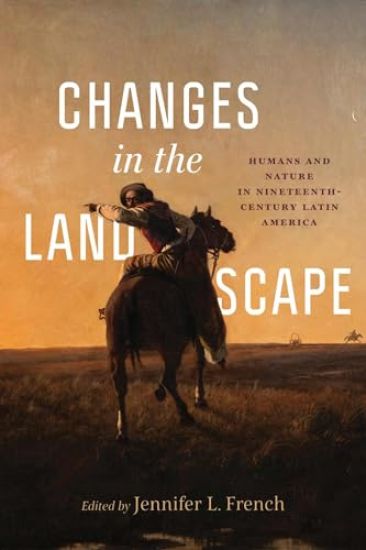
Changes in the Landscape
Jens Andermann; Ronald Briggs; Gisela Heffes; Aarti S. Madan; Vanesa Miseres; Lizabeth Paravisini-Gebert; Jorge Quintana Navarrete; Catalina Rodríguez; Emmanuel A Velayos Larrabure; Lesley Wylie
VANDERBILT UNIVERSITY PRESS
2025
sidottu
Changes in the Landscape is a collection of timely essays that bring the methodologies and commitments of ecocriticism to bear on the study of Latin American literature and cultural production. The book’s eleven chapters, written by some of the leading voices in the field, invite readers to consider how the relationship between humans and nonhuman nature was fundamentally transformed during a period when new modes of capitalist production were emerging in the region and around the world. Jennifer L. French’s introductory essay provides a historical and theoretical framework for the collection. Ranging from the immediate aftermath of the Spanish-American Wars of Independence (1810–1826) to the early twentieth century (1925), the volume’s essays cover a wide variety of genres and forms of cultural production, from JosÉ HernÁndez’s epic poem MartÍn Fierro to prose fiction, painting and photography, and the personal albums compiled by Spanish-American women. Individually and collectively, the essays engage with scientific writing as both a discourse of power and a source of potentially significant, even revelatory information about human and nonhuman nature. Changes in the Landscape enables readers to more fully understand the transition from colonial regimes to the ecocidal extractivism of the export boom (1870–1930) by drawing out and analyzing some of the cognitive resources and rhetorical strategies that were available to imagine, protest, or enact new norms and expectations regarding the relations between human and nonhuman life, be it the life of wildflowers, waterfalls, or Cuba’s CiÉnaga de Zapata.
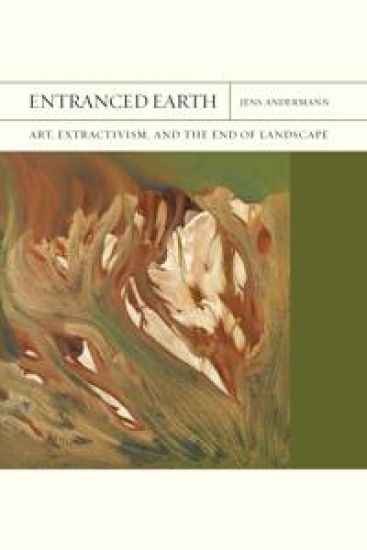
A sweeping analysis of the lasting effects of neocolonial extractivism in Latin American aesthetic modernity from 1920 to the present Looking to the extractive frontier as a focal point of Latin American art, literature, music, and film, Jens Andermann asks what emerges at the other end of landscape. Art in the Global South has long represented and interrogated “insurgent nature”—organic and inorganic matter, human and nonhuman life, thrown into turmoil. In Entranced Earth: Art, Extractivism, and the End of Landscape, Andermann traces the impact of despaisamiento—world-destroying un-landscaping—throughout the Latin American modernist archive. At the same time, he explores innovative, resilient modes of allyship forged between diverse actors through their shared experiences of destruction. From the literary regionalism of the 1930s to contemporary bio art, from modernist garden architecture to representations of migration and displacement in sound art and film, Entranced Earth tracks the crisis of landscape and environmental exhaustion beyond despair toward speculative, experimental forms of survival.
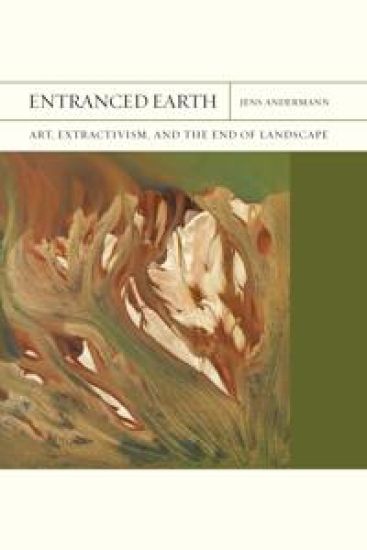
A sweeping analysis of the lasting effects of neocolonial extractivism in Latin American aesthetic modernity from 1920 to the present Looking to the extractive frontier as a focal point of Latin American art, literature, music, and film, Jens Andermann asks what emerges at the other end of landscape. Art in the Global South has long represented and interrogated “insurgent nature”—organic and inorganic matter, human and nonhuman life, thrown into turmoil. In Entranced Earth: Art, Extractivism, and the End of Landscape, Andermann traces the impact of despaisamiento—world-destroying un-landscaping—throughout the Latin American modernist archive. At the same time, he explores innovative, resilient modes of allyship forged between diverse actors through their shared experiences of destruction. From the literary regionalism of the 1930s to contemporary bio art, from modernist garden architecture to representations of migration and displacement in sound art and film, Entranced Earth tracks the crisis of landscape and environmental exhaustion beyond despair toward speculative, experimental forms of survival.

The Optic of the State traces the production of nationalist imaginaries through the public visual representation of modern state formation in Brazil and Argentina. As Jens Andermann reveals, the foundational visions of national heritage, territory, and social and ethnic composition were conceived and implemented, but also disputed and contested, in a complex interplay between government, cultural, and scientific institutions and actors, as a means of propagating political agendas and power throughout the emerging states. The purpose of these imaginaries was to vindicate the political upheavals of the recent past and secure the viability of the newly independent states through a sense of historic destiny and inevitable evolution. The careful presentation of artifacts and spectacles was also aimed abroad in order to win the favor of European imperial powers and thereby acquire a competitive place in the nascent global economy of the late nineteenth century. The Optic of the State offers a fascinating critique of the visual aspects of national mythology. It exposes how scientific and cultural institutions inscribed the state-form in time and space, thus presenting historical processes as natural \u201cgivens.\u201d