Kirjojen hintavertailu – 12 903 724 kirjaa ja 27 kauppaa

Kirjailija

Jens Bartelson

Kirjat ja teokset yhdessä paikassa: 11 kirjaa, julkaisuja vuosilta 1995–2023, suosituimpiin kuuluu Historiens hemvist I : den historiska tidens former. Vertaile teosten hintoja ja tarkista saatavuus suomalaisista kirjakaupoista.

11 kirjaa

Kirjojen julkaisuvuodet: 1995–2023.

Historiens hemvist I : den historiska tidens former

Historiens hemvist I : den historiska tidens former

Jens Bartelson; Henrik Berggren; Staffan Carlshamre; Marcia Sá Cavalcante Schuback; Kristina Fjelkestam; Torbjörn Gustafsson Chorell; Stefan Helgesson; Alf Hornborg; Peter Jackson; Helge Jordheim; Dan Karlholm; Claudia Lindén; Hanna Meretoja; Jerry Määttä; Anders Olsson; Johan Redin; Hans Ruin; Fredrika Spindler; Jayne Svenungsson

Makadam förlag
2016
nidottu
Vi lever alla omgivna av ett förflutet som på olika sätt påverkar nuet. Men hur ska vi förstå det förflutnas fortsatta verkan och närvaro i samtiden? Inom historieteori diskuterades länge frågan om vi kan veta något med säkerhet om det förflutna. Men under senare decennier har intresset snarare riktats mot de olika sätt på vilka det förflutna finns kvar och formar de efterkommande. En dåtidsorienterad historieskrivning har fått ge plats åt en som rör sig i relationer mellan olika tidsliga dimensioner. I takt med att den historiska tiden historiseras väcks nya frågor: Är det meningsfullt att tala om en sammanhängande fortskridande tid eller bör vi snarare tänka oss flera parallella, multipla och korsande tider? Hur ska vi förstå historisk tid efter att framstegstanken själv alltmer kommit att framstå som en konstruktion? Frågor om vår egen plats i ett historiskt landskap öppnar för nya sätt att tänka det historiska och att historisera, där genealogiska, arkeologiska, dekonstruktiva, konstellativa och andra former av motläsningar tycks öppna nya och olikartade dörrar till det förflutna, i dess skilda gestalter och verkligheter. "Den historiska tidens former" är den första fristående delen i trebandsverket "Historiens hemvist". Den samlar nitton forskare inom skilda ämnen som behandlar frågor om historiens slut, hemsökelser och gengångare, döda och odöda, postapokalyps och messianism, exil, narrativitet och genealogi, polytemporalitet, anakronism och tidens mångfaldigande. Sammantaget bidrar den till att ge nya kartor över det samtida historiska medvetandet i dess struktur och förvandling. Volymen är redigerad av Victoria Fareld, forskare i idéhistoria vid Stockholms universitet, och Hans Ruin, professor i filosofi vid Södertörns högskola, båda knutna till forskningsprogrammet "Tid, minne, representation".
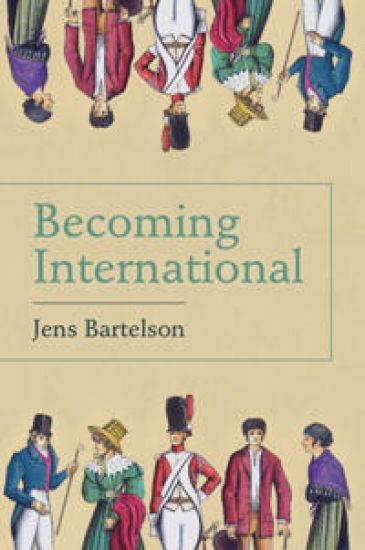
Becoming International

Becoming International

Jens Bartelson

Cambridge University Press
2023
sidottu
When and how did the modern world become an international one? Jens Bartelson, a leading scholar of the history of international thought, provides new answers to this question by analyzing how relations between polities have been conceptualized across different historical contexts from the sixteenth century to the present day. A global intellectual history of the international system, this book challenges the widespread assumption that this system emerged as a result of a transition from empires to states, instead proposing that the international realm is but a continuation of imperial relations by other means. Showing how the international system spread through the creative appropriation of European concepts of nation and state by non-Europeans, Bartelson argues that this system has taken on a life of its own, to the point of becoming an empire in its own right.
Becoming International

Becoming International

Jens Bartelson

Cambridge University Press
2023
pokkari
When and how did the modern world become an international one? Jens Bartelson, a leading scholar of the history of international thought, provides new answers to this question by analyzing how relations between polities have been conceptualized across different historical contexts from the sixteenth century to the present day. A global intellectual history of the international system, this book challenges the widespread assumption that this system emerged as a result of a transition from empires to states, instead proposing that the international realm is but a continuation of imperial relations by other means. Showing how the international system spread through the creative appropriation of European concepts of nation and state by non-Europeans, Bartelson argues that this system has taken on a life of its own, to the point of becoming an empire in its own right.
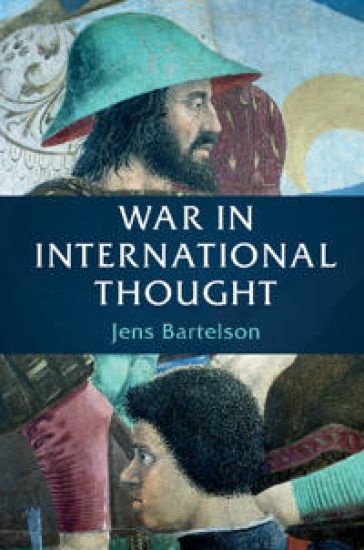
War in International Thought

War in International Thought

Jens Bartelson

Cambridge University Press
2017
sidottu
As scholars and citizens, we are predisposed to think of war as a profoundly destructive activity that ideally should be abolished altogether. Yet before the twentieth century, war was widely understood as a productive force in human affairs that should be harnessed for the purposes of creating peace and order. Analyzing how the concept of war has been used in different contexts from the seventeenth to the late nineteenth century, Jens Bartelson addresses this transition by inquiring into the underlying and often unspoken assumptions about the nature of war, and how these have shaped our understanding of the modern political world and the role of war within it. He explores its functions in the process of state making and in the creation of the modern international system to bring the argument up to date to the present day, where war is now on the centre stage of world politics.
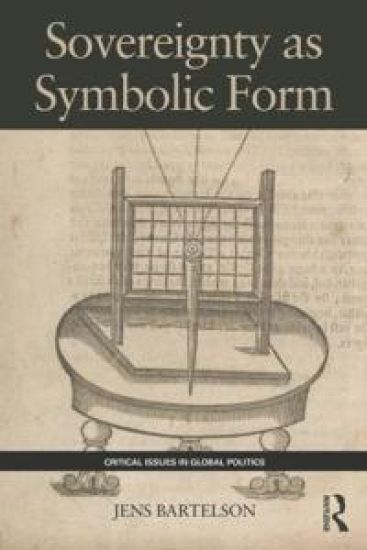
Sovereignty As Symbolic Form

Sovereignty As Symbolic Form

Jens Bartelson

Routledge
2014
nidottu
This book is a critical inquiry into sovereignty and argues that the meaning and functions performed by this concept have changed significantly during the past decades, with profound implications for the ontological status of the state and the modus operandi of the international system as a whole. Although we have grown accustomed to regarding sovereignty as a defining characteristic of the modern state and as a constitutive principle of the international system, Sovereignty as Symbolic Form argues that recent changes indicate that sovereignty has been turned into something granted, contingent upon its responsible exercise in accordance with the norms and values of an imagined international community. Hence we need a new understanding of sovereignty in order to clarify the logic of its current usage in theory and practice alike, and its connection to broader concerns of social ontology: what kind of world do we inhabit, and of what kind of entities is this world composed? This book will be of interest to students of International Relations, Critical Security and International Politics.
Sovereignty as Symbolic Form

Sovereignty as Symbolic Form

Jens Bartelson

Routledge
2014
sidottu
This book is a critical inquiry into sovereignty and argues that the meaning and functions performed by this concept have changed significantly during the past decades, with profound implications for the ontological status of the state and the modus operandi of the international system as a whole. Although we have grown accustomed to regarding sovereignty as a defining characteristic of the modern state and as a constitutive principle of the international system, Sovereignty as Symbolic Form argues that recent changes indicate that sovereignty has been turned into something granted, contingent upon its responsible exercise in accordance with the norms and values of an imagined international community. Hence we need a new understanding of sovereignty in order to clarify the logic of its current usage in theory and practice alike, and its connection to broader concerns of social ontology: what kind of world do we inhabit, and of what kind of entities is this world composed? This book will be of interest to students of International Relations, Critical Security and International Politics.
Visions of World Community

Visions of World Community

Jens Bartelson

Cambridge University Press
2009
pokkari
Throughout the history of Western political thought, the creation of a world community has been seen as a way of overcoming discord between political communities without imposing sovereign authority from above. Jens Bartelson argues that a paradox lies at the centre of discussions of world community. The very same division of mankind into distinct peoples living in different places which makes the idea of a world community morally compelling has also been the main obstacle to its successful realization. His book offers a philosophical and historical analysis of the idea of world community by exploring the relationship between theories of world community and changing cosmological beliefs from the late Middle Ages to the present.
Visions of World Community

Visions of World Community

Jens Bartelson

Cambridge University Press
2009
sidottu
Throughout the history of Western political thought, the creation of a world community has been seen as a way of overcoming discord between political communities without imposing sovereign authority from above. Jens Bartelson argues that a paradox lies at the centre of discussions of world community. The very same division of mankind into distinct peoples living in different places which makes the idea of a world community morally compelling has also been the main obstacle to its successful realization. His book offers a philosophical and historical analysis of the idea of world community by exploring the relationship between theories of world community and changing cosmological beliefs from the late Middle Ages to the present.
The Critique of the State

The Critique of the State

Jens Bartelson

Cambridge University Press
2001
sidottu
What kind of political order would there be in the absence of the state? Jens Bartelson argues that we are currently unable to imagine what might lurk 'beyond', because our basic concepts of political order are conditioned by our experience of statehood. In this study, he investigates the concept of the state historically as well as philosophically, considering a range of thinkers and theories. He also considers the vexed issue of authority: modern political discourse questions the form and content of authority, but makes it all but impossible to talk about the foundations of authority. Largely due to the existing practices of political and scientific criticism, authority appears to be unquestionable. Bartelson's wide-ranging and readable discussion of the suppositions and presuppositions of statehood will be of interest to scholars and upper-level students of political theory and social theory, and philosophy of social science.
The Critique of the State

The Critique of the State

Jens Bartelson

Cambridge University Press
2001
pokkari
What kind of political order would there be in the absence of the state? Jens Bartelson argues that we are currently unable to imagine what might lurk 'beyond', because our basic concepts of political order are conditioned by our experience of statehood. In this study, he investigates the concept of the state historically as well as philosophically, considering a range of thinkers and theories. He also considers the vexed issue of authority: modern political discourse questions the form and content of authority, but makes it all but impossible to talk about the foundations of authority. Largely due to the existing practices of political and scientific criticism, authority appears to be unquestionable. Bartelson’s wide-ranging and readable discussion of the suppositions and presuppositions of statehood will be of interest to scholars and upper-level students of political theory and social theory, and philosophy of social science.
A Genealogy of Sovereignty

A Genealogy of Sovereignty

Jens Bartelson

Cambridge University Press
1995
pokkari
The concept of sovereignty is central to international relations theory and theories of state formation, and provides the foundation of the conventional separation of modern politics into domestic and international spheres. In this book Jens Bartelson provides a critical analysis and conceptual history of sovereignty, dealing with this separation as reflected in philosophical and political texts during three periods: the Renaissance, the Classical Age, and Modernity. He argues that the concept of sovereignty and its place within political discourse are conditioned by philosophical and historiographical discontinuities between the periods, and that sovereignty should be regarded as a concept contingent upon, rather than fundamental to, political science and its history.