Kirjojen hintavertailu – 12 903 725 kirjaa ja 27 kauppaa

Kirjailija

Jens Henrik Koudal

Kirjat ja teokset yhdessä paikassa: 5 kirjaa, julkaisuja vuosilta 1997–2023, suosituimpiin kuuluu For Town and Country: The Civic Music System in Denmark, 1660-1800. Vertaile teosten hintoja ja tarkista saatavuus suomalaisista kirjakaupoista.

5 kirjaa

Kirjojen julkaisuvuodet: 1997–2023.

Musik & nationalitet

Musik & nationalitet

Jens Henrik Koudal

Clemmer du
2023
pokkari
En nationalsang eller -hymne er et stykke musik – med eller uden tekst - der bruges som symbol på en stat. Denne bog handler om, hvordan nationalsange udtrykker kulturel og politisk nationalitet, og hvorfor de spiller en større rolle i vor tid end nogensinde før. Forfatteren behandler både sangenes tekst og musik. Han besvarer spørgsmål som: Hvordan opstår nationalhymner? Hvordan opretholder nationalsange deres status? Hvad er ’overnationale nationalhymner’? ... Ud over at beskrive og tolke en række nationalhymner rummer bogen historier om de diskussioner om nationalitet, moral og politik, som hymnerne konstant giver anledning til.
For Town and Country: The Civic Music System in Denmark, 1660-1800
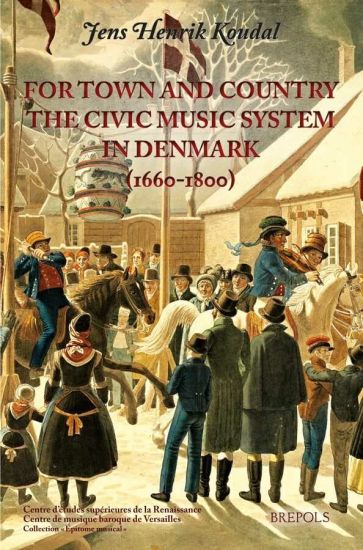
The employment of civic musicians was a practice in most European countries in early modern Europe, all the way from London and Venice to small Danish towns. This study's objective is to lay out which kinds of civic musicians (stadsmusikanter) Denmark had, and to examine what that came to signify for musicians and music, as there has not been a study in depth of civic musicians' employment in Denmark until now. It has been a particular objective of this study to illuminate the Danish situation in relation to some other European countries. Compared to Germany, the civic music system in the kingdom of Denmark developed some clear characteristics in the period 1660-1800 because it had to fulfil the requirements of both the absolute monarchy and the municipal authorities. It is particularly interesting that the system was regulated by royal licenses which applied across both towns and the countryside. The book's first main section goes through the background to the absolute monarchy's civic music system, including the conditions of employment. The second main section shows what the social consequences of the Danish system were for both licensed and unlicensed musicians. The third section is about the instruments and the music. We find examples of the entire repertoire of the Danish civic musicians, from ambitious artistic ensemble music to virtuoso solo sonatas with continuo and single part music for everyday use. The civic musicians exercised a marked influence on the unlicensed players in villages. One can speak of a cultural battle between the professional civic musicians' music and the traditions of the country fiddlers. Civic musicians in Denmark had international contacts with colleagues and played a prolific role as promoters of music.
Grev Rabens dagbog

Grev Rabens dagbog

Jens Henrik Koudal

-
2007
nidottu
Gennem citater fra adelsmandens Otto Ludvig Rabens (1730-1791) livsjournal fortælles om hans færden ved hoffet i København, turen til Paris ved Ludvig XVs hof og om godsdriften på Ålholm
For borgere og bønder

For borgere og bønder

Jens Henrik Koudal

Museum Tusculanums Forlag
2000
sidottu
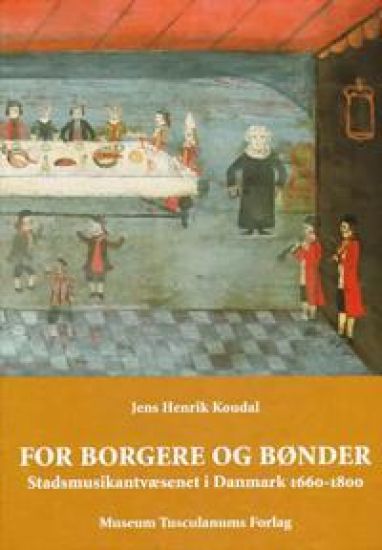
Privilegerede stadsmusikanter kendes i Europa fra det 13. til det 19. århundrede, hvor de havde en vigtig funktion i musiklivet. Bogen giver den første dybtgående skildring af stadsmusikantvæsenet i Danmark, der fik sine grundlæggende impulser fra Tyskland, men udviklede tydelige særtræk i den enevældige periode. I tidsrummet 1660-1800 havde Danmark næsten 30 kongeligt priviligerede stadsmusikantembeder med eneret på at spille for borgere og bønder. Bogen beskriver stadsmusikanternes hverdag og sociale forhold. Den skildrer deres opfattelse, deres instrumenter, repertoire, kompositioner og kunst. Også konkurrenterne, der ""gik dem i næringen"", belyses. Forfatteren konkluderer, at stadsmusikanterne havde en nøglerolle som formidlere mellem udlandet og Danmark samt mellem land og by. De bidrog til at inddrage Danmark i en fælles europæisk musikkultur. Afhandlingen har regional interesse, idet den rummer oplysninger om alle de 30 købstæder i kongeriget, der i perioden 1660-1800 havde kongeligt privilegerede stadsmusikantembeder med eneret på at spille for borgere og bønder. Bilagsdelen rummer fortegnelser over musikere, spilledistrikter, musikinstrumenter, noder m.m. samt giver eksempler på alle vigtige kildetyper. Sammen med udførlige registre bevirker det, at bogen ud over at fremdrage meget nyt stof også fungerer som en håndbog. Jens Henrik Koudal er arkivar og seniorforsker på Dansk Folkemindesamling. PRESSEN SKREV: ""Det lykkes Jens Henrik Koudal at kortlægge det kgl. privilegerede professionelle musikliv i Danmark. Han gør også nogle gedigne musikhistoriske fund, der placerer hans disputats fornemt i den internationale forskning(...)og han lægger vægt på at vise, at moderne dansk kan skrives, så det er flydende og farverigt uden at den akademiske præcision sættes over styr."" - Jens Brincker, Berlingske Tidende ""Henrik Koudals disputats er en fremragende og skelsættende monografi om en central institution i Danmark, som her i landet ikke hidti

Historical Studies on Folk & Traditional Music

Historical Studies on Folk & Traditional Music

Doris Stockmann; Jens Henrik Koudal

Museum Tusculanum Press
1997
nidottu
Since the 1960s historical studies of European folk and traditional music have had a centre in the 'Study Group on Historical Sources of Folk Music' within the International Council for Traditional Music (ICTM). The new political situation in Europe in the 1990s has given this work topical interest, since folk and traditional music is often an important component in ethnic or even national identity. The Study Group held its eleventh conference in Copenhagen at the Danish Folklore archives (Dansk Folkemindesamling) from 24 to 28 April 1995. The local organisers of the meeting were Jens Henrik Koudal and Svend Nielsen. Around 30 participants from 15 countries (Austria, Belgium, Bulgaria, Croatia, Denmark, Germany, Hungary, Italy/Albania, Latvia, Lithuania, Norway, Poland, Romania and Sweden) attended the conference, presenting recent results of their research. The meeting concentrated on historical aspects of the following topics: (I) 'Traditional Music Between Urban and Rural Communities', and (II) 'Music and Working'. MAIN HEADINGS: Preface; THEME ONE -- Traditional Music Between Urban and Rural Communities; Central Europe; Balkans; On the Borderlines and Outside Europe. THEME TWO -- Music and Working.