
Kirjailija
Jens Nielsen
Kirjat ja teokset yhdessä paikassa: 33 kirjaa, julkaisuja vuosilta 2007–2026, suosituimpiin kuuluu Hau de Katt de Schwanz aff!: Rummelpottlaufen ... viel mehr als eine Silvestertradition. Vertaile teosten hintoja ja tarkista saatavuus suomalaisista kirjakaupoista.
33 kirjaa
Kirjojen julkaisuvuodet: 2007–2026.


Das Dominikanerkloster St. Maria-Magdalena in Schleswig
Jens Nielsen
BoD - Books on Demand
2021
sidottu

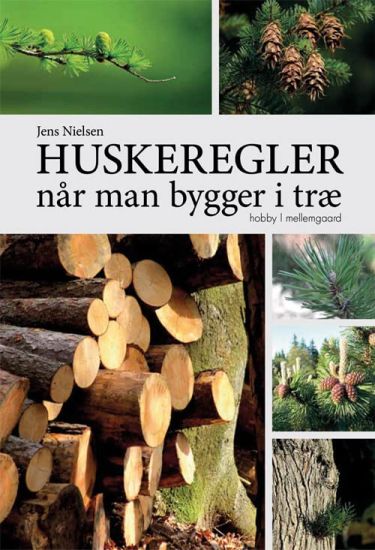
Bogen handler om træ og tekniske forhold, hvordan træet bliver og skaber sig selv i naturen. Håndværkere og fagfolk arbejder med træ til boligen, haven, landskabet, hvordan træet skal kunne benyttes til at arbejde med maskiner og at behandle træet, som skal være den helt rigtige måde. Alle elsker at gå ture i skoven, det er naturen. Bogen er beregnet til alle mennesker, der interesserer sig for træ. Uddrag af bogen Træet er bogen og handler om træets opvokset i verden, især i Danmark, hvor vi lever i. Vores træ bruges til mange mulighederne, men også vores jorden passer på træet, hvor vi alle sammen lever i. Træet skaber sig selv ligesom naturen som ingen kan gøres, fordi træets frø skaber sig selv som et barn. Om forfatteren Jens Nielsen er født døv Danmark (f. 1971). Han er uddannet kandidat i arkitektur. Han har desuden sine uddannelser som ingeniør, konstruktør og maskinsnedker. Han har specielt interesseret sig for træ, indretning, konstruktionsteknik, arkitektur, landskab og håndværk.
Bioreaction Engineering Principles
John Villadsen; Jens Nielsen; Gunnar Lidén
Springer-Verlag New York Inc.
2014
nidottu
The present text is a complete revision of the 2nd edition from 2003 of the book with the same title. In recognition of the fast pace at which biotechnology is moving we have rewritten several chapters to include new scientific progress in the field from 2000 to 2010. More important we have changed the focus of the book to support its use, not only in universities, but also as a guide to design new processes and equipment in the bio-industry. A new chapter has been included on the prospects of the bio-refinery to replace many of the oil- and gas based processes for production of especially bulk chemicals. This chapter also serves to make students in Chemical Engineering and in the Bio-Sciences enthusiastic about the whole research field. As in previous editions we hope that the book can be used as textbook for classes, even at the undergraduate level, where chemical engineering students come to work side by side with students from biochemistry and microbiology. To help the chemical engineering students Chapter 1 includes a brief review of the most important parts of microbial metabolism. In our opinion this review is sufficient to understand microbial physiology at a sufficiently high level to profit from the rest of the book. Likewise the bio-students will not be overwhelmed by mathematics, but since the objective of the book is to teach quantitative process analysis and process design at a hands-on level some mathematics and model analysis is needed. We hope that the about 100 detailed examples and text notes, together with many instructive problems will be sufficient to illustrate how model analysis is used, also in Bio-reaction Engineering.
Biotechnology
Karl Schügerl; T. Scheper; Shimshon Belkin; Isao Endo; Man Bock Gu; Wei Shou Hu; Bo Mattiasson; Jens Nielsen; Gregory N. Stephanopoulos; Roland Ulber; An-Ping Zeng; Jian-Jiang Zhong; Weichang Zhou
Springer-Verlag Berlin and Heidelberg GmbH Co. K
2014
nidottu
Microbial Products
Karl Schügerl; T. Scheper; Shimshon Belkin; Isao Endo; Man Bock Gu; Wei Shou Hu; Bo Mattiasson; Jens Nielsen; Gregory N. Stephanopoulos; Roland Ulber; An-Ping Zeng; Jian-Jiang Zhong; Weichang Zhou
Springer-Verlag Berlin and Heidelberg GmbH Co. K
2013
nidottu
Plant Cell Cultures I
Karl Schügerl; T. Scheper; Shimshon Belkin; Isao Endo; Man Bock Gu; Wei Shou Hu; Bo Mattiasson; Jens Nielsen; Gregory N. Stephanopoulos; Roland Ulber; An-Ping Zeng; Jian-Jiang Zhong; Weichang Zhou
Springer-Verlag Berlin and Heidelberg GmbH Co. K
2013
nidottu
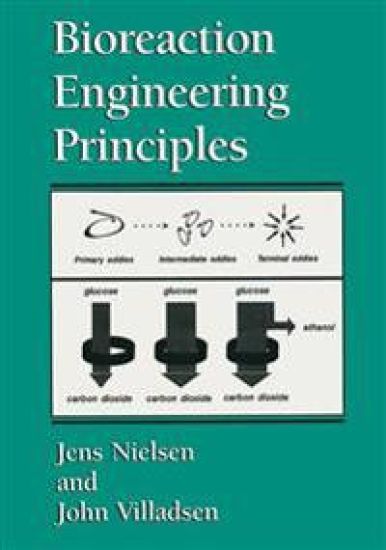
Bioreaction Engineering Principles
Jens Nielsen; John Villadsen
Springer-Verlag New York Inc.
2013
nidottu
Integrating recent research on the physiology and modelling of bioreactions and bioreactors, the authors present a comprehensive, unified introduction to the principles and practices of the field. The work features nearly 100 detailed design examples and problems, many of which are suitable for hands-on demonstrations on a personal computer or for expanded research. The text will serve as a highly instructive guide for students in bioengineering and biotechnology, as well as biochemical, chemical, and environmental engineering.
Bioreaction Engineering Principles
John Villadsen; Jens Nielsen; Gunnar Liden
Springer-Verlag New York Inc.
2011
sidottu
The present text is a complete revision of the 2nd edition from 2003 of the book with the same title. In recognition of the fast pace at which biotechnology is moving we have rewritten several chapters to include new scientific progress in the field from 2000 to 2010. More important we have changed the focus of the book to support its use, not only in universities, but also as a guide to design new processes and equipment in the bio-industry. A new chapter has been included on the prospects of the bio-refinery to replace many of the oil- and gas based processes for production of especially bulk chemicals. This chapter also serves to make students in Chemical Engineering and in the Bio-Sciences enthusiastic about the whole research field. As in previous editions we hope that the book can be used as textbook for classes, even at the undergraduate level, where chemical engineering students come to work side by side with students from biochemistry and microbiology. To help the chemical engineering students Chapter 1 includes a brief review of the most important parts of microbial metabolism. In our opinion this review is sufficient to understand microbial physiology at a sufficiently high level to profit from the rest of the book. Likewise the bio-students will not be overwhelmed by mathematics, but since the objective of the book is to teach quantitative process analysis and process design at a hands-on level some mathematics and model analysis is needed. We hope that the about 100 detailed examples and text notes, together with many instructive problems will be sufficient to illustrate how model analysis is used, also in Bio-reaction Engineering.
Metabolome Analysis
Silas G. Villas-Boas; Jens Nielsen; Jorn Smedsgaard; Michael A. E. Hansen; Ute Roessner-Tunali
John Wiley Sons Inc
2007
sidottu
Providing information on the main approaches for the analysis of metabolites, this textbook: Covers basic methodologies in sample preparation and separation techniques, as well as the most recent techniques of mass spectrometry. Differentiates between primary and secondary metabolites. Includes four chapters discussing successful metabolome studies of different organisms. Highlights the analytical challenges of studying metabolites. Illustrates applications of metabolome analysis through the use of case studies.