Kirjojen hintavertailu – 12 903 725 kirjaa ja 27 kauppaa
Kirjailija
Jens Schröter
Kirjat ja teokset yhdessä paikassa: 21 kirjaa, julkaisuja vuosilta 2014–2025, suosituimpiin kuuluu Die Entstehung der Bibel. Vertaile teosten hintoja ja tarkista saatavuus suomalaisista kirjakaupoista.
UFOs sind zentrales und virulentes Thema der Gegenwartsästhetik: Als über Medien vermittelte Objekte sind sie zugleich Prüfsteine für die Mechanismen medialer Realitätsvermittlung selbst. Dies gilt sowohl für die Möglichkeit, überhaupt einen Diskurs über UFOs zu führen, diese ‚unbekannten Flugobjekte‘ also zu erfassen und zu dokumentieren, als auch für die Verbreitung von Narrativen rund um UFOs in der Science-Fiction. Vor diesem Hintergrund werden UFOs als medienästhetische Objekte begriffen, mit denen verhandelt wird, was ‚wirklich‘ ist und wie die Medien zur Konstruktion der Wirklichkeit beitragen.
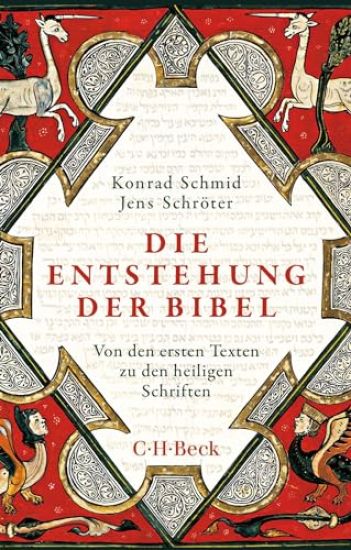
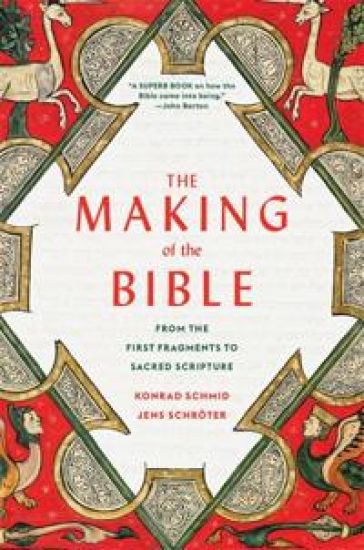
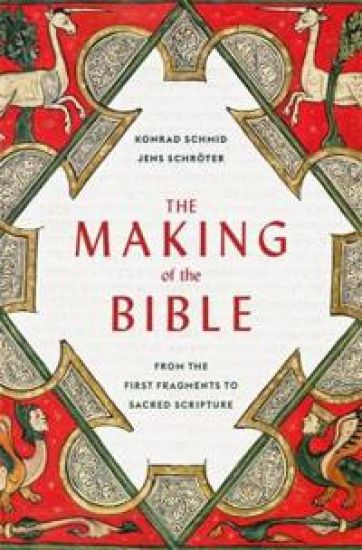
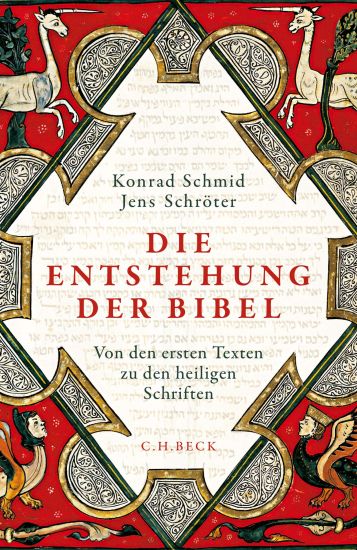
“A landmark…If you have time to read only one book on the Bible this year, make sure that it is this one.”—Katherine J. Dell, Church Times“Excellent…With a sure touch, the authors lead the reader through the geopolitical context of the Hebrew Bible and the setting and background of the New Testament, finding something to say about practically every book’s origins and development.”—John Barton, The Tablet“A remarkable deep dive into foundational books whose origins are often taken for granted.”—Publishers WeeklyIn this revelatory account of the making of the foundational text of western civilization, a world-renowned scholar of the Hebrew scriptures joins a noted authority on the New Testament to reconstruct Jewish and Christian scriptural histories and reveal the underappreciated contest between them. The New Testament, they show, did not develop in the wake of an Old Testament set in stone. The two evolved in parallel, often in conversation with each other, ensuring a continuing mutual influence of Jewish and Christian traditions. A remarkable synthesis of the latest Old and New Testament scholarship, The Making of the Bible is the most comprehensive history yet of the long, transformative journeys of these texts on route to inclusion in the holy books, revealing their buried lessons and secrets.
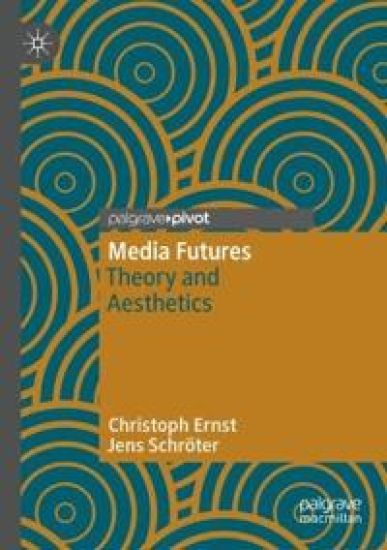
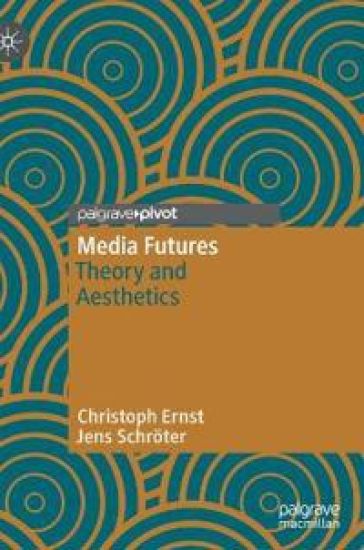
This book deals with the connection between media and the future. It is about the imagination of futuristic media and what this says about the present, but it also shows how media are imagined as means to control the future. The book begins by describing different theories of the evolution of media and by exploring how this evolution is tied to expectations regarding the future. The authors discuss the theories of imagination and how the imagination of media futures operates. To do so, they analyse four concrete examples: the imaginations once related to interactive television and how they were performed in an important piece of media art; those on “ubiquitous computing,” which remain present today; those on three-dimensional, especially holographic, displays that are prevalent everywhere in cinema, and lastly the contemporary imaginations on quantum computing and how they have been enacted in science fiction. The book appeals to readers interested in the question of how our present imagines its technological futures.
“The Making of the Bible is invaluable for anyone interested in Scripture and in the intertwined histories of Judaism and Christianity.”—John Barton, author of A History of the Bible: The Book and Its FaithsThe authoritative new account of the Bible’s origins, illuminating the 1,600-year tradition that shaped the Christian and Jewish holy books as millions know them today. The Bible as we know it today is best understood as a process, one that begins in the tenth century BCE. In this revelatory account, a world-renowned scholar of Hebrew scripture joins a foremost authority on the New Testament to write a new biography of the Book of Books, reconstructing Jewish and Christian scriptural histories, as well as the underappreciated contest between them, from which the Bible arose. Recent scholarship has overturned popular assumptions about Israel’s past, suggesting, for instance, that the five books of the Torah were written not by Moses but during the reign of Josiah centuries later. The sources of the Gospels are also under scrutiny. Konrad Schmid and Jens Schröter reveal the long, transformative journeys of these and other texts en route to inclusion in the holy books. The New Testament, the authors show, did not develop in the wake of an Old Testament set in stone. Rather the two evolved in parallel, in conversation with each other, ensuring a continuing mutual influence of Jewish and Christian traditions. Indeed, Schmid and Schröter argue that Judaism might not have survived had it not been reshaped in competition with early Christianity. A remarkable synthesis of the latest Old and New Testament scholarship, The Making of the Bible is the most comprehensive history yet told of the world’s best-known literature, revealing its buried lessons and secrets.
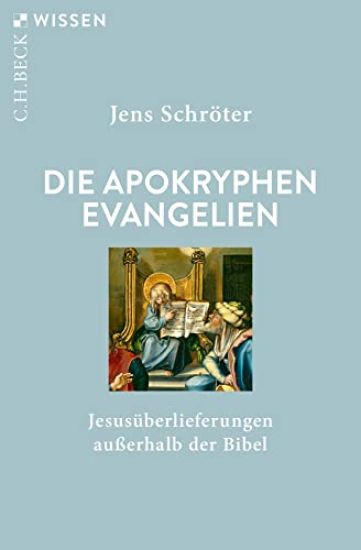
The New Testament contains four accounts of the life of Jesus. To some people in antiquity, four was too many. Disagreements in the Gospels over what Jesus said and did triggered debate between insiders and drew criticism from outsiders. To other people, four was not enough. As early as the first century, Christians wrote additional gospels, each with their own portrayal of Jesus and depictions of his relationships with his family, his followers, and his Father. While these gospels were not included in the New Testament canon, many continued to be important for Christian thought and practice; all these texts, moreover, are significant for the study of emergent Christianity. This short, accessible introduction draws on current scholarship on the various noncanonical (or apocryphal) gospels to present this fascinating literature to readers eager to learn more about their origins, contents, and meaning. The book begins with a discussion of the distinction between gospels that became canonical and those that came to be regarded as apocryphal. Then, the gospels are presented in chapters arranged according to Jesus' ministry: from Infancy Gospels to texts about Jesus' earthly career to his passion, resurrection, and postresurrection appearances. This book demonstrates how early Christians confronted crises in their communities through story, crafting new accounts of Jesus' life that expanded upon and sometimes challenged the Gospels that became canonical. The apocryphal gospels are not Scripture, but they are no less valuable for understanding Christianity in its formative centuries and beyond.
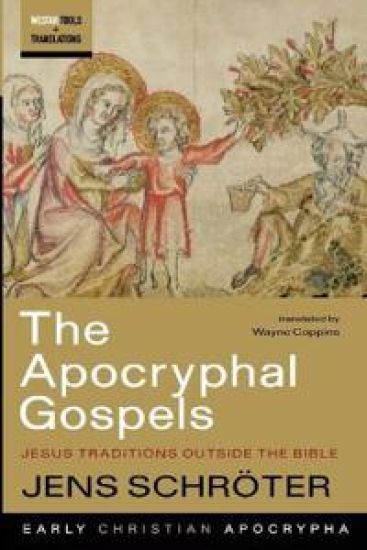
The New Testament contains four accounts of the life of Jesus. To some people in antiquity, four was too many. Disagreements in the Gospels over what Jesus said and did triggered debate between insiders and drew criticism from outsiders. To other people, four was not enough. As early as the first century, Christians wrote additional gospels, each with their own portrayal of Jesus and depictions of his relationships with his family, his followers, and his Father. While these gospels were not included in the New Testament canon, many continued to be important for Christian thought and practice; all these texts, moreover, are significant for the study of emergent Christianity. This short, accessible introduction draws on current scholarship on the various noncanonical (or apocryphal) gospels to present this fascinating literature to readers eager to learn more about their origins, contents, and meaning. The book begins with a discussion of the distinction between gospels that became canonical and those that came to be regarded as apocryphal. Then, the gospels are presented in chapters arranged according to Jesus' ministry: from Infancy Gospels to texts about Jesus' earthly career to his passion, resurrection, and postresurrection appearances. This book demonstrates how early Christians confronted crises in their communities through story, crafting new accounts of Jesus' life that expanded upon and sometimes challenged the Gospels that became canonical. The apocryphal gospels are not Scripture, but they are no less valuable for understanding Christianity in its formative centuries and beyond.
This book deals with the connection between media and the future. It is about the imagination of futuristic media and what this says about the present, but it also shows how media are imagined as means to control the future. The book begins by describing different theories of the evolution of media and by exploring how this evolution is tied to expectations regarding the future. The authors discuss the theories of imagination and how the imagination of media futures operates. To do so, they analyse four concrete examples: the imaginations once related to interactive television and how they were performed in an important piece of media art; those on “ubiquitous computing,” which remain present today; those on three-dimensional, especially holographic, displays that are prevalent everywhere in cinema, and lastly the contemporary imaginations on quantum computing and how they have been enacted in science fiction. The book appeals to readers interested in the question of how our present imagines its technological futures.
As the inaugural volume in the Baylor-Mohr Siebeck Studies in Early Christianity series, Jens Schröter's celebrated From Jesus to the New Testament is now available for the first time in English. Schröter provides a rich narrative to Christian history by looking back upon the theological forces that created the New Testament canon. Through his textual, historical, and hermeneutical examination of early Christianity, Schröter reveals how various writings that form the New Testament's building blocks are all held together. Jesus not only bound the New Testament, but launched a theological project that resulted in the canon. Schröter's study will undoubtedly spark new discussion about the formation of the canon.
Der Band bietet die erste Einführung in Konzepte der Imagination zukünftiger Medientechnologien. Ausgehend von der sozialen Transformation durch neue Medien wird die interdisziplinäre Debatte um die Vorstellbarmachung zukünftiger Medien vorgestellt. Im Durchgang durch etablierte Theorien aus Philosophie, Medientheorie, Sozialtheorie sowie Wissenschafts- und Technikforschung wird aufgezeigt, welchen breiten Einfluss Prozesse der Imagination, etwa in Gestalt von Narrativen wie in der Science Fiction, für die Diskursivierung und Konzeptualisierung von (digitalen) Medientechnologien haben.
Der Band führt in die Literatur zu den verschiedenen Aspekten des Verhältnisses von Medien und Ökonomie ein. Dass "die Medien" und "die Ökonomie" in einem engen Verhältnis stehen, scheint zumindest hinsichtlich der Medienindustrie offensichtlich zu sein. Doch wäre es zu eng, die Fragen nach Medien und Ökonomie darauf zu reduzieren. So setzt z. B. die Ökonomie ihrerseits immer schon verschiedene und sich wandelnde Formen von Medien voraus und ferner ist "die Ökonomie" auch Gegenstand medialer Darstellungen.
A media theory of markets Markets abound in media-but a media theory of markets is still emerging. Anthropology offers media archaeologies of markets, and the sociology of markets and finance unravels how contemporary financial markets have witnessed a media technological arms race. Building on such work, this volume brings together key thinkers of economic studies with German media theory, describes the central role of the media specificity of markets in new detail and inflects them in three distinct ways. Nik-Khah and Mirowski show how the denigration of human cognition and the concomitant faith in computation prevalent in contemporary market-design practices rely on neoliberal conceptions of information in markets. SchrÖter confronts the asymmetries and abstractions that characterize money as a medium and explores the absence of money in media. Beverungen situates these inflections and gathers further elements for a politically and historically attuned media theory of markets concerned with contemporary phenomena such as high-frequency trading and cryptocurrencies.
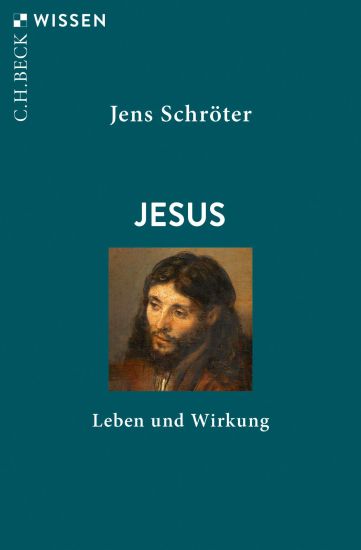
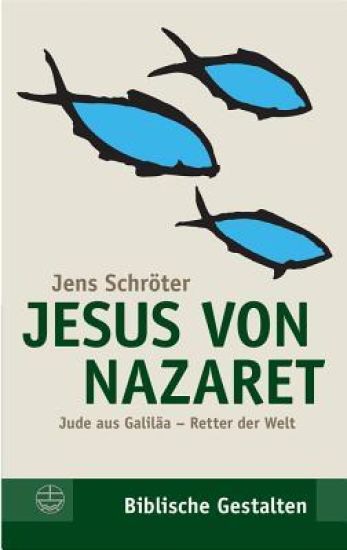
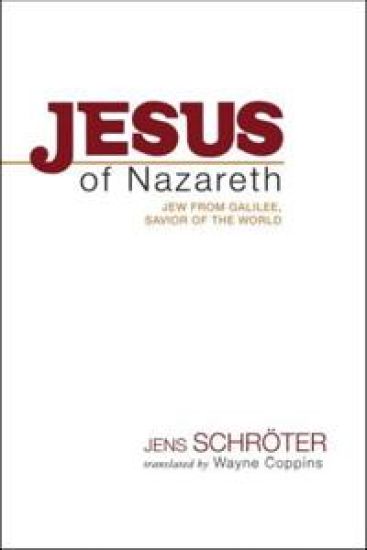
What can we know about Jesus of Nazaret? This book authored by the renowned Berlin New Testament scholar Jens Schroter searches for the earliest traces of the itinerant preacher from the Galilee who was deeply rooted in Jewish traditions of his time and became the central figure of what is today the world's largest religion. Thereby, new results from archaeological excavations of places of Jesus' activity as well as insights from current Jesus research are considered. Schroter sketches a vivid portrait of Jesus in his time by tracing his activity in the Galilee and his passion and crucifixion in Jerusalem. The book, however, does not end with Jesus' death, but also deals with the beginnings of faith in Jesus as the Christ, the savior of the world, and early interpretations of his person in canonical and non-canonical writings.
Jesus of Nazareth continues to fascinate. From antiquity onwards countless people have found meaning for their lives through Jesus' teaching. His life led to the establishment of a community that subsequently grew into what is today the world's largest religion. At the center of the Christian faith stands the confession that this Jesus is both "true human being and true God." In Jesus of Nazareth , noted German New Testament scholar Jens Schröter directly addresses the connection between Jesus' humanity and divinityâhow the historical Jesus can also be the Christ of confession. Schröter begins by looking at the modern quest for the "historical Jesus" from its beginnings down to the present. In the process Schröter isolates key questions of historical methodâhow can we reconstruct the past? What is the relationship between these reconstructions and past reality itself? Schröter then examines the words and deeds of Jesus, including his death and resurrection, in their Galilean and Greco-Roman contexts. Schröter finally measures the impact that Jesus has had in literature, film, music, and the fine arts. Jesus of Nazareth thus narrates the remarkable story of how a Jew from Galilee became the savior of the world, how Jesus can be said to be both God and human, and how this Jesus continues to exert influence.
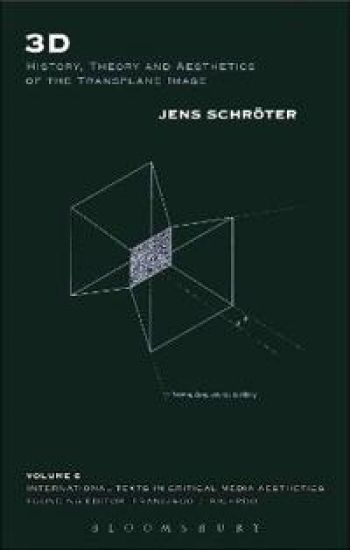
There is a blind spot in recent accounts of the history, theory and aesthetics of optical media: namely, the field of the three-dimensional, or trans-plane, image. It has been widely used in the 20th century for very different practices - military, scientific and medical visualization - precisely because it can provide more spatial information. And now in the 21st century, television and film are employing the method even more. Appearing for the first time in English, Jens Schroeter's comprehensive study of the aesthetics of the 3D image is a major scholarly addition to this evolving field. Citing case studies from the history of both technology and the arts, this wide-ranging and authoritative book charts the development in the theory and practice of three-dimensional images. Discussing and analyzing the transformation of the socio-cultural and technological milieu, Schroeter has produced a work of scholarship that combines impressive historical scope with contemporary theoretical arguments.