Kirjojen hintavertailu – 12 903 733 kirjaa ja 27 kauppaa

Kirjailija

Jeppe Sinding Jensen

Kirjat ja teokset yhdessä paikassa: 11 kirjaa, julkaisuja vuosilta 2004–2025, suosituimpiin kuuluu Syncretism in Religion. Vertaile teosten hintoja ja tarkista saatavuus suomalaisista kirjakaupoista.

11 kirjaa

Kirjojen julkaisuvuodet: 2004–2025.

What Is Religion?

What Is Religion?

Jeppe Sinding Jensen

TAYLOR FRANCIS LTD
2025
nidottu

Halvin toimitettuna 74,10 €

Starting from the premise that religion is a human endeavour that can be analysed and compared across time and cultures, What Is Religion? brings the most up-to-date scholarship to bear on humankind’s most enduring creation. Religious belief is one of the most pervasive and ubiquitous characteristics of human society. Religion has influenced human lives since prehistoric times, shaping the world views of cultures from isolated tribes to vast empires. The book opens with a brief history of the idea of religion, then divides the study of religion into four essential topics – types, representations, practices and institutions – and concludes with a final, eye-opening chapter on religion today. Packed with case studies from a wide range of religions, past and present, What Is Religion? offers a very current, comprehensive, yet intellectually challenging, overview of the history, theories, practices, and study of religion. Thoroughly updated throughout to include more global religion, non-religion, spirituality, and new religious movements, this third edition provides an accessible, wide-ranging, engaging, and concise book for undergraduate students in the study of religion. It is also invaluable for students of anthropology, history, philosophy, psychology, sociology, and theology as well as anyone interested in how and why humans became and continue to be religious.
What Is Religion?

What Is Religion?

Jeppe Sinding Jensen

TAYLOR FRANCIS LTD
2025
sidottu
Starting from the premise that religion is a human endeavour that can be analysed and compared across time and cultures, What Is Religion? brings the most up-to-date scholarship to bear on humankind’s most enduring creation. Religious belief is one of the most pervasive and ubiquitous characteristics of human society. Religion has influenced human lives since prehistoric times, shaping the world views of cultures from isolated tribes to vast empires. The book opens with a brief history of the idea of religion, then divides the study of religion into four essential topics – types, representations, practices and institutions – and concludes with a final, eye-opening chapter on religion today. Packed with case studies from a wide range of religions, past and present, What Is Religion? offers a very current, comprehensive, yet intellectually challenging, overview of the history, theories, practices, and study of religion. Thoroughly updated throughout to include more global religion, non-religion, spirituality, and new religious movements, this third edition provides an accessible, wide-ranging, engaging, and concise book for undergraduate students in the study of religion. It is also invaluable for students of anthropology, history, philosophy, psychology, sociology, and theology as well as anyone interested in how and why humans became and continue to be religious.
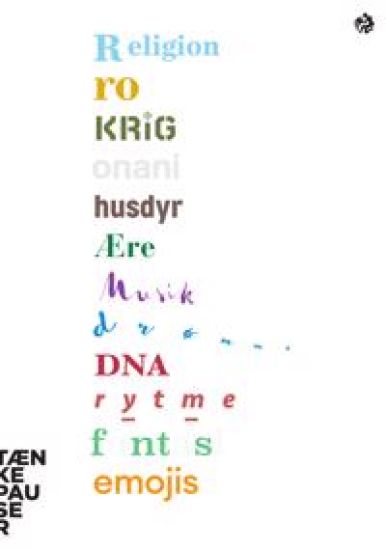
Tænkepauser 73-84

Tænkepauser 73-84

Jeppe Sinding Jensen; Iben Have; Gorm Harste; Inger Anneberg; Sasja Emilie Mathiasen Stolpa; Steen Kaargaard Nielsen; Melanie Gillespie Rosen; Lotte Bjergbæk; Birgitte Stougaard Pedersen; Andreas Lieberoth; Tina Thode Hougaard

Aarhus Universitetsforlag
2021
nidottu
Tænkepauser er bogserien, hvor topforskere fra Aarhus Universitet formidler deres viden om centrale emner som frihed, netværk og tillid. Idéen er at kanalisere forskningen ud til nye målgrupper og ind i hverdagens pauser - fra sofahjørnet til løbeturen. Hver bog er lækkert designet og udstråler den kæmpemæssige begejstring, som forskerne har for deres emne. Kombineret med lettilgængeligt sprog, en overskuelig længde og en ofte humoristisk tone gør det serien til en intet mindre end fremragende formidling af vigtig viden, som ellers ofte kun skrives af fagfolk for fagfolk.
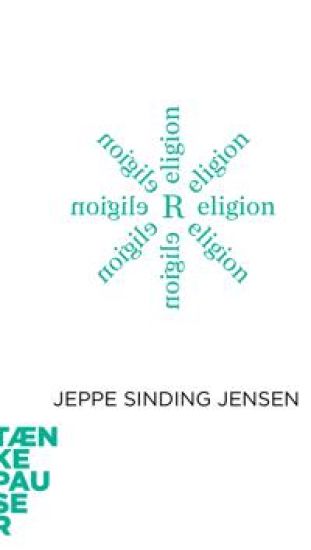
Religion

Religion

Jeppe Sinding Jensen

Aarhus Universitetsforlag
2019
nidottu
Alting har en årsag. På nær religion. Kristendom, islam eller anden form for hokuspokus er blevet os givet i tidernes morgen af guder, ånder eller fjerne forfædre. Den forklaring tror de mest godtroende gudstro på. Men det er nu nok løgn og latin ifølge Jeppe Sinding Jensen, eviggrøn fritænker ved Aarhus Universitet. Religion er måske bare et tilfældigt biprodukt af menneskets million år lange udvikling, hvor vores forestillingsevne er gået amok med absurde ideer om usynlige væsner og magter, der styrer verden og livet. Det lyder også helt utroligt, men alting skal jo have en årsag.
What Is Religion?

What Is Religion?

Jeppe Sinding Jensen

Routledge
2019
nidottu
Starting from the premise that religion is a human endeavour that can be analysed and compared across time and cultures, What Is Religion? brings the most up-to-date scholarship to bear on humankind’s most enduring creation. Religious belief is one of the most pervasive and ubiquitous characteristics of human society. Religion has influenced human lives since prehistoric times, shaping the world views of cultures from isolated tribes to vast empires. The book opens with a brief history of the idea of religion, then divides the study of religion into four essential topics – types, representations, practices and institutions – and concludes with a final, eye-opening chapter on religion today. Packed with case studies from a wide range of religions, past and present, What Is Religion? offers a very current, comprehensive, yet intellectually challenging, overview of the history, theories, practices and study of religion. Thoroughly updated throughout, this second edition provides an accessible, wide-ranging, engaging and concise book for undergraduate students in the study of religion. It is also invaluable for students of anthropology, history, psychology, sociology and theology as well as anyone interested in how and why humans became and continue to be religious.
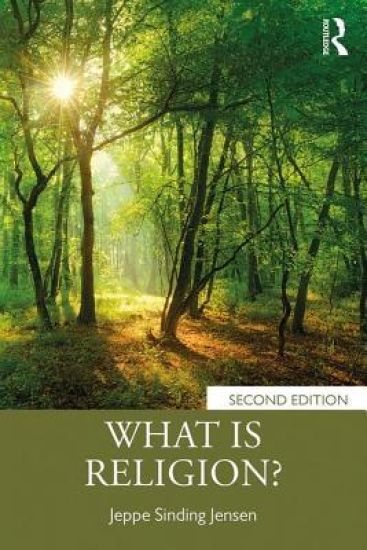
What Is Religion?

What Is Religion?

Jeppe Sinding Jensen

Routledge
2019
sidottu
Starting from the premise that religion is a human endeavour that can be analysed and compared across time and cultures, What Is Religion? brings the most up-to-date scholarship to bear on humankind’s most enduring creation. Religious belief is one of the most pervasive and ubiquitous characteristics of human society. Religion has influenced human lives since prehistoric times, shaping the world views of cultures from isolated tribes to vast empires. The book opens with a brief history of the idea of religion, then divides the study of religion into four essential topics – types, representations, practices and institutions – and concludes with a final, eye-opening chapter on religion today. Packed with case studies from a wide range of religions, past and present, What Is Religion? offers a very current, comprehensive, yet intellectually challenging, overview of the history, theories, practices and study of religion. Thoroughly updated throughout, this second edition provides an accessible, wide-ranging, engaging and concise book for undergraduate students in the study of religion. It is also invaluable for students of anthropology, history, psychology, sociology and theology as well as anyone interested in how and why humans became and continue to be religious.
Religious Narrative, Cognition and Culture

Religious Narrative, Cognition and Culture

Armin W. Geertz; Jeppe Sinding Jensen

Equinox Publishing Ltd
2011
sidottu
'Religious Narrative, Cognition and Culture' brings together some of the world's leading scholars in the fields of cognitive science and comparative religion. The essays range across diverse fields: the neurological processes and possible genetic foundations of how language emerged; the possible phylogenetic routes in the development of language and culture; the complex interrelations between the ontogenesis and the sociogenesis of cognitive processes; the value of a combination of neurology, narratology and a reworked speech-act approach that focuses on narrative; how the psychology of ritual helps make narrative beliefs possible; religious narratives; emotional communication; the role of gossip as religious narrative; area studies of religious narrative and cognition in the Bible; Indian Epic literature; Australian Aboriginal mythology and ritual; modern religious forms such as New Age, Asatro, astrological narrative and virtual rituals in cyberspace.
Religious Narrative, Cognition and Culture

Religious Narrative, Cognition and Culture

Armin W. Geertz; Jeppe Sinding Jensen

Equinox Publishing Ltd
2011
nidottu
'Religious Narrative, Cognition and Culture' brings together some of the world's leading scholars in the fields of cognitive science and comparative religion. The essays range across diverse fields: the neurological processes and possible genetic foundations of how language emerged; the possible phylogenetic routes in the development of language and culture; the complex interrelations between the ontogenesis and the sociogenesis of cognitive processes; the value of a combination of neurology, narratology and a reworked speech-act approach that focuses on narrative; how the psychology of ritual helps make narrative beliefs possible; religious narratives; emotional communication; the role of gossip as religious narrative; area studies of religious narrative and cognition in the Bible; Indian Epic literature; Australian Aboriginal mythology and ritual; modern religious forms such as New Age, Asatro, astrological narrative and virtual rituals in cyberspace.
Myths and Mythologies

Myths and Mythologies

Jeppe Sinding Jensen

Equinox Publishing Ltd
2009
sidottu
In all cultures and at all times, humans have told stories about where they came from, who they are and how they should live their lives. 'Myths and Mythologies' brings together the key classic and contemporary writings - philosophical, psychological, sociological, semiological and cognitivist - on myth. To the insider, myths contain truth, revelation and a 'history of ourselves'; to the outsider, a culture s myths can be seen as the product of foolish, infantile and wishful thinking. Myths tell us about specific cultures, about human creativity, and how narrative shapes and reflects understanding. The 'Reader' is an invaluable resource for students and scholars interested in the impact of narrative on human culture and the meaning of truth in religious language.
Myths and Mythologies

Myths and Mythologies

Jeppe Sinding Jensen

Equinox Publishing Ltd
2009
nidottu
In all cultures and at all times, humans have told stories about where they came from, who they are and how they should live their lives. 'Myths and Mythologies' brings together the key classic and contemporary writings - philosophical, psychological, sociological, semiological and cognitivist - on myth. To the insider, myths contain truth, revelation and a 'history of ourselves'; to the outsider, a culture s myths can be seen as the product of foolish, infantile and wishful thinking. Myths tell us about specific cultures, about human creativity, and how narrative shapes and reflects understanding. The 'Reader' is an invaluable resource for students and scholars interested in the impact of narrative on human culture and the meaning of truth in religious language.
Syncretism in Religion

Syncretism in Religion

Anita Maria Leopold; Jeppe Sinding Jensen

Equinox Publishing Ltd
2004
nidottu
Syncretism - the fusion of different beliefs into one religious system - has long been controversial in scholarship. It is widely held that religion, culture and ethnicity are pure entities that may become mixed in encounter and lead to impure, hybrid forms. 'Syncretism in Religion' presents a selection of essays committed to solving the problems of syncretism. The essays reflect the full breadth of religious traditions that could be called syncretistic. An overview of the historical background of syncretism is given, alongside classical readings from the history of religion, definitions of syncretism in relation to theories of power, and an assessment of the future of the subject. This volume brings together the work of authors who have made significant contributions in the field, some appearing for the first time in English. It will be of interest to any student or scholar of religion, philosophy or anthropology concerned with the dynamics of cultural contact and change.