

Kirjailija
Jeremiah James
Kirjat ja teokset yhdessä paikassa: 5 kirjaa, julkaisuja vuosilta 2011–2025, suosituimpiin kuuluu History of Salvatore Ferragamo Watches. Vertaile teosten hintoja ja tarkista saatavuus suomalaisista kirjakaupoista.
5 kirjaa
Kirjojen julkaisuvuodet: 2011–2025.

Dom is a young adult looking for a better life. He isn't satisfied with what he has, so he leaves his home in Minnesota and starts a new life in Arizona. He originally plans to be a law abiding citizen, looking for a job and a simple life, but his direction quickly changes when he encounters a member of a drug cartel in an alley and chooses a life of crime instead. His world goes dark when he makes a bold decision to rob a cartel stash house, which leads him far away from the ordinary life he once envisioned. He befriends Nico, a member of a powerful drug cartel, and the two advance into murder, torture, and drugs. Their actions quickly get the attention from the cartel, and they soon find themselves in a world of pain as they fight to avoid their own deaths. Once Dom feels what it's like to have power and control, he creates a monster in his own way, not fearing death and not caring who he hurts. Some may view him as a vigilante, others not so much. Join Dom on his wild ride battling life, death, revenge and justice. See how the addiction to power can lead to ultimate self-destruction.

Dom is a young adult looking for a better life. He isn't satisfied with what he has, so he leaves his home in Minnesota and starts a new life in Arizona. He originally plans to be a law abiding citizen, looking for a job and a simple life, but his direction quickly changes when he encounters a member of a drug cartel in an alley and chooses a life of crime instead. His world goes dark when he makes a bold decision to rob a cartel stash house, which leads him far away from the ordinary life he once envisioned. He befriends Nico, a member of a powerful drug cartel, and the two advance into murder, torture, and drugs. Their actions quickly get the attention from the cartel, and they soon find themselves in a world of pain as they fight to avoid their own deaths. Once Dom feels what it's like to have power and control, he creates a monster in his own way, not fearing death and not caring who he hurts. Some may view him as a vigilante, others not so much. Join Dom on his wild ride battling life, death, revenge and justice. See how the addiction to power can lead to ultimate self-destruction.
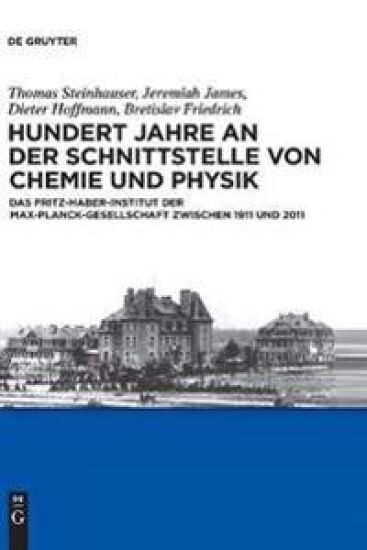
Hundert Jahre an der Schnittstelle von Chemie und Physik
Thomas Steinhauser; Jeremiah James; Dieter Hoffmann; Bretislav Friedrich
de Gruyter
2011
sidottu
Das Fritz-Haber-Institut, vor hundert Jahren als Kaiser-Wilhelm-Institut fur physikalische Chemie und Elektrochemie gegrundet, gehort zu den traditionsreichsten und renommiertesten Instituten der Max-Planck-Gesellschaft. Zahlreiche Nobelpreistrager haben an ihm gewirkt und bis heute wird dort wissenschaftliche Spitzenforschung betrieben. Daruber hinaus ist das Institut aber nicht nur ein Ort wissenschaftlicher Exzellenz und Produktivitat gewesen, seine hundertjahrige Geschichte ist auch auch aufs engste mit der deutschen Geschichte im zwanzigsten Jahrhundert verknupft. So spielte es eine zentrale Rolle in der deutschen Giftgasforschung und der chemischen Kriegsfuhrung des Ersten Weltkrieges. In den Jahren der nationalsozialistischen Gewaltherrschaft war es besonders von den rassistischen Vertreibungsmanahmen betroffen und firmierte als nationalsozialistischer "Musterbetrieb." Schlielich musste es sich wahrend des Kalten Krieges in der Frontstadt Berlin behaupten. Anlasslich seines hundertjahrigen Grundungsjubilaums wird in der vorliegenden Publikation, als Ergebnis eines dreijahrigen interdisziplinaren Forschungsprojekts, die gleichermaen glanzvolle wie widerspruchliche Geschichte des Instituts dokumentiert und ein exemplarischer Einblick in die moderne Wissenschaftsgeschichte mit ihren Wechselwirkungen zu Gesellschaft und Politik gegeben.
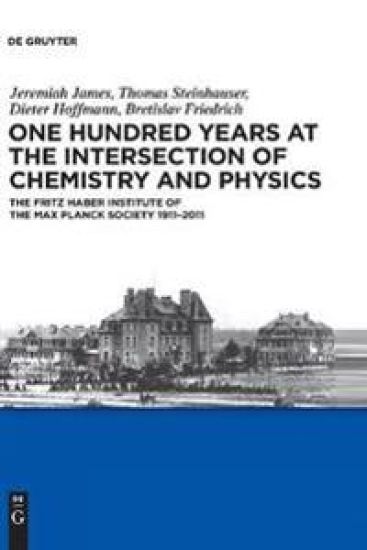
One Hundred Years at the Intersection of Chemistry and Physics
Jeremiah James; Thomas Steinhauser; Dieter Hoffmann; Bretislav Friedrich
De Gruyter
2011
sidottu
This volume, occasioned by the centenary of the Fritz Haber Institute, formerly the Institute for Physical Chemistry and Electrochemistry, covers the institute's scientific and institutional history from its founding until the present. The institute was among the earliest established by the Kaiser Wilhelm Society, and its inauguration was one of the first steps in the development of Berlin-Dahlem into a center for scientific research. Its establishment was made possible by an endowment from Leopold Koppel, granted on the condition that Fritz Haber, well-known for his discovery of a method to synthesize ammonia from its elements, be made its director. The history of the institute has largely paralleled that of 20th-century Germany. It undertook controversial weapons research during World War I, followed by a "Golden Era" during the 1920s, in spite of financial hardships. Under the National Socialists it experienced a purge of its scientific staff and a diversion of its research into the service of the new regime, accompanied by a breakdown in its international relations. In the immediate aftermath of World War II it suffered crippling material losses, from which it recovered slowly in the post-war era. In 1953, shortly after taking the name of its founding director, the institute joined the fledgling Max Planck Society. During the 1950s and 60s, the institute supported diverse researches into the structure ofmatter and electron microscopy in a territorially insular and politically precarious West-Berlin. In subsequent decades, as both Berlin and the Max Planck Society underwent significant changes, the institute reorganized around a board of coequal scientific directors and a renewed focus on the investigation of elementary processes on surfaces and interfaces, topics of research that had been central to the work of Fritz Haber and the first "Golden Era" of the institute.