
Kirjojen hintavertailu – 12 859 828 kirjaa ja 27 kauppaa

Kirjailija

Jeremiah P. Ostriker

Kirjat ja teokset yhdessä paikassa: 4 kirjaa, julkaisuja vuosilta 2003–2024, suosituimpiin kuuluu Assessing Research-Doctorate Programs. Vertaile teosten hintoja ja tarkista saatavuus suomalaisista kirjakaupoista.

4 kirjaa

Kirjojen julkaisuvuodet: 2003–2024.

Heart of Darkness

Heart of Darkness

Jeremiah P. Ostriker; Simon Mitton

PRINCETON UNIVERSITY PRESS
2024
pokkari
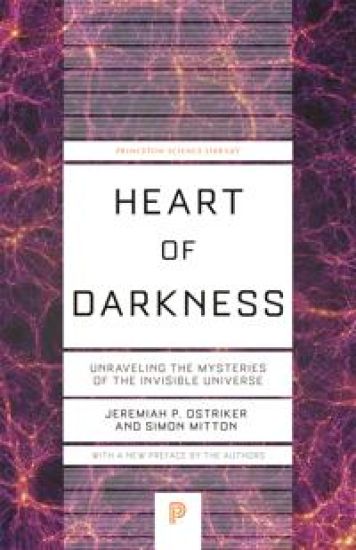
Humanity's ongoing quest to unlock the secrets of dark matter and dark energyHeart of Darkness describes the incredible saga of humankind's quest to unravel the deepest secrets of the universe. Over the past forty years, scientists have learned that two little-understood components—dark matter and dark energy—comprise most of the known cosmos, explain the growth of all cosmic structure, and hold the key to the universe's fate. The story of how evidence for the so-called "Lambda-Cold Dark Matter" model of cosmology has been gathered by generations of scientists throughout the world is told here by one of the pioneers of the field, Jeremiah Ostriker, and his coauthor Simon Mitton. From humankind's early attempts to comprehend Earth's place in the solar system, to astronomers' exploration of the Milky Way galaxy and the realm of the nebulae beyond, to the detection of the primordial fluctuations of energy from which all subsequent structure developed, this book explains the physics and the history of how the current model of our universe arose and has passed every test hurled at it by the skeptics. Throughout this rich story, an essential theme is emphasized: how three aspects of rational inquiry—the application of direct measurement and observation, the introduction of mathematical modeling, and the requirement that hypotheses should be testable and verifiable—guide scientific progress and underpin our modern cosmological paradigm. This monumental puzzle is far from complete, however, as scientists confront the mysteries of the ultimate causes of cosmic structure formation and the real nature and origin of dark matter and dark energy.
Heart of Darkness

Heart of Darkness

Jeremiah P. Ostriker; Simon Mitton

Princeton University Press
2015
pokkari
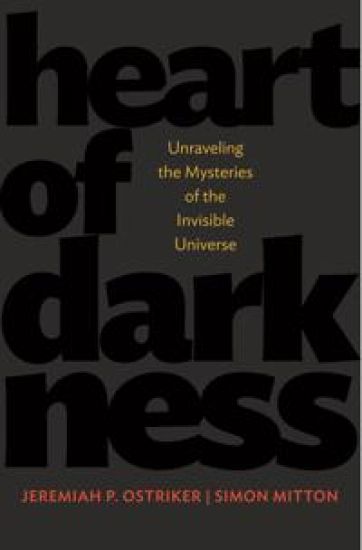
Heart of Darkness describes the incredible saga of humankind's quest to unravel the deepest secrets of the universe. Over the past thirty years, scientists have learned that two little-understood components--dark matter and dark energy--comprise most of the known cosmos, explain the growth of all cosmic structure, and hold the key to the universe's fate. The story of how evidence for the so-called "Lambda-Cold Dark Matter" model of cosmology has been gathered by generations of scientists throughout the world is told here by one of the pioneers of the field, Jeremiah Ostriker, and his coauthor Simon Mitton. From humankind's early attempts to comprehend Earth's place in the solar system, to astronomers' exploration of the Milky Way galaxy and the realm of the nebulae beyond, to the detection of the primordial fluctuations of energy from which all subsequent structure developed, this book explains the physics and the history of how the current model of our universe arose and has passed every test hurled at it by the skeptics. Throughout this rich story, an essential theme is emphasized: how three aspects of rational inquiry--the application of direct measurement and observation, the introduction of mathematical modeling, and the requirement that hypotheses should be testable and verifiable--guide scientific progress and underpin our modern cosmological paradigm. This monumental puzzle is far from complete, however, as scientists confront the mysteries of the ultimate causes of cosmic structure formation and the real nature and origin of dark matter and dark energy.
Heart of Darkness

Heart of Darkness

Jeremiah P. Ostriker; Simon Mitton

Princeton University Press
2013
sidottu
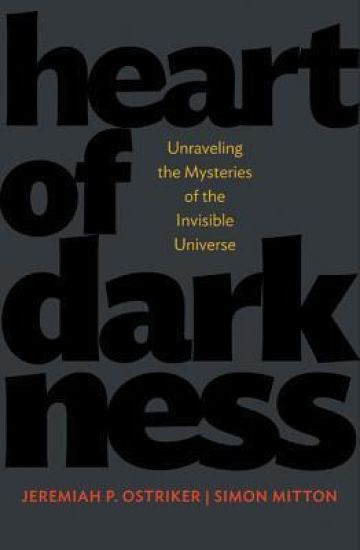
Heart of Darkness describes the incredible saga of humankind's quest to unravel the deepest secrets of the universe. Over the past thirty years, scientists have learned that two little-understood components--dark matter and dark energy--comprise most of the known cosmos, explain the growth of all cosmic structure, and hold the key to the universe's fate. The story of how evidence for the so-called "Lambda-Cold Dark Matter" model of cosmology has been gathered by generations of scientists throughout the world is told here by one of the pioneers of the field, Jeremiah Ostriker, and his coauthor Simon Mitton. From humankind's early attempts to comprehend Earth's place in the solar system, to astronomers' exploration of the Milky Way galaxy and the realm of the nebulae beyond, to the detection of the primordial fluctuations of energy from which all subsequent structure developed, this book explains the physics and the history of how the current model of our universe arose and has passed every test hurled at it by the skeptics. Throughout this rich story, an essential theme is emphasized: how three aspects of rational inquiry--the application of direct measurement and observation, the introduction of mathematical modeling, and the requirement that hypotheses should be testable and verifiable--guide scientific progress and underpin our modern cosmological paradigm. This monumental puzzle is far from complete, however, as scientists confront the mysteries of the ultimate causes of cosmic structure formation and the real nature and origin of dark matter and dark energy.
Assessing Research-Doctorate Programs

Assessing Research-Doctorate Programs

James A. Voytuk; Charlotte V. Kuh; Jeremiah P. Ostriker

National Academies Press
2003
nidottu
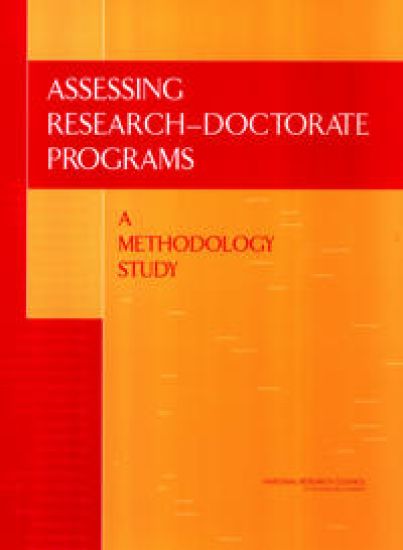
How should we assess and present information about the quality of research-doctorate programs? In recommending that the 1995 NRC rankings in Assessing the Quality of Research-Doctorate Programs: Continuity and Change be updated as soon as possible, this study presents an improved approach to doctoral program assessment which will be useful to administrators, faculty, and others with an interest in improving the education of Ph. D.s in the United States. It reviews the methodology of the 1995 NRC rankings and recommends changes, including the collection of new data about Ph. D. students, additional data about faculty, and new techniques to present data on the qualitative assessment of doctoral program reputation. It also recommends revision of the taxonomy of fields from that used in the 1995 rankings. Table of Contents Front Matter Executive Summary 1. Introduction 2. How the Study Was Conducted 3. Taxonomy 4. Quantitative Measures 5. Student Education and Outcomes 6. Reputation and Data Presentation 7. General Conclusions and Recommendations 8. References Appendix A: Biographical Sketches: Committee and Panels Appendix B: Program-Initiation Consultation with Organizations Appendix C: Meetings and Participants Appendix D: Sample Questionnaires Appendix E: Taxonomy of Fields and Their Subfields Appendix F: Fields for Ph. D.s Granted During 1996-2001 Appendix G: Technical and Statistical Techniques